What Maine Town Clerks Ask For at the Counter
There’s nothing quite as deflating as getting all geared up for a day on Maine’s incredible ATV trails, only to remember you haven't registered your machine – or worse, you head to the town office with good intentions but leave empty-handed because you forgot a critical piece of paperwork. Trust me, we’ve all been there, staring blankly at the clerk as they ask for something you didn't even know you needed. This guide is here to save you from that frustration, walking you through every single document and detail a Maine town clerk will likely ask for when you go to register your ATV or UTV.
The Essentials: Core Documents Every Time
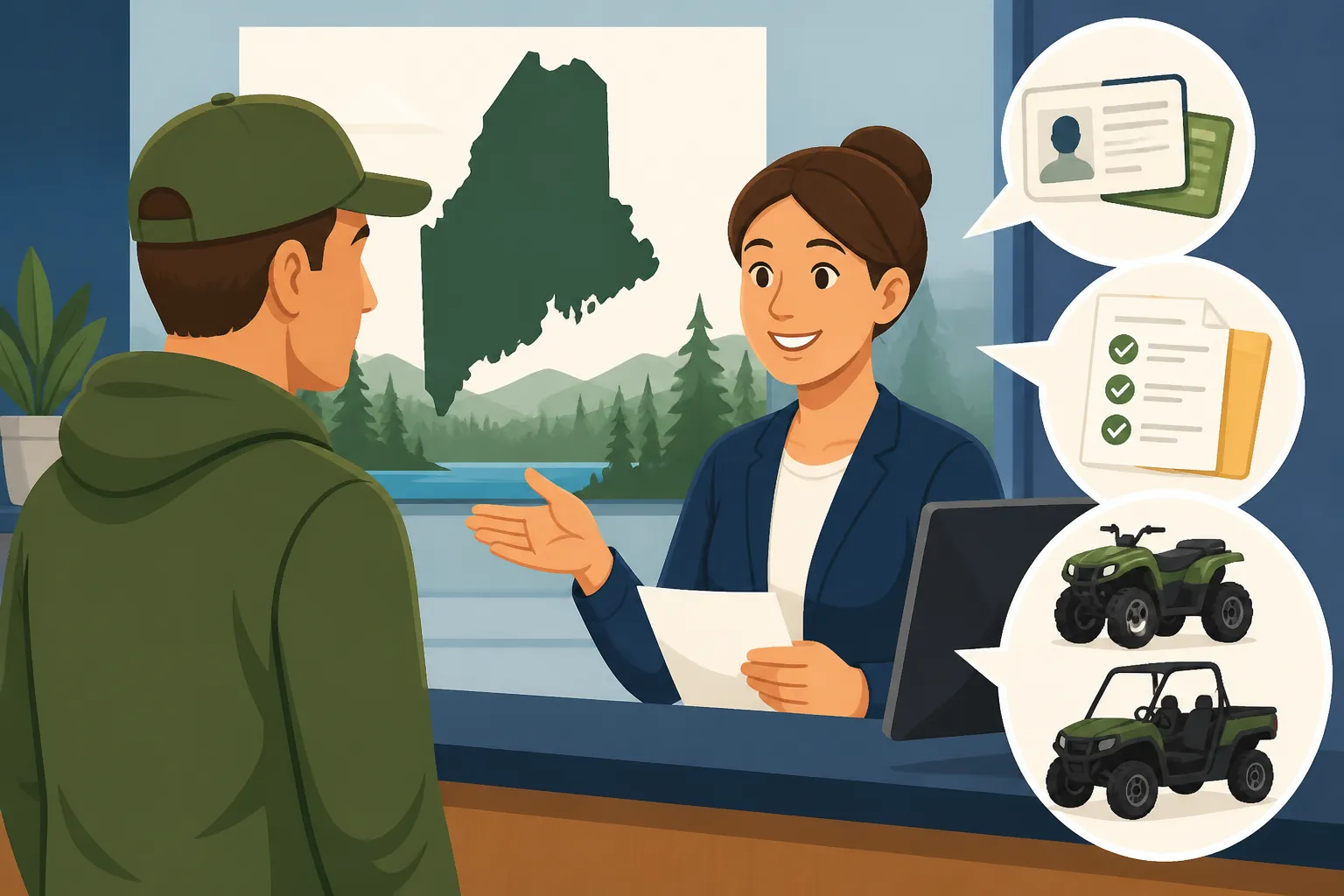
When you walk into your local Maine town office, the clerk behind the counter is essentially looking to confirm two main things: who you are, and that you rightfully own the machine you're trying to register. Having these foundational documents squared away will make the entire process so much smoother, letting you get out on those dirt roads and wooded trails much faster.
Proof of Ownership: The Cornerstone
This is hands down the most crucial piece of information you’ll need to bring. Without clear proof that the ATV or UTV belongs to you, a town clerk simply cannot process your registration. They need to ensure the machine isn't stolen and that you have the legal right to register it in your name.
If you bought your ATV or UTV new from a dealership, they typically handle a lot of the initial paperwork for you, but you'll still receive a manufacturer's certificate of origin (MCO) or a similar document. This MCO is vital. It’s essentially the birth certificate of your machine, proving it's new and has never been registered before. Hold onto this document carefully, as it's typically a one-time issue. For a new purchase, the dealer will often send copies directly to the state or provide you with what you need to take to the town office.
When you've purchased a used machine, especially from a private seller, a well-executed bill of sale is your golden ticket. This document doesn't need to be fancy, but it absolutely must include the buyer's name and address, the seller's name and address, the date of sale, the purchase price, and a clear description of the ATV or UTV, including its make, model, year, and VIN (Vehicle Identification Number). It's always a good idea to have both parties sign and date it, and keeping a copy for yourself is essential. Some folks even opt to use online legal document services, like LawDepot, to ensure their bill of sale covers all the necessary bases and looks professional. You can dive deeper into what makes a good bill of sale by checking out [Maine ATV Bill of Sale: What to Include].
What if you're registering a machine that's been in the family for ages, or you've inherited it? In these cases, the previous registration certificate, even if expired, can often serve as proof of ownership, especially if it's in your name or a close family member's name. If you're struggling to find any traditional proof of ownership, don't despair; sometimes, an affidavit of ownership might be an option, though this usually involves a few extra steps and might require a notary. For a thorough understanding of what's accepted, take a look at [Proof of Ownership for a Maine ATV Registration].
Your Personal Identification: Who You Are
Just like almost any official transaction these days, the town clerk will need to verify your identity. This is standard procedure to prevent fraud and ensure the registration is issued to the correct individual. It’s also how they’ll confirm your residency status, which directly impacts the registration fees you’ll pay.
The most common and universally accepted form of identification is your valid driver's license. If you have a Maine driver's license, it immediately establishes your residency. Make sure it's current and clearly legible. The information on your license, such as your name and address, will be entered into the registration system, so it needs to match other documents you're presenting.
If you don't have a driver's license, perhaps you don't drive or you're registering an ATV for someone else, a state-issued identification card will usually suffice. This could be a Maine State ID card. Again, the key is that it's government-issued and includes your photo and current address. For a youth machine, if the registration is being put in a parent's or guardian's name, that adult's ID will be required.
Residency Verification: Maine Resident vs. Non-Resident
Your residency status is a big deal when it comes to ATV and UTV registration in Maine, primarily because the fees differ significantly. Town clerks are specifically trained to determine if you are a bona fide resident or a non-resident, as this affects how much you pay and what registration options are available to you.
For Maine residents, a valid Maine driver's license or state ID card with your current Maine address is typically sufficient. However, if your ID is new or doesn't perfectly reflect your primary residence, you might be asked for additional proof. This could include a recent utility bill (power, water, internet), a property tax bill for a Maine property you own, or even a lease agreement for a rental property. The goal is to show a consistent physical address within the state. Understanding your local requirements can help, and information on specific town office procedures is often available. You can learn more about resident costs in [Maine Resident ATV Registration Fee].
Non-residents, on the other hand, will need to present their valid driver's license or state ID from their home state. There's no requirement for non-residents to prove a Maine address, as they are registering under a different fee structure designed for visitors. It's really that simple: show your out-of-state ID, pay the non-resident fee, and you're good to go. This typically allows you to choose between an annual non-resident registration or a shorter, seven-day option if you're just visiting for a brief period. For a deeper dive into these options, see [Maine Non-Resident Annual ATV Registration].
Machine Specifics: What They Need to Know About Your ATV/UTV
Beyond proving who you are and that you own the machine, the town clerk also needs to gather specific details about the ATV or UTV itself. These details are crucial for state records, enforcement purposes, and ensuring the machine meets basic operational standards for trail use.
Vehicle Identification Number (VIN) Details
The Vehicle Identification Number, or VIN, is like your ATV's unique fingerprint. Every machine has one, and it's absolutely paramount for registration. This 17-character code provides a wealth of information about the vehicle, including its manufacturer, model year, and where it was made. Clerks use the VIN to ensure the machine hasn't been reported stolen and to accurately record its identity in the state's database.
When you bring your ATV or UTV for registration, the clerk will ask for the VIN, and it's best to have it written down accurately, though they may also ask to visually confirm it if the machine is present (though this is rare for ATVs at a town office). You can usually find the VIN stamped directly onto the frame of your ATV or UTV, often on the left-hand side near the front wheel, or on a main support beam. It can sometimes be in a less obvious spot, like under the seat or near the engine mount. It's a good idea to locate and double-check your VIN before you head to the office, as sometimes dirt, rust, or paint can make it hard to read. Knowing [Where the VIN Is Stamped on a Quad] can save you a lot of time and hassle.
Dealing with a machine where the VIN is missing or unreadable can be a real headache. This often happens with older machines, those that have been heavily modified, or sometimes even if a previous owner was involved in questionable activities. If your VIN is completely unreadable or missing, the town clerk won't be able to register your machine on the spot. You would likely be directed to the Maine Inland Fisheries and Wildlife (IF&W) office for a VIN verification process, which might involve an inspection by a game warden. This can add significant delays to your registration, so proactive checking is always best.
Make, Model, and Year
While the VIN holds the most detailed information, town clerks will also ask for the more straightforward details of your machine: its make, model, and year. This information provides a quick overview and helps categorize the vehicle in the state's system. It also confirms that the VIN matches the general description of the machine you're registering.
The "make" is simply the manufacturer, such as Polaris, Can-Am, Yamaha, Honda, or Arctic Cat. The "model" is the specific line of ATV or UTV, like a Polaris Sportsman, a Can-Am Defender, or a Honda Rancher. The "year" refers to the model year of the machine. All of this information is usually readily available on the machine itself, often on a decal, or in your owner's manual. If you have the original bill of sale or previous registration, these details should be clearly listed there.
Providing accurate make, model, and year information is important for the state's record-keeping, allowing them to track the types of machines being registered in Maine. This data can be useful for everything from trail planning to safety initiatives. It’s also one more way to ensure that the machine you are registering aligns with the ownership documents you've presented.
Engine Size and Type
The final key piece of machine-specific information the town clerk will need is the engine size, typically measured in cubic centimeters (CCs), and sometimes the engine type (e.g., two-stroke or four-stroke). While most adult ATVs and UTVs don't have specific CC limits for registration, this information becomes critical when registering youth machines.
For ATVs or UTVs intended for riders under the age of 16, Maine law has very specific restrictions on engine size to ensure rider safety. For instance, a 10-year-old might be restricted to an ATV under 90cc, while a 15-year-old could ride a machine up to 250cc. Clerks will cross-reference the stated engine size with the birthdate of the primary operator (if they are a minor) to ensure compliance with these regulations. Failing to meet these requirements means the machine cannot be legally registered for that specific youth operator. Make sure you're familiar with [Youth Machine Size Limits for Maine Riders] before you buy a machine for a younger rider.
The engine size is almost always prominently displayed on a sticker or cast into the engine block itself. If you're unsure, your owner's manual will have the precise specifications. Having this detail ready will prevent any delays, especially if you're registering a machine for a child or teenager, as the clerk will be quite diligent in confirming these specific details to ensure compliance with Maine's youth riding laws.
Financial Considerations: Fees and Taxes at the Counter
Once all the paperwork proving your identity and ownership of the machine is in order, the conversation inevitably turns to money. There are a few financial aspects to consider when registering your ATV or UTV in Maine, including state fees, agent fees, and potentially sales or use taxes.
Registration Fees: The Price of Trail Access
This is the most straightforward cost you'll encounter. Maine charges a state registration fee for ATVs and UTVs, which goes towards funding the state's extensive trail network, administrative costs for the Department of Inland Fisheries and Wildlife (IF&W), and enforcement efforts by the Warden Service.
In addition to the state fee, when you register at a town office, you'll also pay a small agent fee. This fee is a separate charge that the town retains for providing the service of registering your machine. It's a standard practice across Maine municipalities and helps cover the operational costs of their local office. These fees can vary slightly depending on whether you're a resident or a non-resident, and whether you opt for an annual registration or a shorter-term option like the seven-day non-resident registration.
It's wise to check current fee schedules before you go, although specific pricing isn't something we can provide here. Fees can change periodically, so verifying the exact amount beforehand can prevent surprises. Remember, even if you register mid-season, the annual registration fee remains the same; it's not prorated. For more details on the breakdown of costs, you can read [What a Maine ATV Registration Costs] and [Maine ATV Registration Agent Fees].
Sales Tax and Use Tax: Paying Your Due
Beyond the registration fee, you might also be responsible for paying sales tax, or in some cases, use tax, directly at the town office. This often catches people by surprise, especially when buying from a private seller, but it's an important part of Maine's tax code.
If you purchase a new or used ATV or UTV from a licensed dealer in Maine, the sales tax is typically collected by the dealer at the time of purchase. They will then provide you with a sales tax certificate or a similar document confirming that the tax has been paid. You'll bring this proof to the town office when you register, so the clerk knows you've already fulfilled your tax obligation. This is the simplest scenario for sales tax. Learn more about it in [Maine Sales Tax on an ATV Purchase].
However, if you buy a used ATV or UTV from a private seller in Maine, you are generally responsible for paying the sales tax directly to the town when you register the machine. The tax is usually calculated based on the purchase price listed on your bill of sale. If the purchase price seems unusually low, the town clerk might ask for clarification or refer to a NADA guide or similar valuation to determine a fair market value for tax assessment. It’s important to be transparent with the purchase price to avoid issues.
Furthermore, if you bring an ATV or UTV into Maine from another state, even if you paid sales tax in that state, you might owe Maine's use tax. This tax applies if the sales tax paid in the other state was less than Maine's current sales tax rate. The town clerk will calculate the difference, and you'll pay that amount at the time of registration. This ensures fairness and that everyone contributing to Maine’s trail system pays a comparable amount in taxes. For more on this, check out [Use Tax When You Bring an ATV Into Maine].
Accepted Payment Methods
Finally, it's essential to know what forms of payment your specific town office accepts. While most larger towns and cities are equipped to handle a variety of payment methods, smaller, rural towns might have more limited options.
Cash is almost always accepted, but it's always wise to bring the exact amount if possible, as some smaller offices might not have a large change fund. Personal checks are also commonly accepted, but they will need to be written for the exact amount to the town or municipality. Make sure you have enough funds in your account to cover the check to avoid any returned check fees.
Many, but not all, Maine town offices now accept debit or credit cards. If you plan to pay by card, it’s a good idea to call ahead and confirm, as some offices may have specific card brands they accept, or they might charge a small processing fee for card transactions. Imagine arriving with your new-to-you UTV and all the paperwork, only to find out they only take cash, and the nearest ATM is twenty minutes away. Knowing this detail in advance can save you a significant amount of time and aggravation. For further guidance, read [Paying for a Registration by Card].
| Document/Requirement | New from Maine Dealer | Private Sale (Used) | Non-Resident (Any Purchase) | Inherited Machine |
|---|---|---|---|---|
| Proof of Ownership | Manufacturer's Certificate of Origin (MCO) or dealer bill of sale | Bill of Sale (essential) | Bill of Sale or previous registration (from home state) | Previous registration, probate docs, affidavit |
| Personal ID | Maine Driver's License/State ID | Maine Driver's License/State ID | Out-of-State Driver's License/State ID | Maine Driver's License/State ID |
| Residency Proof | Maine ID is primary proof | Maine ID is primary proof | N/A (based on out-of-state ID) | Maine ID is primary proof |
| Machine Details | VIN, Make, Model, Year, CCs | VIN, Make, Model, Year, CCs | VIN, Make, Model, Year, CCs | VIN, Make, Model, Year, CCs |
| Sales/Use Tax Due | Paid by dealer (proof needed) | Paid at counter | Use Tax (if applicable) | N/A (unless recently purchased) |
| Registration Fees | Resident Fee + Agent Fee | Resident Fee + Agent Fee | Non-Resident Fee + Agent Fee | Resident Fee + Agent Fee |
Special Circumstances and Additional Documents
While the core documents cover most scenarios, there are specific situations where you'll need to bring additional paperwork or prepare for unique questions. These circumstances can sometimes add a layer of complexity, but being prepared can turn a potential headache into a smooth transaction.
Registering a Used Machine: Navigating Previous Ownership
Buying a used ATV or UTV from a private individual is a common way to get into the sport, but it comes with its own set of paperwork requirements. The bill of sale isn't just a nicety; it's the primary legal document confirming the transfer of ownership from the seller to you. It proves you're the new owner and that the previous owner relinquished their rights.
Beyond the bill of sale, it's incredibly helpful to also bring the previous owner's most recent registration certificate, even if it's expired. This provides a clear paper trail, showing that the machine was legitimately registered in Maine previously. Clerks appreciate this continuity. If you're registering an ATV that someone else previously owned, and especially if it wasn't registered for a while, the clerk will be extra diligent about verifying the chain of ownership. This is particularly important for things like [Maine ATV Registration After a Private Sale].
What happens if the machine you bought has no registration history in Maine, or the previous owner lost all their paperwork? This can be a tricky spot. You'll definitely need a robust bill of sale. In some cases, if the machine has truly never been registered or the previous owner can't be traced, you might need to sign an affidavit of ownership under oath, stating how you acquired the machine. This is a more involved process and something the town clerk can guide you on, though it's best to avoid this situation by asking for complete paperwork from the seller beforehand. If you find yourself in this predicament, resources like [Buying an ATV With No Registration History] can offer further advice.
Machines Without Traditional Paperwork
Occasionally, someone might come across an ATV or UTV that simply doesn't have a clear paper trail. This could be a very old machine found in a barn, a homemade side-by-side, or even an abandoned machine that you’ve legally acquired. Registering these machines requires a more detailed approach, as the typical proof of ownership isn't available.
For machines without a VIN (very rare for anything post-1981) or without any previous registration documents, you'll need to work closely with your town office and potentially the IF&W. An affidavit of ownership is often required, where you swear under penalty of perjury how you came to possess the machine. This usually needs to be notarized. Sometimes, an inspection by a game warden might be necessary to verify the machine's identity and ensure it's not stolen, especially if the VIN is questionable. This process is designed to protect both the state and future owners from potential legal issues. It's definitely not the path of least resistance, but it's often the only way to get legitimate registration for these unique cases. You can read up on these challenges in [Maine ATV Registration for a Machine Without Paperwork].
Homemade ATVs or UTVs, while less common, also fall into this category. If you've built a machine from scratch, you'll need to document the major components, including the engine serial number, and possibly undergo a special inspection to assign a VIN before it can be registered. The key here is proactive communication with your town office and the state agencies involved.
Youth Machines and Ownership
Registering an ATV or UTV for a child introduces an additional layer of considerations, primarily revolving around the actual owner's name and safety requirements. While the minor will be the primary operator, the registration itself is typically placed in an adult's name.
When registering a machine for a youth rider, the adult (parent or legal guardian) who owns or is responsible for the machine will be the one whose name appears on the registration certificate. This adult will need to provide their personal identification and proof of residency. The child's name might be noted as the primary operator, but legally, the adult is the registrant. This ensures accountability for the machine's use and adherence to regulations. This topic is explored in more detail in [Buying an ATV for a Child: Whose Name Registers It].
Furthermore, Maine law requires all ATV riders between the ages of 10 and 16 to complete an approved ATV safety course. When registering a machine for a child in this age group, the town clerk may ask to see proof of this safety certification, usually in the form of a certificate or card issued upon completion of the course. While not always a strict requirement at the moment of registration (as the course is for the rider, not the machine itself), it's a good practice to have it, especially since the child cannot legally operate the ATV on designated trails without it. Preparing for this is key, and you can learn more about the requirements in [Maine ATV Safety Course Requirements].
What to Expect During the Process
You've gathered all your documents, triple-checked your VIN, and even verified your payment method. Now it's time to actually go to the town office. Knowing what the interaction will be like can help manage expectations and make the process less stressful.
The Clerk's Role and Your Experience
Maine town clerks are the backbone of local government, handling everything from dog licenses to property taxes, and yes, ATV and UTV registrations. They are trained professionals who follow state guidelines set by the Bureau of Parks and Lands and IF&W. Their primary role is to ensure all legal requirements are met before issuing a registration.
When you present your documents, the clerk will systematically review each one, comparing information between your ID, proof of ownership, and the machine details. They might ask clarifying questions, especially if something is unclear on your bill of sale or if there's a discrepancy in dates or names. Common questions might revolve around how you acquired the machine, if sales tax has been paid, or confirming your residency. They aren't trying to grill you; they're just doing their due diligence. If you've done your homework and brought everything requested, the process should be relatively quick and straightforward. Remember, they process thousands of these registrations, so clear, organized paperwork is much appreciated. For a list of common questions, see [Maine ATV Registration Questions Town Clerks Hear Most].
Some town offices, particularly in popular ATV riding regions like Aroostook County or the Moosehead Lake area, can get incredibly busy, especially during peak seasons or on weekends. Patience is a virtue! Go during off-peak hours if possible, or be prepared for a wait. Most clerks are friendly and helpful, but they can only work with the information you provide. The more prepared you are, the faster they can get you on your way.
Immediate Riding vs. Waiting for Stickers
One of the most common questions new registrants have is, "Can I ride right away?" The good news is, in most cases, yes! When you successfully register your ATV or UTV at the town office, the clerk will typically issue you a temporary registration form or printout. This document serves as immediate proof of registration and allows you to legally operate your machine on Maine trails.
However, the physical registration decals (stickers) that you affix to your ATV or UTV are usually mailed to you directly from the Maine Department of Inland Fisheries and Wildlife (IF&W) in Augusta. This means you won't walk out of the town office with your stickers in hand. The mailing process usually takes some time, ranging from a week to several weeks, depending on the time of year and IF&W's workload. So, while you can hit the trails immediately with your temporary printout, you will eventually need to apply those permanent stickers once they arrive. To understand what this means for your first ride, read [Riding Before Your Stickers Arrive].
Once your decals arrive, you'll need to affix them properly to your machine. Maine law specifies where these stickers should be placed – generally, on the front and back of the machine, in a clearly visible location. Make sure the surface is clean and dry for good adhesion, so they don't peel off during your first ride. For more on this, check out [Where Maine ATV Stickers Go and When They Arrive].
Leveraging Online Resources (Where Applicable)
While going to the town office is essential for initial registrations, especially for new purchases or when sales tax is due, it's worth knowing when and how you can leverage online resources. Maine's Department of Inland Fisheries and Wildlife (IF&W) maintains an online registration portal that can be incredibly convenient for certain transactions.
The online system is primarily designed for renewals of existing ATV and UTV registrations. If you've previously registered your machine and just need to update it for the new season, the online portal is a fast and efficient way to do so from the comfort of your home. You'll typically need your old registration number and some basic information about your machine. The new decals will then be mailed to you, similar to an in-person registration. This is a great option for seasonal residents or those who live far from a town office. You can follow a detailed guide in [Maine IF&W Online Registration Walkthrough].
It's important to note that you generally cannot complete a first-time registration online, especially if it involves a new purchase, a private sale where sales tax is due, or any situation requiring proof of ownership verification that a town clerk needs to physically examine. The online system is for renewals where the machine's information and your ownership are already established in the state's database. So, while the online option is fantastic for convenience, remember that for many initial registrations, a trip to your local Maine town office is still the necessary first step. For clarity on this, see [Can You Register a Maine ATV Online the First Time?].
Disclaimer
This article is for general informational purposes only and does not constitute professional advice. Laws, prices and regulations vary by location and change over time. Consult a qualified professional for guidance on your specific situation.