Writing a Safe ATV Sale Agreement
Buying or selling an ATV or UTV privately in Maine can feel like a handshake deal, a quick exchange of cash for keys out in a dusty field. But trust me, as someone who's seen plenty of folks get burned (or burn others, sometimes unintentionally!), relying on a verbal agreement is a recipe for heartache. This guide is all about helping you understand why a formal, written ATV sale agreement is absolutely vital, and exactly what needs to be in it to protect both the buyer and the seller when you're dealing with an off-road machine here in the Pine Tree State.
Why a Solid ATV Sale Agreement Isn't Just "Good to Have" – It's Essential
You might think, "It's just an ATV, what's the big deal?" But even a used quad can represent a significant investment, and like any transaction involving money and a valuable piece of equipment, clear communication and a written record are your best friends. Without a proper agreement, you're leaving a lot to chance, and in Maine, where we don't title ATVs, that written record becomes even more important as your primary proof of ownership.
Protecting Yourself as a Buyer: Avoiding Nasty Surprises
Imagine this: You find what looks like a fantastic deal on a used side-by-side. You meet the seller, hand over the cash, grab the keys, and head home, excited for your first ride. A week later, the engine starts acting up, or maybe you discover a serious issue that the seller never mentioned. Without a sale agreement detailing the condition of the machine at the time of sale, you have very little recourse. It becomes a "he said, she said" situation, and you're likely stuck with the repair bill.
Another common pitfall for buyers is unknowingly purchasing a stolen machine, or one with outstanding liens. While a sale agreement doesn't guarantee a clean history, it forces the seller to provide their full information, and a well-drafted one can include warranties about ownership. If something goes wrong down the line, having a documented transaction makes it much easier to track down the responsible party or at least prove your good faith as a purchaser. It’s your first line of defense against future headaches and an important step in proving [Proof of Ownership for a Maine ATV Registration].
Safeguarding Your Interests as a Seller: Peace of Mind After the Handover
Now, let's flip the coin. As a seller, you might think once the money is in your hand and the ATV is gone, your responsibility ends. Not necessarily! Without a clear, written agreement, you could face accusations of misrepresentation if the buyer later claims the machine wasn't as described. You could even be held liable for accidents if there's any ambiguity about when ownership officially transferred.
A robust sale agreement clearly states the condition of the ATV at the time of sale, often including an "as-is" clause that limits your liability for future mechanical failures. It also provides undeniable proof that you transferred ownership on a specific date, which is crucial for your own records and can be important if the buyer never gets around to registering it and issues arise later. Think of it as your legal shield, ensuring that once you've sold the machine, it's truly out of your hands and off your mind. It also helps manage expectations, especially when discussing [Deposit Rules When Buying a Used UTV Privately].
Key Elements Every Maine ATV Sale Agreement Must Include
When you're putting together a sale agreement, whether you're drafting it yourself or using a template from a service like LawDepot, there are core pieces of information that simply cannot be left out. These details form the backbone of your legal protection and ensure clarity for both parties. Remember, the more specific you are, the better.
The Basics: Identifying Parties and the Machine
First and foremost, the agreement needs to clearly identify who is buying and who is selling. This might seem obvious, but skipping details here can lead to confusion later.
- Full Legal Names and Addresses: Include the complete legal names of both the buyer and the seller, along with their current physical addresses. If either party is a business, use the full business name and address. This ensures that everyone knows exactly who the contract is between.
- Contact Information: Phone numbers and email addresses are helpful additions, allowing for easier communication should any questions arise shortly after the sale.
- Date of Agreement: Clearly state the date the agreement is being signed. This is crucial for establishing when ownership officially transferred.
Next, you need to describe the ATV or UTV in enough detail that there's no question about which specific machine is being sold.
- Make, Model, and Year: For example, "2018 Polaris Sportsman 570 EPS" or "2020 Can-Am Defender HD10 XT."
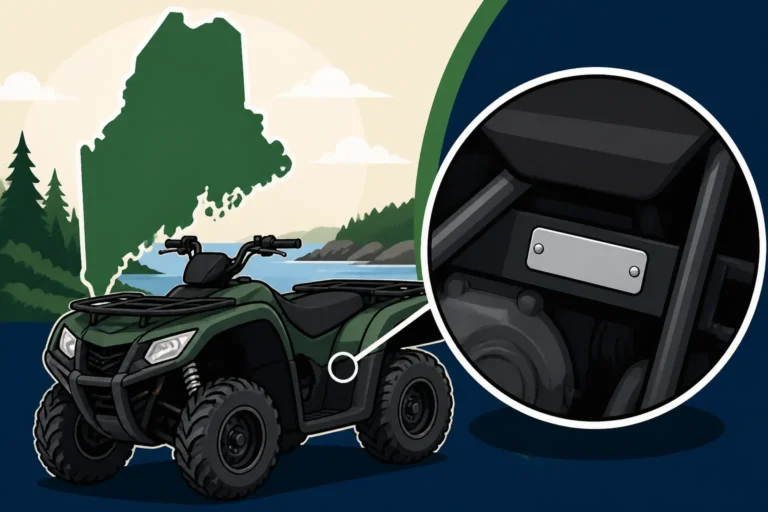
- Vehicle Identification Number (VIN): This is perhaps the most critical piece of identification. The VIN is a unique 17-character code stamped on the frame of the ATV. It's like a fingerprint for the machine. Double-check that the VIN listed on the agreement matches the VIN on the physical ATV precisely. A helpful resource for understanding this is [VIN Verification Before Registering in Maine].
- Odometer/Hour Meter Reading: If your ATV has an odometer or hour meter, record the reading at the time of sale. This provides a snapshot of the machine's usage and can be important for later disputes about condition or wear.
- Accessories Included: List any specific accessories that are part of the sale (e.g., plow, winch, trailer hitch, spare tires). If something isn't listed, assume it's not included.
The Financials: Price, Payment, and Taxes
Money changes hands, so this section needs to be crystal clear. Ambiguity here is a recipe for disputes.
- Agreed-Upon Purchase Price: State the final sale price in both numerical and written form (e.g., "$5,000.00 (Five Thousand U.S. Dollars)"). This prevents any misinterpretation of figures.
- Payment Method: Specify how the payment will be made. Will it be cash, a certified check, a money order, or a bank transfer? If a deposit was paid earlier, clearly indicate the deposit amount, the date it was received, and the remaining balance due at the time of sale.
- Maine Sales Tax Responsibility: This is a big one in Maine, as we have sales tax on private ATV sales. The agreement should clearly state who is responsible for paying the Maine sales tax. Typically, the buyer is responsible, but acknowledging it in the agreement is important. For a deeper dive, check out [Maine Sales Tax on an ATV Purchase]. A good template, perhaps from LawDepot, will often have a section for this.
Condition and "As-Is" Clauses
This is where you manage expectations about the ATV's current state. Most private ATV sales are "as-is," meaning the buyer accepts the machine with all its existing faults, whether known or unknown.
- Description of Condition: While you're selling "as-is," it's still good practice to offer a brief, honest description of the ATV's general condition (e.g., "Good working order, minor cosmetic scratches consistent with age and use," or "Needs carburetor adjustment"). This doesn't create a warranty, but shows good faith.
- "As-Is, Where-Is" Clause: This is critical for sellers. It explicitly states that the buyer is purchasing the ATV in its current condition, with no warranties, express or implied, from the seller. This means the seller isn't responsible for any repairs or issues that arise after the sale. A typical clause might read: "The Buyer acknowledges that they have inspected the ATV to their satisfaction and are purchasing it in 'as-is, where-is' condition, with no warranties or guarantees from the Seller, either express or implied."
- Buyer Inspection Acknowledgment: Include a line where the buyer confirms they've had the opportunity to inspect the ATV or have waived that right. This is especially important for [Pre-Purchase Inspection Before You Buy a Quad].
Signatures and Witnessing
The signatures transform the agreement from a draft into a legally binding document.
- Signatures of Both Parties: Both the buyer and the seller must sign the agreement. Print their names clearly below their signatures.
- Date of Signatures: Alongside each signature, include the date it was signed.
- Witness Signatures (Optional but Recommended): While not always legally required, having one or two impartial witnesses sign and date the agreement can add an extra layer of validity and security, especially if a dispute arises later. They attest that the parties indeed signed the document.
Beyond the Basics: Important Considerations for a Maine ATV Sale
A basic sales agreement covers the essentials, but for peace of mind, there are other aspects you should consider when buying or selling an ATV in Maine. These considerations can prevent future headaches and ensure a smooth transfer of ownership.
Proof of Ownership and History
In Maine, ATVs are not titled like cars. This means the paper trail for ownership is different and relies heavily on prior registration documents and bills of sale.
- Previous Registration: As a seller, providing your most recent ATV registration card is usually the best proof that you legally owned the machine. As a buyer, you should absolutely ask for this. This is what [What Maine Town Clerks Ask For at the Counter] will typically request.
- Prior Bill of Sale: If you, as the seller, bought the ATV from a private party, providing that original bill of sale can further strengthen the chain of ownership. For a new buyer, seeing this history is incredibly reassuring. You can find more details on what should be in these documents in [Maine ATV Bill of Sale: What to Include].
- No Maine Title: Emphasize that Maine does not title ATVs. This prevents confusion for buyers from states where titles are standard. This is a crucial distinction covered in [Does Maine Title ATVs?]. It reinforces why a solid bill of sale is so important.
- Lien Check: While Maine doesn't title ATVs, there could still be a lien on the machine if the previous owner financed it. As a buyer, you might want to consider doing a basic lien search, especially for more expensive machines. The seller should ideally provide a statement that the ATV is free and clear of all liens.
Inspecting the ATV Before the Handshake
This section is primarily for the buyer, but sellers should be aware that a buyer's due diligence is part of a transparent process.
- Thorough Physical Inspection: As a buyer, never, ever buy an ATV sight unseen or without a thorough inspection. Start it up, listen to the engine, check the lights, brakes, tires, and suspension. Look for leaks, cracks, or signs of extensive damage or amateur repairs.
- Test Ride (if possible and safe): If the seller allows, a short test ride can reveal a lot about how the machine performs under power. Always prioritize safety during any test ride.
- Bring a Knowledgeable Friend: If you're not mechanically inclined, bring a friend who knows ATVs. A second set of eyes (and ears) can spot things you might miss.
- VIN Cross-Reference: Again, verify that the VIN on the machine matches any provided paperwork. This helps confirm you're buying the correct ATV and can also be a red flag for a potentially stolen machine.
Navigating the Sales Tax in Maine
Sales tax is often a point of confusion in private sales, but it's straightforward in Maine.
- Buyer's Responsibility: In almost all private sales in Maine, the buyer is responsible for paying the sales tax directly to the Bureau of Parks and Lands (BPL) when they go to register the ATV. The seller does not collect the sales tax.
- How it's Calculated: The sales tax is calculated on the agreed-upon purchase price as stated in your bill of sale. If the BPL or town clerk believes the stated price is significantly undervalued, they may refer to standard valuation guides, so be honest in your agreement.
- Documentation for Registration: The written sale agreement or bill of sale is the document the town office or BPL will use to assess the sales tax when you register. Without it, you can't register the ATV. This is a key part of [Maine ATV Registration After a Private Sale].
| Element | Buyer's Benefit | Seller's Benefit | Importance Level |
|---|---|---|---|
| Full Names/Addresses | Identifies responsible party for issues/follow-up | Identifies buyer, proves transfer | High |
| Date of Agreement | Establishes purchase date, warranty start (if any) | Limits post-sale liability timeframe | High |
| VIN | Confirms machine identity, aids registration | Proves which specific machine was sold | Critical |
| Purchase Price | Clear cost, basis for sales tax | Confirms amount received, prevents disputes | High |
| Payment Method | Clear transaction record | Proof of payment type, no "non-payment" claims | Medium |
| "As-Is" Clause | Acknowledges inspection, limits expectations | Limits liability for future issues | High |
| Signatures/Witnesses | Legally binding, verifiable consent | Legally binding, proof of mutual agreement | Critical |
| Prev. Registration | Confirms seller ownership history | Demonstrates clear ownership chain | High |
| Odometer/Hours | Documents usage at time of sale | Reference for disputes about wear and tear | Medium |
Finalizing the Deal and What Comes Next
You've agreed on the price, inspected the machine, and now it's time to make it official. The last steps in creating and using your sale agreement are just as important as the details within it.
Making Copies for Both Parties
This might sound like a minor detail, but it's critical. Once the agreement is signed by both the buyer and the seller (and any witnesses), make sure each party receives a complete, original signed copy.
- Proof for Both: The buyer needs their copy to serve as proof of purchase for registration and in case of any future disputes. The seller needs their copy as proof of sale to protect against future liability or claims related to the ATV.
- Digital Backups: Consider scanning your signed agreement and saving a digital copy in a secure location. This adds another layer of protection in case the paper copy is lost or damaged. You could even use a service like LawDepot to store your documents securely.
The Buyer's Next Steps: Registration
Once you, as the buyer, have your new ATV and the signed sale agreement in hand, your immediate next step is to register it.
- Visit Your Town Office or IF&W: You'll need to head to your local town office or visit the Maine Department of Inland Fisheries & Wildlife (IF&W) website to complete the registration process. This is outlined further in resources like [First-Time Maine ATV Registration at the Town Office].
- Bring the Agreement: You will need your signed sale agreement (bill of sale) to prove ownership and to pay the sales tax. Without this document, you won't be able to register the ATV.
- Get Your Stickers: After successfully registering, you'll receive a registration certificate and decals that need to be affixed to your ATV before you can legally ride it on designated trails or public ways in Maine. Remember, riding an unregistered ATV can lead to [Penalties for Riding an Unregistered ATV in Maine].
A carefully crafted ATV sale agreement is more than just paperwork; it's a foundation of trust and legal protection for both parties. It ensures that everyone is on the same page, minimizes misunderstandings, and provides a clear record should any questions arise down the trail. Don't skip this crucial step – it's the smartest move you can make when buying or selling an ATV in Maine.
Disclaimer
This article is for general informational purposes only and does not constitute professional advice. Laws, prices and regulations vary by location and change over time. Consult a qualified professional for guidance on your specific situation.