Inheriting an ATV in Maine
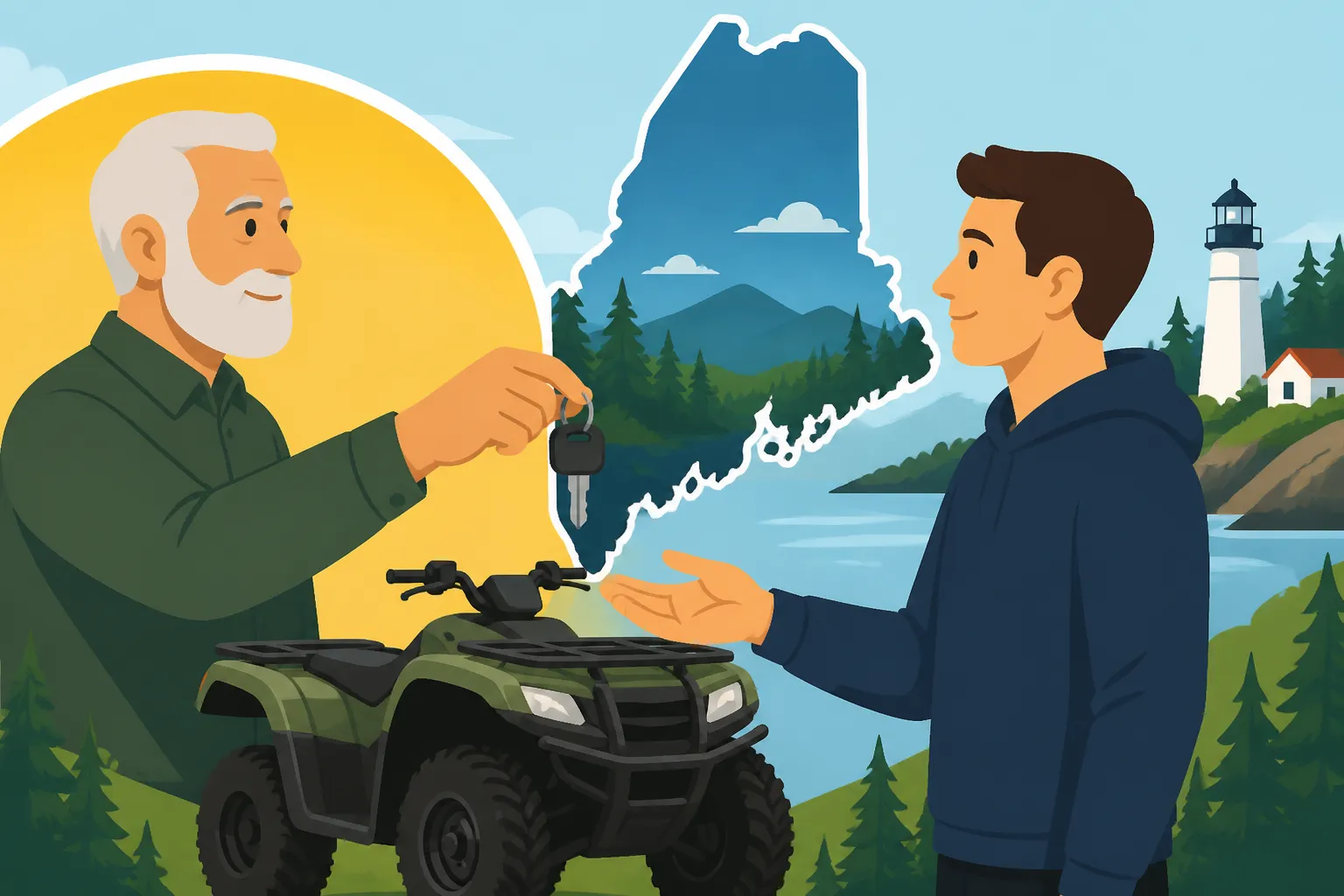
Inheriting an ATV in Maine can bring a mix of emotions. On one hand, it might be a cherished memory of a loved one who enjoyed the trails, a way to connect with their passion. On the other hand, dealing with an estate is already a heavy burden, and figuring out the practicalities of registering or selling a machine can feel overwhelming. This guide is here to walk you through the process, making sense of the legal steps, paperwork, and decisions you'll need to make regarding an inherited ATV in the Pine Tree State.
The Emotional Weight of Inheriting an ATV
When someone close to you passes away, the grief can be all-consuming. Amidst that emotional storm, you're often tasked with a mountain of practical decisions and paperwork. Finding an ATV among their possessions can be a poignant reminder of shared rides or adventures they loved, but it also adds another item to an already lengthy to-do list. It’s completely normal to feel conflicted – a mix of sentimentality, responsibility, and perhaps even a bit of frustration at the added complexity.
Navigating Grief While Handling Logistics
It's easy to want to push aside logistical tasks when your heart is hurting. You might look at that ATV and see more than just a machine; you see a father’s pride, a mother’s joy, or a friend’s adventurous spirit. That makes approaching the paperwork not just a chore, but an emotionally charged experience. Give yourself grace during this time. There's no rush to tackle everything immediately. However, at some point, these practicalities do need attention to ensure the machine is either properly transferred, sold, or maintained in accordance with Maine's regulations. Delaying too long can sometimes lead to complications down the road, so finding a balance between processing your grief and taking small, manageable steps is key.
Deciding What Comes Next for the Machine
Once you’ve had a moment to breathe, the big question looms: what do you do with the ATV? For some, keeping the machine is a no-brainer – it’s a tangible link to their loved one, a way to carry on their legacy on the trails. They might envision themselves riding it, creating new memories while honoring old ones. For others, an ATV might not fit their lifestyle, or perhaps they already have their own. In such cases, selling it might be the most practical option to help settle the estate or simply to ensure the machine goes to a home where it will be used and enjoyed. Then there are situations where the ATV might be old, in disrepair, or simply not worth the effort of registering or selling, leading to considerations of donation or even [Scrapping a Dead ATV]. Each path has its own set of requirements, so figuring out your intention for the ATV is a crucial first step.
Understanding Maine's ATV Inheritance Process
Dealing with an inherited ATV, just like any other asset, falls under the umbrella of estate administration. This process can vary significantly depending on whether the deceased had a will and the overall complexity of their estate. It’s not just about getting a new sticker; it's about legally transferring ownership from the deceased's estate to a new individual.
The Role of Probate and the Estate
In Maine, if the deceased owned assets solely in their name, their estate might need to go through probate. Probate is the legal process of proving a will (if one exists), appointing a personal representative (also called an executor), identifying and inventorying the deceased's property, paying debts and taxes, and distributing the remaining property to the heirs.
If there's a will, it typically names an executor who is responsible for carrying out the deceased's wishes, including the distribution of assets like an ATV. The will specifies who inherits what. If there's no will (this is called dying "intestate"), Maine law dictates how the assets are distributed, usually starting with spouses and children. In this scenario, the court will appoint an administrator to manage the estate. Either way, the personal representative or administrator will need "Letters of Testamentary" (if there's a will) or "Letters of Administration" (if there's no will) from the probate court. These official documents prove they have the legal authority to act on behalf of the estate, which is absolutely critical when you go to transfer or sell the ATV. Legal services, like those offered by LawDepot, can help with drafting these crucial documents, ensuring your wishes are clear for all your assets, not just your ATV.
Essential Documents You'll Need
Gathering the right paperwork is often the biggest hurdle in any inheritance process. For an ATV, you'll need a specific set of documents to prove your authority to act and to demonstrate a clear chain of ownership.
Here's a breakdown of what you'll typically need:
- Certified Death Certificate: This is the foundational document, proving the original owner is deceased. You'll need an official, certified copy.
- The Original Will (if one exists): If the ATV is specifically bequeathed to you in the will, this document is paramount.
- Letters of Testamentary or Letters of Administration: As mentioned, these court-issued documents empower the executor or administrator to manage and distribute the estate's assets, including the ATV. You absolutely need this to prove you have the legal right to transfer the machine.
- Proof of Ownership from the Deceased: This could be the deceased’s last valid [What It Takes to Register an ATV in Maine] registration certificate, a bill of sale from when they purchased it, or any other official document that demonstrates their ownership. Remember, [Does Maine Title ATVs?] are not issued in Maine, so the registration certificate is the primary document showing ownership.
- Your Valid Photo Identification: For the person inheriting or acting as the executor, a driver's license or state ID is required.
Make sure you have all these documents in order before you approach any agency or potential buyer, as they will be required for any transaction.
Dealing with an ATV Without Clear Paperwork
It's a frustrating but common scenario: you've inherited an ATV, but the deceased owner either never properly registered it, lost the original bill of sale, or the paperwork is simply nowhere to be found. This can add a layer of stress to an already difficult time. However, it's not an insurmountable obstacle.
If you find yourself in this situation, the process might require a bit more legwork. You'll still need the death certificate and letters of testamentary/administration to prove your legal right to the machine. For proof of ownership, you might need to try a few avenues. This could involve contacting the dealer where the ATV was originally purchased (if known) to see if they have records, or even checking with Maine IF&W if the machine had been registered in the past. If all else fails, Maine does have a process for [Maine ATV Registration for a Machine Without Paperwork], which usually involves submitting an affidavit of ownership under penalty of perjury, detailing how you came into possession of the machine and why other documentation is unavailable. This is a situation where being transparent and providing as much supporting detail as possible is crucial to getting the ATV registered in your name.
Registering the Inherited ATV in Your Name
Once you've navigated the estate process and gathered all the necessary documents, the final step for keeping the ATV is to register it in your own name. This is where you officially become the recognized operator in the eyes of the state.
Steps for the New Owner or Executor
The actual registration process itself is quite similar to any other ATV registration in Maine, with the added step of proving inheritance. You can typically handle this at your local [Maine Town Offices That Register ATVs] that performs IF&W registrations, or directly through the Maine Department of Inland Fisheries & Wildlife (IF&W).
Here's a general outline of the steps:
- Complete the Registration Application: You'll need to fill out a standard ATV registration form. These are available at town offices or on the IF&W website.
- Present Required Documentation: You'll bring all the documents you've carefully gathered:
- The certified death certificate.
- The Letters of Testamentary or Letters of Administration, verifying your authority.
- The deceased's previous registration certificate or other proof of ownership.
- Your own valid photo ID.
- Pay the Registration Fee: As an inheritor, you'll pay the standard [Maine Resident ATV Registration Fee] or [Maine Non-Resident Annual ATV Registration] fee, depending on your residency. Maine IF&W or the town clerk will be able to provide the current figures.
- Receive Your Registration Certificate and Stickers: Once processed, you'll receive a new registration certificate with your name as the owner and your new registration decals. You'll be ready to legally ride the trails.
The staff at the town office or IF&W can guide you through any specific questions regarding your unique situation, especially if there are complexities in the estate.
What About Sales Tax on an Inherited ATV?
A common concern when transferring ownership is whether sales tax will be assessed. The good news is that in Maine, when an ATV is directly inherited from an estate, it is generally exempt from sales tax. This is because the transfer is not considered a "sale" in the traditional sense, but rather a distribution of assets as part of an inheritance.
However, it's always wise to confirm this directly with the Maine Department of Inland Fisheries & Wildlife or the town clerk when you go to register. While direct inheritance is typically exempt, if you were to then sell the ATV to another private party, the buyer would be responsible for paying [Maine Sales Tax on an ATV Purchase] on that subsequent transaction. It's important to understand the distinction between inheriting an asset and selling it later on.
Temporary Riding and Stickers
After you've successfully completed the registration process, you'll walk away with a temporary registration certificate. This document is your immediate proof of registration and allows you to start riding right away. It's a huge relief for many who are eager to get out on the trails or perhaps continue a tradition their loved one cherished.
The physical registration stickers, which must be affixed to the ATV, will typically arrive by mail in a week or two. While you're waiting for them, make sure you carry your temporary registration certificate with you whenever you ride. Law enforcement officers, such as Maine Game Wardens, recognize the temporary certificate as valid proof that your ATV is legally registered. This means you don't have to wait for the physical decals to arrive before enjoying the machine. Just remember to put the [Maine ATV Registration Stickers and When They Arrive] on your machine as soon as they show up in your mailbox.
Options Beyond Keeping the ATV
Inheriting an ATV doesn't always mean you'll keep it. For various reasons, you might decide that the best course of action for you and the estate is to sell the machine, donate it, or even responsibly dispose of it. Each of these paths requires careful consideration and adherence to certain procedures.
Selling the Inherited ATV
If you decide to sell the inherited ATV, you'll need to ensure the sale is handled properly, both to protect yourself as the seller and to provide the buyer with the necessary paperwork for their own registration. The key here is establishing a clear chain of ownership from the deceased's estate to the buyer.
Here's how to approach it:
- Establish Your Authority: Just like registering it for yourself, you'll need the certified death certificate and the Letters of Testamentary/Administration to prove you have the legal right to sell assets from the estate. These documents confirm that the sale is legitimate.
- Transfer Ownership to the Estate (if necessary): In some cases, especially if the deceased's ownership paperwork was scant, you might first need to register the ATV in the estate's name (or your name as executor) to formalize the estate's ownership. However, often, simply having the Letters of Testamentary/Administration along with the deceased's last registration is sufficient to sell.
- Draft a Bill of Sale: This is crucial. When [Selling an ATV in Maine: What You Sign], you must provide the buyer with a clear and detailed bill of sale. This document should state that you are selling the ATV as the personal representative/executor of the estate, list the deceased owner's name, and include all the standard ATV details (make, model, VIN, purchase price, date of sale). You might even look into online legal resources like LawDepot to help you draft a clear, legally sound document that covers all the necessary bases. This bill of sale, along with the deceased's last registration and a copy of your Letters of Testamentary/Administration, will serve as the buyer's proof of ownership. Make sure to consult [Maine ATV Bill of Sale: What to Include] to ensure you've got all the essential information documented.
- Advise the Buyer on Sales Tax: The buyer will be responsible for paying [Maine Sales Tax on an ATV Purchase] when they register the ATV in their name. Make sure they understand this, as it's a common point of confusion in private sales.
- Inform IF&W: While not strictly required in all cases for private sales, informing IF&W or the town clerk of the sale can help prevent any future confusion related to the previous registration.
| Document | Purpose for Inherited ATV | Needed for Keeping | Needed for Selling |
|---|---|---|---|
| Certified Death Certificate | Proves the original owner is deceased. | Required | Required |
| Will (if applicable) | Directs asset distribution; may name inheritor. | Required | Recommended (for context) |
| Letters of Testamentary/Admin. | Legal authority for executor/administrator to act on behalf of the estate (transfer/sell). | Required | Required |
| Deceased's Proof of Ownership | Previous registration, bill of sale, or other documentation showing the deceased owned the ATV. | Required | Required |
| Your Valid Photo ID | Identification for the new owner or person acting as executor/administrator. | Required | Required |
| New Registration Application | To register the ATV in the inheritor's name. | Required | Not Applicable |
| Bill of Sale (from Estate) | To document the transfer of ownership from the estate to a new buyer. | Not Applicable | Required |
Donating or Disposing of the Machine
Sometimes, keeping or selling an inherited ATV just isn't the right fit. Perhaps the machine is very old, in poor condition, or simply not worth the time and effort of restoration or sale. In such cases, you have other options.
- Donating the ATV: If the ATV is still in working condition, donating it to a charitable organization can be a wonderful way to honor your loved one's memory and potentially gain a tax deduction for the estate. You'll still need your Letters of Testamentary/Administration to legally transfer the machine to the charity, and they will provide you with the necessary documentation for tax purposes. Always check with the charity regarding their donation process and if they accept ATVs.
- Disposing of the Machine: If the ATV is beyond repair or simply not marketable, responsible disposal is the way to go. This typically involves taking it to a salvage yard or a recycling center that handles vehicles. They will often require proof of ownership (like the deceased's last registration and your Letters of Testamentary/Administration) to ensure they are taking possession of the machine legally. It’s important to properly dispose of fluids and parts to minimize environmental impact. If you're looking at [Scrapping a Dead ATV], ensure you follow local guidelines for vehicle disposal.
No matter which path you choose for an inherited ATV in Maine, remember that patience and thorough documentation are your best friends. It’s a process, but with the right steps, you can navigate it successfully.
Disclaimer
This article is for general informational purposes only and does not constitute professional advice. Laws, prices and regulations vary by location and change over time. Consult a qualified professional for guidance on your specific situation.