Registering a Canadian ATV in Maine
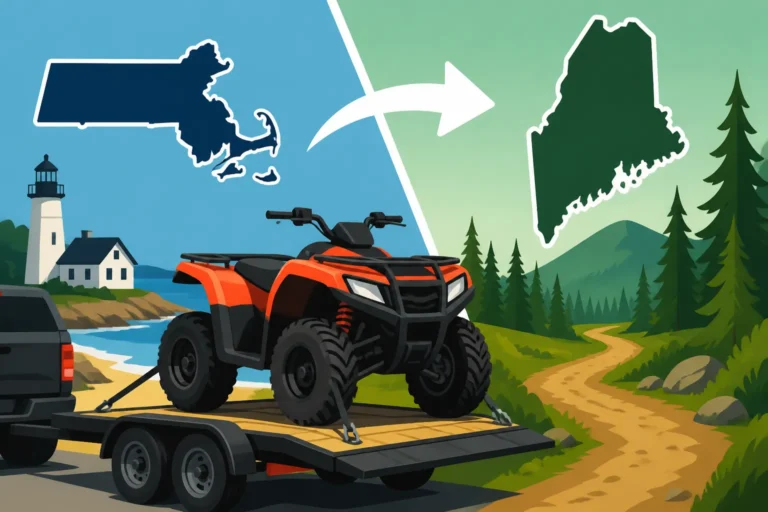
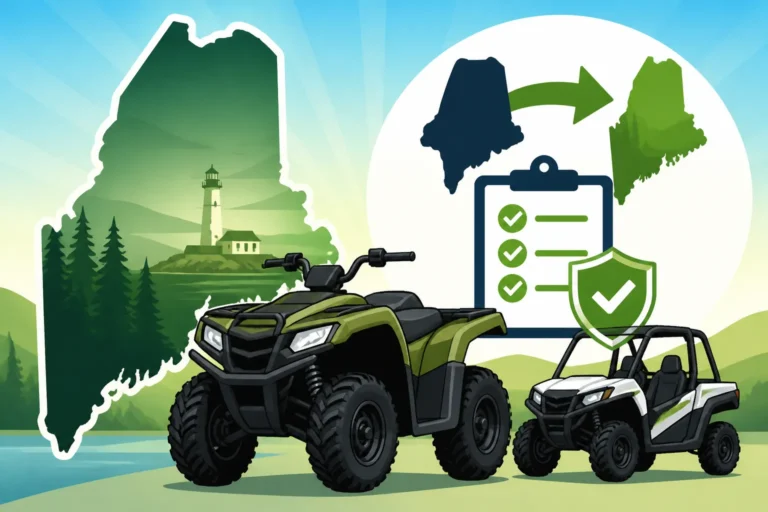
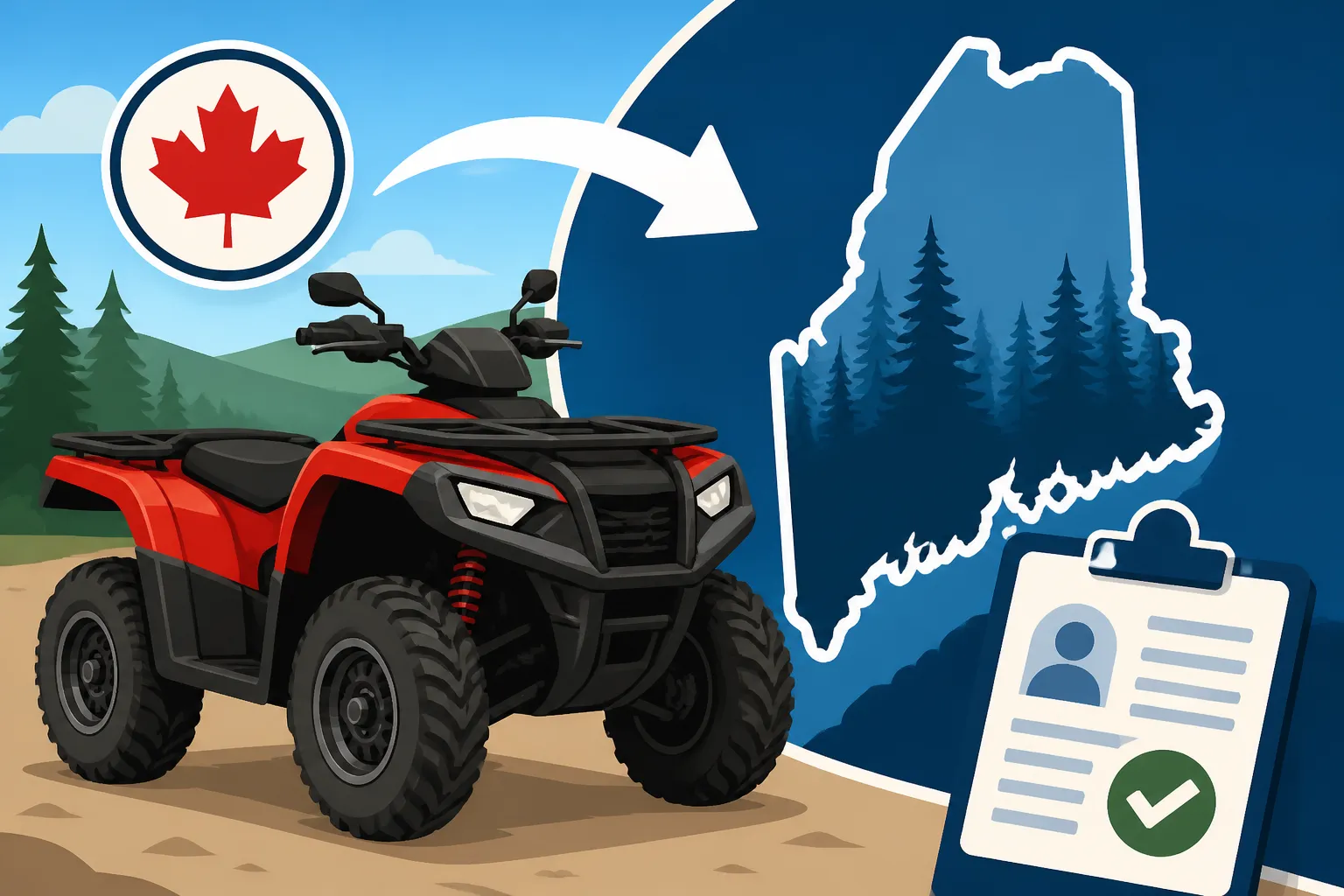
Oh, the allure of a great deal or the convenience of bringing your trusted quad across the border! Many Mainers, or folks looking to explore our incredible trails, might find themselves with an ATV or UTV that started its life in Canada. It sounds simple enough: you bought it, you own it, you want to ride it. But when it comes to getting that Canadian machine registered here in Maine, the process can feel like a labyrinth of forms, regulations, and head-scratching moments. This guide is designed to cut through the confusion, helping you understand exactly what you need to do to get your Canadian-origin ATV legally registered and ready to hit our beautiful woods and trails.
The Unique Hurdles of Bringing a Canadian ATV to Maine
Bringing an ATV from Canada into the U.S. and then registering it in Maine introduces a few extra layers of complexity compared to simply buying one from a private seller down the road. These aren't insurmountable obstacles, but they do require your attention to detail and a bit of patience. Understanding these initial hurdles is key to a smooth registration process.
Customs, Duties, and Import Paperwork
This is often the first, and sometimes most intimidating, step when dealing with a Canadian-bought ATV. The U.S. government has specific requirements for importing vehicles, and an ATV is no exception. You can't just drive it across the border and assume all is clear for state registration; you have to officially import it. This means declaring the vehicle at the border and ensuring all federal import regulations are met. You'll typically need to prove that you've paid any applicable duties and taxes to the U.S. Customs and Border Protection (CBP).
One of the most crucial pieces of documentation here is the HS-7 Declaration form, issued by the Department of Transportation (DOT). This form declares that the vehicle either conforms to U.S. safety standards, is exempt from them, or is being imported for modification to meet them. You might also need an EPA form, proving compliance with emission standards. Without these federal forms, a Maine town clerk can't register your machine, as they need assurance it's legally allowed in the country. It's not uncommon for people to get to the town office only to be sent back to deal with customs first, so make this your absolute priority.
Sales Tax Differences and Use Tax Implications
Here in Maine, we like to ensure that every vehicle purchase, new or used, contributes to the state's coffers through sales tax. When you buy an ATV from a private seller in Maine, you pay sales tax based on the purchase price or NADA book value, whichever is higher, directly to the state when you register. If you buy from a dealer, they'll usually collect it at the point of sale. But what happens if you bought your ATV in Canada and paid Canadian sales tax?
Maine will likely still assess a "use tax" on your purchase. The use tax is essentially the same as sales tax, but it applies to items purchased outside the state (or country, in this case) for use within Maine. Even if you paid provincial sales tax or GST/HST in Canada, Maine will still expect you to pay the difference if our rate is higher, or the full amount if no sales tax was paid. This can often catch people by surprise, so be prepared for this expense when you head to the registration counter. You can learn more about this by checking out [Use Tax When You Bring an ATV Into Maine].
Proving Ownership Beyond a Canadian Bill of Sale
A Canadian bill of sale might be perfectly valid where you bought it, but it might not look familiar to a Maine town clerk. Our clerks are used to seeing specific information on a bill of sale to verify ownership, such as the full names and addresses of buyer and seller, the purchase price, the date of sale, and crucially, the Vehicle Identification Number (VIN) of the machine. If your Canadian bill of sale is handwritten, uses unfamiliar terminology, or is in French (which can be a challenge for some clerks who aren't bilingual), it might cause a delay.
It's vital that the proof of ownership you present is clear, legible, and contains all the necessary information. Clerks need to be able to trace the ownership of the machine to you directly. They're looking for an unbroken chain of custody. If the Canadian paperwork is sparse or hard to understand, it could lead to complications. You may need to supplement it or even create a more standardized document to satisfy Maine's requirements, which we'll discuss more in the next section.
Essential Documents for Your Maine Canadian ATV Registration
Successfully registering your Canadian ATV hinges on having a meticulously prepared set of documents. Think of it like a puzzle: every piece needs to be present and fit perfectly. Without the right paperwork, your trip to the town office will likely result in a polite request to return later with the missing items.
The Importance of a Clear Bill of Sale
Regardless of where you bought your ATV, a robust bill of sale is your absolute cornerstone of ownership proof. For a Maine town clerk, this document is usually the primary way they confirm you are the rightful owner. It needs to clearly state who sold the ATV, who bought it, the date of the transaction, the agreed-upon price, and, most importantly, the complete Vehicle Identification Number (VIN) of the machine. Clerks also appreciate a clear description of the ATV, including make, model, and year.
If your original Canadian bill of sale is handwritten, or if the terms are not clear to an English speaker, it can be a good idea to create a supplemental or translated bill of sale that consolidates all the required information in a format familiar to Maine officials. Websites like LawDepot offer customizable bill of sale templates that you can use to ensure all the essential details are present and easy to read. Even if you paid in Canadian dollars, you'll need to indicate the equivalent U.S. dollar amount for Maine's tax calculations. For more detail, refer to [Maine ATV Bill of Sale: What to Include].
Customs Documentation and Import Statements
Beyond the bill of sale, the specific customs forms are what truly differentiate a Canadian ATV registration from a domestic one. When you bring your ATV across the border, you must properly declare it to U.S. Customs and Border Protection. The most important document you'll receive (or should have obtained) is the HS-7 Declaration form. This form certifies that your ATV meets, or is exempt from, federal motor vehicle safety standards. Similarly, you'll likely need an EPA form (Environmental Protection Agency) to show that the ATV complies with U.S. emissions standards.
These forms are not optional; they are critical proof that your vehicle has legally entered the United States and meets federal regulations. Without them, the State of Maine cannot register your ATV because it would be a violation of federal law to operate a non-compliant or illegally imported vehicle on public lands. Keep these documents safe and easily accessible, as they will be thoroughly reviewed by the registration clerk.
VIN Verification and Prior Registration History
Every ATV has a unique Vehicle Identification Number (VIN), a 17-character code that's like its fingerprint. When registering any ATV in Maine, the clerk will verify this VIN. For a Canadian machine, it's particularly important to ensure the VIN is clearly visible on the ATV itself and matches exactly across all your documentation: the bill of sale, customs forms, and any previous Canadian registration. Sometimes, older Canadian machines might have slightly different VIN formats or locations than what clerks are accustomed to seeing on U.S. machines, so be prepared to point it out. You can find general guidance on VIN locations in resources like [Where the VIN Is Stamped on a Quad].
While not always strictly required for a first-time Maine registration of an imported machine, bringing any previous Canadian registration papers can be very helpful. It provides an additional layer of ownership history and helps confirm the VIN. If you're buying a used Canadian ATV, it's also a good idea to perform a VIN check to ensure it hasn't been reported stolen in either Canada or the U.S. There are various online services that can help with this, giving you peace of mind before you make the purchase. Checking out [How to Check If a Used ATV Is Stolen] can provide more tips.
Step-by-Step: Registering Your Canadian Quad in Maine
Once you've cleared the federal hurdles and gathered all your paperwork, the actual registration process at a Maine town office becomes much more manageable. Here’s a breakdown of what to expect and how to prepare for your visit.
Initial Steps: Customs Clearance and Paperwork Prep
Before you even think about visiting your local town office, the absolute first step is ensuring your ATV has completely and legally cleared U.S. Customs. This means you must have your HS-7 and EPA forms in hand, along with any documentation proving duties were paid (if applicable). Without these federal documents, your journey to the town office will be a short one. The clerk simply cannot proceed with registration for a vehicle that hasn't been properly imported.
Once your customs paperwork is in order, meticulously organize all your documents. This includes your clear bill of sale (consider using a template from LawDepot to organize the information if your Canadian one is sparse), the HS-7 and EPA forms, any previous Canadian registration, and your Maine identification if you're a resident. It's often helpful to make copies of everything, keeping the originals safe. Having everything neatly compiled and ready to present will make the process much smoother for both you and the town clerk.
Your Visit to the Maine Town Office
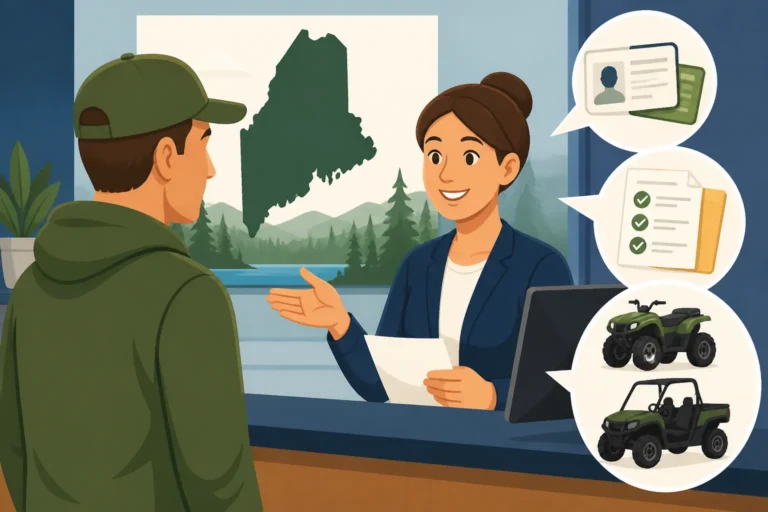
For a first-time registration of an imported Canadian ATV, you must go in person to a Maine town office or to the Bureau of Parks and Lands office in an unorganized territory. Unlike renewals, first-time registrations, especially for machines with unique import considerations, cannot be done online. Be prepared for the clerk to take a little extra time with your paperwork, as they'll need to carefully review the customs forms and verify the VIN. [First-Time Maine ATV Registration at the Town Office] gives you a good overview of the general process.
When you arrive, the clerk will ask for your proof of ownership (the bill of sale), your customs declaration forms, and proof of your Maine residency if you are registering as a resident. They will also calculate and collect any applicable Maine use tax based on the purchase price. Be ready to pay this tax, as well as the registration fee. The clerk will likely ask to see the physical VIN on the ATV itself if you brought it with you, or they may ask you to verify its location. You can get more insight into what they usually ask for by reviewing [What Maine Town Clerks Ask For at the Counter].
What Happens After Registration
If all your paperwork is in order and you've paid the necessary fees and taxes, the town clerk will issue you a temporary registration permit right on the spot. This permit is your golden ticket, allowing you to legally ride your ATV immediately. It typically includes your registration number and validation sticker information. It's wise to carry this temporary permit with you whenever you ride until your official stickers arrive in the mail. Many riders appreciate the immediate validation, as explained in [Maine ATV Registration Confirmation for Immediate Riding].
Your permanent registration decals (stickers) and card will then be mailed to you by the Maine Department of Inland Fisheries & Wildlife (IF&W). This usually takes a week or two, but exact times can vary. Once you receive them, remember to apply the decals to your ATV in the designated locations. You can find guidance on this in [Where Maine ATV Stickers Go and When They Arrive]. In the meantime, rest assured that you can ride with your temporary permit, understanding the rules for [Riding Before Your Stickers Arrive].
Special Cases for Canadian Riders and Short-Term Visits
Not every Canadian ATV owner is a Maine resident or plans a permanent move. Many Canadian friends visit our state, sometimes bringing their ATVs for a few days of trail riding. Maine has specific provisions for these scenarios, but it's crucial to understand the limitations.
The Three-Day Canadian Exception
Maine has a special arrangement that allows residents of New Brunswick and Quebec to operate their ATVs in Maine for up to three days without requiring a Maine registration. This is a courtesy that recognizes the close relationship and shared trail systems across the border. However, this is a very strict "three-day" rule. It's not three days per visit, but three days total for the calendar year. Any riding beyond that three-day limit, or if you are from any other Canadian province, requires a full Maine non-resident registration.
This exception is designed for short excursions, perhaps a day trip across the border for lunch or a quick overnight stay. It's not intended for extended vacations or for residents of other Canadian provinces. If you plan to spend more than a long weekend exploring Maine's vast trail network, you'll definitely need to look at our non-resident registration options. You can read more about this specific rule in [The Three-Day Canadian Exception in Maine].
Non-Resident Annual or Seven-Day Registration
If you're a Canadian visitor from outside New Brunswick or Quebec, or if your visit from those provinces extends beyond the three-day grace period, you'll need to purchase a Maine non-resident ATV registration. Maine offers two primary options for non-residents: a seven-day registration and an annual registration. The [Maine Non-Resident Seven-Day ATV Registration] is perfect for a week-long trip, offering flexibility without the commitment of a full year. If you plan multiple visits throughout the year or a longer stay, the [Maine Non-Resident Annual ATV Registration] might be more cost-effective.
It's important to note that while non-resident renewals can often be done online, the initial registration of an ATV that's being brought into Maine from Canada still generally requires an in-person visit if it's the first time that specific machine is being put into the Maine system. After that initial setup, future non-resident renewals would be much simpler. Always be sure to check the most current regulations, as details can sometimes change.
Insurance Requirements for Canadian Machines
While Maine does not currently mandate liability insurance for ATVs operating on our trail system (though it is highly recommended for your own protection!), it's a good practice to ensure your Canadian ATV is adequately insured when riding in the U.S. Your Canadian insurance policy may or may not provide coverage for incidents that occur south of the border. It's crucial to contact your Canadian insurance provider before your trip to confirm your coverage.
If your Canadian policy doesn't extend to the U.S., or if you want additional peace of mind, you might consider purchasing a temporary U.S. insurance policy. While Maine doesn't require it for registration, having appropriate coverage can protect you from significant financial liability in the event of an accident. This becomes even more critical if you're using your ATV on designated road sections or access routes, where risks with other vehicles might increase. For general information on Maine's approach to ATV insurance, check out [Maine ATV Insurance and When You Need It].
| Document Category | Required for Maine Resident (US-Bought) | Required for Maine Resident (Canadian-Bought Import) | Required for Canadian Visitor (Non-Resident) |
|---|---|---|---|
| Proof of Ownership | Bill of Sale or Prior Registration | Clear Bill of Sale (U.S. equivalent if needed) | Proof of Canadian ownership (e.g., Canadian registration) |
| Customs Clearance | Not Applicable | HS-7 & EPA Forms (Critical) | Not Applicable (unless importing for permanent stay) |
| Sales/Use Tax | Maine Sales Tax or proof paid | Maine Use Tax (even if Canadian tax paid) | Not Applicable (for visitor registrations) |
| VIN Verification | Yes | Yes (physical verification likely) | Yes |
| Previous Registration | Helpful but not always mandatory | Helpful (Canadian registration) | Yes (Canadian registration) |
| Proof of Residency | Yes (Maine ID) | Yes (Maine ID) | No |
| Registration Type | Resident Annual | Resident Annual | Non-Resident Annual or Seven-Day |
Disclaimer
This article is for general informational purposes only and does not constitute professional advice. Laws, prices and regulations vary by location and change over time. Consult a qualified professional for guidance on your specific situation.