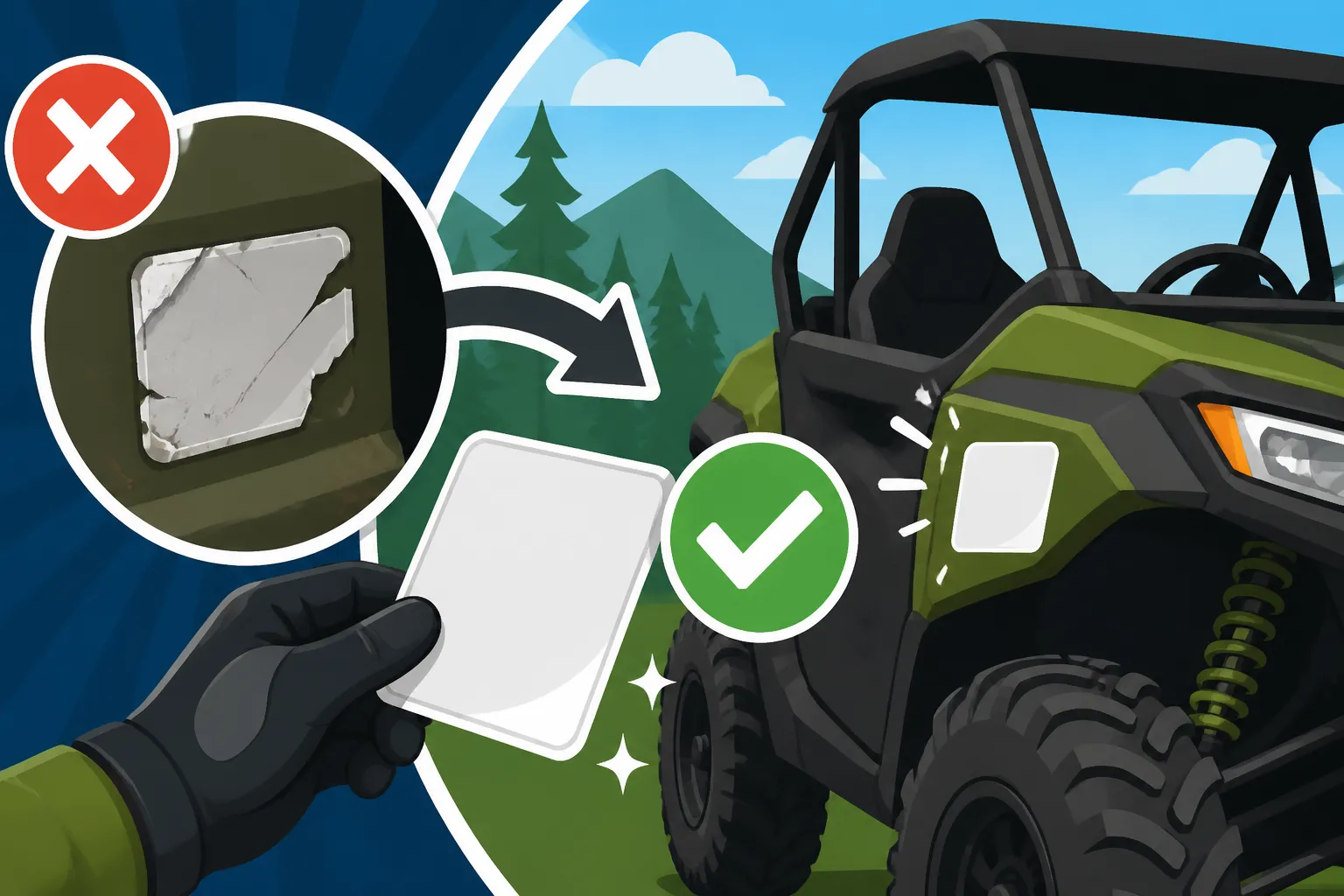
Replacing a Damaged Registration Decal
You finally have a moment to hit the trails, your ATV is gassed up and ready, but then you glance down and see it: your Maine ATV registration decal is peeling, faded, or torn. It’s incredibly frustrating when you’ve done your part to register your machine, only to have the proof of it fall apart. This guide is here to walk you through exactly what to do when your decal decides to give up the ghost, ensuring you can get back on the trails legally and without a headache.
Why Your Decal Might Need Replacing (and Why It's a Pain)
It’s a tough life for an ATV registration decal. These little stickers are out there in the elements, taking a beating so you don't have to carry your paper registration tucked into a ziplock bag every time you ride. But all that exposure means they don't always last as long as we'd like.
Wear and Tear From the Elements
Maine trails can be brutal on equipment, and your decal is no exception. Think about it: sun exposure fades the colors until they're barely legible. Rain, snow, mud, and endless washes can make the adhesive give way, leading to peeling edges that eventually tear. Even just brushing against branches on a tight trail can scuff or rip a corner. It's not always neglect; sometimes, it's just the reality of riding in the beautiful, rugged Maine outdoors. You bought your ATV to ride it, and riding it means exposing it to the very things that cause these decals to deteriorate. It’s a common complaint, and frankly, it just adds another item to our already long pre-ride checklist.
Accidental Damage or Theft
Sometimes, it's not just Mother Nature working against your decal. Accidents happen. Maybe you were loading your ATV, and something scraped across the decal, leaving a big gouge. Perhaps you had a minor fender bender with another machine, and the decal took the brunt of the impact. Or, in rarer, more frustrating cases, someone might try to peel it off or deface it. Even worse, if your ATV was ever stolen and then recovered, the decal might be damaged during the recovery process or by the thief themselves. In such situations, the damage is often more immediate and extensive than simple wear and tear, and you need to address it quickly to ensure your machine is still legal for use. While you hope it never happens, it’s good to know the steps for when it does.
The Importance of a Visible Decal
Having a clearly visible and legible registration decal isn't just a suggestion; it's a requirement in Maine. Think of it as a quick visual cue for law enforcement, like the Maine Warden Service, that your machine is properly registered. If your decal is faded, peeling, or otherwise unreadable, it essentially looks like you're riding an unregistered ATV, even if your paper registration is perfectly valid back home. This can lead to unnecessary stops, questioning, and even potential fines. Wardens need to be able to quickly identify registered machines to ensure everyone is following the rules and that the funds from registrations are being properly collected to support our trails. A compromised decal can make a warden wonder if the machine is [Riding an Unregistered ATV in Maine] or even facing [Penalties for Riding an Unregistered ATV in Maine]. Keeping it fresh and visible prevents a lot of hassle for both you and the wardens out there protecting our natural resources.
The Process of Getting a Replacement Decal
Alright, so you've identified the problem. Now, let's talk about the solution. Getting a replacement decal isn't overly complicated, but it does require a few steps and some specific information. The good news is that Maine has a fairly straightforward process for these situations.
Where to Go for a Replacement
When you need a replacement ATV registration decal, you generally have a couple of primary options, mirroring the initial registration process.
First, your local town office is often the most convenient choice. Many Maine town offices are authorized agents for the Department of Inland Fisheries and Wildlife (IF&W) and can handle ATV registrations and replacements right at the counter. This is fantastic because you can often walk in, explain your situation, and walk out with your replacement documents on the same day. It's a personal touch that many riders appreciate, especially if you have any questions or unique circumstances. If your original registration was done at the town office, starting there is usually a safe bet, as they'll likely have your records on file.
Your second option is to contact the Maine IF&W directly. While you can't typically get a decal printed on the spot if you call them, they can process requests for replacements and mail the new decal to you. This might be a good option if you live in an unorganized territory without a local town office, or if your town office isn't an authorized agent for IF&W registrations. The IF&W also handles online services, though requesting a replacement decal specifically often involves a form or direct contact rather than a standard online renewal interface. For general online tasks, you might refer to the [Maine IF&W Online Registration Walkthrough], but decal replacement often needs a specific request.
It's always a good idea to call ahead to your chosen location (town office or IF&W) to confirm their hours, what they require, and if they can process your specific request, especially if you're traveling a distance.
What Information You'll Need
To get a replacement decal, you'll need to provide some key information to prove ownership and confirm the existing registration details. This helps prevent fraud and ensures the correct decal is issued for your machine.
Here's a breakdown of what you'll typically need:
- Your existing registration number: This is the most crucial piece of information. It's the unique identifier for your ATV's current registration. Even if the decal itself is unreadable, you should have this number on your paper registration certificate. If you don't have your original paper registration either, the process might be more akin to [Replacing a Lost ATV Registration].
- Your name and address: This is to confirm you are the registered owner and where they should send any new documents if mailing.
- The ATV's make, model, and VIN (Vehicle Identification Number): While the registration number is paramount, having your ATV's VIN readily available is always wise. It's the ultimate identifier for your machine and can quickly resolve any discrepancies. You can usually find the VIN stamped on the frame of your ATV.
- Proof of ownership: This usually means your original paper registration certificate, even if it's damaged. If you only have a copy, or if the original is lost, a bill of sale or previous title (if applicable, though Maine doesn't title ATVs) can serve as secondary proof. Having documents handy that you might have prepared with a service like LawDepot, such as a bill of sale from your initial purchase, can be helpful in these situations. It’s about creating a clear paper trail, even for something as simple as a decal replacement.
- A reason for replacement: You'll simply state that the decal is damaged, faded, or peeling. They won't usually ask for a detailed explanation or photos, but being clear helps.
- Identification: Bring your driver's license or other valid photo ID. This helps the clerk verify you are the registered owner.
It’s always best to bring as much documentation as you have, even if you think it might not be strictly necessary. Better to have it and not need it than to need it and not have it!
The Cost and How It Works
Replacing a damaged decal in Maine typically involves a small administrative fee. This fee covers the cost of printing and issuing the new decal and processing your request. It’s usually a nominal amount, far less than a full registration fee, reflecting that you're just getting a replacement for a valid, existing registration.
Expect to pay a small fee. As a blogger, I can't give you current figures, but you should budget for a modest charge. This fee helps cover the administrative costs for the IF&W or the town office. You can usually pay by cash, check, or sometimes credit/debit card, depending on the specific location. Always check with the town office or IF&W beforehand about their accepted payment methods.
Once you’ve provided all the necessary information and paid the fee, the process goes like this:
- Verification: The clerk or IF&W agent will verify your existing registration details against their records.
- Issuance: They will then issue a new registration certificate with your original registration number and a new decal.
- Delivery: If you're at a town office, you'll likely receive your new decal and registration certificate right then and there. If you're going through IF&W by mail or phone, they will send it out, which means you'll need to account for mail delivery time. This is where topics like [Maine ATV Registration Sticker Delivery Time] become relevant, as it can take some time for mail to arrive.
Important Note: The replacement decal will typically bear the original expiration date of your existing registration. You're not getting a new registration period, just a fresh decal for the current period.
Here's a quick summary of what you'll generally need:
| Item | Description | Why It's Needed |
|---|---|---|
| Existing Reg. Number | The unique number on your current, damaged registration/decal | Primary identifier for your active registration. |
| Owner's ID | Driver's License or other valid photo ID | To verify your identity as the registered owner. |
| ATV's VIN | Vehicle Identification Number (usually on frame) | Secondary identifier for your machine, for verification against records. |
| Proof of Ownership | Original registration certificate, bill of sale, or similar document | To confirm you are the rightful owner. |
| Replacement Fee | Small administrative charge (check current amount with issuing agency) | Covers the cost of processing and producing the new decal. |
| Reason for Request | Statement that decal is damaged, faded, peeling, etc. | Simple explanation for why a replacement is needed. |
Remember, getting this done promptly saves you potential headaches down the trail.
Waiting for Your New Decal and Riding Legally
So, you've submitted your request for a new decal. What now? The last thing you want is to be sitting at home, staring out the window at perfect trail weather, because you're worried about riding without that fresh sticker.
What to Do While You Wait
If you’ve applied for your replacement decal by mail or if your town office needed to order it, you’ll naturally have a waiting period. During this time, it's crucial to understand how to stay on the right side of the law.
The most important thing you’ll receive when you get a replacement (either at the counter or by mail) is a temporary confirmation page or receipt. This piece of paper is your golden ticket. It serves as official proof that you have a valid, current registration and that a replacement decal has been requested. You absolutely must carry this document with you every single time you ride your ATV.
Think of it like this: the permanent decal is the visual proof for wardens on the trail, but the temporary confirmation is the definitive proof you show if stopped. It explains why your decal might be missing or unreadable. [Printing a Registration Confirmation Page] is vital, whether it's for an initial registration or a replacement. Put it in a waterproof baggie and keep it in your riding pack or a secure compartment on your ATV. Wardens are very understanding when you have this proof; they know decals get damaged. Without it, however, it becomes much harder to prove you're legal, and you might encounter questions wardens typically ask, as detailed in [Maine Warden Checks and What They Ask].
Avoiding Fines for an Unreadable Decal
The biggest concern for riders with a damaged decal is the risk of a fine. As we discussed, a faded or peeling decal can be interpreted as an unregistered machine. While having applied for a replacement is crucial, what happens if you haven't received that confirmation yet, or if you're riding with a truly unreadable decal?
Here’s the deal:
- Carry your paper registration: Even if your decal is a mess, always carry your actual paper registration certificate. This is your primary proof of registration, and wardens will accept it if your decal is illegible. Again, a waterproof pouch is your friend here.
- Be proactive: If your decal is visibly damaged, don't wait for a warden to point it out. Get the replacement process started as soon as possible. Delaying it only increases your risk.
- Explain the situation calmly: If you are stopped, politely explain that your decal is damaged, that you've applied for a replacement, and present your paper registration and any temporary confirmation you have. Honesty and preparedness go a long way.
- Don't risk riding without any proof: Riding with neither a legible decal nor a valid paper registration (or temporary confirmation) is a recipe for a fine. The penalties for [Fine for an Unregistered ATV in Maine] can be significant, and it’s simply not worth the risk. Wardens are out there to ensure safety and compliance, and they do take unregistered machines seriously because it impacts trail funding and safety for everyone.
The goal is to eliminate any doubt for a warden during a trailside stop. By carrying your documentation, you're doing your part.
Preventing Future Decal Damage
Once you get that shiny new decal, you’ll want to do everything you can to protect it from the elements and extend its lifespan. While some wear is inevitable, there are steps you can take to keep it looking good for longer.
Proper Placement and Application
The initial application of your decal can significantly impact its longevity. The instructions for [Where Maine ATV Stickers Go and When They Arrive] will often include details on proper placement, but here are some general tips:
- Clean Surface: Before applying the decal, ensure the surface of your ATV is thoroughly clean, dry, and free of any dirt, grease, or wax. Alcohol wipes can help ensure a pristine surface for maximum adhesion.
- Smooth Application: Apply the decal slowly and carefully, pressing out any air bubbles as you go. Air bubbles can create weak points where water and grime can get under the sticker, leading to peeling.
- Flat Surface: Choose the flattest, smoothest surface possible on your ATV for placement. Uneven or heavily textured surfaces won't allow the decal to adhere properly.
- Avoid High-Impact Areas: Try to pick a spot that's less likely to get scraped by branches, gear, or your own body while riding. Often, the front fender or a designated area on the side is best.
Regular Cleaning and Maintenance
How you clean and maintain your ATV can also play a big role in your decal's life.
- Gentle Cleaning: When washing your ATV, avoid direct, high-pressure streams from a power washer directly onto the decals. This can lift the edges and force water underneath, weakening the adhesive. Use a gentle stream and sponge instead.
- Avoid Harsh Chemicals: Strong cleaning agents or degreasers can sometimes degrade the decal material or adhesive. Stick to ATV-specific cleaners or mild soap and water around the decal areas.
- Pat Dry: Instead of vigorously scrubbing or wiping over the decal, gently pat it dry or let it air dry to prevent lifting or scratching.
- Inspect Regularly: After each ride, give your decals a quick check. If you notice a tiny corner starting to lift, you might be able to press it back down firmly before it becomes a bigger problem.
Protective Measures and Best Practices
For those who want to go the extra mile, there are some additional protective steps you can consider.
- Clear Protective Film: Some riders apply a layer of clear protective film or tape over their decals. This provides an extra barrier against scuffs, UV rays, and general wear and tear. You can often find automotive-grade clear films that are durable and virtually invisible.
- Storage Considerations: When storing your ATV, especially outdoors, covering it can protect the decals from prolonged sun exposure and harsh weather, which are major culprits of fading and deterioration.
- Avoid Extreme Temperatures: Rapid and extreme temperature changes can affect adhesive. While hard to control, being mindful during storage or transport can help. You'll want to avoid issues like [Decals That Peel Off in Winter Storage].
- Be Mindful of Gear: When strapping down gear or luggage to your ATV, ensure it doesn't rub or put constant pressure on the decal area. This friction can wear down the decal quickly.
By taking these proactive steps, you can significantly extend the life of your Maine ATV registration decal and spend more time enjoying the trails and less time worrying about paperwork. Happy riding!
Disclaimer
This article is for general informational purposes only and does not constitute professional advice. Laws, prices and regulations vary by location and change over time. Consult a qualified professional for guidance on your specific situation.