Gifting an ATV and the Registration That Follows
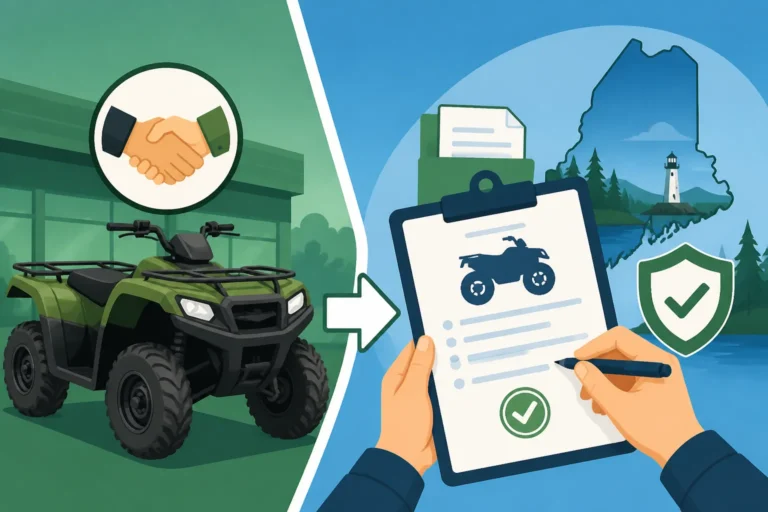
The joy of receiving an ATV or UTV as a gift is something truly special. Maybe it’s a trusted machine passed down from a family member, a surprise for a birthday, or a heartfelt gesture that says, "Let's hit those Maine trails together!" But once the initial excitement settles, a common question often pops up: "How in the world do we handle the paperwork for a gift, especially when it comes to registration? No money changed hands, so what do I need?" This guide will walk you through the specifics of registering a gifted ATV or UTV in Maine, ensuring you have all your ducks in a row so you can hit the trails legally and without a hitch.
The Spirit of Gifting vs. The Letter of the Law
Gifting an ATV or UTV is a wonderful act, but the state of Maine still needs to understand who owns what. Even if the transaction is purely a transfer of affection rather than currency, there are specific steps and documents required to ensure the new owner can legally register and operate the machine. This isn't about complicating generosity; it's about maintaining clear records for safety, enforcement, and the overall integrity of our trail system.
Why "No Money Changed Hands" Still Needs Paperwork
It might seem counterintuitive to create paperwork when no cash, check, or electronic transfer has occurred. After all, if Grandpa just hands over the keys to his trusty quad, isn't that enough? Unfortunately, no. From the perspective of the Maine Inland Fisheries and Wildlife (IF&W) or your local town clerk, they need a clear paper trail to officially recognize the transfer of ownership. This documentation is crucial for several reasons.
First, it establishes who is legally responsible for the ATV. If the machine is involved in an accident, a trespass incident, or simply needs to be identified, clear ownership records are paramount. Without them, it can lead to confusion, disputes, and even legal complications down the line. Imagine trying to report a stolen ATV without any proof that it's actually yours! Secondly, the state tracks ownership for registration purposes. They need to know that the person applying for registration is indeed the legitimate owner of the machine. This prevents fraud and ensures that only those with rightful claim can register and benefit from Maine's trail network.
Skipping documentation can lead to significant headaches. What if you decide to sell the ATV in a few years? The next buyer will absolutely demand proof of your ownership, and a casual "it was a gift" won't suffice. Or, what if the ATV is involved in an incident and you need to provide proof to insurance or law enforcement? Having a solid paper trail from the moment the gift changed hands protects both the giver and the recipient. It simply avoids a lot of unnecessary stress and potential legal tangles down the road, making the enjoyment of your new ATV far more straightforward.
Essential Documents When Gifting an ATV
When you're dealing with a gifted ATV, the paperwork looks a little different than a standard sale, but it's no less important. The core idea is to create documentation that clearly states the machine was transferred from one party to another as a gift, with no monetary exchange. This is especially vital for legal and tax purposes, and for proving ownership to the state of Maine when you go to register.
The absolute cornerstone document for a gifted ATV is a Bill of Sale, even if the "price" listed is $0. This document acts as a formal record of the transfer. It should include the names and addresses of both the giver and the recipient, a detailed description of the ATV (make, model, year, and crucially, the Vehicle Identification Number or VIN), and the date of the transfer. While the amount paid will be zero, it still serves as a legal acknowledgement of the change in ownership. Many people use readily available templates for this, and resources like LawDepot can provide customizable bill of sale forms that you can adapt to reflect a gift, ensuring all necessary legal language is included.
Beyond the zero-dollar Bill of Sale, it's highly recommended to also include a gift affidavit or a simple statement of gift. This separate document, signed by the giver (and often notarized, although not strictly required by Maine for a gift, it adds an extra layer of authenticity), explicitly states that the ATV is being given as a gift, and no money or other valuable consideration has been exchanged. This is especially helpful for clarifying the situation with the Bureau of Motor Vehicles (BMV) or IF&W, particularly regarding sales tax implications, which we’ll cover shortly. It removes any ambiguity about the nature of the transaction. Lastly, the giver should provide any existing title or previous registration documentation they have for the ATV. While Maine does not title ATVs, they will have a previous registration card. This shows a clear chain of ownership and proves the giver actually owned the machine they are gifting.
Navigating Maine's Registration for a Gifted ATV
Once you have your essential ownership documents in hand, the next step is getting that ATV or UTV registered in your name so you can legally ride the incredible network of trails across Maine. The process for a gifted machine is very similar to registering any other ATV for the first time, but with a specific focus on the paperwork that proves the transfer of ownership without a traditional sale price.
Proving Ownership for a Maine ATV Registration
When you walk into your local town office or go through the online registration process with Maine IF&W, the primary goal for them is to ensure you are the rightful owner of the ATV you wish to register. For a gifted machine, this means your documentation needs to clearly establish this transfer. They aren't going to simply take your word for it that your aunt gave it to you; they need something on paper.
The critical piece of documentation here, as mentioned before, is the zero-dollar Bill of Sale or a formal gift affidavit. This document, signed by both the giver and the recipient, serves as the primary proof of ownership transfer. It clearly states the ATV's identifying information, like the VIN, make, model, and year, along with the names and addresses of both parties involved. When the town clerk or IF&W agent reviews your application, they will scrutinize this document to confirm that the ATV has indeed been legally transferred to you. For a deeper dive into what documents are typically accepted, you can refer to our guide on [Proof of Ownership for a Maine ATV Registration].
In addition to the gift paperwork, you should also bring any previous registration card that belonged to the giver. While this card isn't proof of your ownership, it serves as proof of the giver's prior ownership, which helps establish a clear chain of custody for the machine. It verifies that the person who gifted you the ATV was indeed its last registered owner. Without these clear documents—especially the gift-specific Bill of Sale or affidavit—you might encounter delays or difficulties in registering your ATV. The state needs to be certain that the machine isn't stolen or being improperly transferred, and good documentation makes that process smooth and quick.
Sales Tax Implications on a Gifted ATV in Maine
One of the biggest concerns for many people when transferring an ATV, especially as a gift, is sales tax. When you purchase an ATV in Maine, whether new from a dealer or used from a private seller, you are typically responsible for paying Maine sales tax on the purchase price. However, when an ATV is genuinely given as a gift, where absolutely no money or other consideration changes hands, the situation regarding sales tax is usually different.
In Maine, sales tax is generally applied to the "sales price" of an item. If there is no sales price—because the item was a bona fide gift—then there is typically no sales tax levied. This is why having a clear gift affidavit or a Bill of Sale explicitly stating "$0" as the transaction amount is so important. This documentation directly informs the registering agency (either the town office or IF&W) that the transaction was a gift, and therefore, no sales tax is due. It helps avoid any confusion or assumptions that a private sale occurred. Our article on [Maine Sales Tax on an ATV Purchase] provides more context on how sales tax normally applies.
It's important to differentiate a genuine gift from a transaction where a minimal amount of money is exchanged simply to avoid taxes. While Maine officials generally understand and accept legitimate gifts, if there's any suspicion that a nominal amount was listed on a Bill of Sale to skirt tax obligations, they could potentially assess a use tax based on the ATV's fair market value. However, this is quite rare for genuine gifts between individuals. The key is transparency and honesty in your documentation. If it's truly a gift, state it clearly. For situations where you might bring an ATV into Maine from out of state, the rules around [Use Tax When You Bring an ATV Into Maine] would apply, but again, a genuine gift would typically be exempt from this as well if properly documented. Always ensure your paperwork accurately reflects the nature of the transfer to prevent any unexpected tax bills.
Steps for the Recipient to Register the Gift
So, you've got your gifted ATV, all your ownership documents are in order, and you understand the tax implications. Now it's time to actually get that machine registered so you can legally enjoy the trails. The process for registering a gifted ATV in Maine follows the same general steps as any other first-time registration, but with your specific gift paperwork making the ownership clear.
First, gather all your essential documents. This includes the zero-dollar Bill of Sale or gift affidavit, any previous registration card from the giver, and your own proof of residency (like a Maine driver's license or state ID). You'll also need to know the ATV's make, model, year, and its Vehicle Identification Number (VIN). Having everything organized before you begin will make the process much smoother. For a comprehensive list of what a town clerk might ask for, check out [What Maine Town Clerks Ask For at the Counter].
Next, you have two primary options for where to register: your local town office or, in some cases, online through the Maine IF&W portal. For a first-time registration of a machine that hasn't been registered in your name before, the town office is often the most straightforward route, as they can review all your specific gift documentation in person. You'll present your paperwork, fill out the registration application, and pay the [Maine Resident ATV Registration Fee]. The clerk will process everything and issue your new registration certificate and stickers. If you're looking for guidance on an in-person registration, our article [First-Time Maine ATV Registration at the Town Office] offers a detailed walkthrough. While online renewal is common, [Maine IF&W Online Registration Walkthrough] can give you an idea of the information required, though initial registrations often benefit from an in-person visit due to the unique nature of gift documentation.
Common Scenarios and Potential Headaches
Gifting an ATV or UTV, while straightforward with the right paperwork, can sometimes present unique challenges or questions. From navigating registrations for minors to dealing with machines that seem to have no paper trail at all, it's helpful to anticipate these scenarios and know how to address them head-on.
Gifting to a Minor and Whose Name Goes on It
Gifting an ATV to a child or teenager is an incredibly generous gesture, especially if you envision years of trail riding together. However, when the recipient is a minor (under 18 years old in Maine), the question of whose name goes on the registration becomes a little more complex. Legally, a minor cannot enter into contracts or hold ownership of property in the same way an adult can.
Generally, if you're gifting an ATV to a minor, an adult—typically a parent or legal guardian—will need to be the registered owner of the machine. This means the gift documentation (Bill of Sale or affidavit) would list the adult as the recipient. This adult would then be responsible for completing the registration process and ensuring the ATV is legally operated. While the ATV might be for the child, the legal responsibility and ownership typically reside with the adult until the child reaches the age of majority. This is a common practice that ensures a responsible party is accountable for the machine. For more details on this specific situation, our article [Buying an ATV for a Child: Whose Name Registers It] delves into the nuances of registering a youth machine.
Even though the adult is the registered owner, it doesn't mean the child can't ride it. Maine has specific age and safety course requirements for ATV operators, especially minors. The child can still be the primary operator, provided they meet all the state's safety and age guidelines. The adult simply holds the legal ownership and responsibility. This approach ensures compliance with state laws while still allowing the intended recipient—the minor—to enjoy their new gifted ATV under appropriate supervision and legal oversight.
Gifting an ATV Without Any Paperwork
This is a scenario that many long-time ATV owners in Maine might face. Perhaps the machine has been in the family for decades, passed down through generations, and somewhere along the way, all original paperwork—bills of sale, old registrations—have simply vanished. Now you want to gift it to a grandchild, but you have nothing to show for it. This can feel like a dead end, but there are still paths to getting it registered, though it requires a bit more effort.
When you have an ATV without any formal paperwork, your primary challenge is to establish a clear chain of ownership to the satisfaction of the Maine IF&W or your town clerk. The first step is to create a comprehensive Bill of Sale or a detailed gift affidavit, even if you don't have prior documents. This new document should clearly state the names of the giver and recipient, the date of transfer, and all identifiable information about the ATV, including the VIN, make, model, and year. It's crucial that this document explains the situation (e.g., "gifted, no prior paperwork available") and that the giver is attesting to their long-term ownership. Resources like LawDepot can offer templates for a general bill of sale, and you can customize it to clearly state the "gift" nature and lack of prior documents.
In some cases, the town clerk or IF&W might request additional verification. This could involve a VIN verification, where a law enforcement officer or authorized agent confirms the VIN on the machine matches your paperwork. Another option, though less common for a gift, might be a sworn affidavit from the giver, detailing how they came to own the ATV and why no prior paperwork exists. This provides a legal declaration of ownership history. While it can be a bit of a hurdle, it's not insurmountable. It's designed to prevent stolen ATVs from being registered. For a deeper dive into registering an ATV when the paperwork is scarce, check out [Maine ATV Registration for a Machine Without Paperwork]. The key is to provide as much verifiable information as possible and be upfront about the lack of historical documentation.
The Difference Between a Gift and a "Zero-Dollar Sale"
While both a "gift" and a "zero-dollar sale" involve no money changing hands, the legal and practical distinction can be important, especially when it comes to intent and how the transaction is viewed by the state. Understanding this difference ensures you use the correct terminology and documentation when registering your ATV in Maine.
A gift is typically understood as a voluntary transfer of property from one person (the donor) to another (the donee) without any expectation of payment or exchange of value. The intent is purely benevolent. When you gift an ATV, you're not expecting anything in return, and the recipient isn't obligated to provide anything. This pure intention of giving is key to its legal definition and is generally what exempts the transaction from sales tax in Maine. The documentation should clearly reflect this intent, using terms like "gift" or "without consideration." A gift affidavit, as mentioned earlier, is specifically designed to articulate this intent.
A zero-dollar sale, while superficially similar due to the lack of monetary exchange, can sometimes carry a different implication. In some contexts, a "zero-dollar sale" might be used to formally transfer ownership where there is some underlying consideration, even if it's not monetary (e.g., as part of a larger estate transfer, or a trade for services that aren't easily valued). Or, sometimes, people mistakenly use a standard Bill of Sale with "$0" listed, without explicitly stating it's a gift. While often treated similarly by the state for registration purposes, particularly if no money did exchange hands, clarifying the intent as a "gift" removes any potential ambiguity and strengthens the argument for sales tax exemption. Using a specific gift affidavit, or at least a standard Bill of Sale from a source like LawDepot that is clearly marked "Gift" and shows $0 for the sale price, is the safest bet to ensure the state understands the nature of the transfer. This avoids any misinterpretation that might lead to an inquiry about fair market value for tax purposes.
Here's a quick overview of required documents for different gift scenarios:
| Scenario | Required Documents | Key Considerations |
|---|---|---|
| Standard Gift | – Zero-dollar Bill of Sale – Gift Affidavit/Statement of Gift – Giver's previous registration card |
Clearly state "gift" to exempt from sales tax. Notarization optional but recommended for affidavit. |
| Gift to a Minor | – Zero-dollar Bill of Sale (to adult) – Gift Affidavit (to adult) – Giver's previous registration card |
Adult (parent/guardian) must be the registered owner. Child can still operate if safety course and age rules met. |
| Gift with No Prior Paperwork | – Detailed Zero-dollar Bill of Sale/Gift Affidavit – Any existing ownership proof (old photos, mechanic records) |
Requires more diligence to prove chain of ownership. May need VIN verification or additional sworn affidavits. |
| "Zero-Dollar Sale" | – Bill of Sale (marked $0) – Gift Affidavit (if intent is truly a gift) |
Be clear about intent. If truly a gift, use "Gift Affidavit" to ensure sales tax exemption. If not a gift, clarify other consideration if any. |
When you're ready to head to the town office, remember to bring your driver's license or state ID, the completed application form, and all your meticulously prepared gift documents. They'll guide you through the final steps to get your new stickers. [Registering an ATV at Your Maine Town Office] will help you prepare for that visit. Should any issues arise, don't hesitate to ask the clerk for clarification; they're there to help. And remember, riding an unregistered ATV in Maine can lead to penalties, so don't hit the trails until those decals are proudly displayed! For information on potential consequences, you can look at [Penalties for Riding an Unregistered ATV in Maine]. Happy trails!
Disclaimer
This article is for general informational purposes only and does not constitute professional advice. Laws, prices and regulations vary by location and change over time. Consult a qualified professional for guidance on your specific situation.