Insuring a UTV You Use for Snow Removal
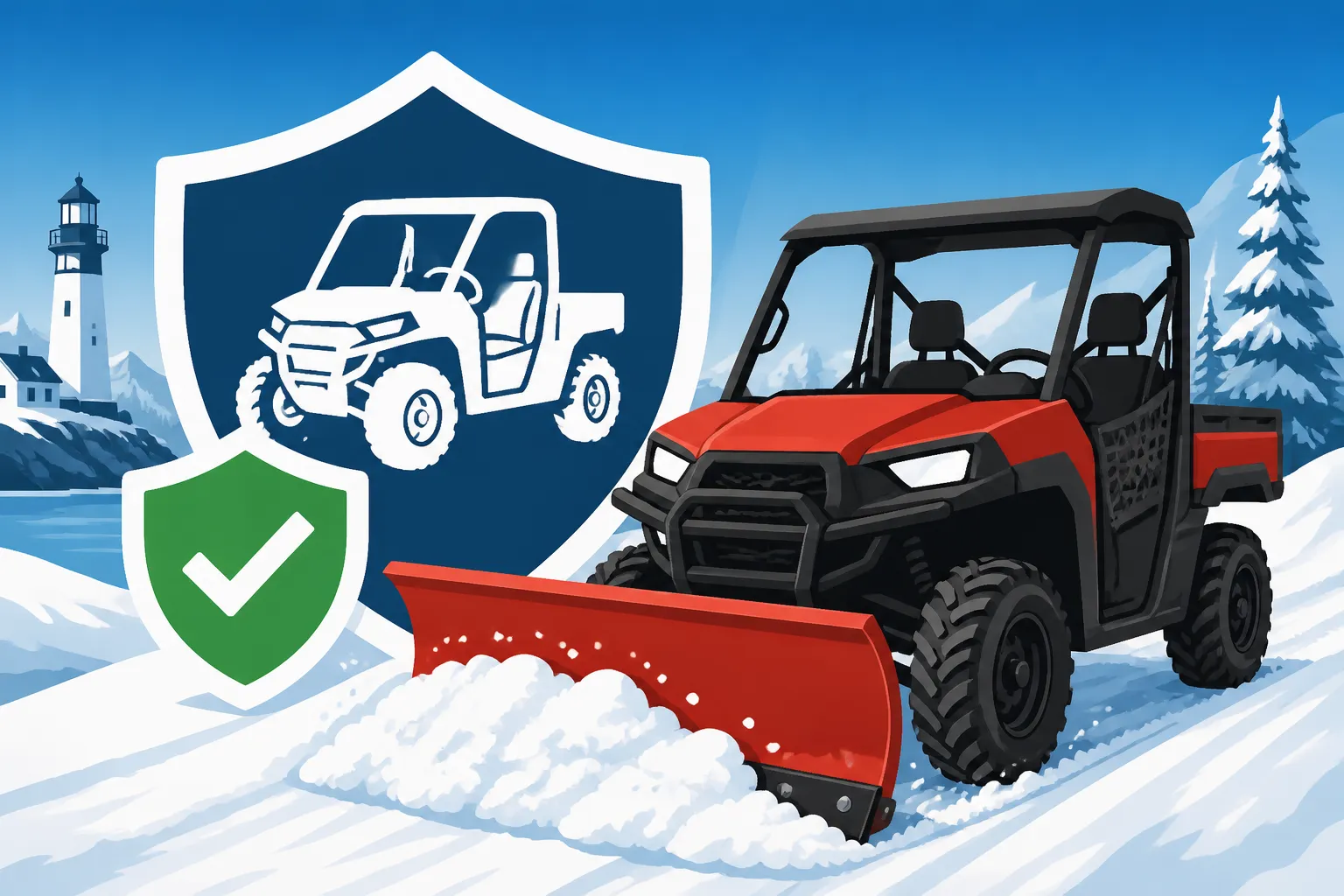
It’s a truly liberating feeling, isn't it? That first heavy snowfall blankets your driveway, and instead of dreading hours with a shovel or waiting for a plowing service, you just fire up your UTV, drop the blade, and make short work of it. Many folks in Maine have discovered the sheer joy and practicality of using a UTV for snow removal, whether it’s for their own sprawling property, a shared camp road, or even helping out neighbors. But amidst the satisfaction of a clean path, a crucial question often gets overlooked: is your UTV properly insured for this kind of work? This guide will cut through the confusion and help you understand how to protect yourself and your valuable machine when it’s pulling plow duty.
Why Your Standard ATV/UTV Insurance Might Not Be Enough for Snow Removal
You might think, "I have insurance on my UTV already, I'm good!" And in many recreational scenarios, you probably are. But pushing snow with a plow attachment introduces a whole new layer of risk that often isn't covered by a basic recreational policy. It's not just about the weather; it's about the nature of the work itself.
The "Work Vehicle" vs. "Recreational Vehicle" Divide
Insurance companies categorize vehicles based on how they're typically used, and the risk associated with that use. A UTV, or utility terrain vehicle, is often bought with the word "utility" in mind, but many standard policies are really geared more towards the "recreational" aspect – tearing up trails, hauling gear to a hunting camp, or cruising scenic routes.
When you attach a plow and start clearing snow, especially in tight spaces, near obstacles, or on someone else's property, your UTV starts looking a lot less like a recreational toy and a lot more like a piece of light commercial equipment. This shift in perceived use can be a red flag for insurers. Think about it: flying down a groomed trail at the camp is one thing; carefully maneuvering a heavy blade around a granite mailbox, a fragile rose bush, or a child's forgotten sled is another entirely. The potential for a mishap goes up significantly, and with it, the potential cost of a claim. You need to make sure your policy understands this distinction.
Understanding Liability Risks with Snow Removal
This is where many UTV owners get into trouble. When you're simply riding on a trail, your primary liability concerns might be another rider or accidental damage to a tree. But with snow removal, you're interacting with people's property, their vehicles, and even their safety in a much more direct way.
Imagine this all-too-common scenario: you’re plowing a neighbor's driveway, feeling good about helping out. Suddenly, you misjudge a snowdrift, and your plow blade clips the corner of their garage, leaving a nasty dent. Or perhaps you're backing up, and you don't see their child’s bicycle hidden under a fresh layer of powder, crushing it. Worse yet, what if someone slips and falls on a patch of ice that you were responsible for clearing, sustaining a serious injury? Without adequate liability coverage tailored for this kind of activity, you could be on the hook for significant repair bills, medical expenses, or even a lawsuit. It’s a harsh reality that helping out can turn into a huge financial burden if you're not properly protected. Your standard [Maine ATV Liability Coverage Limits] might not be enough to cover the increased risks associated with plowing.
Key Insurance Coverages to Look For
So, what exactly do you need to look for in a UTV insurance policy when snow removal is part of its job description? It's about ensuring a robust shield against common plowing-related mishaps, both to your machine and to others.
Property Damage Liability If You Damage Someone Else's Property
This coverage is absolutely critical for anyone using a UTV to plow snow, whether for personal use or for others. If you accidentally cause damage to someone else's property while operating your UTV and plow, this is the coverage that steps in to pay for the repairs.
Consider the classic Maine property scenario: you’re plowing your own long, winding driveway, and you inadvertently take out a section of your stone wall hidden by a fresh drift. Or perhaps you're navigating a friend's narrow access road, and your plow scrapes the side of their parked pickup truck. Maybe you even damage underground sprinklers or an invisible fence buried just beneath the snow. These are not unlikely occurrences when operating heavy machinery in low visibility and often challenging conditions. Without this specific coverage, every "oops" moment could translate directly into hundreds, if not thousands, of dollars out of your own pocket. When you're comparing policies, make sure the limits for property damage liability are substantial enough to cover these kinds of incidents.
Bodily Injury Liability If Someone Else Gets Hurt
While you always hope it never happens, the risk of causing injury to another person increases when you're operating a UTV, especially one equipped for plowing, in residential or shared areas. Bodily injury liability coverage protects you financially if you cause an accident that results in injury or even death to a third party.
Think about a busy winter day: children might be playing nearby, or a neighbor could be walking their dog. If you were to accidentally back over someone’s foot, or if they slip and fall on a patch of ice that was a direct result of your plowing activities (for instance, you plowed snow over a storm drain, causing water to pool and freeze), you could be held liable for their medical bills, lost wages, and pain and suffering. This coverage is paramount, particularly if you ever plow for anyone other than yourself, even if it’s just a favor. A serious injury claim can quickly escalate into a six-figure demand, so understanding your [Maine ATV Insurance and When You Need It] and ensuring high enough liability limits is non-negotiable for snow removal work.
Collision Coverage For Your UTV's Damage
Your UTV is an investment, and when you attach a heavy plow and put it to work, it's subjected to significantly more stress and potential for impact than during a leisurely trail ride. Collision coverage is designed to pay for damage to your own UTV if it's involved in an accident, regardless of who is at fault.
Imagine striking a hidden stump or a large rock buried under the snow. Your plow might absorb some of the impact, but significant damage to the plow frame, your UTV's front end, suspension, or even the engine could occur. You might back into a tree while maneuvering in a tight spot, or slide into another object on an icy patch. Without collision coverage, you'd be entirely responsible for the cost of repairing or replacing your machine. Given the demanding nature of snow removal, this isn't just a "nice-to-have"; it's essential for protecting your investment. This type of coverage is usually optional, but for a plowing UTV, it’s highly recommended.
Comprehensive Coverage Beyond Collisions
While collision coverage handles direct impacts, comprehensive coverage steps in for damages to your UTV that aren't caused by a collision. This might seem less directly related to plowing, but it's still very important for any valuable off-road vehicle.
This includes things like theft (UTVs are unfortunately a target for thieves, even when stored at camp), vandalism, fire, natural disasters like severe wind or hail, or even hitting an animal while en route to a plowing job. If your UTV is stored outside with the plow attached, it's exposed to the elements and potential mischief. Losing your UTV to theft or fire would be a massive blow, especially if you rely on it for winter upkeep. Comprehensive coverage offers a safety net for these unpredictable events, ensuring that your valuable snow-clearing machine is protected from a wide range of non-collision perils.
Uninsured/Underinsured Motorist Coverage
While perhaps less commonly invoked in a plowing scenario, uninsured/underinsured motorist (UM/UIM) coverage can still provide an important layer of protection. This coverage protects you and your UTV if you are involved in an accident with another driver (or even another ATV/UTV operator) who is either uninsured or doesn't have enough insurance to cover your damages and medical bills.
Think of it this way: you're plowing a small section of a private road that's also used by others. An irresponsible snowmobiler or another ATV rider comes around a blind corner too fast and crashes into your UTV, causing damage to your machine and potentially injuring you. If that other operator doesn't have insurance, or their limits are too low, your UM/UIM coverage could kick in to help cover your repair costs, medical expenses, and lost wages. While not the first thing people think of for a plowing UTV, it's a valuable safeguard, especially on shared access roads or in areas where recreational vehicles might interact with your working UTV.
Special Considerations for Commercial Snow Removal
This is a really critical point that many UTV owners overlook, often with severe consequences. The moment you start accepting payment for your snow removal services, even if it's just a small amount, your UTV's insurance needs change dramatically.
When "Helping a Neighbor" Becomes Commercial Use
There’s a common misconception that if you’re only plowing for a few neighbors, or perhaps just clearing the access road for a small group of camps, it’s not "commercial." Unfortunately, many insurance providers would beg to differ. The line between a friendly favor and a commercial operation can be surprisingly thin. If you’re exchanging services for money, goods, or even a direct financial benefit (like reduced rent for plowing a landlord's property), an insurer may classify that as commercial activity.
For example, clearing your elderly neighbor's driveway purely out of kindness with no expectation of payment is likely still considered personal use. But if that neighbor insists on giving you twenty dollars every time, or if you make a verbal agreement to clear five driveways for a set seasonal fee, you’ve likely crossed into commercial territory. If an incident occurs while you're engaged in what the insurer deems commercial activity, and your policy is only for recreational or personal use, your claim could be denied outright. This could leave you personally responsible for substantial damages or injury costs. It's always better to be upfront with your insurance agent about how you use your UTV, even if you just "help out" for a small consideration.
Commercial Policies vs. Personal Policies
If your UTV is truly being used for commercial snow removal – meaning you're marketing your services, have multiple clients, or are charging rates beyond a token "thank you" – you absolutely need a commercial insurance policy. Personal UTV policies are designed for individual recreational or household utility use, not for business operations.
Commercial policies offer significantly higher liability limits, which are crucial when you're dealing with multiple properties, clients, and the increased risk of business operations. They also often include specific endorsements for things like "contractor's equipment" or "business property," which ensure your plow attachment and potentially other tools are covered. These policies understand the inherent risks of working on other people’s property and the potential for larger claims. Trying to save a few bucks by sticking with a personal policy while operating a commercial plowing service is a recipe for financial disaster. If your UTV is registered under an LLC, for instance, you'd definitely need a commercial policy to align with [Registering a UTV Under an LLC].
Business Interruption and Equipment Breakdown
For those who rely on their UTV as a critical piece of equipment for a small snow removal business, commercial policies can offer additional layers of protection. Business interruption insurance, for example, could provide financial relief if your UTV is severely damaged and you can't work for a period. This coverage helps compensate for lost income while your primary tool is out of commission.
Furthermore, some commercial policies offer equipment breakdown coverage, which can be invaluable for the complex machinery of a UTV and its plow. If a critical component of your UTV or plow fails due to a mechanical issue (not just an accident), this coverage could help pay for repairs or replacement, minimizing downtime and keeping your business operational. While these are more specialized coverages, they highlight the comprehensive nature of commercial policies compared to the more limited scope of personal UTV insurance.
Navigating the Process: What to Tell Your Insurer
Getting the right insurance for your snow removal UTV doesn’t have to be a headache, but it does require honesty and attention to detail. The key is clear communication with your insurance provider.
Be Honest and Specific
The most crucial piece of advice when insuring your UTV for snow removal is to be completely honest and specific with your insurance agent about how you intend to use the machine. Do not assume your agent will guess or that recreational coverage will magically extend to commercial plowing. When you're discussing your policy, state explicitly: "I will be using this UTV with a plow attachment for snow removal on my own property," or "I will be using this UTV with a plow for commercial snow removal on multiple properties for a fee."
Detail the make, model, year, and value of your UTV, but also provide specifics about the plow attachment itself – its type, size, and value. This transparency is vital because if you ever need to file a claim and the insurer discovers you misrepresented how the UTV was being used, they could deny your claim, leaving you to pay out of pocket. Many people struggle with finding clear information about what [What Maine Riders Need Before They Ride], and proper insurance is at the top of that list. Being vague or omitting details in an attempt to save a few dollars on premiums is a huge risk that simply isn't worth it.
Documenting Your UTV and Plow
Having thorough documentation of your UTV and its plow attachment is incredibly important, not just for insurance but for ownership in general. This includes proof of ownership, such as a bill of sale, and photographs of the machine and the plow.
When you purchase your UTV, especially if it’s a [Buying an ATV From a Private Seller in Maine], ensure you have a detailed bill of sale that clearly outlines the UTV's VIN, year, make, model, purchase price, and the seller’s information. If the plow was purchased separately or came with the UTV, make sure its details are also included. Services like LawDepot offer templates for bills of sale that can help you capture all the necessary information, providing clear legal proof of your purchase. Take clear, well-lit photos of your UTV from all angles, showing the plow attachment, and make sure the VIN is visible in at least one photo. This documentation serves as irrefutable proof of ownership and the condition of your equipment before any incident. In the unfortunate event of a theft or total loss, this paperwork and photographic evidence will be invaluable to your insurance company when processing your claim and determining the payout value. Knowing [VIN Verification Before Registering in Maine] can also help in securing all necessary paperwork.
Reviewing Your Policy Annually
Your life changes, and so might how you use your UTV. That’s why reviewing your insurance policy annually isn't just a good idea; it's essential. What might have been adequate coverage last year could be insufficient this year.
Perhaps you started out only plowing your own driveway, but now you’ve decided to take on a few neighbors for some extra cash. Or maybe you've upgraded your plow to a heavier-duty model. These changes need to be reflected in your policy. An annual review with your insurance agent provides an opportunity to discuss any new uses, attachments, or changes in your circumstances. It's also a great time to ensure your liability limits are still appropriate given current risks and to explore if there are any new discounts or coverage options available. Don't just pay the renewal notice without a quick chat with your agent. Taking a proactive approach ensures that your UTV is always properly protected, no matter how you're using it to tackle Maine's infamous winter snows. Whether it’s your main income source or just helping out, proper insurance is key to your peace of mind.
Here's a quick comparison of personal vs. commercial UTV insurance for snow removal:
| Feature | Personal UTV Insurance (Typical) | Commercial UTV Insurance (Recommended for Plowing for Pay) |
|---|---|---|
| Primary Use | Recreational, personal property utility | Business operations, revenue generation |
| Liability Limits | Often lower, geared towards personal risk | Significantly higher, to protect against business liabilities |
| Plow Coverage | May require endorsement; check carefully | Explicitly covers attachments as business equipment |
| Injury to Others | Covers accidents during personal use | Covers accidents involving clients or while on job sites |
| Property Damage | Covers damage during personal use | Covers damage to client property during work |
| Business Interruption | Not typically included | Often an available add-on |
| Equipment Breakdown | Not typically included | Often an available add-on |
| Cost | Generally lower | Generally higher, reflecting increased risk |
| Claim Denial Risk | High if used for undeclared commercial work | Low if usage is accurately declared and covered |
Disclaimer
This article is for general informational purposes only and does not constitute professional advice. Laws, prices and regulations vary by location and change over time. Consult a qualified professional for guidance on your specific situation.