Maine Warden Stops and ATV Paperwork
There's nothing quite like the feeling of hitting a Maine ATV trail, the hum of the engine, the smell of the pines, and the promise of adventure. But that feeling can turn to a knot in your stomach pretty quickly if you see the telltale green truck of the Maine Warden Service approaching. Knowing what wardens are looking for when they stop an ATV or UTV rider and having your paperwork in order can make all the difference between a friendly chat and a frustrating, potentially costly, experience. This guide will walk you through what to expect, what documents you absolutely need to have on hand, and how to handle a stop with confidence, ensuring your trail ride stays enjoyable.
What Maine Wardens Are Looking For During an ATV Stop
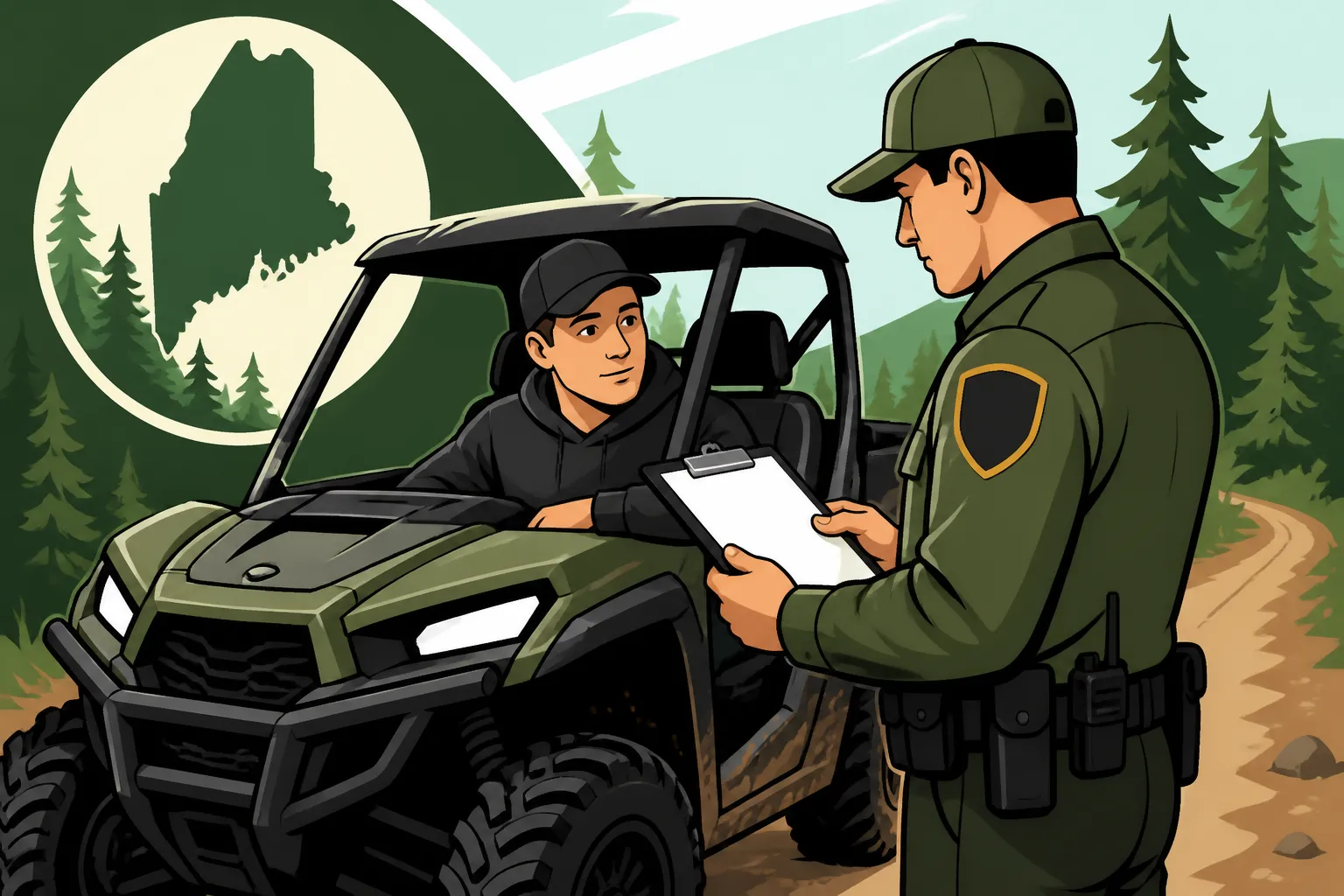
When a Maine Warden pulls you over on an ATV trail, they're not just being nosy; they're ensuring everyone on the trails is operating safely and legally. Their primary goal is conservation and public safety, and that often means checking for compliance with state regulations. It's not about spoiling your fun, but about protecting the trails, the landowners who grant access, and the riders themselves.
Registration and Decal Verification
First and foremost, a warden will almost certainly check your ATV or UTV's registration. They'll be looking for a current, valid registration decal affixed to the machine. This little sticker is your proof that your machine is properly registered with the state of Maine. Wardens are experts at spotting expired decals or those that aren't correctly displayed. They'll want to see it clearly visible, typically on the front fender or side panel, un-obscured by mud or accessories. It's not just about having the sticker; it's about making sure it's the right sticker for that machine and that it's current for the riding season. Think of it as your vehicle's license plate; without it, you simply shouldn't be on the trails. They might also check your [Maine ATV Registration Numbers and Where They Go] to ensure they match the physical registration card.
Proof of Ownership and Identity
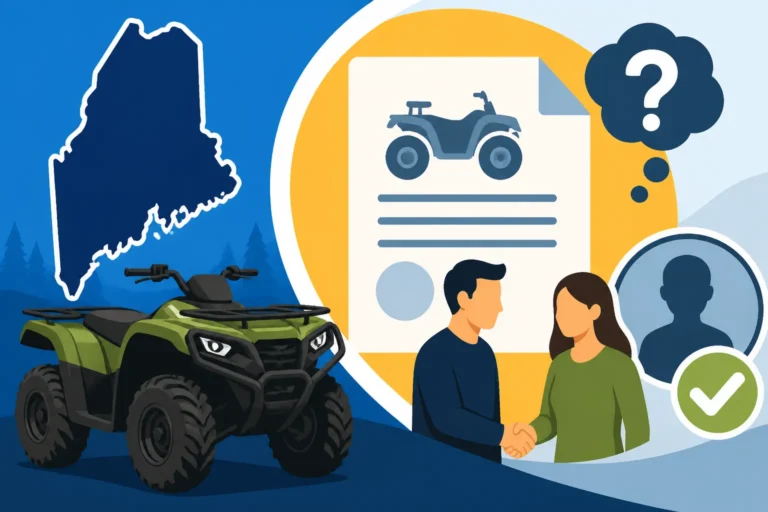
Beyond the decal, the warden will want to see the physical registration card that corresponds to your ATV. This card contains vital information: the machine's VIN, your name as the registered owner, and the registration expiration date. This card essentially serves as your immediate proof of ownership, or at least proof that you are the legal operator. They'll also ask for your identification, such as a driver's license or state ID, to verify that the name on the registration matches who you say you are. If you're riding a machine that isn't registered in your name, you should be prepared to explain the situation and ideally have a bill of sale or written permission from the owner. For example, if you bought a used ATV from a private seller, having your [Maine ATV Bill of Sale: What to Include] handy is critical, even if the registration isn't yet transferred into your name. Wardens need to confirm that the machine isn't stolen and that you have a legal right to operate it.
Rider Safety Compliance
Maine has specific safety requirements, especially for younger riders. If you have riders under 18 with you, or if you yourself are under 18, a warden will likely check for helmet compliance. In Maine, all ATV riders and passengers under 18 years of age are required to wear a helmet. The helmet must be approved by the Department of Transportation (DOT) or meet equivalent standards. Beyond helmets, wardens are also looking for general safe operating practices. This includes observing speed limits, especially near homes or businesses, avoiding reckless operation, and respecting posted signs regarding trail access or road crossings. They might observe how you approach [Maine's Stop-and-Yield Rule Before a Public Way] or if you're riding within the designated [Maine's 500-Yard Limit on a Public Way]. They're trained to spot unsafe riding habits from a distance, so maintaining a responsible riding posture is always a good idea.
Essential Paperwork to Carry While Riding
Knowing what wardens are looking for is one thing, but actually having the required documents in a secure, accessible, and protected manner is another. You can't just toss them in a ziploc bag and hope for the best; the elements and vibrations of trail riding can wreak havoc on paper. Think about investing in a waterproof document holder or even a sturdy, clear dry bag that can be secured to your machine or carried on your person.
Your Current ATV Registration Card
This is non-negotiable. Every time you ride your ATV or UTV on Maine's trails, you must have the current registration card for that specific machine with you. This isn't just a suggestion; it's the law. The card proves that your machine is legally registered for the current season. If you've just registered online and your physical sticker hasn't arrived yet, you should carry the printed confirmation page that you receive immediately after completing the online registration. This confirmation serves as your temporary registration until the physical sticker arrives. Many riders print this page and laminate it or place it in a waterproof sleeve. When you're riding on the trails, especially in remote areas, immediate proof of registration is paramount. A warden can't wait for you to go home and fetch it, and ignorance is rarely an acceptable excuse. For non-residents, understanding your options, like a [Maine Non-Resident Annual ATV Registration] or a [Maine Non-Resident Seven-Day ATV Registration], is crucial, and you must carry the corresponding physical card.
Proof of Ownership (Bill of Sale or Title)
While Maine does not title ATVs in the same way it titles cars, proof of ownership is still incredibly important. The registration card typically lists the owner, but if you've recently purchased the machine, especially in a private sale, having the bill of sale can be your best friend. This document proves that you legally acquired the ATV. It's also vital for establishing a clear chain of ownership, which can be important if there's ever a question of theft or disputed ownership. If your original bill of sale is lost or was never properly executed, it's a good idea to create one retrospectively, using reliable templates from services like LawDepot, to protect yourself in future transactions. A detailed [Maine ATV Bill of Sale: What to Include] isn't just good practice; it's a critical record. When dealing with a private sale, this is the document that truly transfers legal ownership, even if the state registration is updated separately.
Safety Course Certificate (for Youth Riders)
For any operator between the ages of 10 and 16, a valid ATV safety course certificate is required to operate an ATV on land other than that owned by their parent, guardian, or immediate family. This isn't just about knowing how to operate the machine; it's about understanding trail etiquette, safety rules, and environmental considerations. If a youth rider is stopped by a warden, they will be asked to present this certificate. While an accompanying adult may be present, the youth rider must still possess their own certificate. Carrying a laminated copy of this certificate in a secure location is a smart move. Failing to have it can result in an immediate end to the ride and potential fines. This requirement underscores Maine's commitment to ensuring that young riders are educated and responsible before they hit the trails. Make sure to check [Maine ATV Safety Course Requirements] for all the details.
How to Handle a Maine Warden Stop
A warden stop can feel intimidating, but remembering that these officers are generally focused on safety and compliance, not automatically giving out tickets, can help. Your demeanor and cooperation can significantly influence the outcome.
Remain Calm and Cooperative
The most important thing you can do during a warden stop is to remain calm and cooperative. Pull over safely to the side of the trail as soon as you see the warden signaling you to stop. Turn off your engine, keep your hands visible, and wait for the warden to approach. Resist the urge to rummage through your bags or glove box before they ask, as sudden movements can be misinterpreted. Listen carefully to their instructions and questions. Wardens are professional and expect the same courtesy in return. A calm, respectful attitude often leads to a more positive interaction, even if you have a minor issue. Remember, they are often out there dealing with serious issues, and a polite interaction makes their job easier. Your compliance and respectful communication can often de-escalate any tension and lead to a more pleasant resolution.
Present Requested Documentation
Once the warden approaches, they will typically ask for your identification, your ATV's registration, and possibly proof of ownership. Have these documents ready but don't present them until asked. Hand them over calmly and clearly. If you have the temporary online registration confirmation because your sticker hasn't arrived, explain that clearly and present the printout. If you're operating a machine that isn't registered in your name, be ready to explain the situation and provide the bill of sale or written permission from the owner. This is where a well-drafted document, perhaps using a template from a service like LawDepot, can be invaluable for clarifying ownership. If you're asked about the [Maine Sales Tax on an ATV Purchase], having your bill of sale detailing the transaction price can be helpful, though typically tax matters are settled at registration.
Be Honest and Direct
Answer the warden's questions honestly and directly. Avoid making excuses, being argumentative, or volunteering too much unnecessary information. If you've made a mistake, sometimes a truthful and contrite explanation is better than a fabricated story. For example, if your registration sticker peeled off and you're waiting for a replacement, state that fact clearly and show any documentation you have to support it. Wardens are experienced and can often tell when someone is being evasive. Your honesty and willingness to address any issues often go a long way in their assessment of the situation. They appreciate riders who understand the rules and take responsibility, even for minor oversights.
Consequences of Missing or Improper Paperwork
The rules and regulations for ATV operation in Maine are in place for good reasons: safety, trail maintenance, and landowner relations. Failing to comply, particularly with registration and safety paperwork, can lead to various penalties that will quickly sour your day on the trails.
Fines and Citations
The most common consequence for missing or improper paperwork is a fine. Operating an unregistered ATV in Maine is a violation that carries a specific penalty. The exact amount can vary, but it's never a small sum and always more expensive than simply registering your machine in the first place. You could also be fined for not carrying your registration card, for not displaying your decal correctly, or for a youth rider not having their safety certificate. These fines are designed to deter non-compliance and help fund the [Maine ATV Trail Fund and Club Grants] that keep the trail system operational. A warden will issue you a citation, which is essentially a ticket that outlines the violation and the associated fine. Paying it promptly is usually the best course of action, though you always have the right to contest it in court if you believe there was a misunderstanding or error.
Termination of Your Ride
In some cases, especially for more serious infractions like a completely unregistered machine or multiple violations, a warden may order you to cease operation immediately. This means your ride is over, right then and there. You may be required to trailer your ATV off the trail system, or in some instances, the machine could even be impounded. Imagine being deep in the woods, only to have your day cut short and face the logistics of getting your machine home without being able to ride it. It's a frustrating scenario that can easily be avoided by ensuring all your paperwork is in order before you even leave your driveway. Wardens have the authority to make sure unsafe or illegal operation doesn't continue, and sometimes that means stopping a rider's day for good.
Other Potential Issues
Beyond direct fines and ride termination, missing paperwork can lead to a host of other complications. If there's an accident, and your machine isn't properly registered, it could impact insurance claims or liability. If you're involved in a dispute over ownership, lack of proper documentation like a bill of sale can make your case much harder to prove. Furthermore, consistent issues with unregistered machines on trails can strain relationships with private landowners, who generously allow access over their property. This can lead to [Trails Lost to Landowner Withdrawal], which impacts everyone. Ultimately, compliance with registration and safety requirements is a small price to pay for enjoying the vast and beautiful Maine ATV trail system. Always be prepared; it benefits not just you, but the entire ATV community in Maine.
Essential Document Checklist for Maine ATV Riders
To help you keep track, here's a quick checklist of the documents you should always consider carrying when you hit the Maine trails:
| Document Type | Description | When to Carry | Notes |
|---|---|---|---|
| ATV Registration Card | Official registration document with VIN, owner name, and expiration date. | Every ride, on every trail. | Laminate or use a waterproof holder. |
| Temporary Confirmation | Printout if waiting for physical sticker after online registration. | Until physical sticker arrives and is affixed. | Keep accessible; acts as temporary proof. |
| Photo Identification | Driver's license, state ID, or other government-issued photo ID. | Every ride. | To verify your identity and match registration. |
| Bill of Sale | Document proving legal ownership, especially if recently purchased. | Especially if the registration is not yet in your name. | Crucial for proving ownership after a private sale. LawDepot offers templates. |
| Youth Safety Certificate | Official certificate for riders aged 10-16. | Every ride if a youth rider is operating. | Laminated copy recommended; required by law for youth. |
| Written Permission | From owner if riding someone else's machine without them present. | When operating an ATV not registered to you. | A brief, signed note can avoid questions. |
This table serves as a handy reminder for what to pack before your next adventure. Taking a few moments to ensure you have everything can save you hours of trouble later on.
Disclaimer
This article is for general informational purposes only and does not constitute professional advice. Laws, prices and regulations vary by location and change over time. Consult a qualified professional for guidance on your specific situation.