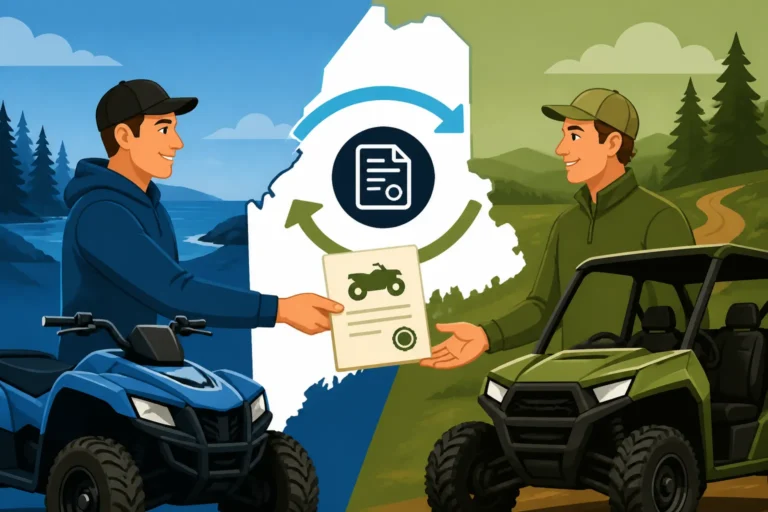
Camp Owners Who Keep an ATV in Maine
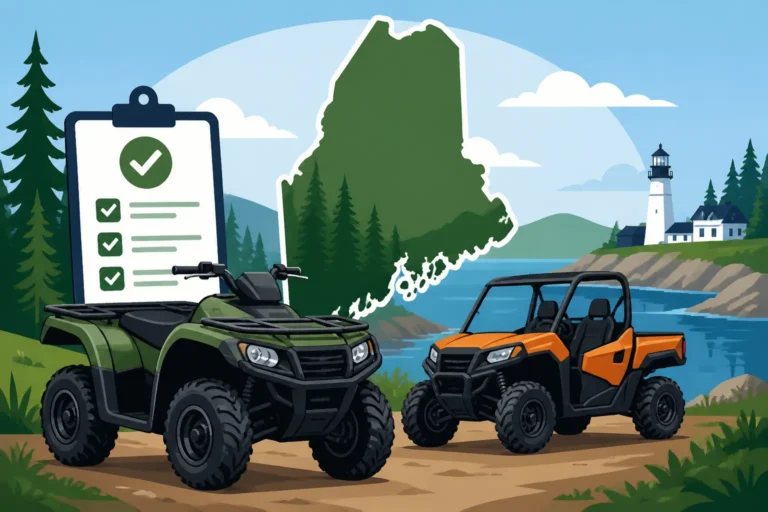
It's a familiar scenario for so many who love Maine: you have a beloved camp, cabin, or seasonal home nestled among the pines or alongside a sparkling lake. And, naturally, you want to bring your ATV or UTV up to enjoy the incredible trails and backroads this state has to offer. But then the questions start bubbling up: how do I register this thing in Maine if I'm not a full-time resident? What's the deal with taxes, and do I even qualify for a resident registration? This guide is going to walk you through everything a camp owner needs to know to get their ATV or UTV legally registered and ready to ride in Maine.
Understanding Residency and Its Impact on ATV Registration
One of the biggest hurdles and sources of confusion for camp owners in Maine is figuring out what "residency" actually means when it comes to registering your ATV or UTV. It might seem straightforward, but for those who split their time between Maine and another state, the lines can get a little blurry, and those lines have a direct impact on your registration options and costs.
The Definition of a "Resident" for ATV Purposes in Maine
When the Maine Department of Inland Fisheries & Wildlife (IF&W) talks about a "resident" for ATV registration, they're generally referring to someone who makes Maine their permanent, primary home. This means where you primarily live, where you vote, where you register your vehicles (car, truck), and where you declare residency for tax purposes. If Maine is truly your year-round base of operations, then you're a resident, plain and simple.
For camp owners, especially those who visit for several months out of the year but maintain a primary residence elsewhere, this distinction is crucial. You might feel like a local, you might contribute to the local economy, and your heart might belong to Maine, but if your primary residence is in Massachusetts, New York, or any other state, for ATV registration purposes, you're likely considered a non-resident. This distinction isn't meant to be exclusionary; it's simply how the state manages its programs and funding, often linking resident fees to the state's tax base. Understanding this up front saves a lot of headaches and ensures you're looking at the right registration options from the start.
Seasonal Residents and Non-Resident Registration Options
If you’re a seasonal resident, owning a camp in Maine but living elsewhere for the majority of the year, you'll almost certainly need to pursue a non-resident ATV registration. But don't fret! Maine makes it pretty easy for non-residents to legally enjoy the trails. You generally have two main options: the annual non-resident registration or a shorter-term, seven-day registration.
The annual non-resident registration is the most popular choice for camp owners who plan to spend multiple weeks or weekends throughout the riding season in Maine. It covers you for the entire registration year (which runs from July 1st to June 30th the following year), no matter how many trips you make. It's often the most cost-effective solution if you're coming up more than once or twice a season. You can often complete this online through the IF&W website, which is incredibly convenient for out-of-state owners. Just make sure you understand the [Maine Non-Resident Annual ATV Registration] process.
On the other hand, the seven-day non-resident registration is perfect for those spontaneous, shorter visits. Maybe you’re only coming up for a long weekend or a single week-long vacation. This option allows you to pay a reduced fee for a limited period. However, if you find yourself using it repeatedly, the cost can quickly add up and even surpass the annual fee. Most camp owners find the annual option offers the best value and peace of mind. It’s important to weigh your anticipated usage against the costs to make the best choice for your situation. For more details, you can look into the [Maine Non-Resident Seven-Day ATV Registration] options.
The Practicalities of Registering Your ATV as a Camp Owner
Once you've determined your residency status and chosen the right registration type, the next step is the actual registration process. As a camp owner, especially one who might not be in Maine all the time, navigating the practicalities requires a bit of foresight.
Registering in Your Maine Town vs. Online
For many camp owners, the idea of registering their ATV online is incredibly appealing. It means no need to plan a trip to a town office, no waiting in line, and the ability to get things sorted before you even pack the trailer. The Maine Department of Inland Fisheries & Wildlife (IF&W) website offers a straightforward online registration portal for both resident and non-resident renewals, and for first-time non-resident registrations. This is often the most convenient route, allowing you to pay with a credit card and print a temporary confirmation page immediately, meaning you can often ride right away while waiting for your stickers to arrive in the mail. You can learn more about this by checking out the [Maine IF&W Online Registration Walkthrough].
However, there's also the option of registering at your local Maine town office, typically where your camp is located. This method offers a personal touch that some appreciate. Town clerks are often very knowledgeable about local trail systems, unique town ordinances, and can answer specific questions you might have. If you're physically in Maine when you decide to register, stopping by the town office can be a quick and efficient way to get your paperwork done. It’s also often the only option for first-time resident registrations or certain complex situations. Just be prepared with all your documentation, as the [What Maine Town Clerks Ask For at the Counter] list can be extensive. For camp owners who aren't residents, bringing your machine's VIN and proof of ownership to the town office is usually enough.
Proof of Ownership and Other Documents You'll Need
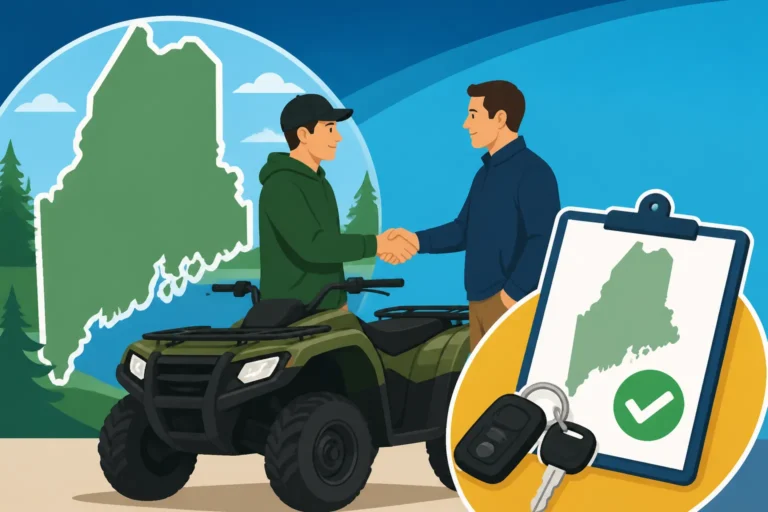
Regardless of whether you choose to register online or in person, proving you actually own the ATV or UTV is paramount. For a new machine purchased from a dealer, you'll typically have a manufacturer's statement of origin (MSO) or certificate of origin (MCO) and a bill of sale. If you bought your machine used, especially from a private seller, a clear, dated, and signed bill of sale is your most critical document.
A well-crafted bill of sale should include the seller's and buyer's full names and addresses, the date of sale, the purchase price, and a detailed description of the ATV, including the make, model, year, and — most importantly — the Vehicle Identification Number (VIN). Without a clear chain of ownership, you could face delays or outright denial of registration. It's not uncommon for camp owners to buy an ATV locally from a neighbor or through an online marketplace, and having these documents in order beforehand can prevent a lot of frustration. If you're drawing up your own, resources like LawDepot can be incredibly helpful for generating a professional and comprehensive [Maine ATV Bill of Sale: What to Include]. They offer templates that ensure all necessary fields are covered, providing peace of mind for both buyer and seller.
In some cases, especially if you're registering an older machine or one where the paperwork has been lost over time, you might need to provide additional proof, such as old registration cards, insurance documents, or even a sworn affidavit. Always make sure the VIN on your paperwork matches the VIN stamped on the machine itself. Maine does not title ATVs, so the registration card and proof of ownership are the primary documents establishing your legal right to the machine.
Common Pitfalls and Considerations for Camp Owners
Owning a camp in Maine comes with its own unique set of logistical challenges, and bringing an ATV into the mix can add a few more wrinkles. It's not just about getting the registration sticker; there are financial and administrative details that are often overlooked by seasonal residents.
Sales Tax and Use Tax Implications
This is a big one that often catches camp owners by surprise, especially if they purchased their ATV out of state. If you buy an ATV or UTV in Maine, you'll pay Maine sales tax at the point of purchase, typically handled by the dealer or collected by the town office during registration if it was a private sale. However, if you purchase your machine outside of Maine and then bring it into the state for use at your camp, you may be subject to Maine's use tax.
Maine's use tax is essentially a sales tax on items purchased outside the state but intended for use within Maine, for which no Maine sales tax was collected. The tax rate is generally the same as the sales tax rate. So, if you bought your ATV in New Hampshire (which has no sales tax) and then bring it to your Maine camp to ride, Maine expects you to pay the equivalent sales tax as use tax. This is typically collected when you register the machine for the first time in Maine. The good news is that if you paid sales tax in another state, Maine usually grants a credit for that amount, meaning you only pay the difference if Maine's rate is higher. It’s critical to keep your purchase receipts to prove any sales tax you already paid. Failing to account for use tax can lead to unexpected fees when you go to register. For a deeper dive into this, check out [Use Tax When You Bring an ATV Into Maine].
What Happens When Your Registration Expires
ATV and UTV registrations in Maine run on an annual cycle, from July 1st to June 30th of the following year. As a camp owner, especially if you're not in Maine year-round, it can be easy to lose track of this date. However, riding an unregistered ATV in Maine carries penalties, including fines.
Maine IF&W does a pretty good job of sending out renewal reminders, often by mail or email, but it's ultimately your responsibility to ensure your registration is current. If you're a seasonal resident, make sure the mailing address on file is one you check regularly, even when you're not at camp. Many camp owners choose to have their Maine mail forwarded or have a trusted neighbor check their mailbox.
The good news is that renewals, especially for non-residents, can almost always be done online, even if you’re sitting in your primary home hundreds of miles away. This allows you to renew your registration well in advance of your next trip to camp. Don't wait until the last minute, or worse, until you're pulled over by a game warden on a trail ride. Planning ahead and keeping track of your registration's expiration date will keep you riding legally and smoothly. To prevent any surprises, understand [When a Maine ATV Registration Expires].
| Feature | Maine Resident Camp Owner | Maine Non-Resident Camp Owner |
|---|---|---|
| Primary Address | Maine | Out-of-state, Maine camp is secondary |
| Registration Fee | Resident rate (lower) | Non-resident rate (higher) |
| Registration Options | Annual resident registration | Annual non-resident or 7-day non-resident |
| Online Renewal | Yes, usually available | Yes, usually available |
| Town Office Registration | Yes, full services available | Yes, but may require more proof of ownership |
| Sales Tax on Purchase | Maine sales tax if bought in ME | Maine use tax if bought out-of-state and brought in |
| Proof of Ownership | Bill of sale, MSO/MCO | Bill of sale, MSO/MCO |
| Annual Expiration | June 30th | June 30th |
| Convenience for Seasonal Use | Straightforward | Online renewal and confirmation page are key |
Navigating Specific Situations
Camp ownership, by its very nature, often involves unique scenarios that can complicate standard procedures. When it comes to ATVs, these can range from where you originally bought the machine to how you decide to pass it along to family members.
Registering an ATV Bought Out of State
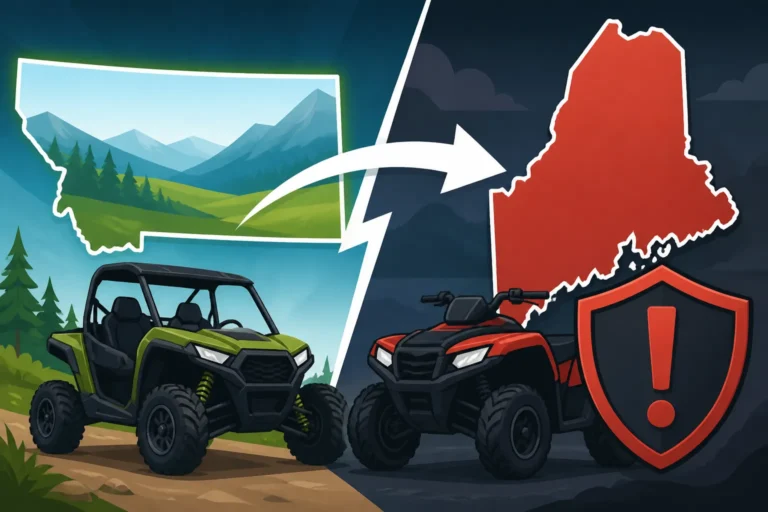
It's very common for camp owners to purchase their ATV or UTV in their home state and then bring it up to Maine. Perhaps you found a better deal, or you already owned the machine before you even bought your camp. The process for registering an ATV bought out of state in Maine is generally straightforward but requires attention to detail.
First, you'll need all your purchase paperwork: a bill of sale (even if it's from a private party in another state), and if applicable, the vehicle's title or previous registration from your home state. While Maine doesn't title ATVs, proof of ownership from a titling state is still important documentation to bring. As mentioned earlier, be prepared to pay Maine's use tax if you haven't already paid an equivalent sales tax in your state of purchase.
You can often complete the initial non-resident registration online. You’ll enter the VIN and details from your bill of sale. If you choose to go to a town office, they will ask for these same documents. It’s always a good idea to bring as much paperwork as you have on hand. Don't worry if your home state requires titles and Maine doesn't; the important thing is establishing a clear chain of ownership from the previous owner to you. This ensures a smooth registration process for your machine, whether it’s a brand-new quad from New Hampshire or a seasoned side-by-side from Pennsylvania. For a detailed guide, see [Maine ATV Registration for a Machine Bought Out of State].
Gifting an ATV to a Family Member at Camp
Sometimes, a camp owner decides to gift an ATV or UTV to a spouse, child, or grandchild who frequently visits or lives at the camp. This can be a wonderful gesture, but it requires proper paperwork to ensure the machine is legally transferred and registered in the new owner's name.
The most important document for gifting an ATV is a bill of gift or a bill of sale with a stated purchase price of "zero" or "gift." This document acts similarly to a bill of sale, clearly stating that ownership has been transferred from you to the recipient. It should include the names and addresses of both parties, the date of the gift, and the complete description of the ATV, including the VIN. Even if it's a family transaction, having this formal documentation is crucial for the new owner to register the machine in their name.
If the recipient is a minor, the ATV must be registered in the name of a parent or legal guardian. The parent or guardian will be responsible for the machine's registration, even if the minor is the primary rider. This ensures that a responsible adult is legally accountable. When gifting, remember that while you might not be exchanging money, the act of transferring ownership still has legal implications for registration purposes. Just like a standard purchase, resources like LawDepot can provide excellent templates for a bill of gift or a transfer of ownership agreement, ensuring all necessary legal components are covered for a hassle-free registration. This will help the new owner navigate the process, especially if they are getting their [Gifting an ATV and the Registration That Follows] sorted.
Disclaimer
This article is for general informational purposes only and does not constitute professional advice. Laws, prices and regulations vary by location and change over time. Consult a qualified professional for guidance on your specific situation.