Maine ATV Registration After a Private Sale
Buying an ATV or UTV from a private seller in Maine can feel like navigating a winding, unmarked trail – exciting, full of potential, but also a little daunting when it comes to the official paperwork. Many folks get a great deal on a used machine, only to find themselves scratching their heads when it's time to make it legal for the trails. This comprehensive guide is here to untangle the process of registering your privately purchased ATV or UTV in Maine, making sure you have all your ducks in a row so you can hit the trails confidently, without any unexpected detours or fines.
Understanding the Private Sale Process in Maine
So, you've found the perfect used quad or side-by-side from a private seller here in Maine. Maybe it was a neighbor selling off an extra machine, or you scrolled through some online listings and found a gem. Regardless of how you found it, a private sale has a few key differences from buying from a dealership, especially when it comes to getting that all-important registration. There's no dealership to handle the paperwork for you, no "doc fees" to complain about, but also no automatic transfer of information to the state. It all falls on you, the buyer, to make sure everything is squared away.
The Importance of a Solid Bill of Sale
Let me tell you, if there's one piece of paper you absolutely, positively need after a private sale, it's a rock-solid bill of sale. Think of it as your golden ticket – it's the official record that proves you are now the rightful owner of that shiny new-to-you machine. Without it, you're essentially trying to register a vehicle that, on paper, isn't really yours, and that's going to lead to a lot of headaches at the registration counter.
A good bill of sale isn't just a scribble on a napkin. It needs to include crucial details like the full names and addresses of both the buyer and the seller, the date of the sale, the purchase price, and a detailed description of the ATV or UTV itself. This description should always include the Vehicle Identification Number (VIN), make, model, and year. It's also smart to include a statement that the machine is sold "as is, where is" if that's the agreement, which is common in private sales. You can often find free templates online, or use a service like LawDepot to generate a professional-looking document, which provides an extra layer of confidence. The more thorough your bill of sale, the smoother your registration process will be, and the less likely you are to run into questions about [Proof of Ownership for a Maine ATV Registration].
Verifying Ownership and Machine History
Before you even hand over the cash, it's incredibly smart to do a little detective work on the ATV you're about to buy. This isn't just about making sure you're not getting a lemon; it's about confirming the seller actually owns the machine they're selling. The last thing you want is to buy a stolen ATV and lose both your money and the machine. Always ask the seller for proof of previous registration – even if Maine doesn't title ATVs, they should have an old registration card in their name. This helps establish a clear chain of ownership.
Compare the VIN on any paperwork to the VIN stamped on the machine itself. These numbers must match. If they don't, or if the VIN plate looks tampered with, walk away immediately. It's also a good idea to check for any signs that the ATV might have been rebuilt or significantly modified, which can sometimes raise questions during registration if not properly documented. A quick call to the Maine Warden Service, with the VIN in hand, can also help you confirm if the machine has been reported stolen, offering peace of mind before you make that final decision. Checking whether a used ATV is stolen is a simple step that can save you a world of trouble.
Sales Tax Considerations for Private Purchases
Ah, sales tax. Even in a private sale, the state of Maine wants its piece of the pie. It's a common misconception that if you buy from an individual, you don't pay sales tax. That's just not true in Maine. When you register your privately purchased ATV, you'll be responsible for paying Maine sales tax on the purchase price.
The sales tax is calculated based on the purchase price stated on your bill of sale. So, if you and the seller agreed on a price of $3,000, you'll pay sales tax on that amount. If the price on your bill of sale seems suspiciously low, the registration agent at the town office or IF&W might question it, as they have the authority to assess the tax based on fair market value if they suspect underreporting. Be honest on your bill of sale – it will save you potential hassle and future questions. Understanding [Maine Sales Tax on an ATV Purchase] is crucial before finalizing your private sale.
Gathering Your Essential Documents for Registration
So, you've made the deal, shaken hands, and now you're the proud owner of a new-to-you ATV. Fantastic! But before you can hit the trails, you need to get it registered. This means compiling the right documents to present to the state. The more organized you are, the faster and smoother this process will be. Forget something, and you'll likely be sent home to retrieve it, delaying your riding time.
The Bill of Sale: Your Proof of Purchase
As we talked about, the bill of sale is your absolute cornerstone document. It's the primary piece of evidence that you legally acquired the ATV from a previous owner. The registration agent will want to see this, plain and simple. Ensure all the information on it is clear, legible, and accurate. Double-check the VIN, make, model, and year against the machine itself, and confirm the seller's name matches any previous registration paperwork they might have provided.
Some people try to be casual with a bill of sale, maybe just an email or text message. Resist this urge! A formal, printed document, signed by both parties, provides undeniable proof. You can find templates online or even create one using resources like LawDepot, ensuring it covers all the necessary legal points. Having a well-prepared [Maine ATV Bill of Sale: What to Include] will make your registration process much easier. Without this critical document, you're going to have a very hard time proving ownership, and the registration agent likely won't be able to process your application.
Proof of Prior Registration or Ownership
While Maine doesn't issue titles for ATVs like it does for cars, having a copy of the previous owner's Maine registration card is incredibly helpful. This document serves two main purposes: it corroborates the seller's ownership claim, and it provides the registration agent with the machine's history, including its last registered VIN. If the seller can't provide an old registration, other forms of ownership proof might be acceptable, but it can complicate things.
If the ATV was previously registered in a state that does title ATVs, such as New Hampshire or Massachusetts, then the title certificate from that state would be the ultimate proof of ownership. In such a case, you'd present the out-of-state title, along with your bill of sale, to show the transfer of ownership to you. The key is to show a clear paper trail from the previous owner to you. Don't assume you can register an ATV without any prior ownership documentation; it's a common stumbling block.
The Elusive Maine ATV Title Question
This is where many new ATV owners in Maine get confused. Unlike cars, trucks, or even snowmobiles, Maine does not issue titles for ATVs or UTVs. That's right, there's no pink slip to sign over. This often surprises people, especially those coming from states where ATV titles are standard. Instead, in Maine, proof of ownership for an ATV is primarily established through a bill of sale, supported by previous registration documents.
So, when you're buying privately, don't expect the seller to hand you a title. They won't have one if the machine has always been registered in Maine. Your bill of sale will be the primary document proving ownership. This can sometimes feel a bit unsettling, especially if you're used to the clear-cut process of transferring a vehicle title, but rest assured, it's the standard practice here. If you're wondering [Does Maine Title ATVs?], the answer is no.
The Maine ATV Registration Application Itself
Once you have your bill of sale and any supporting ownership documents ready, the next step is to tackle the registration application. This form is what officially gets your ATV or UTV into the state's system, allowing you to ride legally on designated trails and access routes. It's a straightforward form, but a few details require careful attention.
Filling Out the Registration Form Accurately
Whether you're registering in person at your town office or attempting it through the state's online portal (if eligible), you'll encounter the official Maine ATV registration form. This form asks for all the pertinent details about you, the new owner, and the machine itself. Be prepared to provide your full name, address, phone number, and date of birth. For the ATV, you'll need its make, model, year, and most importantly, the VIN. This is where your thoroughly prepared bill of sale comes in handy, as all these details should be readily available there.
It's absolutely critical that the information on your registration form precisely matches your bill of sale and any other ownership documents. Even a single digit off on the VIN can cause a rejection or significant delays. Take your time, double-check every entry, and don't hesitate to ask the registration agent for clarification if you're unsure about any section. Accuracy here prevents future headaches and ensures your registration is processed correctly.
Resident vs. Non-Resident Implications
Maine distinguishes between resident and non-resident ATV registrations, and the fees differ significantly. If you're a full-time resident of Maine, you'll apply for a resident registration. If you own property in Maine but reside primarily in another state, or if you're just visiting to ride the trails, you'll need a non-resident registration. This distinction is crucial because applying for the wrong type of registration will lead to rejection or paying the incorrect fee.
For private sales, this distinction doesn't change the documents you need, but it definitely impacts the cost and which form you might select if there are separate versions. Always be clear about your residency status when applying. For example, a new resident moving to Maine with an out-of-state ATV will register as a resident but might also need to address [Maine Use Tax After an Out-of-State ATV Purchase]. The state relies on your honesty regarding your residency, but they can cross-reference information if they suspect a misrepresentation to avoid higher non-resident fees.
Fees and Payment Methods
Once the form is filled out and your documents are in order, you'll need to pay the registration fees. For a Maine resident, the [Maine Resident ATV Registration Fee] is typically a set amount for the year. Non-residents, on the other hand, have options like a seven-day registration or an annual non-resident registration, each with its own cost. Remember, sales tax will also be collected at this time if you haven't paid it already.
Most town offices accept cash, checks, and often credit or debit cards, though some might add a small processing fee for card transactions. If you're registering online (which, for a first-time private sale, usually isn't an option unless you're a non-resident renewing or registering an already-documented machine), you'll typically pay with a credit card. Always confirm the exact fee amount and accepted payment methods before you head to the registration location, so you're not caught off guard. It's frustrating to stand in line only to find you don't have the right payment method!
Where to Register Your Privately Purchased ATV
Now that you have your paperwork meticulously gathered and reviewed, the big question is: where do you actually go to make it official? Maine offers a few avenues for ATV registration, each with its own set of rules and conveniences. For a first-time registration after a private sale, your options are generally more limited to in-person services.
Registering at Your Local Maine Town Office
For most Maine residents purchasing an ATV privately, the easiest and most common place to register is your local town office. The town clerk's office handles a vast array of registrations, from vehicles to boats, and ATVs are no exception. They are typically well-versed in the requirements and can guide you through the process, especially if you have any unusual circumstances.
When you go to the town office, make sure to bring your bill of sale, any previous registration paperwork, your driver's license or other valid ID, and your chosen payment method. Many town clerks appreciate it if you have the registration form mostly filled out beforehand, but they'll often have blank copies available if you need to start fresh. The benefit of registering at the town office is the immediate satisfaction of walking out with your temporary registration paper, which allows you to ride right away. They'll also be able to answer questions specific to local ordinances or trail access in your area. This is the recommended route for a [First-Time Maine ATV Registration at the Town Office].
The Maine IF&W Online Registration Option (and its limits for first-timers)
The Maine Department of Inland Fisheries & Wildlife (IF&W) does offer an online registration portal, which is incredibly convenient for renewals. However, for a first-time registration of an ATV purchased in a private sale, especially if it's a resident registration, the online system usually won't be an option. The reason is simple: the system needs to establish the sales tax payment and officially record the change of ownership, which typically requires a human agent to review your bill of sale.
Non-residents might find the online portal more accommodating for initial registrations if they're simply renewing or if the machine has a clear history in the state's system. But for a true "new to you" private sale for a Maine resident, plan on an in-person visit. The system is designed for ease of renewal, not for initial complex transactions that require document verification. Always double-check the IF&W website for the most current guidelines, but generally, assume an in-person visit for your first registration post-private sale. You can find more details on [Maine IF&W Online Registration Walkthrough], but remember its limitations for first-time private sales.
Unorganized Territory Registration Details
What if you live in one of Maine's many unorganized territories, areas without their own municipal government? This is a common situation for many folks who enjoy Maine's vast wilderness. In this case, you can't go to a "town office" because there isn't one. Instead, residents of unorganized territories can register their ATVs directly through the Maine IF&W main office, or sometimes through a designated agent in a nearby organized town that handles registrations for such areas.
The process and documentation required are largely the same as for a town office registration: bill of sale, proof of previous ownership, identification, and payment for fees and sales tax. It's always a good idea to call ahead to the IF&W or the specific agent you plan to visit to confirm their hours, what documents they require, and accepted payment methods. This ensures you don't make a long trip only to find they're closed or missing a crucial piece of information. Learning about [Registering an ATV in a Maine Unorganized Township] is essential for those living in these areas.
Common Challenges and Troubleshooting
Even with the best preparation, sometimes things don't go perfectly. Private sales can present unique challenges, especially when it comes to paperwork and machine history. It's not uncommon for sellers to have misplaced documents, or for the machine itself to have an unusual past. Knowing how to troubleshoot these common issues can save you a lot of stress.
What If the Seller Has No Paperwork?
This is one of the trickiest situations. You've found a great ATV, but the seller claims they've lost the old registration card, or maybe they just bought it themselves and never registered it. While Maine doesn't require titles, having some proof of prior ownership is incredibly helpful. If the seller literally has no paperwork – no old registration, no bill of sale from when they bought it – you're facing an uphill battle.
The absolute minimum you need is a comprehensive bill of sale from the person selling it to you. Make sure it includes the VIN. The registration agent will likely be very scrutinizing. They need to be confident that you're not trying to register a stolen machine. In some cases, if the machine has a clean VIN and passes a background check, and you have a solid bill of sale, you might be able to register it. However, be prepared for extra scrutiny and potentially being asked for more information or a sworn affidavit of ownership. Frankly, it's often best to avoid machines with no paperwork if you can, to prevent potential legal headaches down the road. This situation often leads to questions about [Maine ATV Registration for a Machine Without Paperwork].
Dealing with Out-of-State Private Sales
Buying an ATV from a private seller outside of Maine adds another layer of complexity, but it's totally doable. The primary difference is how you handle the ownership documentation. If you buy an ATV from a state that issues titles (like most states do for ATVs), you must get that signed-over title from the seller, along with a bill of sale. That title, properly transferred to your name, becomes your essential proof of ownership.
When you bring this out-of-state purchased ATV to Maine for registration, you'll present the signed title, your bill of sale, and pay Maine sales tax (or use tax, if applicable). The registration agent will verify the VIN from the title and your bill of sale against the machine. Keep in mind that Maine's sales tax will still apply, even if you paid sales tax in the other state. You might be eligible for a credit if you paid tax in a reciprocal state, but that's a detail to discuss with the registration agent. For more information, you'll want to review [Maine Use Tax After an Out-of-State ATV Purchase].
When the VIN Doesn't Match
Imagine this nightmare scenario: you get all your paperwork ready, proudly present it, and the registration agent tells you the VIN on your bill of sale doesn't match the one stamped on the ATV. Or worse, the VIN on the machine looks altered. This is a huge red flag and will immediately halt your registration process.
If there's a minor discrepancy, like a transcription error on your bill of sale, you might be able to correct it on the spot, assuming the seller is available to verify. However, if the VINs are fundamentally different, or if the physical VIN on the machine appears to have been tampered with, you've got a serious problem. The registration agent cannot legally register a machine with a questionable VIN. In such cases, they might advise you to contact law enforcement or the Maine Warden Service for a VIN verification. This could indicate a stolen machine or one with a problematic history. Always perform a thorough [VIN Verification Before Registering in Maine] before completing a private sale.
What Happens After You Register
Congratulations! You've navigated the private sale, gathered your documents, filled out the forms, and paid your fees. You've officially registered your ATV in Maine. But what happens next? Can you just rip down the road to the nearest trail? Not quite, but almost! There are a couple more steps and important considerations before you're fully trail-ready.
Immediate Riding and Confirmation Pages
When you register your ATV in person at a Maine town office, they will typically print out a temporary registration certificate for you right there on the spot. This piece of paper is your immediate proof of registration. Yes, you can ride with this confirmation page. It serves as your legal documentation until your official decals and registration card arrive in the mail. Keep it somewhere safe, ideally on your person while riding, or in a waterproof pouch on your ATV, so you can present it to a game warden if asked.
The ability to ride immediately with a confirmation page is a huge relief for many new owners, especially those eager to hit the trails the same day they register. Just remember that this paper is temporary, and you'll still be waiting for the official stickers to arrive. [Maine ATV Registration Confirmation for Immediate Riding] is a key benefit of in-person registration.
Waiting for Your Decals and Sticker Placement
After your in-person registration, or once your online registration (if applicable for renewal or non-resident) is processed, the Maine Department of Inland Fisheries & Wildlife will mail you your official ATV registration decals and a permanent registration card. This usually takes a little time, so don't expect them to appear in your mailbox overnight. The exact turnaround can vary, but typically it's within a couple of weeks.
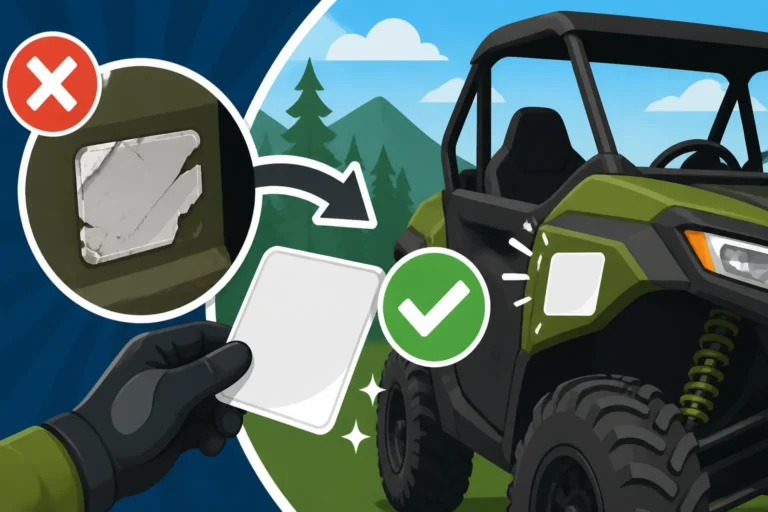
Once you receive your decals, it's crucial to place them correctly on your ATV. Maine law specifies where these stickers must be affixed – typically on the front and rear of the machine, in a clearly visible location. They need to be applied to a clean, flat surface to ensure they stick well and don't peel off, especially during harsh Maine winters. Failing to properly display your decals can lead to a conversation with a game warden, even if your machine is registered. Refer to [Where Maine ATV Stickers Go and When They Arrive] for precise placement guidance.
Penalties for Riding Unregistered
This is perhaps the most important takeaway: do not ride an unregistered ATV or UTV on Maine trails or public ways. The penalties for doing so are not minor, and game wardens actively patrol the trail systems. If you're caught operating an unregistered machine, you can expect a significant fine, and your riding adventure will likely come to an abrupt halt. It's simply not worth the risk.
Maine's registration system funds the very trails you ride and contributes to enforcement, so it's taken seriously. Even if you've just bought the machine and are "just taking it for a quick spin," that's no excuse in the eyes of the law. Make sure you have that temporary registration confirmation, or your permanent decals, displayed before your tires ever touch a trail. Always ensure your machine is legal to avoid [Penalties for Riding an Unregistered ATV in Maine].
Here's a quick overview of the documentation you'll need after a private sale:
| Document Type | Required for Private Sale? | Purpose | Notes |
|---|---|---|---|
| Bill of Sale | Yes | Primary proof of ownership transfer | Must include buyer/seller info, date, price, VIN, make, model, year. Can use a template from LawDepot. |
| Previous Registration | Highly Recommended | Corroborates seller's ownership, machine history | A copy of the seller's most recent Maine registration card. |
| Out-of-State Title | Yes (if applicable) | Primary proof of ownership if from a titling state | Must be signed over to you by the seller. |
| Photo ID | Yes | For identity verification at registration point | Driver's license or state ID. |
| Maine Sales Tax Payment | Yes | Paid at time of registration | Calculated on purchase price. |
| Registration Application | Yes | Official form for state records | Fill out accurately, double-check VIN. Available at town offices or IF&W. |
| Registration Fee | Yes | Annual fee for trail access and maintenance | Varies for residents and non-residents (7-day vs. annual). |
Disclaimer
This article is for general informational purposes only and does not constitute professional advice. Laws, prices and regulations vary by location and change over time. Consult a qualified professional for guidance on your specific situation.