ATV Yield Rules in Traffic
Riding an ATV or UTV in Maine is a truly unique experience, offering unparalleled access to stunning landscapes. But when those trails occasionally intersect with public roads, or you find yourself on a designated ATV access route, things can get a little nerve-wracking. The rules for yielding in traffic aren't always clear, and the last thing any rider wants is an unexpected encounter with a vehicle or, even worse, a warden. This guide is all about demystifying those tricky ATV yield rules, so you can ride confidently and safely.
Understanding Maine's ATV Road Regulations
Navigating Maine's vast network of ATV trails often means encountering sections of public road, designated ATV access routes, or even just crossing a paved road to get from one trail segment to another. This blend of off-road adventure and on-road necessity is part of what makes Maine riding so special, but it also means we, as riders, need to be extra vigilant and well-versed in the specific rules that govern our machines when they share space with cars and trucks. Many riders come from states where ATVs are strictly off-road, so the idea of even briefly entering traffic can be daunting, and honestly, a bit confusing. You're not alone if you've scratched your head wondering who has the right-of-way.
Maine law is pretty clear that ATVs are generally not designed or intended for public way travel. However, there are very specific, limited circumstances where it's permitted. These exceptions are crucial to understand because they dictate when and where you might even encounter another vehicle or pedestrian. Whether it's the [Maine's 500-Yard Limit on a Public Way] for crossing or accessing trails, or a town-approved ATV access route, these aren't free-for-all zones. They come with responsibilities, and at the top of that list is safely interacting with other forms of traffic.
The underlying principle behind all traffic laws, especially those involving yielding, is safety. ATVs and UTVs, while robust off-road, are significantly less visible and offer far less protection than a passenger car. This inherent vulnerability means that, in most scenarios where you're interacting with traditional road traffic, the onus is often on the ATV operator to exercise extreme caution and yield to avoid conflict. It’s not just about what the law says, but about common sense and self-preservation. Think of it as defensive riding, anticipating potential hazards, and always being ready to give way.
General Road Rules for ATVs
Maine's regulations for ATVs on public ways are primarily restrictive, focusing on specific allowances rather than broad permissions. Generally, you cannot simply ride your ATV down a public road like a car. The exceptions typically involve crossing a public way, accessing a trail, or utilizing specific municipal-designated ATV access routes. For instance, you're often allowed to cross a public road if you do so at nearly a right angle, come to a complete stop, and yield to all traffic. These aren't suggestions; they are explicit legal requirements designed to minimize risk.
When you do find yourself on a permitted section of a public way, like a short connector between trails, you're expected to operate your ATV as far to the extreme right of the traveled way as possible. This "extreme right rule" is a fundamental safety measure, keeping you out of the main flow of traffic and giving other vehicles ample room. You also need to be aware of speed limits, which are usually posted for traditional vehicles but apply to you just the same. Remember, even if you’re only on the pavement for a short distance, you're now part of the public road system, and all the associated rules of the road apply, including signaling turns if your machine is equipped. This is where quality accessories from brands like SuperATV that enhance visibility with proper mirrors or turn signal kits can be invaluable.
It's also important to remember that these allowances often come with conditions. For example, certain public ways might be closed to ATVs entirely, or specific times of day might be restricted. Always pay attention to signage, as towns have the authority to create their own ordinances regarding ATV access. A common mistake riders make is assuming that because one town has an ATV access route, all towns do. This simply isn't the case. Always check with local authorities or trail clubs to ensure you're compliant. Ignorance of the law is never an excuse, and a friendly chat with a [Maine Warden Service ATV Patrols] member can often clarify any uncertainties before you head out.
Importance of Yielding for Safety
The concept of yielding is fundamental to safe traffic flow, especially when two different types of vehicles, like an ATV and a passenger car, are sharing the same space. An ATV, with its smaller profile and generally slower acceleration compared to a car, is at a distinct disadvantage in any collision. Even minor incidents can result in significant injuries for ATV operators and passengers, let alone damage to the machine itself. Therefore, embracing a proactive yielding mindset isn't just about following the law; it's about protecting yourself and others.
Imagine approaching a paved road crossing. You've come to a complete stop as required, but there's a car approaching in the distance. Rather than gambling on whether you can make it across before they arrive, a safe rider will err on the side of caution, waiting until the road is completely clear or the approaching vehicle has passed. This small act of patience can prevent a major accident. It's about respecting the physics of the situation: cars take longer to stop and drivers might not expect an ATV.
Furthermore, proper yielding fosters good relations between ATV riders and other road users, including motorists, cyclists, and pedestrians. When ATV riders consistently demonstrate safe, courteous behavior on shared routes, it helps build trust and acceptance of ATVs within the community. Conversely, aggressive or careless riding, especially failing to yield, can quickly lead to resentment, complaints, and potentially, the loss of valuable ATV access routes. We all want to keep enjoying Maine's amazing trails, so let's do our part to make sure we're seen as responsible members of the outdoor community.
Specific Yield Scenarios: Intersections and Crossings
When you're out on the trails, the wilderness can feel boundless, but eventually, you'll likely encounter a public way. These intersections and crossings are where ATV riders need to be at their most alert, as they present the highest potential for conflict with traditional vehicle traffic. Maine law has specific mandates for these moments, and understanding them perfectly is non-negotiable for safety and legal compliance. It’s not enough to slow down; there are distinct actions you must take.
These scenarios often cause the most stress for riders, especially those new to operating on or near public roads. The roar of a passing logging truck or the speed of a car on a rural highway can be intimidating when you're on a four-wheeler. The key is to remove the guesswork by knowing exactly what's expected of you, every single time. It's about developing habits that prioritize safety above all else, ensuring that when you do interact with road traffic, it's predictable and controlled.
It's also vital to remember that visibility works both ways. While you're looking for oncoming traffic, drivers in cars are also trying to spot you. Having proper lighting, even during the day, can make a huge difference. Accessories like bright LED headlights or taillights from SuperATV can significantly improve how well other drivers see you, which indirectly helps prevent situations where you might need to make an emergency yield. Anything that makes you more noticeable is a win for safety.
Yielding at Public Way Crossings
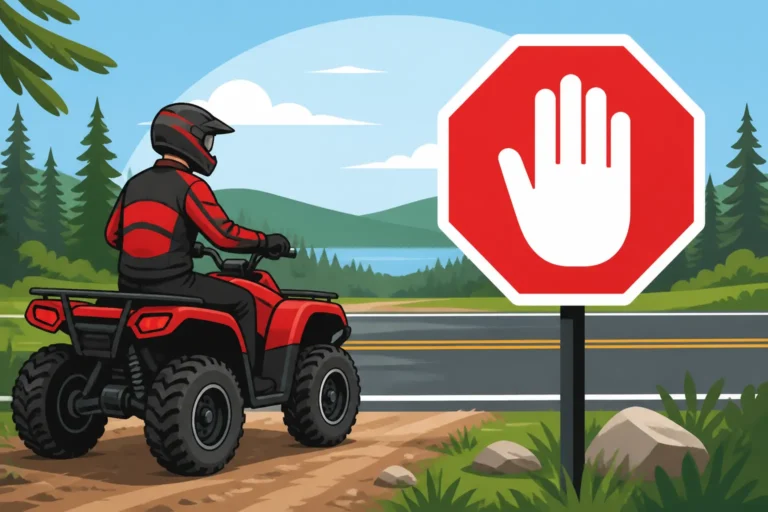
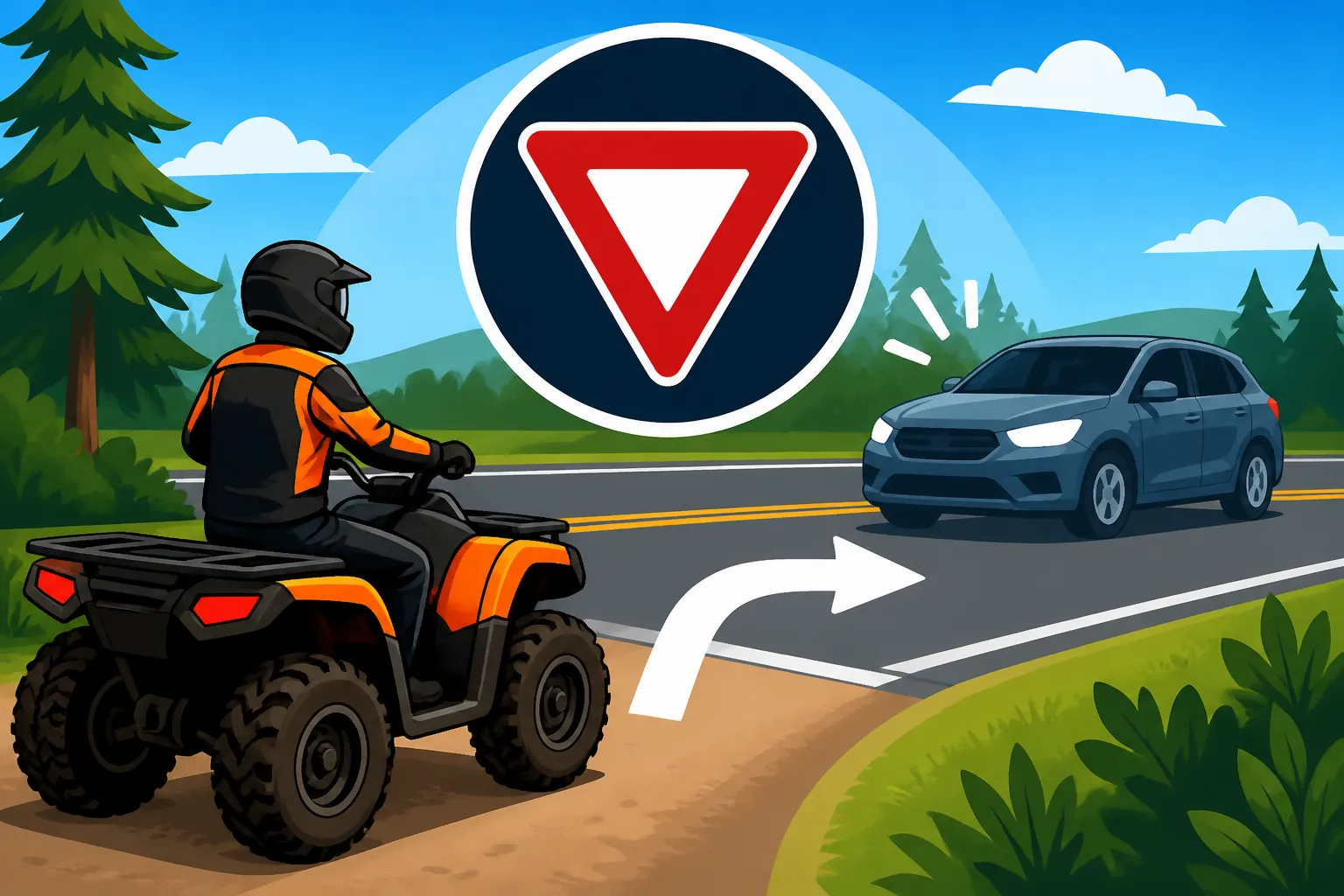
Maine law is very clear when an ATV crosses a public way: you must come to a complete stop and yield to all vehicular traffic approaching from either direction. This isn't a "slow roll" or a "look and go" situation. It means your wheels need to be absolutely still before you proceed. Think of it like a stop sign for cars, but with an even higher stakes for ATVs due to their vulnerability. After stopping, you must look carefully both ways, ensuring the road is entirely clear, or that approaching vehicles are at a safe distance where they won't have to adjust their speed or direction for your crossing.
The act of crossing itself also has rules. You must generally cross at a right angle to the public way, or as close to it as practicable. This minimizes the time your ATV spends in the lane of traffic and makes your trajectory predictable for any distant drivers. Do not attempt to cross diagonally or travel any distance down the road before crossing, unless it's a specifically designated ATV access route. This short, direct crossing is a critical safety measure, limiting your exposure to fast-moving traffic. You can learn more about this specific requirement in [Maine ATV Road Crossing at an Angle].
Consider a scenario: you're on a well-used club trail that meets a state route in rural Maine. You hear a car coming, so you bring your ATV to a full stop at the edge of the pavement, engine idling. You wait as the car passes. Then, you look left, then right, then left again. No other vehicles are in sight. You then proceed directly across the road, maintaining a right angle, and immediately enter the continuation of the trail on the other side. This precise sequence of actions is not just good practice; it's what the law mandates.
Yielding on Designated ATV Access Routes
Some forward-thinking towns in Maine have established designated ATV access routes. These are specific sections of public roads (often dirt or less-traveled paved roads) where ATVs are legally permitted to travel for a certain distance, typically to connect trails, access businesses, or reach local points of interest. While this is fantastic for riders, it doesn't mean you have carte blanche to disregard traffic laws. In fact, these routes come with their own set of responsibilities, and yielding is still paramount. [Maine ATV-Access Routes and How Towns Post Them] often involve specific signage and local ordinances.
When riding on a designated ATV access route, you are considered part of the flow of traffic, but you are still riding a machine that is secondary to traditional vehicles. Therefore, you are expected to yield to all traditional motor vehicles, just as you would if you were on a bicycle or walking. If you approach an intersection while on an access route, you must obey all traffic signs and signals (stop signs, yield signs, traffic lights) just like any car. If there's no sign, standard right-of-way rules apply, but again, given your machine type, it's always safest to yield to larger vehicles.
Furthermore, on these access routes, you must continue to ride on the extreme right of the traveled way. You should not impede the flow of traffic, and if a faster vehicle approaches from behind, you should be prepared to pull over safely to allow them to pass, if necessary. While these routes are fantastic for connecting the dots of the trail system, they are not your private trail. They are shared public ways, and courteous, safe operation, including generous yielding, is key to maintaining these privileges for all riders. Understanding [Riding an ATV on the Road in Maine] will provide even more context for these situations.
Yielding at Stop Signs and Traffic Signals
This might seem obvious, but it's surprising how many questions arise about ATVs and traditional traffic control devices. If you are operating your ATV on a designated ATV access route, or if you're briefly crossing a public way where there's a stop sign or traffic signal, you are absolutely bound by those controls. There's no special exemption for ATVs; a red light means stop, and a stop sign means stop. Failing to do so is not only illegal but incredibly dangerous.
At a stop sign, you must come to a complete and full stop behind the stop line or crosswalk. After stopping, just like in a car, you must yield to any vehicles already in the intersection or approaching from other directions that have the right-of-way. Only when it's safe to proceed should you do so. The same goes for traffic lights: a green light grants you permission to proceed, but you must still exercise caution and yield to any vehicles or pedestrians that might still be in the intersection, perhaps making a left turn.
The temptation to "cheat" a stop or light, especially in remote areas where traffic is sparse, can be strong. However, wardens and local law enforcement are well aware of this tendency. A quick stop at a rural intersection could be all it takes for a citation, or worse, an accident. Always remember that the rules are there for everyone's safety, and your smaller machine makes compliance even more critical. Think of it this way: when you're on a public road, your ATV is a vehicle in the eyes of the law regarding these traffic controls.
| Scenario | ATV Action Required | Yield To | Location Example |
|---|---|---|---|
| Public Way Crossing | Complete stop, cross at right angle | All vehicular traffic | A trail crossing a rural State Route 15 in Dexter |
| Designated Access Route | Obey all signs/signals, ride extreme right | All vehicular traffic, pedestrians, cyclists | Main Street in Ashland, designated an ATV route |
| Unsigned Intersection | Standard right-of-way rules, but yield if unsure | Vehicles approaching from the right or already in intersection | A junction of two camp roads, one designated ATV access |
| Yield Sign | Slow down, be prepared to stop | All cross traffic | An ATV trail merging onto a town road in Greenville |
| Pedestrian Crosswalk | Complete stop | All pedestrians, regardless of traffic control | Crossing a road near a trailhead parking area |
Yielding to Pedestrians and Other Vulnerable Users
While much of the focus on ATV road rules naturally gravitates towards interactions with cars and trucks, it's equally, if not more, important to consider pedestrians, cyclists, and other vulnerable road users. These individuals are completely unprotected, and any encounter with an ATV, even at low speeds, can have serious consequences. As ATV operators, we have a heightened responsibility to ensure their safety, and that often means giving them the widest berth and right-of-way in almost every scenario.
Maine's landscape is dotted with small towns, villages, and trailheads that see a lot of foot traffic. Even on quiet logging roads, you might encounter hikers, dog walkers, or children playing. The distinct sound of an ATV can sometimes startle people, leading to unpredictable movements. Being prepared to stop, slow down, and provide ample space is not just courteous; it's a legal and ethical obligation.
When considering accessories for your ATV, think beyond just performance. Products that enhance safety, like a clear, unobstructed mirror from SuperATV, can help you spot pedestrians or cyclists approaching from behind or the side, giving you more time to react and yield appropriately. Awareness of your surroundings is your best defense against accidents involving vulnerable users.
Pedestrians in Crosswalks and Shared Spaces
Maine law, like most states, gives pedestrians the right-of-way in crosswalks, whether marked or unmarked. When you're operating an ATV on a public way, even a designated access route, and you approach a crosswalk where a pedestrian is present or clearly intending to cross, you must come to a complete stop and allow them to proceed safely. This isn't optional; it's a fundamental rule of the road.
Beyond marked crosswalks, there are "shared spaces" where pedestrians and ATVs might both be present, such as wide shoulders on town roads, parking lots, or even certain multi-use trails where ATVs are permitted. In these situations, the general rule of thumb is that pedestrians always have the right-of-way. Give them space, slow your speed significantly, and be prepared to stop if they make an unexpected move. For example, if you're riding a [Maine Rail Trails Open to ATVs] and encounter a family walking, you should slow to a crawl, move to the far side of the trail, and pass with extreme caution.
Children and pets are particularly unpredictable. Their movements can be sudden and without warning. If you see children playing near a road or trail where you're riding, or someone walking a dog, reduce your speed to bare minimums and be ready to stop completely. A quick blast of the horn might startle them; a slow, steady approach is usually safer. Remember, it's our responsibility as operators of powerful machines to prevent harm to those who are most vulnerable.
Cyclists and Other Non-Motorized Traffic
Just like pedestrians, cyclists, and other non-motorized users (like those on horseback or even a skateboard) also deserve our utmost respect and caution when we share any public way or trail section. While they may be moving faster than a pedestrian, they still lack the protection and visibility of a motor vehicle. Maine's laws typically grant cyclists the same rights as vehicular traffic on public roads, but also expect motor vehicle operators to give them ample space.
When you encounter a cyclist on a designated ATV access route, for instance, you should treat them with the same yielding courtesy you would a pedestrian. Slow down, provide at least three feet of passing clearance (more if possible), and only pass when it is completely safe and clear. If the road is narrow or there's oncoming traffic, it's always better to wait behind them until there's enough space to pass safely, or if necessary, yield entirely by pulling over and letting them pass you.
For areas where ATVs share multi-use trails with cyclists or horseback riders, specific local ordinances or trail club rules might apply. Always check signage. In the absence of specific rules, the safest practice is to assume that the non-motorized user has the right-of-way. A friendly wave, a significant reduction in speed, and a wide berth go a long way in fostering positive relationships between different user groups. Remember, we all want to enjoy Maine's outdoors, and mutual respect is key.
Navigating Designated ATV Access Routes and Shared Ways
Maine's trail system is truly something special, often connecting through small towns and along sections of public roads thanks to designated ATV access routes. These routes are a privilege, not a right, born from the hard work of local clubs and supportive municipalities. Understanding how to correctly navigate them, especially concerning yield rules, is crucial for both safety and preserving these valuable connections for all riders. It’s easy to get comfortable when you see "ATV Route" signs, but that doesn't mean you can let your guard down.
These routes are rarely isolated; they often involve interactions with residential areas, local businesses, and of course, traditional road traffic. Successfully managing these interactions means always being aware of your surroundings, anticipating the unexpected, and prioritizing safety. It’s a different kind of riding than blasting down a remote logging road, and it demands a different mindset.
Remember, while on these routes, you're expected to have your machine in good working order, including functioning lights, mirrors, and brakes. Upgrading components to meet road-ready standards, like robust mirrors for a wide field of vision or brighter LED lights for visibility, can make a huge difference. Brands like SuperATV offer a range of accessories that can help riders enhance their UTV or ATV for safer operation on these shared ways, making it easier to spot approaching vehicles or pedestrians and thus, yield effectively.
Rules for Shared Road Corridors
When you're on a designated ATV access route, you are effectively sharing a road corridor with cars, trucks, and potentially other vehicles like snowmobiles during winter months (on shared corridors). This means you must adhere to the basic rules of the road that apply to all vehicles. This includes staying to the extreme right of the traveled way, obeying all posted speed limits, and, most importantly, yielding to other vehicles as necessary. You're not expected to match the speed of a car, but you are expected to operate predictably.
Think about a town like Jackman, where ATV access routes are common. If you're riding your UTV down Main Street to get to a restaurant, you're sharing that road with residents driving their cars, delivery trucks, and tourists. You'll encounter intersections, driveways, and parking areas. In all these instances, the expectation is that you will yield to other motor vehicles, pedestrians, and cyclists, just as any car would. If you're turning left, for example, you must yield to oncoming traffic. If you're entering a flow of traffic, you must yield to traffic already on the road.
It's also worth noting that many of these shared corridors pass through residential areas. Be mindful of noise levels and dust. Excessive noise or kicking up too much dust can lead to complaints from residents, which could jeopardize the future of these access routes. Yielding also extends to being a good neighbor: slow down, be quiet, and be courteous. This helps ensure that the privilege of using these routes continues for everyone.
Yielding at Driveways and Parking Lots
Even off the main flow of traffic, subtle yielding rules apply, especially around driveways and parking lots. If you're on an ATV access route that runs alongside a residential area or passes businesses, you'll inevitably encounter vehicles entering or exiting driveways and parking areas. In almost all cases, the vehicle entering or exiting a private driveway or parking lot into the public way (even a designated ATV access route) is required to yield to traffic already on the public way. However, for ATV operators, a defensive riding approach suggests always being prepared to yield, regardless.
Let's say you're riding your quad on a town-designated ATV route that passes several homes. You see a car backing out of a driveway. Even if technically they should yield to you, it's far safer for you to slow down, anticipate their movement, and be prepared to stop and let them out. Why? Because they might not see you, or they might not expect an ATV on that road. Prioritizing safety over who has the "technical" right-of-way is always the smartest move.
Similarly, when you are entering or exiting a parking lot from an ATV access route, you must yield to any pedestrians, cyclists, or other vehicles already in the parking lot or traveling on the public way. Parking lots, by their nature, are areas of high activity and often unpredictable movements. Proceed very slowly, be highly observant, and always assume others may not see you. Making eye contact with drivers or pedestrians can also help confirm their awareness of your presence, but never assume they'll yield to you first.
Consequences of Failing to Yield and Staying Safe
Let's be blunt: failing to yield when required on an ATV in Maine can have serious, far-reaching consequences. It's not just about a simple slap on the wrist. We're talking about legal penalties, financial burdens, potential loss of riding privileges, and, most critically, the very real risk of injury or even death. Nobody wants their adventure to end with an ambulance ride or a conversation with a Maine Warden about negligence.
Understanding these potential repercussions isn't meant to scare you off the trails, but to impress upon you the absolute importance of adhering to every rule, especially those concerning yielding and traffic interaction. Riding an ATV is a fantastic pastime, but it demands responsibility, particularly when we share public spaces.
When you're out there, remember that wardens are patrolling and they are well-versed in [Fines Maine Wardens Write Most Often]. They're not just looking for registration violations; they're observing how riders operate their machines, especially in areas where they interact with the public. Riding safely and responsibly is your best defense against penalties and, more importantly, against accidents.
Legal Penalties and Fines
Operating an ATV in Maine comes with a clear set of laws, and ignoring yield rules is a direct violation of those laws. If a Maine Warden or other law enforcement officer observes you failing to yield, you could face significant fines. These aren't trivial tickets; they can put a serious dent in your wallet. The exact amount can vary depending on the specific violation and whether it's a first offense, but expect it to be costly.
Beyond the initial fine, repeated offenses could lead to more severe penalties. Your [Maine ATV Registration] could be suspended or revoked, meaning you wouldn't be able to legally ride your machine anywhere in the state. Imagine having a beautiful ATV sitting in your garage, unable to hit the trails, all because of a moment of carelessness on a public road. That's a frustration no rider wants to experience.
Furthermore, if your failure to yield results in an accident, the legal repercussions escalate dramatically. You could be held financially liable for property damage to other vehicles, medical expenses for injured parties, and even face criminal charges depending on the severity of the incident. This is where [Maine ATV Insurance and When You Need It] becomes absolutely critical, but even with insurance, the legal battles and emotional toll can be immense. It's simply not worth the risk.
Accident Risk and Injury Prevention
The most sobering consequence of failing to yield is the increased risk of an accident and severe injury. ATVs offer very little protection in a collision. Even a low-speed impact with a car can throw a rider from their machine, resulting in broken bones, head injuries, or worse. Unlike a car where you're surrounded by a steel cage, airbags, and seatbelts, an ATV offers none of that. Your body is the primary impact zone.
This is why preventive measures are so vital. Always wear a DOT-approved helmet and other protective gear. But even the best gear can only do so much. The most effective injury prevention strategy is avoiding the collision in the first place, and that comes down to safe operating practices, with yielding being a cornerstone. Anticipating potential hazards, slowing down, and always being prepared to stop is the best way to keep yourself and your passengers safe.
Think about the dynamics: a car weighs thousands of pounds and can stop relatively quickly, but not instantly. Your ATV is lighter, more agile, but also more exposed. If you pull out in front of a car because you misjudged their speed or proximity, they might not be able to stop in time, leading to a devastating impact. Always assume the larger vehicle might not see you, and ride defensively. Your life, and the lives of those you ride with, literally depend on it.
Best Practices for Safe Road Interaction
To ensure a safe and enjoyable riding experience that includes necessary road interactions, adopt these best practices:
- Always Assume You Don't Have the Right-of-Way: Even when you technically do, defaulting to a defensive posture and being prepared to yield will prevent countless close calls. It’s an easy rule to remember and a powerful safety tool.
- Come to a Complete Stop: At every public road crossing or stop sign, make sure your wheels are absolutely stationary. This gives you time to thoroughly check for traffic and signals your intention clearly to any approaching drivers.
- Look Both Ways, Multiple Times: Scan left, then right, then left again before proceeding. Your peripheral vision is limited on an ATV, so turn your head and make sure the path is clear.
- Enhance Visibility: Make yourself as visible as possible. Ride with your headlights on, even during the day. Consider adding reflective tape to your machine or wearing brightly colored gear. Ensure your mirrors are clean and properly adjusted. [Maine Lighting Requirements for Night Riding] are strict, but good visibility is essential at all times.
- Use Hand Signals: If your ATV isn't equipped with turn signals (and many aren't), use clear hand signals for turns and stops. This communicates your intentions to other drivers.
- Maintain Awareness of Surroundings: Actively scan the road, shoulders, and driveways for other vehicles, pedestrians, or cyclists. Avoid distractions like loud music that might prevent you from hearing approaching traffic.
- Know the Local Rules: Before riding in a new area, check for local ordinances regarding ATV access routes. Not all towns have them, and the rules can vary. A quick call to the town office or local ATV club can save you a lot of trouble.
- Ride Sober: Never operate an ATV on or near a public way under the influence of alcohol or drugs. Impaired judgment is a recipe for disaster, especially when navigating complex traffic situations. [Maine ATV Operating Under the Influence] carries severe penalties.
By internalizing and practicing these yield rules and safety best practices, you'll not only avoid costly fines and legal troubles but, more importantly, you'll ensure that your adventures on Maine's incredible ATV trails remain safe and enjoyable for years to come.
Disclaimer
This article is for general informational purposes only and does not constitute professional advice. Laws, prices and regulations vary by location and change over time. Consult a qualified professional for guidance on your specific situation.