Maine Registration for a Road-Legal Side-by-Side
There's a special kind of freedom that comes with imagining your side-by-side rolling off the trail, cruising down a town road, and pulling right up to your favorite diner for a burger. Many of us see these powerful machines and think, "Why can't this be street legal like a car?" In Maine, the journey to get your side-by-side officially recognized for significant road use is often paved with confusion and a fair bit of frustration. This guide will help you understand the current landscape of Maine law regarding road-legal side-by-side registration, clarify what's truly possible, and what steps you can take to maximize your machine's utility within state regulations.
The Dream vs. Reality: Why "Street Legal" Isn't Always What You Think in Maine
It's easy to look at a modern UTV with its headlights, seatbelts, and even turn signals, and think it's just a smaller version of a car. You might see other states with robust street-legal UTV programs and wonder why Maine isn't keeping up. The reality, however, is that Maine's legal framework for off-road vehicles hasn't quite caught up to the evolving capabilities and designs of today's side-by-sides. This often leads to a disconnect between what owners envision and what the law permits.
The Core Challenge: Maine's Definition of an ATV/UTV
At the heart of the matter is how Maine defines these machines. For the most part, even the most sophisticated side-by-sides fall under the umbrella of "ATV" in Maine statute, which includes all-terrain vehicles and off-road vehicles. This classification immediately places significant restrictions on their use of public roads, unlike how cars and trucks are treated. It can feel incredibly limiting when you've invested in a machine designed to perform well in various terrains, only to find its road capabilities severely curtailed by legal definitions.
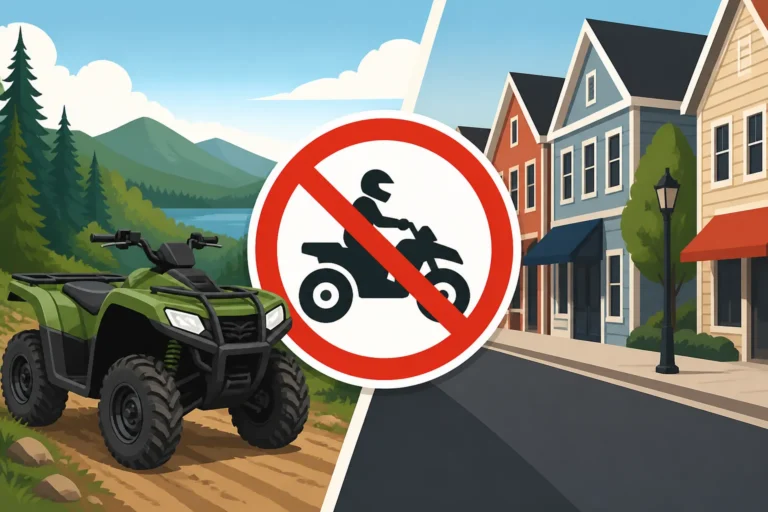
When you're out on the trails or exploring back roads, you'll notice signs and rules that strictly govern how and where ATVs, including UTVs, can interact with public ways. The infamous "500-yard rule" is a prime example of this: ATVs are generally allowed to cross public ways or operate on the extreme right of a public way for a maximum distance of 500 yards. This is a far cry from the open-ended road access many owners dream of. [Maine's 500-Yard Limit on a Public Way] This foundational classification means that even if your UTV has all the bells and whistles of a road vehicle, it's still legally considered an ATV, and its road use is heavily restricted. This is often the biggest hurdle and the source of the most confusion for side-by-side owners hoping for full street legality.
What "Road Legal" Actually Means in Maine for an ATV/UTV
So, if full street legality like a car isn't typically on the table, what does "road legal" actually mean for your side-by-side in Maine? Primarily, it refers to your ability to operate on designated ATV access routes, approved crossings, and within specific town ordinances that have opened up certain roads to ATV traffic. It's about limited road access, not unrestricted driving on highways or main thoroughfares. Many towns across Maine recognize the economic benefits of allowing ATV access to businesses, and they go through a process to officially designate roads or sections of roads as ATV access routes.
This designation often comes with specific rules, like speed limits, times of day when riding is permitted, and adherence to all other ATV laws. These town-by-town decisions are what allow you to connect trails, ride into a village for supplies, or access a gas station. [How a Maine Town Designates an ATV-Access Route] You won't be getting a standard license plate from the Bureau of Motor Vehicles (BMV) in these scenarios; you'll be operating under your standard Maine ATV registration. For most UTV owners, this is the practical extent of "road legal" operation in Maine. The idea of truly making a UTV a street-legal vehicle, akin to a car, is a complex and often unachievable goal under current state law, designed for very specific types of low-speed vehicles that most UTVs don't fit into.
Navigating the Equipment Requirements for Road Use (Where Applicable)
Even with the limitations on full street legality, there are still crucial equipment considerations for operating your side-by-side on any public way in Maine, even if it's just for a crossing or a designated access route. Ensuring your machine is properly equipped is not just about legality; it's about safety for yourself, your passengers, and others sharing the road. Neglecting these items can lead to fines and, more importantly, put you at risk.
Essential Gear for Designated ATV Access Routes
When you're riding on any public way, even an approved ATV access route, your side-by-side needs to be as visible and communicative as possible. This is where many of the features already built into modern UTVs come in handy, but some additions might be necessary.
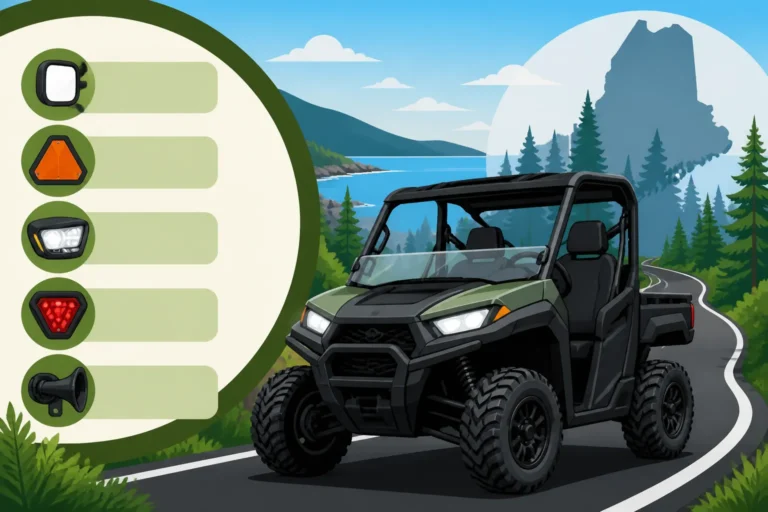
First, proper lighting is non-negotiable, especially if there's any chance you'll be riding near dusk or dawn. You need working headlights, taillights, and brake lights. These aren't just for seeing; they're for being seen by other vehicles. While turn signals might not be explicitly mandated by Maine ATV law for every public way interaction, they are highly advisable for safety and clarity, especially on designated routes where you might be sharing the road with cars. Many aftermarket kits, like those offered by SuperATV, provide comprehensive turn signal and lighting solutions that integrate seamlessly with your UTV's existing electrical system, making these upgrades straightforward. [Maine Lighting Requirements for Night Riding]
Second, visibility beyond your front windshield is paramount. A functional rearview mirror, or even side mirrors, is crucial for knowing what's behind you. Some UTVs come with these standard, others might require an add-on. A working horn is also a must-have safety feature, allowing you to alert others to your presence. Lastly, while not directly road-specific, your muffler and spark arrestor must be in good working order. Maine has strict noise limits for ATVs, and a properly maintained exhaust system helps you comply and be a good neighbor on shared routes. [Maine Muffler and Exhaust Noise Limits]
The UTV Conversion Kit Conundrum and Practicalities
Many aftermarket companies, including well-known brands like SuperATV, offer "street legal" conversion kits for UTVs. These kits are incredibly popular, and for good reason: they typically bundle all the necessary components like turn signals, a horn, mirrors, and often a license plate bracket, making it easier for owners to equip their machines for road-adjacent use. The promise these kits offer is alluring – transform your UTV into something more versatile.
However, here's where the "conundrum" comes in: while these kits equip your machine with the features of a street-legal vehicle, they don't automatically legalize it for unrestricted road travel in Maine. The state's classification of your UTV as an "ATV" still largely dictates where and how you can ride on public ways. Installing a SuperATV street legal kit is a fantastic step for improving safety and compliance on designated ATV routes and crossings, ensuring you have turn signals and a horn to communicate with other traffic. [Street-Legal UTV Equipment Lists] But it doesn't change the underlying legal definition of your vehicle.
The practical side of these kits is generally positive: they are designed for DIY installation, and manufacturers provide good instructions. However, it's important to understand that after installation, you won't typically take your UTV to a state inspection station for a "street legal" sign-off like you would a car. Maine's inspection system isn't structured for UTVs in that manner. The responsibility falls to the owner to ensure all components are functional and that they are only operating the UTV on public ways where permitted by law, even with the kit installed.
Registration and Classification: The Maine Hurdle
This is where many UTV owners hit the biggest wall in their quest for full street legality in Maine. Understanding the nuances of registration and vehicle classification is critical, and unfortunately, it often reveals why the dream of unrestricted road use for a side-by-side remains largely out of reach.
Standard Maine ATV/UTV Registration vs. Vehicle Registration
When you register your side-by-side in Maine, you obtain an ATV registration. This provides you with a sticker that goes on your machine and allows you to legally operate it on Maine's extensive ATV trail system, approved crossings, and designated town access routes. [Maine ATV Registration and How It Differs] This registration confirms your UTV is a recognized off-highway vehicle, but it does not confer the same rights and privileges as registering a traditional "motor vehicle" with the Bureau of Motor Vehicles (BMV), like a car, truck, or motorcycle.
The core issue lies in the federal vehicle identification number (VIN) and manufacturer's classification. UTVs are typically manufactured and classified as off-highway vehicles, not as vehicles meeting federal motor vehicle safety standards (FMVSS) for road use. This distinction is paramount in Maine. The BMV primarily registers vehicles that meet these federal standards and are designed for primary road use. Attempting to register a UTV as a "motor vehicle" in Maine often runs into a brick wall because its VIN and manufacturing designation don't align with what the state's vehicle registration system is set up to handle. Without that federal stamp of approval as a street-legal vehicle from the factory, Maine's BMV has no clear pathway to issue a traditional license plate for your UTV.
The Low-Speed Vehicle LSV & Golf Cart Exception (and why it rarely applies to UTVs)
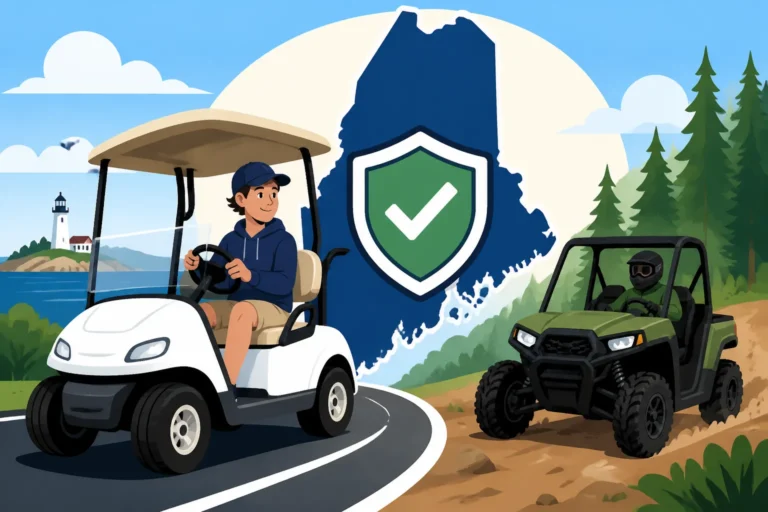
You might have heard of golf carts or Low-Speed Vehicles (LSVs) being registered for street use in some Maine towns, and logically wonder why your UTV can't follow suit. It's a valid question, but unfortunately, these categories have very specific definitions that most modern UTVs simply don't fit. [Maine Golf Cart Rules on Town Streets]
Maine law, like many states, defines LSVs and golf carts with strict parameters regarding top speed (often capped around 20-25 mph), weight, and specific safety features. These vehicles are designed for short-distance, low-speed travel in certain communities, often coastal towns or planned developments, and are limited to roads with specific speed limits. Most performance UTVs, with their higher top speeds, larger engines, and greater weight capacities, far exceed these LSV and golf cart definitions. While your UTV might have some of the safety features, its inherent design and capabilities push it far beyond these categories, making it ineligible for LSV registration. This is a common misunderstanding: just because some small, slow vehicles can be "street legal" in a limited sense, it doesn't mean the same path is open for a powerful side-by-side.
The Real-World Impact: What You Can and Can't Do
Given the current legal framework, the real-world impact for side-by-side owners in Maine is that your machine will, for almost all intents and purposes, remain classified as an ATV. This means your primary riding will be on the vast network of ATV trails, private land with permission, and those specific designated ATV access routes where towns have explicitly allowed their use.
Even with a full aftermarket "street legal" kit from a company like SuperATV installed, your UTV still carries an ATV registration decal, not a traditional license plate. This distinction is crucial when encountering law enforcement. You'll always need to carry your current ATV registration paperwork with you while riding. [Do You Carry Registration Papers While Riding?] Wardens and local police will be checking for your valid ATV registration, not a car registration.
Therefore, while you can equip your UTV for maximum safety and visibility on public ways, it's essential to manage expectations. Full, unrestricted road access akin to a car is not generally possible. Your best bet for maximizing road-adjacent use is to be intimately familiar with local town ordinances, as these vary widely. What's allowed in one town for connecting trails or accessing a gas station might be strictly prohibited in another. [Maine Town Ordinances That Restrict ATVs] Always check the local rules before venturing onto any public way, even if you're just crossing.
Here's a quick comparison of the different vehicle classifications in Maine:
| Feature/Requirement | Standard ATV/UTV Registration (Maine) | Traditional Street-Legal Vehicle (Car/Truck) | "Street-Legal" UTV Conversion (Reality in Maine) |
|---|---|---|---|
| Primary Purpose | Trail & Off-Road | Public Roads & Highways | Trail with Limited Road Access |
| Required Equipment | Head/Taillights, Spark Arrestor | DOT Lights, Horn, Mirrors, Seatbelts, etc. | DOT Lights, Horn, Mirrors, Turn Signals (via kit) |
| State Classification | ATV/UTV | Motor Vehicle | ATV/UTV (typically) |
| Registration Type | ATV/UTV Sticker/Decal | License Plate | ATV/UTV Sticker/Decal (usually) |
| Road Access | Designated trails, crossings, specific town routes (500-yard limit common) | Unrestricted on public roads/highways | Designated trails, crossings, specific town routes (limited by ATV classification) |
| Inspection Requirements | None typical | Annual Safety/Emissions | None typical, but conversion kits require careful installation |
| Legal Pathway for Road Use | Clear for designated ATV routes | Clear for cars/trucks | Very murky/non-existent for full street legality |
In conclusion, while the dream of a fully street-legal side-by-side driving freely on Maine's roads is enticing, the current legal and classification system in Maine makes it an extremely challenging, if not impossible, endeavor for most UTVs to achieve the same road access as a car. Focus your efforts on equipping your machine for safety on permitted routes, understanding the specific limitations, and thoroughly enjoying Maine's vast and beautiful ATV trail network.
Disclaimer
This article is for general informational purposes only and does not constitute professional advice. Laws, prices and regulations vary by location and change over time. Consult a qualified professional for guidance on your specific situation.