Maine Towns That Restrict ATVs on Public Ways
It's incredibly frustrating when you're planning a fantastic ATV or UTV ride through Maine's beautiful landscapes, only to realize that certain towns have a patchwork of rules about where you can and can't ride on public ways. This can turn a simple day trip into a complicated navigation challenge, leaving many riders feeling confused and restricted. This comprehensive guide will help you understand why these local restrictions exist, how to identify them, and most importantly, how to navigate them safely and legally so your Maine adventures stay on track.
Why Some Maine Towns Limit ATV/UTV Access on Public Ways
Maine is famous for its vast network of ATV trails, but the moment those trails intersect with or utilize public roads, local towns often step in with their own set of rules. This isn't always about being anti-ATV; it stems from a mix of genuine concerns that towns have to balance for all their residents and visitors. Understanding these reasons can help you grasp the "why" behind what sometimes feels like arbitrary restrictions.
Concerns Over Rider Safety and Public Interaction
One of the primary drivers behind local restrictions is public safety. Many town roads, especially in busier village centers or along scenic coastal routes, were simply not designed with ATV or UTV traffic in mind. There are often blind corners, narrow shoulders, and mixed-use traffic including cars, bicycles, and pedestrians. Town officials worry about the potential for accidents when ATVs and UTVs mix with traditional road vehicles, especially given the different speeds, handling characteristics, and visibility of these machines.
Think about a small, charming coastal town where tourists and residents alike are walking, cycling, or driving at leisurely paces. Introducing a stream of off-road vehicles, even if they're moving slowly, can create an entirely new set of safety considerations. Residents might express concerns about children playing near roads, pets, or just the general comfort level of their community. It's a tricky balance for towns to manage the safety of all road users while also providing access for recreational riders, and often, the scales tip towards restricting ATV/UTV access in areas deemed high-risk or high-traffic.
Road Wear, Noise, and Environmental Impact
Beyond direct safety, towns also grapple with issues of road infrastructure, noise, and potential environmental impact. While ATVs and UTVs are designed for rough terrain, their continuous use on paved or even well-maintained gravel town roads can contribute to wear and tear over time. Repairing these roads falls to the local municipality, which relies on taxpayer dollars. Some officials might argue that allowing extensive ATV/UTV traffic increases maintenance costs without a clear benefit to the local tax base, particularly if many riders are visitors.
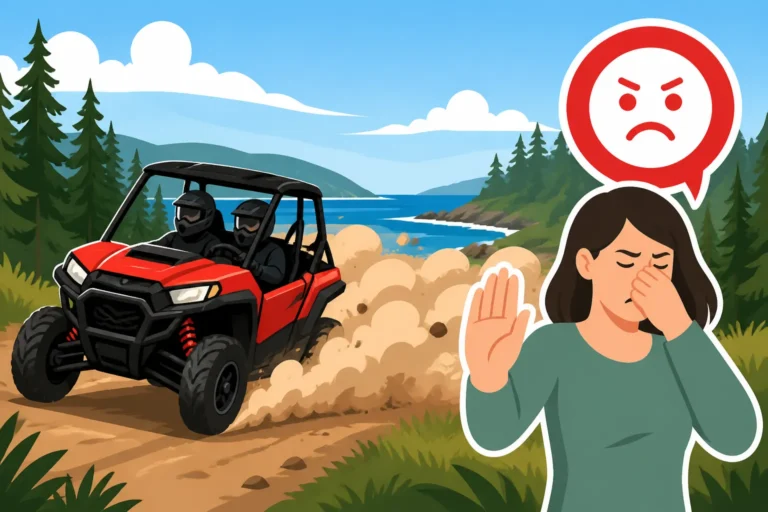
Noise is another significant factor, especially in residential areas or quiet village settings. The distinct sound of an ATV or UTV engine, even a well-maintained one, can be perceived as disruptive by residents who value tranquility. Similarly, concerns about exhaust emissions, dust kicked up on gravel roads, or the potential for off-trail incursions into sensitive natural areas can lead towns to impose limits. These are not always easily dismissed concerns, and they play a substantial role in shaping how and where towns permit [Riding an ATV on the Road in Maine].
How Local Ordinances Restrict ATV/UTV Use
When a town decides to restrict or permit ATV/UTV access on its public ways, it's typically done through formal legal processes. This isn't just a sign posted by a random resident; these are codified rules that carry the weight of local law, making it crucial for riders to understand how they come into being and what they mean. Ignoring these local regulations can lead to tickets, fines, or even more serious consequences, especially if wardens are conducting [Maine Warden Enforcement on Public Ways].
The Authority of Town Meetings and Select Boards
In Maine, many towns operate with a direct democracy model, meaning that significant decisions, including the creation of local ordinances, are often approved by citizens at an annual town meeting or through a special vote. This is where [Maine Select Board ATV Route Votes] come into play. A town's select board or council might propose an ordinance to regulate ATV/UTV use, but ultimately, the community has a say. This process allows residents to voice concerns, propose amendments, or even block proposed access routes.
The ordinances can be quite specific, outlining which roads are open, which are closed, and under what conditions. They might permit ATV/UTV use only for certain purposes, like accessing a trail or a specific business, or they might define a "corridor" through town that connects two larger trail systems. This local control means that rules can vary wildly from one town line to the next, creating a confusing patchwork for riders who are just trying to enjoy the trails.
Specific Road Segments and Designated Access Routes
One common way towns manage ATV/UTV access is by designating specific road segments as "ATV/UTV access routes" while prohibiting use on all other public ways. These designated routes are usually carefully chosen to minimize impact on residential areas, connect to established trails, or provide access to services like gas stations and restaurants. The town will often work with local ATV clubs or the Bureau of Parks and Lands to identify appropriate routes and ensure they meet safety criteria.
You might find that a town allows ATVs on certain unpaved roads, or only on a very short stretch of paved road needed to link up with a larger trail network. The signs for these access routes are crucial – if you don't see a clear sign permitting ATV/UTV travel, you should assume it's prohibited. It's important to remember that these are not open invitations to ride anywhere in town; they are very specific permissions for very specific routes. Riders should always be on the lookout for [Maine ATV-Access Routes and How Towns Post Them].
Signage, Enforcement, and Potential Penalties
The proper posting of signs is paramount to an effective local ordinance regarding ATV/UTV use. Towns are typically required to clearly mark roads that are open for ATV/UTV access and those that are specifically closed. These signs are your primary guide when riding, and you should always defer to them. If a road isn't clearly marked as an "ATV/UTV Access Route," it’s best to err on the side of caution and assume it’s off-limits.
Local law enforcement, including town police and Maine Inland Fisheries & Wildlife (IF&W) wardens, are responsible for enforcing these municipal ordinances. Violating a town's ATV/UTV restrictions can result in fines and other penalties. These fines can add up quickly, especially if you're caught in multiple restricted areas. It's not uncommon for wardens to patrol areas known for violations, so understanding and obeying local rules isn't just about being a good citizen, it's about avoiding a costly disruption to your ride.
Strategies for Identifying Restricted Towns and Routes
The biggest hurdle for riders in Maine often isn't the trails themselves, but figuring out the ever-changing landscape of local road rules. It can feel like you need a legal degree just to plan a multi-town ride! Thankfully, there are several reliable ways to get the most up-to-date information on which towns restrict ATV/UTV access and where you can legally ride.
Tapping Into Local ATV Clubs and Community Resources
One of the absolute best resources for local ATV/UTV regulations is a local ATV club. These clubs are often deeply involved in trail maintenance, landowner relations, and working with towns to establish and maintain access routes. They have firsthand knowledge of ordinances, local politics, and any recent changes. Many clubs maintain websites, Facebook groups, or even dedicated phone lines where you can ask specific questions about riding in their area.
Joining a club, even as a visiting member, is a fantastic way to support the trails and gain access to this invaluable local knowledge. Club members are usually passionate riders who are more than happy to share insights and warn you about potential pitfalls. You can find information on specific clubs and their areas of operation by looking at larger organizations like ATV Maine. They often have [Maine ATV Club Membership and Dues] information and can direct you to local groups.
Checking Official Town Websites and Clerk's Offices
For the most official and legally binding information, always go directly to the source: the town itself. Most towns in Maine have official websites where they post their municipal ordinances, including those related to ATV/UTV use. Look for sections on "Ordinances," "Bylaws," "Town Clerk," or "Public Works." You might have to dig a little, but the information is usually there.
If you can't find it online, or if you want to confirm something, don't hesitate to call the town clerk's office. Town clerks are the keepers of official records and can tell you where to find the relevant ordinance or even email you a copy. While it might feel like a bit of detective work, knowing you have accurate, current information directly from the town can save you a lot of headache and potential fines down the trail.
Utilizing Online Mapping Tools for Route Planning
In addition to local clubs and town offices, modern technology offers powerful tools for planning your rides. Many GPS apps and dedicated off-road mapping platforms now incorporate designated ATV/UTV trails and, increasingly, mark public roads where access is permitted or restricted. While these tools can be incredibly helpful for visualizing your route, it's crucial to remember that map data can sometimes lag behind real-world changes in town ordinances. Always cross-reference with local knowledge or official town information when possible.
Platforms like onX Offroad are popular for this, providing detailed satellite imagery and user-generated trail data. Some riders even use accessories from companies like SuperATV that integrate with GPS units or offer durable, waterproof tablet mounts for on-the-go navigation. These can display your location relative to marked trails and roads. However, always exercise caution; a map is a guide, but local signage and town ordinances are the law. It’s a great way to get a general overview of [Maine Trail Maps and Club Boundaries].
Common Restrictions Riders Encounter
Maine towns have a wide variety of approaches when it comes to managing ATV/UTV traffic on their public ways. While some embrace it for tourism and trail connectivity, others are far more cautious. This means riders need to be prepared for a range of rules, often changing as you cross municipal lines. It's a key part of understanding [Maine Town Ordinances That Restrict ATVs].
Complete Bans and Limited Season Access
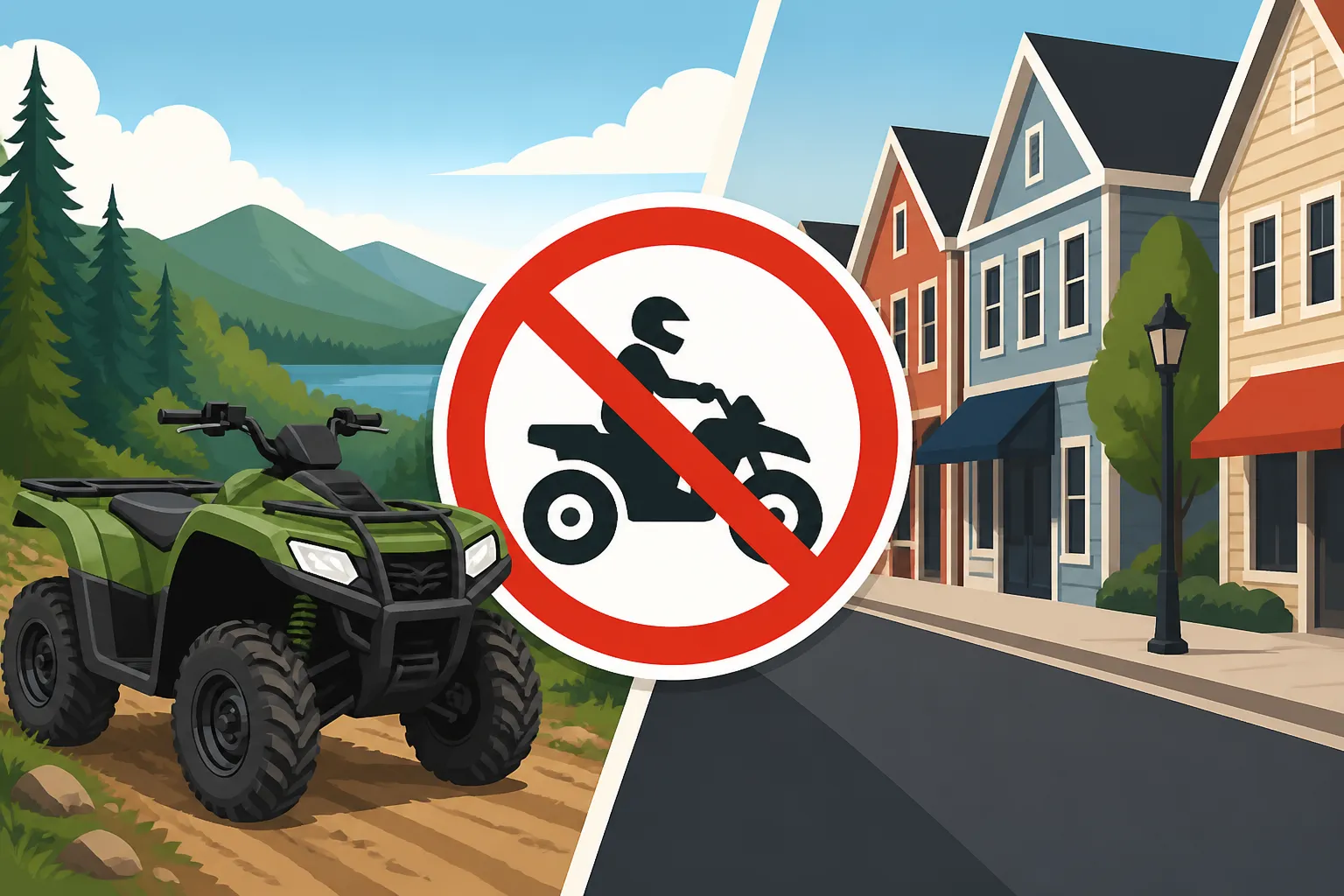
The most straightforward restriction you might encounter is a complete ban on ATV/UTV access on any public way within a town's limits. These towns have decided that for safety, noise, or environmental reasons, they simply won't permit off-road vehicles on their roads. This often happens in denser residential areas, historic village centers, or towns that prioritize quiet tourism. If you encounter a town with a complete ban, your only option to pass through is usually to trailer your machine around it.
Other towns might implement seasonal restrictions. For example, some might allow ATV/UTV use on certain roads only during the summer or fall, when tourism is higher and designated trails are fully open, but close them down during mud season or winter. This helps prevent damage to unpaved roads when they are softest or avoids conflicts with snowmobile trails. Always check the specific dates if a town has seasonal access rules.
Speed Limits and Time-of-Day Rules
Even in towns that permit ATV/UTV access on public ways, you'll almost certainly find specific rules designed to minimize disruption and enhance safety. Speed limits are a common one. While the general state law allows for higher speeds on trails, towns often impose much lower speed limits on their roads, especially near residences or businesses. You might see signs indicating "ATV/UTV 10 MPH" or similar restrictions. Adhering to these lower limits is crucial for safety and for maintaining positive town relations. [Maine ATV Speed Limits Near Buildings] is a common restriction that towns will implement.
Time-of-day restrictions are another frequent rule. Towns might prohibit ATV/UTV use on public roads before a certain hour in the morning (e.g., 7 AM) or after a specific time in the evening (e.g., 9 PM). This is largely to address noise complaints, allowing residents peace and quiet during typical sleeping hours. These rules mean that planning early morning or late-night rides that involve town roads may require re-routing or trailering.
Specific Equipment Requirements or Prohibitions
While less common than bans or speed limits, some towns might have specific equipment requirements or even prohibitions for ATVs and UTVs operating on their public ways. This could include mandates for certain types of lighting, turn signals, or even mirror requirements, especially if the town is attempting to align with some semblance of "street legal" standards for safety. Though these might not be explicitly Maine state law for off-road vehicles, a local ordinance can supersede or add to state requirements within that town's boundaries.
Additionally, certain types of aftermarket modifications, particularly those affecting noise levels, might be scrutinized or even prohibited by local ordinances. If your machine features a loud exhaust from a brand like SuperATV or another performance parts manufacturer, it's wise to be extra mindful of town noise ordinances. While quality aftermarket parts enhance performance, ensuring they comply with local sound regulations is part of being a responsible rider and can help prevent towns from imposing stricter overall bans.
Navigating Restricted Areas Responsibly
Encountering a restricted area isn't the end of your ride, but it does require a shift in strategy. The key to continuing your adventure without running afoul of local laws is careful planning and a commitment to responsible riding practices. It's about respecting the local community and the rules they've put in place.
Planning Ahead and Carrying Necessary Documentation
Before you even load your machine, thorough route planning is essential. Use all the resources at your disposal: club maps, town websites, and online mapping tools. Identify potential restricted zones and plan alternative routes or points where you'll need to trailer your machine. Having a physical map or a downloaded offline map on your GPS or phone is also a good idea, especially in areas with spotty cell service.
Always carry your valid registration for [What It Takes to Register an ATV in Maine], proof of ownership, and any required safety certifications. If you're riding a youth machine, make sure you understand [Youth Machine Size Limits for Maine Riders] and any specific rules about supervision. While not always required by law, having written permission if you're crossing private land that connects to town routes can also save you headaches. Being prepared with your paperwork demonstrates you're a responsible rider.
Trailering Around Forbidden Zones
Sometimes, the simplest and most compliant solution to a town's restriction is to trailer your ATV or UTV around the prohibited section. This might mean driving a few miles down the highway to bypass a village center that doesn't allow ATVs, and then unloading again to continue on a permitted trail. While it adds a small amount of time and effort, it completely eliminates the risk of fines and ensures you're respecting local rules.
Many trail systems have designated staging areas or trailheads on either side of restricted towns, specifically to facilitate this "trailer around" approach. Look for these parking areas on trail maps. It might not be as seamless as riding straight through, but it's a small inconvenience compared to a hefty ticket or the frustration of being turned back by a warden.
Practicing Respectful and Law-Abiding Riding
Ultimately, the future of ATV/UTV access on public ways in Maine often hinges on the behavior of riders. When you are in a town with permitted access, ride slowly, quietly, and courteously. Maintain low speeds, especially near homes, businesses, and pedestrians. Avoid excessive engine revving or sudden acceleration. Always adhere to [Maine's Stop-and-Yield Rule Before a Public Way] and other traffic laws.
Treat all property with respect, stay on marked routes, and never trespass. Even if a particular town allows access, a single incident of irresponsible riding can lead to residents pushing for tighter restrictions or even outright bans. By consistently demonstrating that ATVs and UTVs can share public spaces responsibly, riders contribute to a positive image that can help maintain or even expand access in the long run.
Advocating for More ATV/UTV Access
It's easy to feel frustrated by restrictions, but sitting back and grumbling won't change anything. If you want to see more ATV/UTV access on public ways in Maine, becoming an active advocate is the most effective way to make a difference. Positive change usually comes from organized, respectful engagement with local communities and decision-makers.
Engaging With Town Officials and Attending Public Hearings
The first step in advocating for increased access is to engage directly with your town's leadership. Attend town meetings, especially those where ATV/UTV ordinances are on the agenda. Write polite, well-reasoned letters or emails to your select board members or town councilors. Frame your arguments not just from a recreational standpoint, but also by highlighting the potential economic benefits that responsible ATV/UTV tourism can bring to local businesses like gas stations, restaurants, and lodging establishments.
When speaking with officials, come prepared with facts, not just opinions. Explain how other towns have successfully integrated ATV/UTV access, or propose specific, well-thought-out routes that address safety and noise concerns. Be prepared to listen to their concerns as well, and work towards solutions that balance rider access with community needs. Understanding how [Maine Select Board ATV Route Votes] work is crucial for effective advocacy.
The Power of Local ATV Clubs in Building Relationships
Local ATV clubs are truly the backbone of the trail system in Maine, and they are incredibly powerful advocates for rider rights and access. These clubs often have established relationships with landowners, town officials, and state agencies. They understand the nuances of local politics and have a track record of responsible trail management. If you're serious about seeing more access, joining and actively participating in a local club is one of the most impactful things you can do.
Clubs often organize work parties, maintain trails, and act as a unified voice for riders in discussions with towns. Their collective efforts can be far more persuasive than individual complaints. Many clubs are keen to expand their trail networks and connect communities, and they often know the specific barriers or opportunities for opening new road segments. Becoming part of a club directly strengthens this advocacy.
Demonstrating the Economic Benefits of Responsible Riding
One of the most compelling arguments for opening up public ways to ATV/UTV traffic is the economic benefit it can bring to a town. Riders often stop for gas, grab a meal, purchase supplies, or even book lodging in towns that offer good access to trails. This influx of recreational dollars can be a significant boost for small local businesses, particularly in rural Maine.
When advocating, highlight these economic advantages. Gather data if possible, or share anecdotes about how ATV/UTV riders support local establishments. Contrast this with the potential loss of business if riders choose to bypass a town entirely due to restrictive ordinances. By presenting a strong case for the economic value of responsible ATV/UTV tourism, you can often turn skeptics into supporters and encourage towns to reconsider overly restrictive policies, ultimately reducing the number of [Maine Towns That Banned ATVs on Public Ways].
| Aspect to Check | Where to Find Information | Key Details to Look For |
|---|---|---|
| Town Ordinances | Town's Official Website (Clerk/Ordinances Section) | Specific roads open/closed, time-of-day limits, speed limits |
| Local ATV Clubs | Club Website, Facebook Group, ATV Maine Directory | Current trail conditions, local "hot spots" for wardens, upcoming changes |
| Town Clerk's Office | Call or visit during business hours | Official copies of ordinances, clarification on ambiguities |
| On-the-Ground Signs | Look for physical signs at road intersections and trailheads | "ATV Access Route," "No ATV/UTV," specific speed/time rules |
| Online Mapping Apps | onX Offroad, Polaris Ride Command, other GPS platforms | Visual representation of open/closed routes (cross-reference!) |
Disclaimer
This article is for general informational purposes only and does not constitute professional advice. Laws, prices and regulations vary by location and change over time. Consult a qualified professional for guidance on your specific situation.