Maine Interstate and Toll Road Restrictions
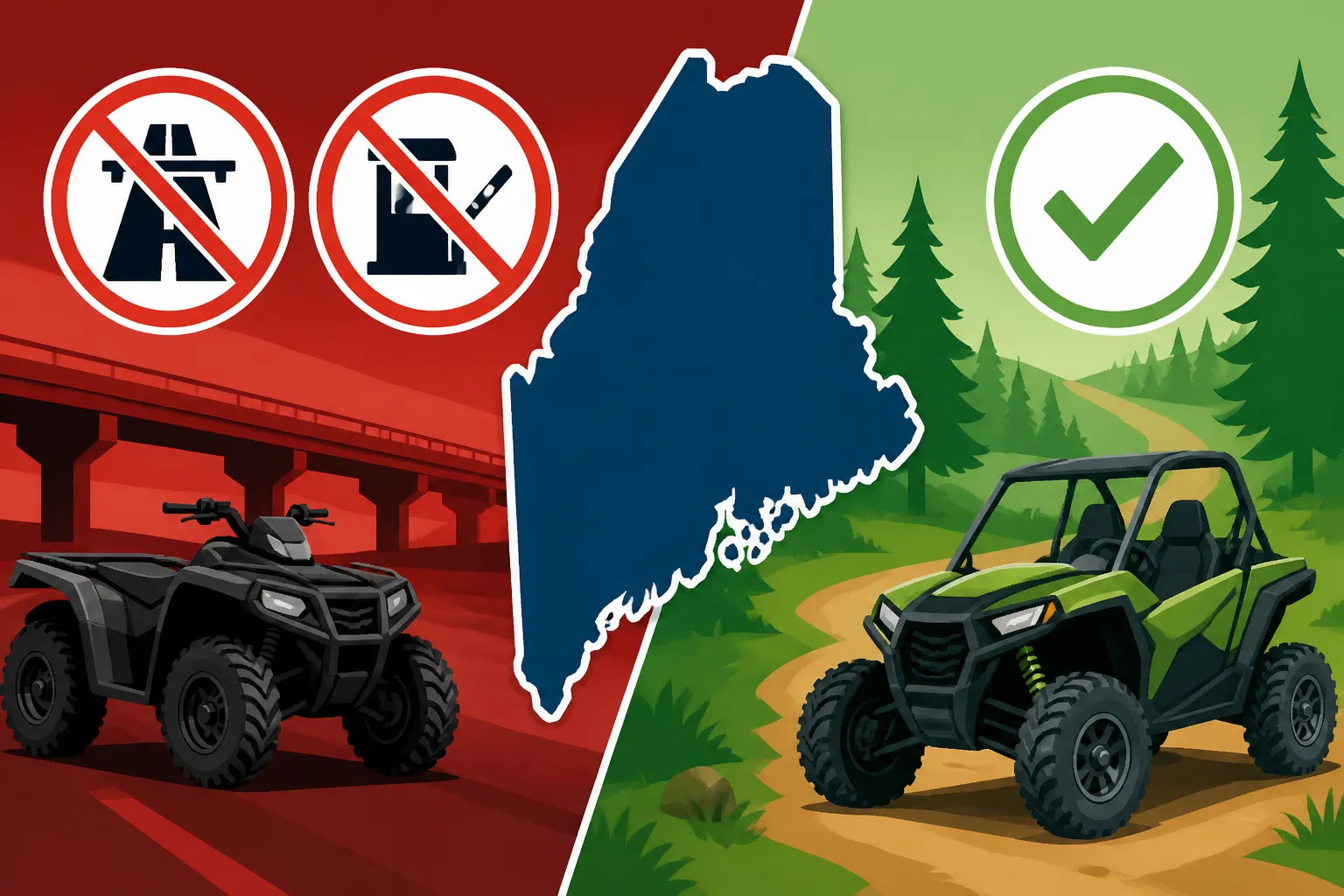
There's a common frustration many of us feel when we're out enjoying Maine's incredible ATV and UTV trails. You're riding along, having a blast, and suddenly you hit a section where you just need to get from point A to point B quickly, perhaps to another trail system, a gas station, or even a local eatery. You look at the map, see an interstate or a toll road nearby, and that little voice in your head wonders, "Could I just jump on there for a bit? It would save so much time!" Unfortunately, for the vast majority of us and our beloved machines, the answer is a resounding and legally firm "no." This guide is here to help you understand exactly why Maine's interstates and toll roads are off-limits for ATVs and UTVs, what the law says, and how you can navigate around these restrictions to keep your adventures safe and legal.
The Harsh Reality: Why ATVs and UTVs Are Barred from Maine's Interstates and Toll Roads
It's easy to look at a map and see the straight lines of I-95 or the Maine Turnpike as a tempting shortcut. After all, they connect so many parts of our beautiful state! However, the very design and purpose of these high-speed roadways make them fundamentally incompatible with off-highway vehicles like ATVs and UTVs. The restrictions aren't arbitrary; they're rooted deeply in safety, vehicle design, and legal classifications that prioritize the well-being of all road users.
Safety Concerns and Speed Differentials
Imagine a large tractor-trailer thundering down the interstate at 70 miles per hour, suddenly encountering a UTV puttering along at 35 or 40. The speed differential alone creates an incredibly dangerous situation. ATVs and UTVs, even the fastest models, are simply not built to sustain highway speeds safely, nor are they designed to quickly accelerate or brake to match the flow of traffic that can often exceed posted limits.
This isn't just about speed; it's about the entire dynamic of highway travel. Vehicles on interstates are designed with crumple zones, advanced braking systems, and robust suspensions to handle the forces and speeds involved. An ATV or UTV, with its open cockpit, exposed components, and lighter build, offers minimal protection in a collision with a passenger car, let alone a commercial truck. The risk of severe injury or fatality for ATV/UTV occupants is astronomically high in such an environment. It’s a terrifying scenario to even consider, which is precisely why these rules are in place.
Design Limitations and Legal Classifications
Beyond speed, there are fundamental differences in how ATVs and UTVs are designed compared to street-legal vehicles. Take the braking system, for instance. While perfectly adequate for trails and dirt roads, ATV/UTV brakes are not typically designed for repeated high-speed stops or sudden emergency braking maneuvers on asphalt at highway speeds. The tires, often knobby and optimized for grip on loose terrain, can handle poorly on pavement, especially at speed, leading to reduced control and faster wear.
Then there's the legal side. In Maine, ATVs and UTVs are specifically defined as off-highway recreational vehicles (OHRV). This classification means they don't meet the stringent federal and state requirements for on-road vehicles. They often lack necessary safety features like appropriate lighting for highway visibility, turn signals that meet DOT standards, robust mirrors, and specific chassis designs to withstand highway impacts. Even if you've added some "street-legal" accessories to your UTV, perhaps from a company like SuperATV, to make it compliant for local road use, those additions don't magically transform it into a vehicle suitable or legal for interstate travel. It's a critical distinction many riders often misunderstand.
Understanding Maine's Legal Framework for ATV/UTV Road Use
Maine's laws regarding ATV and UTV use on public ways are quite clear, especially when it comes to high-speed, limited-access roads. While there are some allowances for crossing or using specific town roads, these exceptions do not extend to the vast network of interstates and toll roads. Understanding these legal definitions is key to staying out of trouble and planning your rides responsibly.
The "Public Way" Definition and Its Exceptions
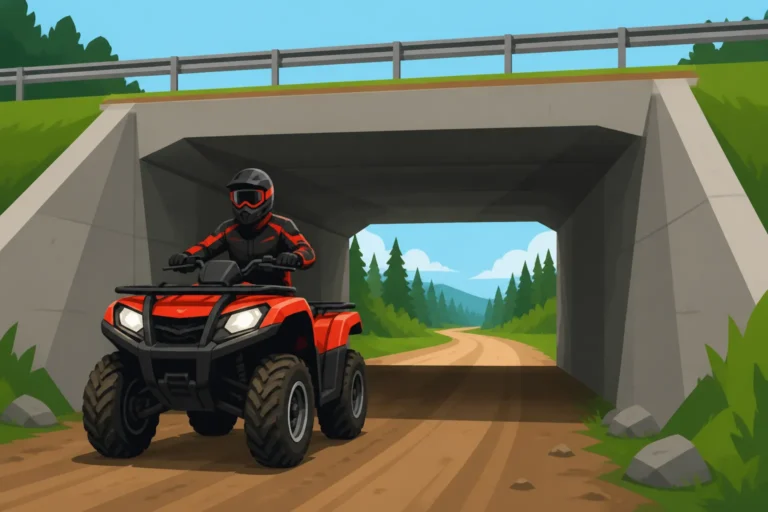
In Maine, a "public way" is a broad term that includes any road, highway, street, or public land where vehicles typically operate. For ATVs and UTVs, the general rule is that they are prohibited from operating on a public way. However, Maine law provides very specific, limited exceptions to this rule. For instance, you might be allowed to cross a public way at a 90-degree angle, after coming to a complete stop and yielding to traffic, and only if the crossing doesn't interfere with traffic flow. We've got a detailed post about [Maine's 500-Yard Limit on a Public Way] if you want to dive deeper into those specific rules.
Some towns in Maine have also designated specific "ATV-access routes" that allow these machines on certain town roads, often marked clearly with signs. These routes are a fantastic way for riders to connect different trail systems or access local businesses. However, it's absolutely crucial to remember that these designated routes are established at the local level, typically on town-maintained roads, and never on state-owned interstates or toll roads. It's a system designed to integrate off-road recreation with local communities, not to open up major highways to ATVs.
Specific Prohibitions on Limited Access Highways
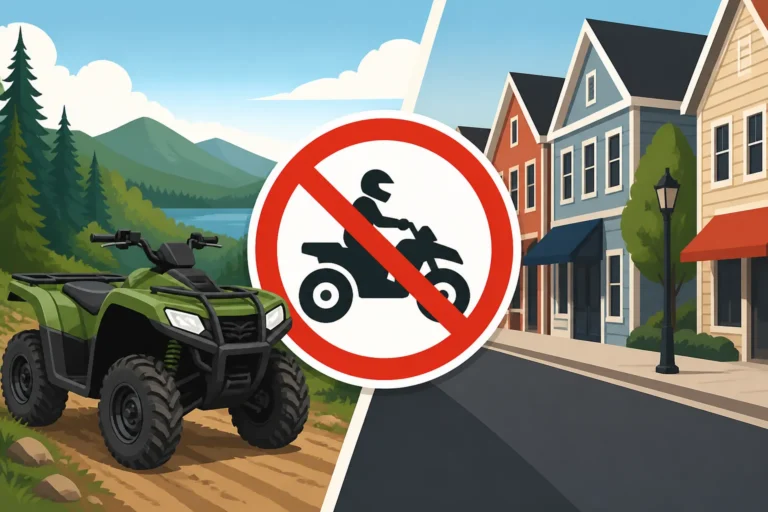
Maine law is explicit about where ATVs and UTVs are absolutely forbidden. The statutes clearly prohibit the operation of these vehicles on limited-access highways, which include interstates like I-95 and the Maine Turnpike. These roads are designed solely for high-speed, motorized vehicles that meet specific highway safety standards. The law doesn't make exceptions for vehicles that look street legal, or for short distances, or for emergencies that don't involve life-threatening situations where an ATV is the only means of assistance.
The rationale behind these specific prohibitions is multi-faceted:
- Safety of All Motorists: As discussed, the speed and design differentials pose an unacceptable risk.
- Traffic Flow: The presence of slow-moving vehicles can disrupt traffic flow, leading to hazards like sudden braking or lane changes.
- Maintenance and Infrastructure: Interstates are maintained for specific vehicle types, and ATVs/UTVs are simply not part of that design.
- Legal Precedent: This prohibition is standard across most states for the same safety reasons.
So, while you might hear stories or see someone attempt to ride on an interstate shoulder in another state (which is still highly illegal and dangerous), do not assume this is permissible or safe in Maine. The Maine Warden Service and local law enforcement actively patrol and enforce these regulations, and the consequences of being caught can be severe. Understanding this ironclad rule is the first step in responsible ATV/UTV ownership in Maine.
Practical Alternatives for Connecting Trails and Destinations
Given that interstates and toll roads are a no-go, how do you manage to connect distant trail systems or reach that remote diner your buddies were raving about? The good news is that Maine offers plenty of legal and often scenic alternatives. It just requires a bit more planning and a realistic understanding of your machine's capabilities and legal limitations.
Leveraging Maine's Extensive ATV Trail Network
Maine boasts an incredible network of [Maine's 6,000 Miles of ATV Trails], carefully managed and maintained by dedicated local clubs. These trails are specifically designed for your machine, offering everything from challenging backcountry terrain to smooth, scenic routes that wind through forests and along waterways. Many of these trails are interconnected, allowing for multi-day trips that span vast regions of the state without ever touching a major highway. You can ride from town to town, finding gas, food, and lodging directly accessible from the trails.
Clubs work tirelessly to secure landowner permissions and maintain these routes, making them the safest and most enjoyable way to explore Maine. Utilizing resources like [Maine Trail Maps and Club Boundaries] from ATV Maine or local club websites can help you plan extensive rides that keep you off prohibited roads entirely. This is the essence of Maine's ATV experience – embracing the trails, not trying to force your machine onto roads it wasn't built for.
Utilizing Designated ATV Access Routes and Town Ordinances
As mentioned earlier, many Maine towns, particularly in popular riding regions, have embraced ATV tourism by establishing designated [Maine ATV-Access Routes and How Towns Post Them]. These routes typically use less-trafficked town roads, allowing riders to travel between trailheads, access services like grocery stores and restaurants, or even connect to other trail systems without using a trailer. These routes are usually clearly marked with specific signage indicating where ATVs and UTVs are permitted.
When riding on these designated routes, remember that you are sharing the road with cars, trucks, and pedestrians. Maine law typically requires you to ride to the extreme right of the traveled way, obey all traffic laws, and exercise caution. While these routes are a fantastic amenity, they are not a loophole for interstate travel. They are strictly limited to the specific town roads designated by local ordinance and are designed to enhance the trail system, not replace it with highway access. Always check local town ordinances or consult with local ATV clubs to understand the specific rules for a given area, as they can vary significantly.
The Role of Trailering and Transport
For longer distances, or when you need to bypass a section of prohibited road, trailering your ATV or UTV is the safest, most legal, and often most efficient option. Think of your truck and trailer as your personal ATV shuttle service. You can drive to a trailhead near your desired riding area, unload, and then enjoy the trails without worrying about breaking the law or endangering yourself on a highway. We have a great resource on [Trailer Registration for Hauling ATVs in Maine] that covers everything you need to know about getting your trailer ready for the road.
Many riders invest in specialized trailers and tie-down equipment to make transport easy and secure. Companies like SuperATV offer a range of accessories, from sturdy tie-downs to ramps and cargo solutions, that can make trailering your machine much more convenient. It's an essential part of responsible ATV/UTV ownership, especially if you plan to explore different regions of Maine. This approach allows you to enjoy the full breadth of Maine's trail system, even if the trailheads are far apart, ensuring you're always riding where you're supposed to be.
| Road Type | ATV/UTV Permitted? | Key Restrictions/Notes |
|---|---|---|
| Interstates/Turnpikes | No | Explicitly prohibited by state law. High speed, safety risks. |
| State Highways (non-interstate) | Generally No | Prohibited unless specifically designated as an ATV access route by town or state. |
| Town Roads | Yes, in designated areas | Only on signed ATV-access routes approved by local ordinance. Must obey all traffic laws. |
| Private Roads/Logging Roads | Yes, with permission | Requires landowner permission. Respect "No Trespassing" signs. |
| Designated ATV Trails | Yes | Specifically designed and maintained for ATVs/UTVs. Always ride legally and responsibly. |
| Crossing a Public Way | Yes, limited | At a 90-degree angle, after stopping, yielding, and not impeding traffic. |
Common Misconceptions and What Happens If You Break the Rules
Despite the clear regulations, there are still a few persistent myths and misunderstandings floating around about ATV and UTV use on Maine's major roads. It's crucial to dispel these notions because the consequences of ignoring the law can be severe, affecting your wallet, your machine, and even your freedom.
The Myth of "Street Legal" for Interstate Travel
One of the biggest misconceptions is that if you make your UTV "street legal," you can then take it anywhere a car can go, including interstates. While it's true that many UTV owners modify their machines with turn signals, rearview mirrors, windshields, and horns (often sourcing parts from reputable manufacturers like SuperATV) to meet requirements for [Can a UTV Be Made Street Legal in Maine?] on town roads, this "street legal" designation typically only applies to specific, lower-speed public ways designated by local municipalities. It almost universally does not grant permission to operate on high-speed, limited-access highways like I-95 or the Maine Turnpike.
These modifications allow your UTV to integrate more safely with slower-moving local traffic on designated routes. They do not magically transform your UTV into a highway-capable vehicle that meets federal highway safety standards for interstates. The fundamental design differences (weight, wheelbase, crash protection, etc.) still mean it's not safe or legal. Don't be fooled by anecdotal stories from other states or by a misunderstanding of what "street legal" truly means in Maine. When it comes to interstates, a "street legal" UTV is still an illegal and dangerous proposition.
Penalties for Riding an Unregistered or Prohibited Vehicle
The Maine Warden Service, State Police, and local law enforcement take these regulations very seriously. If you are caught operating an ATV or UTV on a prohibited roadway, especially an interstate or toll road, you can face significant penalties. These aren't just minor slaps on the wrist; they can hit you hard in the wallet and cause serious headaches.
The fines for operating an ATV or UTV on a public way where it's prohibited can range from hundreds to thousands of dollars, depending on the specific violation and whether it's a repeat offense. Beyond monetary fines, your machine could be impounded, leaving you with towing and storage fees on top of the legal costs. In some cases, operating an unregistered vehicle or in a grossly negligent manner could lead to even more severe charges. We delve into these consequences more deeply in our article [Penalties for Riding an Unregistered ATV in Maine]. Furthermore, interacting with law enforcement on the side of a busy interstate is inherently dangerous for all parties involved, adding another layer of risk to an already ill-advised decision.
Wardens regularly conduct [Maine Warden Service ATV Patrols] on and near designated trail systems and frequently monitor common access points to public ways. They are well-versed in the laws and know where riders might be tempted to break them. It's simply not worth the risk to yourself, your machine, or other motorists to try and take a shortcut on a road where your ATV or UTV doesn't belong.
Planning Your Route: Avoiding the Prohibited Zones
Effective route planning is your best friend when it comes to enjoying Maine's ATV and UTV trails legally and safely. Instead of trying to find ways onto the interstate, focus your energy on finding legal and enjoyable alternatives. A little bit of homework before you leave can save you a lot of trouble, frustration, and potential fines down the road.
Mapping Tools and Local Resources
Gone are the days when a crumpled paper map was your only guide. Today, there's a wealth of mapping tools available specifically for ATV and UTV riders. Apps like onX Offroad or other GPS-enabled mapping solutions often have overlays that show designated ATV trails, public roads, and prohibited areas. These tools can be invaluable for planning multi-day trips or simply navigating a new area. Even a good old-fashioned paper map, cross-referenced with local club maps, can be incredibly helpful, especially in areas with spotty cell service.
When planning, consciously look for trail-to-trail connections, designated ATV access routes through towns, and roads that are specifically listed as open to OHVs. Identify any sections where trailering might be necessary to bridge a gap between two non-connected trail systems. Many local clubs also provide excellent online resources and downloadable maps that are updated regularly, reflecting current trail conditions and closures. Don't forget that if you're looking to grab a bite to eat or fill up, you'll need to know about [Riding to a Gas Station] that is accessible via legal routes.
Engaging with Local ATV Clubs and Wardens
One of the absolute best resources for planning your rides and understanding local regulations are Maine's many dedicated ATV clubs. These volunteer organizations maintain the trails, work with landowners, and are intimately familiar with the local riding landscape. Joining a club, or at least consulting their websites and Facebook groups, can provide you with up-to-the-minute information on trail conditions, closures, designated routes, and any specific local ordinances you need to be aware of. They can often tell you the best ways to get from one point to another without ever encountering an illegal stretch of road.
Similarly, if you have specific questions about a particular area or a planned route, don't hesitate to contact the Maine Warden Service. While they are primarily enforcement, they are also a fantastic source of information about the laws and safe riding practices. They would much rather answer your questions beforehand than issue a citation later. Knowing [What Maine Wardens Ask at a Trail Stop] can also help you understand their priorities and the information you should have readily available. By leveraging these local resources, you can ensure your ride is not only fun but also completely within the bounds of Maine law, keeping you and your fellow riders safe.
Disclaimer
This article is for general informational purposes only and does not constitute professional advice. Laws, prices and regulations vary by location and change over time. Consult a qualified professional for guidance on your specific situation.