Maine Helmet Standards: ANSI and FMVSS 218
Riding the trails and back roads of Maine on your ATV or UTV is an exhilarating experience, a real slice of freedom in the vast wilderness. But there's a serious side to all that fun, especially when it comes to safety gear. Many riders in Maine, particularly those new to the sport or unfamiliar with the specifics, often find themselves scratching their heads over helmet requirements, wondering if their trusty old motocross helmet makes the cut or if they need something entirely different. This guide is here to clear up the confusion surrounding Maine's helmet standards, specifically breaking down what ANSI and FMVSS 218 mean for you, so you can ride confidently and, most importantly, safely.
Understanding Maine's Helmet Law for ATV and UTV Riders
Maine takes rider safety seriously, and for good reason. Accidents, while hopefully rare, can happen, and a helmet is your best line of defense against severe head injuries. It's not just a recommendation; for many, it's the law. Navigating these rules can feel a bit like reading legal jargon, but once you understand the core principles, it all makes sense.
Who Needs to Wear a Helmet in Maine?
Let's cut right to the chase: if you're under the age of 18 and riding an ATV or UTV in Maine, you absolutely must wear a helmet. This isn't a suggestion; it's a non-negotiable legal requirement. This rule applies whether you're operating the machine or riding as a passenger. The state recognizes that younger riders are more vulnerable and have less experience, making proper head protection even more critical. If you're 18 years of age or older, the helmet law doesn't apply to you on most recreational trails. However, there are specific circumstances, particularly when riding on designated public ways, where helmets are required for all riders, regardless of age. For instance, if you're using an ATV or UTV on a public road in an area designated for shared use, or crossing a public way, you might find yourself needing a helmet even if you're an adult. It's always a good idea to check local ordinances and posted signs for these specific rules, as they can vary by town. [Maine Helmet Rules for Riders Under 18] provides a deeper dive into the specifics for younger riders.
The spirit of this law is purely protective. Imagine a scenario: a younger rider, perhaps excited and pushing their limits, encounters an unexpected bump or loose gravel. Without a helmet, even a low-speed tip-over can lead to devastating consequences. The law aims to prevent these tragic outcomes by mandating a piece of equipment proven to save lives and prevent serious injury. It's not about stifling fun, but ensuring that the fun can continue safely for years to come.
The Rationale Behind Helmet Laws
Many seasoned adult riders, especially those who grew up before these laws were widespread, might feel a bit of a tug-of-war with helmet mandates. "I've been riding for decades without one!" is a common sentiment. And it's true, there's a certain feeling of freedom that comes with the wind in your hair. But the statistics paint a stark picture: head injuries are the leading cause of death and serious disability in ATV and UTV accidents. Helmets significantly reduce the risk and severity of these injuries. It's a proven fact.
Think about it this way: your head is incredibly important. It houses your brain, the control center for everything you do. Protecting it isn't just about avoiding a fine; it's about safeguarding your future, your memories, and your ability to enjoy life. The helmet laws, particularly for younger riders, stem from decades of research and countless accident reports that consistently demonstrate the effectiveness of helmets. While you might feel impervious on your machine, unexpected obstacles, changes in terrain, or even another rider's mistake can quickly turn a fun outing into a medical emergency. The law is there as a baseline, a minimum standard of care to ensure that everyone, especially those most at risk, has this essential protection.
Where Maine's Helmet Law Applies
The application of Maine's helmet law isn't always uniform, and this is where some confusion can creep in for riders. Generally, the rule for those under 18 applies to any operation of an ATV or UTV, whether on private property (unless it's truly your own land where specific exemptions may apply), on designated trails, or on public ways where ATV use is permitted. It's not limited to just state-maintained trails. This broad application ensures consistent protection for youth riders across various riding environments.
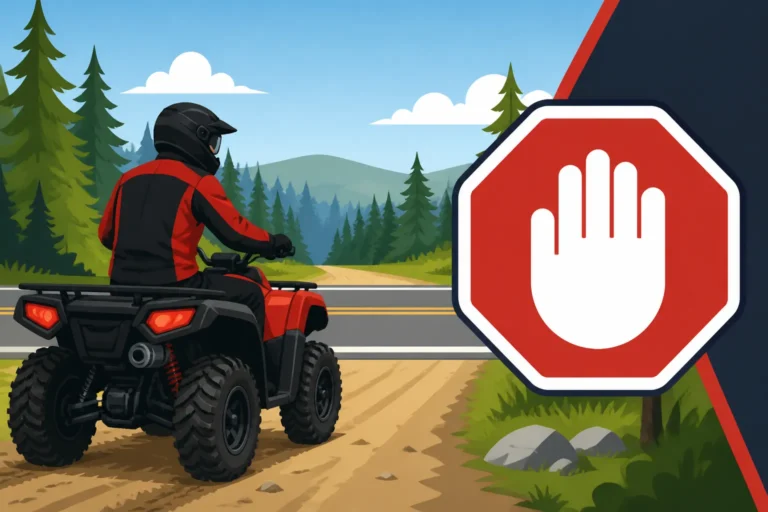
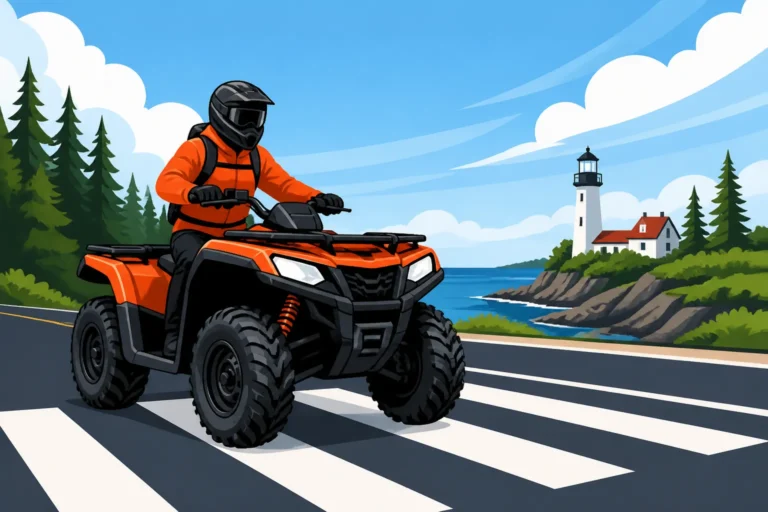
For adult riders, the general consensus is that helmets are not mandatory on designated recreational trails, given that many trails are off-road environments. However, as mentioned earlier, the landscape changes when you enter a public way. Maine law explicitly requires all operators and passengers of ATVs and UTVs to wear protective headgear (a helmet) if they are operating on any public way where ATVs are permitted. This includes crossing roads, riding on authorized ATV-access routes through towns, or even just riding that short 500-yard stretch to connect to another trail. [Maine's 500-Yard Limit on a Public Way] covers this in more detail. The rationale here is that public ways introduce different hazards – motor vehicle traffic, higher speeds, and more rigid rules of the road – making the increased protection of a helmet a necessity for everyone. Always be vigilant for signage, and when in doubt, it's safest to just wear your helmet. It's better to be overly cautious than to face a warden or, worse, an injury.
Deciphering Helmet Safety Standards: ANSI and FMVSS 218
So, you know when you need a helmet, but what kind of helmet? Not just any old hard hat will do. Maine's law, like many others, specifies that helmets must meet certain safety standards. This is where terms like ANSI and FMVSS 218 come into play, and understanding them is crucial for compliance and actual protection.
What is ANSI? The American National Standards Institute
The American National Standards Institute (ANSI) is a private, non-profit organization that oversees the development of voluntary consensus standards for products, services, processes, systems, and personnel in the United States. When it comes to helmets, ANSI sets performance criteria for things like impact absorption, penetration resistance, and retention system strength. Think of ANSI as a seal of quality assurance. If a helmet is ANSI-certified, it means it has undergone rigorous testing by manufacturers to meet specific minimum safety requirements.
For ATV and UTV helmets, you'll often see helmets that meet the ANSI Z90.1 standard (though this specific standard has largely been superseded by more modern certifications like Snell or ECE for recreational motorsports, ANSI continues to be a foundational body). When you see "ANSI compliant" on a helmet, it indicates that the manufacturer claims it meets these established benchmarks. While it's a good starting point, it's important to understand that ANSI's role is primarily to accredit the development of standards, rather than directly certify individual products in the same way the Department of Transportation (DOT) does. So, it means the standard itself is robust, and the helmet claims to meet it. This can sometimes be a subtle but important distinction from a direct government certification like DOT.
What is FMVSS 218? The DOT Standard for Motorcycle Helmets
FMVSS 218 stands for Federal Motor Vehicle Safety Standard 218, and it's the specific standard set by the U.S. Department of Transportation (DOT) for motorcycle helmets. While your ATV or UTV isn't a motorcycle, this is the standard that state laws, including Maine's, often refer to for off-road vehicle helmets because it's the widely recognized federal standard for motorized vehicle head protection. When a helmet is "DOT approved," it means the manufacturer certifies that it meets all the requirements of FMVSS 218.
The DOT standard is extremely comprehensive. It dictates how well a helmet must protect the wearer's head from impacts, how much peripheral vision it must allow, and how durable its chin strap and retention system must be. Helmets are tested for impact attenuation (how much force they absorb), penetration resistance (how well they stop sharp objects), and positional stability (how well they stay on the head). You can usually identify a DOT-compliant helmet by a sticker on the back that explicitly states "DOT" along with "FMVSS 218" or simply "DOT FMVSS No. 218." This certification is a legally recognized mark of safety, ensuring that the helmet offers a baseline level of protection that has been federally mandated. [DOT vs ANSI Helmet Standards for Riders] offers a detailed comparison.
Why Maine Recognizes Both Standards
Maine's recognition of both ANSI and FMVSS 218 standards for helmets provides flexibility while ensuring a foundational level of safety. For practical purposes, most riders will opt for a helmet that is DOT approved (FMVSS 218), as this is the most common and widely understood certification for motorized recreational vehicles. However, acknowledging ANSI standards means that helmets designed under those rigorous guidelines are also considered acceptable. The key takeaway for riders in Maine is that your helmet must have one of these certifications. It's not enough for it to simply be "a helmet" or a "bike helmet."
The intent behind accepting these standards is to ensure that any helmet worn meets minimum engineering and performance criteria for protecting against head injuries that could occur during an ATV or UTV incident. A certified helmet is designed to manage impact energy, distribute forces, and prevent skull penetration, all crucial factors in preventing traumatic brain injuries. Without these standards, riders could wear anything, from construction hard hats to purely decorative headwear, none of which would offer adequate protection in a crash. So, whether it's a full-face off-road helmet or an open-face design for UTVs, always check for that crucial certification sticker to know you're compliant with Maine law and, more importantly, adequately protected.
The Importance of Choosing a Compliant Helmet
Picking out a helmet isn't just about looking cool on the trails (though that's a bonus!). It's a critical safety decision, and going with a certified helmet can literally be a life-saver. When you're browsing options, it's easy to get swayed by price or aesthetics, but that little sticker on the back of the helmet is far more important than any graphic design.
Beyond the Sticker: What a Certified Helmet Offers
That "DOT" or "ANSI" sticker isn't just a label; it's a promise of protection. A certified helmet is a complex piece of engineering designed to absorb and dissipate impact energy in a crash. It's not just a hard shell. Inside, you'll find layers of expanded polystyrene (EPS) foam, which is engineered to crush and deform upon impact, slowing your head's movement and spreading the force over a larger area. This drastically reduces the chances of a concussion or more severe brain injury. [Buying a Helmet That Meets the Standard] is key here.
Beyond the foam, the outer shell of a certified helmet is typically made from advanced composites like fiberglass, carbon fiber, or polycarbonate. These materials are chosen for their strength and ability to resist penetration from sharp objects like branches or rocks. Then there's the retention system – the chin strap and buckle – which is designed to keep the helmet securely on your head during an impact. A helmet can't protect you if it flies off! These components, working together, provide a level of safety that uncertified helmets simply cannot match. It’s an investment in your well-being, allowing you to ride with greater confidence knowing that if the unthinkable happens, you have the best possible chance of walking away from it.
The Dangers of Non-Compliant Helmets
The market is flooded with inexpensive, novelty helmets that might look like real protective gear but offer virtually no real-world protection. These helmets often lack the critical energy-absorbing foam, are made from flimsy outer shells, and have weak retention systems. While they might pass as "helmets" to the untrained eye, they won't meet the ANSI or FMVSS 218 standards, and therefore, they won't protect you when it truly matters.
Riding with a non-compliant helmet is a double risk. First, you're breaking Maine law, which can lead to fines and other penalties if you're caught by a game warden during a [Maine Warden Checks and What They Ask]. Second, and far more critically, you're putting your life and health in extreme jeopardy. In a crash, these helmets can shatter, offer no impact absorption, or simply fly off, leaving your head completely exposed. Imagine the frustration of realizing after an accident that a few extra dollars spent on a certified helmet could have prevented a life-altering injury. It's simply not worth the gamble. Even if you're an adult and legally not required to wear a helmet on certain trails, choosing to wear a certified helmet is always the smartest decision.
How to Verify Helmet Certification
So, how do you make sure you're getting a helmet that meets the standards? It's easier than you might think. For DOT certification, look for the official "DOT" sticker on the back of the helmet. This sticker is typically about 1 inch by 2 inches and will state "DOT," "FMVSS No. 218," and potentially other identifying information. Make sure it's a permanent sticker, not just a removable tag. If a helmet doesn't have this sticker, it's likely not DOT compliant, and you should steer clear if you plan to ride where DOT certification is required.
For ANSI, the certification is usually indicated by a label inside the helmet or on the product description, referencing the specific ANSI standard it meets (e.g., Z90.1). When purchasing a helmet, especially online, always check the product specifications for explicit mention of DOT FMVSS 218 compliance. Reputable retailers and manufacturers will always clearly state the safety certifications their helmets carry. While you're shopping for helmets, it's also a good time to consider other safety gear. Companies like SuperATV offer a wide range of accessories, from sturdy windshields to enhanced lighting, that can complement your certified helmet and contribute to an even safer riding experience. Don't hesitate to ask sales staff if you're unsure about a helmet's certification; they should be able to point you to the correct information.
Practical Helmet Considerations for Maine Riders
Once you understand the legal requirements and safety standards, the next step is finding the right helmet for you. It's not a one-size-fits-all situation. Comfort, fit, and features play a huge role in how likely you are to actually wear your helmet consistently and how well it will protect you.
Finding the Right Fit for Comfort and Safety
A helmet that doesn't fit properly is almost as bad as no helmet at all. An ill-fitting helmet can shift during a ride, obstruct your vision, or, critically, provide inadequate protection in a crash. To find your size, start by measuring the circumference of your head just above your eyebrows. Most helmet manufacturers provide size charts based on head circumference. Once you have a size, try the helmet on. It should feel snug all around your head, without any pressure points. Your cheeks should feel a bit squeezed, and you shouldn't be able to easily insert your fingers between your head and the helmet's padding.
Next, test the helmet's stability. With the chin strap securely fastened, try to move the helmet from side to side and up and down. Your skin should move with the helmet; if the helmet slides around independently, it's too big. Conversely, if it causes painful pressure points or a headache, it's too small. Wear it for a few minutes to ensure sustained comfort. Remember, a helmet should be comfortable enough that you almost forget you're wearing it, yet secure enough that it won't budge during aggressive riding or an unexpected impact.
Helmet Styles and Features for ATV/UTV Use
ATV and UTV riding present unique challenges, and helmet manufacturers have responded with various styles and features designed for off-road use.
- Full-Face Off-Road Helmets: These are typically what most people picture for ATV riding. They offer maximum protection for your entire head, face, and chin. They usually feature an extended chin bar for roost protection (flying dirt and debris from other riders) and a large visor to shield from sun and spray. Ventilation is crucial for airflow during strenuous riding. These often require goggles for eye protection, like those highlighted in [Goggles or Face Shield on an Open Quad].
- Open-Face Helmets: More common for UTV riders or those who prefer a less restrictive feel, open-face helmets protect the top, back, and sides of your head but leave your face exposed. They often come with an integrated visor for sun protection. If you choose an open-face helmet, you'll absolutely need separate eye protection like goggles or riding glasses. These are typically preferred in UTVs where you're seated within a roll cage and might want more airflow or easier communication.
- Modular Helmets: These are a hybrid, offering the versatility of an open-face helmet with the option to lower a chin bar and convert it to a full-face. They're popular for their convenience, allowing riders to easily communicate or take a drink without removing the entire helmet. However, the chin bar in a modular helmet might not offer the same level of impact protection as a dedicated full-face off-road helmet.
When selecting, consider the climate you'll be riding in (ventilation is key in hot Maine summers), the type of terrain (more dust means more need for full-face protection), and whether you need to integrate communication systems or hydration packs. Many modern helmets come with features like removable, washable liners, quick-release buckles, and even built-in emergency removal systems, all of which enhance safety and rider comfort.
When to Replace Your Helmet
Helmets aren't meant to last forever, even if they look perfectly fine on the outside. There are two primary reasons to replace a helmet:
- After an Impact: This is the golden rule. If your helmet has sustained any impact, even if it looks undamaged, it should be replaced immediately. The internal EPS foam is designed to crush to absorb energy; once it's crushed, it can't do its job again. Even a seemingly minor drop onto a hard surface can compromise the helmet's integrity. It's a single-use safety device.
- Age and Wear: Over time, the materials in a helmet degrade. UV exposure, sweat, environmental chemicals, and general wear and tear can weaken the shell, padding, and retention system. Most manufacturers recommend replacing a helmet every 3 to 5 years from its manufacture date, regardless of whether it's been in a crash. Check the helmet's production date, usually found on a sticker under the padding or on the chin strap. If your helmet is showing signs of significant wear, like frayed straps, cracked shells, or loose padding, it's definitely time for a new one. Your safety is worth the investment.
Consequences of Non-Compliance and Enforcement
Ignoring Maine's helmet laws isn't just a lapse in judgment; it comes with real-world consequences, from legal penalties to potentially devastating personal risks. Maine's wardens are out on the trails and access routes, and they take these safety regulations seriously.
Penalties for Riding Without a Compliant Helmet
Getting caught riding an ATV or UTV without a compliant helmet, especially if you're under 18 or on a public way, can lead to immediate legal repercussions. The most common penalty is a fine, which can add up quickly. While specific amounts can vary, getting a ticket for a helmet violation is certainly going to put a dent in your wallet, money that could have been better spent on a good quality helmet in the first place. But it's not just about the money. Repeated violations could potentially lead to loss of riding privileges or other enforcement actions.
Beyond the initial fine, there's the inconvenience of dealing with a citation. You might have to appear in court, which means lost time and additional stress. The goal of the law isn't to punish, but to deter unsafe behavior. Wardens would much rather see every rider, particularly those who are legally required to wear a helmet, fully protected. So, save yourself the hassle and the expense by simply putting on a certified helmet. It's a small price to pay for peace of mind and legal compliance.
Maine Warden Checks and Helmet Inspections
Maine's Inland Fisheries & Wildlife (IF&W) wardens are constantly patrolling the vast network of trails and roads accessible by ATVs and UTVs. They are vigilant about enforcing safety regulations, and helmet compliance is definitely on their checklist during routine stops. During a stop, a warden will not only check for proper registration and valid age/safety certificates (like those covered in [Maine ATV Safety Course Requirements]), but they will also perform a visual inspection of your helmet. They're looking for that crucial DOT or ANSI sticker.
If you're under 18, they will confirm you are wearing a helmet and that it meets the required standards. If you're an adult riding on a public way, they'll verify the same. A warden might also check the general condition of your helmet, looking for obvious signs of damage or extreme wear that could compromise its effectiveness. Being prepared means having your helmet properly worn and securely fastened, along with all your other required paperwork. It makes the interaction smooth and quick, allowing you to get back to enjoying your ride. Wardens are there to ensure everyone's safety, and compliance with helmet laws is a big part of that mission.
Insurance Implications of Non-Compliant Helmets
This is a critical point that many riders overlook: your choice of helmet can have serious implications for your insurance coverage if you're involved in an accident. While [Does Maine Require ATV Insurance to Ride?] generally says no, if you do have coverage, most insurance policies, whether specific ATV insurance or a broader liability policy, include clauses about operating legally and safely. If you're injured in an accident while not wearing a helmet when required by law, or wearing a helmet that doesn't meet the specified standards (ANSI or FMVSS 218), your insurance company could potentially deny or reduce your claim for medical expenses or other damages.
Imagine suffering a serious head injury that requires extensive medical treatment, only to find out your insurance won't cover it because you weren't wearing a compliant helmet. This could lead to massive out-of-pocket expenses and significant financial hardship. Insurance companies are in the business of risk assessment, and riding illegally or unsafely increases that risk exponentially. Protecting your head with a certified helmet not only protects you physically but also financially. It's another compelling reason to always prioritize wearing the right gear.
Disclaimer
This article is for general informational purposes only and does not constitute professional advice. Laws, prices and regulations vary by location and change over time. Consult a qualified professional for guidance on your specific situation.