Street-Legal UTV Equipment Lists
So, you've got this awesome side-by-side, and you're dreaming of not just hitting the trails but also cruising into town for a quick bite or heading down a country road to a friend's camp. It's a common aspiration for UTV owners here in Maine, and believe me, the idea of having your rugged off-road machine also be street-legal is incredibly appealing. However, making that happen in Maine comes with a specific set of hurdles and requirements that can feel a bit like navigating a maze. This guide is all about cutting through the confusion, laying out exactly what equipment you'll need, and explaining the process to get your UTV legitimately ready for Maine's public roads.
Understanding Maine's Stance on Street-Legal UTVs
It's a frustrating reality for many UTV owners in Maine: you see golf carts puttering around town, and you know ATVs and UTVs have designated access routes in many communities, but the idea of making your side-by-side truly street-legal for any public road seems perpetually out of reach. There's a lot of misunderstanding, and often, what people assume is street-legal is actually just an ATV or UTV using one of Maine's specific 500-yard road crossings or an ATV access route established by a town, which is a very different beast.
The Legal Landscape: Why It's Tricky
Maine's laws historically have a clear distinction between vehicles designed for off-road use and those intended for highway travel. While the state readily registers ATVs and UTVs for trail use through the Department of Inland Fisheries and Wildlife (IF&W), this registration does not confer any right to operate on public roads, except for very specific, limited circumstances like crossing a road at a 90-degree angle or using a designated access route. The challenge lies in converting a vehicle that was manufactured as an "off-highway recreational vehicle" (OHRV) into one that meets the much stricter safety and equipment standards of a "motor vehicle" as defined by the Bureau of Motor Vehicles (BMV). This isn't just a matter of bolting on a few extra lights; it requires a fundamental shift in how the state views and regulates your machine. Many owners express frustration when they've bought what they thought was a "street-legal ready" kit, only to find it doesn't quite pass muster here.
Part of the trickiness is that there isn't one simple "street-legal UTV" category that mirrors, say, a car or a truck. The closest a UTV typically gets to state-wide road legality is by meeting the stringent requirements to be classified as a "low-speed vehicle" or, less commonly, undergoing a full conversion and inspection to essentially reclassify it as a regular motor vehicle. This is why you often hear conflicting information or see people attempting to ride illegally, leading to tickets for [Penalties for Riding an Unregistered ATV in Maine]. The key is understanding that trail registration and road registration are two completely separate systems, managed by different state agencies, with different sets of rules and expectations.
Low-Speed Vehicle vs. Highway-Legal UTV
When we talk about making a UTV "street-legal" in Maine, it's crucial to understand the difference between a low-speed vehicle (LSV) and a truly highway-legal UTV. An LSV, often associated with golf carts, has specific, limited capabilities. These vehicles are generally capped at a maximum speed of 25 mph and are restricted to roads with speed limits of 35 mph or less. They also have their own set of safety equipment requirements, which are less extensive than those for a full highway vehicle but more than a standard off-road UTV. So, if your vision is to zip down Route 1 or even a major secondary road, an LSV classification won't cut it. [Low-Speed Vehicle Rules in Maine] dictate where and how these can operate.
A truly highway-legal UTV, on the other hand, aims to meet all the safety and equipment standards of a conventional automobile. This is a much higher bar, requiring DOT-approved components for everything from tires and brakes to lights and glass. It means undergoing a rigorous inspection, often by a certified mechanic or even the BMV itself, to ensure every single component would be considered safe for highway speeds and conditions. The process is more akin to getting a custom-built car inspected and titled than simply adding turn signals to your side-by-side. Many UTVs, even with extensive modifications, struggle to meet every single one of these requirements, making a full highway-legal conversion a rare and complex endeavor in Maine.
Essential Equipment for Maine Street-Legal UTV Conversion
So, you're committed to making your UTV street-legal in Maine. Great! Just be prepared, because the list of necessary equipment goes far beyond what comes standard on even the most decked-out off-road machine. This isn't just about making it look the part; it's about meeting stringent safety and visibility standards designed for public road use. Skipping any of these items could mean your UTV won't pass inspection, and you'll be left frustrated with a pile of parts and no legal way to ride on paved roads.
Lighting and Electrical Systems
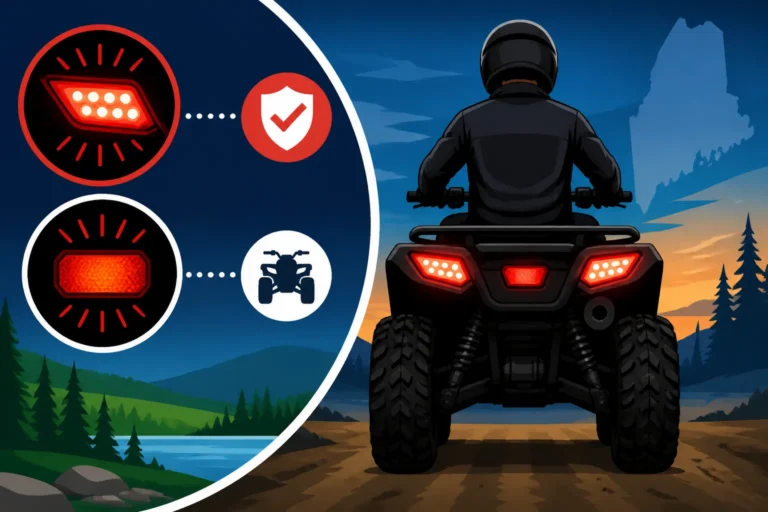
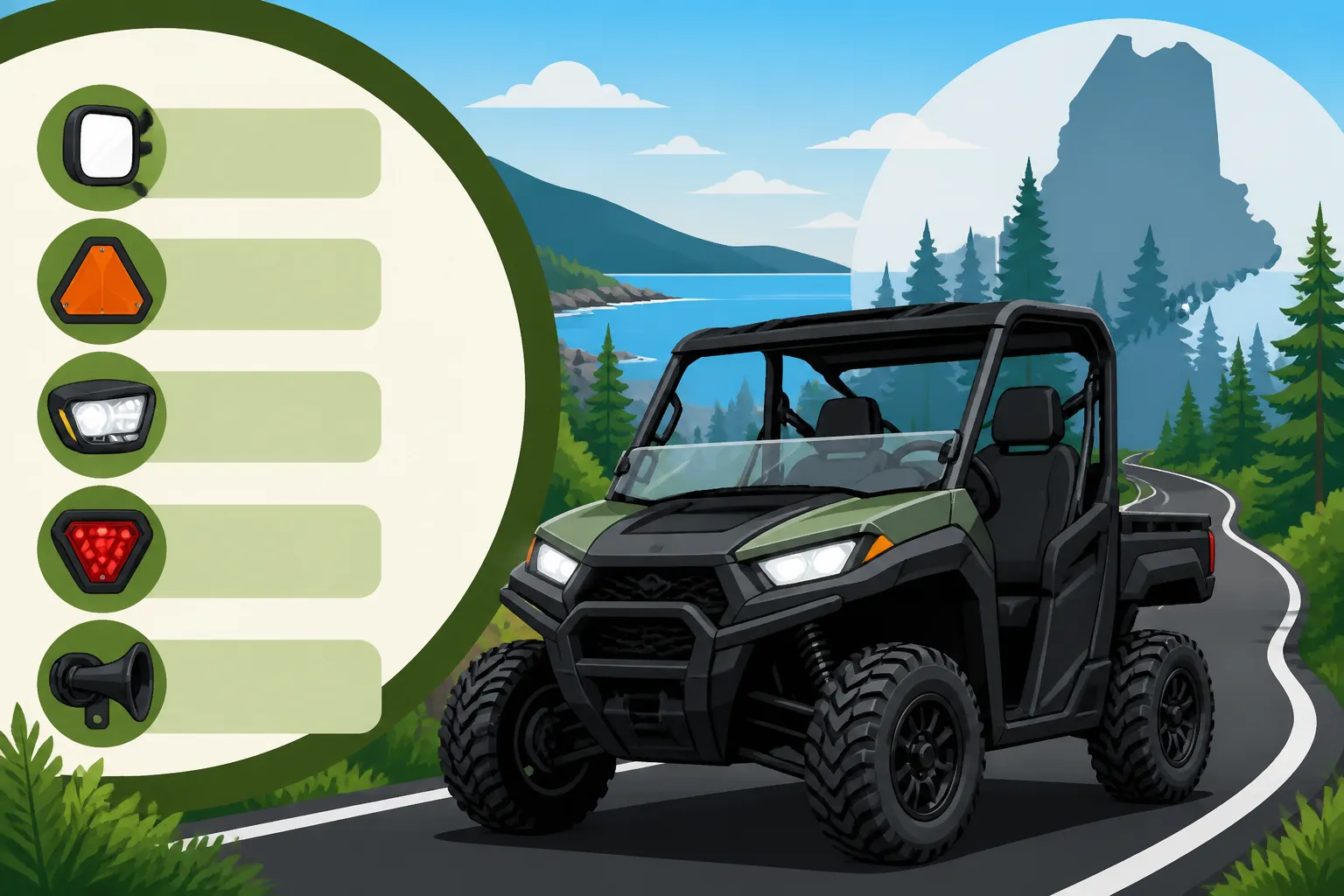
For any vehicle to be considered safe for road use, its lighting system must be comprehensive and fully functional, just like a car's. This means more than just a pair of headlights for the trail. You'll need DOT-compliant headlights that feature both high and low beams, capable of illuminating the road effectively without blinding oncoming traffic. In addition to these, your UTV must be equipped with visible taillights, ensuring you're seen from the rear, and functional brake lights that illuminate when you hit the pedal. These need to be bright enough to be clearly seen in all conditions, day or night.
Crucially, you'll need turn signals – both front and rear – that are easily activated and visible from a distance. These aren't just for courtesy; they're a legal requirement for indicating your intentions to other drivers. Finally, a working horn that's audible from a reasonable distance is essential for warning pedestrians or other vehicles. All these components need to be properly wired into a reliable electrical system. Many UTV owners turn to aftermarket solutions, and companies like SuperATV offer comprehensive, DOT-compliant lighting kits and wiring harnesses specifically designed for UTV conversions, which can make the installation process much smoother and ensure you meet the necessary standards for [Maine Lighting Requirements for Night Riding]. Don't skimp on these; visibility is paramount for safety on public roads.
Safety and Visibility Gear
Beyond the lights, several other pieces of safety and visibility gear are non-negotiable for a street-legal UTV in Maine. First and foremost is a DOT-approved windshield. This isn't just for keeping bugs out of your teeth; it's a critical safety feature designed to withstand impacts and provide a clear, unobstructed view of the road. Many off-road UTVs come with half-windshields or no windshield at all, which won't pass muster for highway use. If your windshield isn't equipped, you'll also need functional wipers to ensure visibility in rain or snow.
Next, you'll need mirrors. This includes at least one rearview mirror and external side mirrors on both the left and right sides of the vehicle. These mirrors must provide a sufficient field of vision to safely operate the UTV in traffic. Again, many off-road UTVs might only have a small rearview mirror, if any, so this is an area where upgrades are almost certainly required. SuperATV is a popular choice for high-quality, durable mirrors that are often designed with road-use requirements in mind, offering a wide range of styles to fit different UTV models. When considering [Maine ATV Mirror Rules], remember that adequate visibility to the rear and sides is not just about avoiding tickets, but about preventing accidents.
Lastly, seat belts are absolutely critical. While most modern UTVs come with seat belts, ensure they are in good working order and securely anchored for all seating positions. The existing roll cage or ROPS (Roll Over Protection Structure) is typically sufficient if it's factory-installed, but any modifications should maintain or improve its structural integrity. You'll want to ensure that if your UTV could potentially carry passengers, there are appropriate restraints for them as well.
Tires, Brakes, and Suspension
When you're transitioning from trail-only riding to public road use, the performance characteristics of your UTV's tires, brakes, and suspension become incredibly important. Off-road tires, with their aggressive tread patterns designed for grip in mud and loose terrain, are generally not suitable or legal for sustained highway speeds. They wear quickly on pavement, can create excessive noise, and often don't provide the stable handling required for road conditions. Instead, you'll need DOT-approved tires specifically designed for road use. These tires offer better traction on asphalt, are more durable, and contribute to a smoother, safer ride.
Your braking system also needs to be in top-notch condition and meet specific standards. This includes fully functional service brakes (foot pedal) that can stop the vehicle effectively and a working parking brake to secure the UTV when stationary. Regular maintenance and inspection of brake pads, rotors, and fluid are paramount. If your UTV has seen a lot of hard trail use, ensuring the brakes are up to highway standards might require more than just a quick check.
Finally, while UTV suspensions are built for rugged terrain, they might need adjustment or modification to improve stability and handling on paved roads. A suspension optimized for extreme articulation off-road can sometimes feel too soft or bouncy on the highway, affecting control. While major suspension overhauls might not always be required for street legality, ensuring it's in excellent repair and provides stable, predictable handling is key. This might mean checking shocks, bushings, and tie rods for wear and tear that wouldn't be as critical on the trail but could be dangerous on the road.
Beyond the Basics: Recommended Upgrades for Road Safety
Meeting the absolute minimum requirements for street legality is one thing, but truly making your UTV safe and practical for Maine's roads often means going above and beyond. Remember, you're sharing the road with much larger, heavier, and faster vehicles. Anything you can do to enhance your visibility, protect occupants, and improve the driving experience will contribute significantly to your safety and enjoyment. These upgrades aren't always legally mandated, but they're highly recommended by anyone who regularly rides a converted UTV on public ways.
Enhancing Driver and Passenger Protection
While a UTV's roll cage provides a good base level of protection, being exposed to other vehicles on a public road brings unique risks. Many factory UTVs have open sides, which is fine for the trail but leaves occupants vulnerable in a side-impact collision. Investing in full doors or door inserts can offer a greater sense of security and some protection from debris. These doors can significantly reduce the risk of occupants being ejected in an accident and provide a barrier against dust and small projectiles kicked up by other vehicles.
Additionally, consider adding heavy-duty front and rear bumpers. While a stock bumper offers some protection, aftermarket bumpers are often more robust, designed to absorb impact more effectively, and can provide mounting points for additional lighting. Another often-overlooked item is a fire extinguisher, mounted securely and easily accessible. Mechanical failures or accidents can sometimes lead to fires, and having one on hand can prevent a minor incident from becoming a catastrophic one. These additions aren't just about meeting a checklist; they're about proactively mitigating the very real dangers of sharing the highway.
Making Your UTV More Visible to Others
Visibility is a constant concern for UTVs on public roads, largely due to their smaller size compared to cars and trucks. Even with all the required lights, doing more to make your machine stand out is a smart move. Adding reflective tape to various parts of your UTV can dramatically increase its visibility, especially at dawn, dusk, or in inclement weather. Think about applying it to the sides, rear, and even the front where appropriate. This small addition can make a huge difference in how quickly other drivers perceive your presence. [Reflective Tape on an ATV] is a simple yet effective way to boost safety.
Consider additional running lights or even small strobe lights (used judiciously and legally, of course, avoiding emergency vehicle colors) to enhance your profile. Brightly colored flags, particularly if mounted high on the UTV, can also help. While often associated with dune buggies or desert riding, a tall, bright flag can make your UTV more noticeable over crests or around turns, especially on winding Maine roads. The goal here is to become impossible to miss. Drivers are simply not accustomed to seeing UTVs on public roads, so you need to compensate for that lack of expectation with maximum visibility.
Comfort and Practicality for Street Use
Beyond pure safety, a street-legal UTV that's uncomfortable or impractical for road use won't be enjoyed for long. A functional speedometer and odometer are generally required for registration, but a reliable fuel gauge is incredibly practical. Running out of gas on a trail is one thing; doing so on a busy road is another entirely. Many UTVs, especially older or more basic models, lack precise fuel readouts, so an upgrade here can save you a headache.
For those planning to use their UTV year-round or in unpredictable Maine weather, an enclosed cab with working heaters (and potentially air conditioning for summer) can transform the riding experience. Not only does it protect you from the elements, but it also helps reduce wind noise and buffeting, making longer rides far more enjoyable. Finally, consider a quieter exhaust system, if yours is particularly loud. While a throaty exhaust might sound great on the trail, excessive noise can quickly draw unwanted attention and lead to complaints from residents, potentially jeopardizing existing [Maine Noise Limits and Muffler Rules] and limiting trail access in certain areas. SuperATV offers various aftermarket accessories, including cabs and sound-dampening materials, that can greatly improve the comfort and practicality of your UTV for mixed road and trail use.
The Paperwork Trail: Registering Your Street-Legal UTV in Maine
Once you've poured time, effort, and money into equipping your UTV to meet street-legal standards, the next crucial step is navigating the bureaucracy. This isn't just about slapping on a license plate; it's a formal process with specific inspections and documentation requirements that differ significantly from registering an ATV for trail use with IF&W. Getting this part right is absolutely essential if you want to avoid fines or having your UTV impounded for illegal road use.
Proving Compliance and Inspection Requirements
This is where the rubber meets the road, so to speak. To register your UTV as a street-legal vehicle in Maine, you'll need to prove that it genuinely complies with all the motor vehicle safety standards. This often involves an inspection, usually by a certified inspection station or, in some cases, directly by the Bureau of Motor Vehicles (BMV). They're not just glancing at your turn signals; they're meticulously checking every component to ensure it meets DOT (Department of Transportation) specifications. This includes your windshield's safety glass rating, the proper functioning of all lights, horn, and wipers, the integrity of your braking system, and the compliance of your tires.
You may need to provide documentation for aftermarket parts, proving they are DOT-approved. This is where purchasing quality, compliant parts from reputable manufacturers, like those found at SuperATV, becomes even more critical, as they often provide the necessary certifications. The inspection will also confirm the Vehicle Identification Number (VIN) and ensure it matches your ownership documents. This process is far more rigorous than a simple visual check, and preparedness is key to a smooth experience. Getting your [VIN Verification Before Registering in Maine] is a fundamental step that must be done correctly.
Registration Process and Fees
Assuming your UTV passes inspection, you'll then proceed to the actual registration process. This happens at the Maine Bureau of Motor Vehicles (BMV) or a town office that handles vehicle registrations, not through the IF&W system used for trail registrations. You'll need your proof of ownership (like a title or bill of sale), the inspection certificate, and proof of insurance. The UTV will be registered as a motor vehicle, which typically means it will receive a standard vehicle license plate, not the small ATV decal.
The fees associated with this registration will be similar to those for a passenger car or light truck, rather than the lower fees for an off-road ATV registration. It’s important to understand that this is a separate, distinct registration; you will likely still need to maintain an IF&W registration if you plan to use your UTV on designated ATV trails, as the street-legal registration doesn't automatically grant trail access. The goal here is to obtain [Maine Registration for a Road-Legal Side-by-Side], which involves meeting the specific criteria for a street-legal vehicle, not an off-highway one. This dual registration scenario is a common point of confusion but is critical for full legal compliance for both road and trail riding.
Insurance Considerations for Road-Legal UTVs
This is a really big one, and it's an area where many UTV owners make a costly mistake. If you've gone through the effort to make your UTV street-legal for highway use, your standard off-road ATV insurance policy will almost certainly not provide adequate coverage for accidents that occur on public roads. Maine, like most states, requires mandatory liability insurance for any vehicle operating on its public ways. This means your street-legal UTV will need a policy that's comparable to what you carry for your car or truck.
You'll need liability coverage to protect you in case you're at fault in an accident that causes injury or property damage to others. Beyond that, you'll want to consider comprehensive and collision coverage to protect your investment in the UTV itself, especially given the costs associated with the conversion. Talk to your insurance agent before you even start the conversion process. They can explain the specific requirements and help you find a policy that covers your UTV adequately for both on-road and off-road use, if applicable. Don't assume your current policy extends to this; verify it. Failure to carry proper [Insurance for a Road-Ridden UTV] could lead to severe financial penalties, license suspension, or worse, leaving you personally liable for damages in an accident.
Navigating Maine Roads: Rules and Regulations for Street-Legal UTVs
So, you've done the work, you've passed inspection, and you've got your street-legal UTV registration and license plate. Congratulations! But the journey isn't over. Operating your UTV on Maine's public roads comes with a whole new set of rules and regulations that are distinctly different from those governing trail riding. Ignoring these rules can quickly land you in trouble, undoing all the effort you've put into legalizing your machine. It's not just about what equipment you have; it's about how you use it.
Where You Can and Cannot Ride
Even with a street-legal registration, your UTV isn't suddenly a car. Maine's general motor vehicle laws apply, which means you cannot operate your UTV on limited-access highways like the Maine Turnpike or interstate routes. These are off-limits to most slow-moving or smaller vehicles, and UTVs fall into that category. You'll primarily be restricted to town roads, state routes, and other public ways with appropriate speed limits.
Furthermore, individual towns and municipalities in Maine still retain the authority to create their own ordinances regarding UTV operation on public ways, even if your machine is technically street-legal at the state level. This means that while you might be legal to drive on a state road running through a town, that same town might have an ordinance prohibiting UTVs on its local streets, especially in densely populated areas. It's crucial to research the specific rules for any town you plan to operate in. Just because it's technically legal doesn't mean it's allowed everywhere. This is particularly relevant given [Maine Towns That Restrict ATVs on Public Ways] often have similar restrictions for street-legal UTVs, or apply the same underlying logic. Always check local signs and ordinances to avoid an unpleasant encounter with local law enforcement.
Operator Licensing and Age Restrictions
Unlike traditional ATV trail riding, where a safety course might suffice for younger riders, operating a street-legal UTV on public roads in Maine requires a valid driver's license. There are no exemptions for age or lack of a license, as the UTV is being treated as a conventional motor vehicle. This means if you want to operate your street-legal UTV on a public road, you must hold a current, valid Maine driver's license (or a valid license from another state/country recognized by Maine).
This is a significant departure from the rules for off-highway vehicles, which allow riders as young as 10 to operate an ATV under supervision after completing a safety course. For a street-legal UTV, that goes out the window. If a teenager in your family wants to drive the street-legal UTV on public roads, they must be old enough to obtain a standard driver's license and have successfully done so. Essentially, the rules for driving a car apply directly to driving your street-legal UTV. For more on this, you can refer to information on [Maine ATV Rules for Riders Without a Driver's License], noting how those exemptions do not apply to highway-legal UTVs.
Helmet and Passenger Rules
When it comes to helmets, Maine's laws for street-legal UTVs generally follow the same guidelines as those for other motor vehicles. For occupants of a UTV that has been legally converted for street use and is equipped with seat belts and a roll cage, helmets are typically not required for adults (18 and older) if the vehicle otherwise meets the safety standards of an enclosed motor vehicle. However, Maine law does require helmets for all passengers and operators under the age of 18 on motorcycles, mopeds, and ATVs.
This can create a bit of a gray area, so it's always safest to err on the side of caution. For any passenger under 18, a DOT-approved helmet is strongly recommended, and often legally required depending on the exact classification of your UTV. All occupants, regardless of age, must use the installed seat belts. If your UTV has specific seating positions, you cannot carry more passengers than there are designated seats and seat belts. Overloading your UTV or allowing passengers to ride in unsecured positions is illegal and extremely dangerous. Always adhere to [Helmet Rules for Maine Passengers Under 18] and ensure everyone is buckled in for safety.
Common Pitfalls and How to Avoid Them
The journey to making your UTV street-legal in Maine is fraught with potential missteps. Many enthusiastic owners, fueled by the desire for more versatile riding, stumble over technicalities, misunderstandings, or simply inadequate preparation. It's easy to get excited and overlook crucial details that can turn your dream of road-legal UTV adventures into a headache of fines, frustrated inspections, and even impoundment. Learning from the common pitfalls can save you a lot of time, money, and heartache.
Assuming Off-Road Registration is Enough
This is arguably the most significant and most common mistake UTV owners make in Maine. They buy a brand-new side-by-side, register it with IF&W for trail riding, add a few accessories like turn signals and a horn, and then assume they're good to go for a quick run down the public road to the general store. This is not the case. An IF&W ATV/UTV registration is for off-road trail use only. It does not confer the right to operate on public ways, except for very specific, limited circumstances (like crossing a road at designated points, using a temporary snowmobile/ATV corridor, or on an officially designated ATV access route within a town).
Operating a UTV with only an IF&W registration on any undesignated public road is illegal and can result in significant fines, points on your driver's license, and potentially having your machine towed. Law enforcement officers, especially Maine Game Wardens and municipal police, are well-versed in the distinctions. They will pull you over, and ignorance of the law is not a valid defense. Understanding [Penalties for Riding an Unregistered ATV in Maine] is crucial here; while your UTV might be "registered" for trails, it's "unregistered" for the road, and the consequences are serious. Always remember: trail registration does not equal street legality.
Overlooking Specific Town Ordinances
Even if you've painstakingly gone through the entire process of getting your UTV registered as a legitimate street-legal vehicle with the Maine BMV, your freedom to roam isn't entirely unrestricted. Municipalities in Maine have the authority to enact their own ordinances that can further restrict or even prohibit the operation of certain vehicles on local roads. This means that while your UTV might be perfectly legal to drive on a state highway, a town could have an ordinance preventing its use on certain main streets, in village centers, or even on all municipal roads.
Imagine you've driven your newly legal UTV from your camp down a state route, only to be stopped by a local police officer as you turn onto a downtown street for a coffee. The officer might inform you that, despite your state registration, the town has an ordinance prohibiting UTVs on its public ways. This can be incredibly frustrating after all your effort. It's imperative to research the local laws and ordinances of any town you plan to operate your street-legal UTV in. Don't rely solely on state law; local rules can override your plans. Many communities, concerned about noise, traffic flow, or safety, have specific regulations. Check resources like [Maine Town Ordinances That Restrict ATVs] to see if similar rules might apply to your street-legal UTV. A quick call to the town office before your trip can save you a lot of grief.
Inadequate Insurance Coverage
This is a pitfall that can lead to catastrophic financial consequences. As discussed earlier, once your UTV is registered for street use, your existing off-road insurance policy is almost certainly insufficient, if not completely invalid, for incidents occurring on public roads. Relying on an inadequate policy is like driving without insurance – you're exposed to immense personal liability. If you're involved in an accident with another vehicle on a public road and you're at fault, you could be personally responsible for thousands, or even hundreds of thousands, of dollars in property damage, medical bills, lost wages, and pain and suffering for the other parties involved.
Many UTV owners mistakenly believe their homeowner's insurance or even their auto insurance policy will automatically extend coverage to their street-legal UTV. While some policies might have limited extensions, it's rarely comprehensive enough for a dedicated road-legal vehicle. You absolutely must obtain a specific auto insurance policy that explicitly covers your UTV for highway use. Contact your insurance agent, be clear that your UTV is registered for public roads, and ensure your policy provides adequate liability, and ideally, comprehensive and collision coverage. Skimping on this critical step could lead to financial ruin in the event of an accident. Always prioritize proper [Insurance for a Road-Ridden UTV] for your safety and financial protection.
Disclaimer
This article is for general informational purposes only and does not constitute professional advice. Laws, prices and regulations vary by location and change over time. Consult a qualified professional for guidance on your specific situation.