Riding a Logging Road on an ATV
Ah, the allure of Maine's logging roads! There's a certain magic to rumbling down those gravel paths, flanked by towering pines and the crisp scent of the forest. For many ATV and UTV riders, these roads represent the ultimate freedom and access to the backcountry. However, what often seems like a wide-open invitation can quickly become a legal headache or a dangerous situation if you don't understand the specific rules and etiquette that come with riding on Maine's vast network of working woods roads. This guide will walk you through everything you need to know to safely and legally enjoy these unique trails, ensuring your backcountry adventures are memorable for all the right reasons.
Understanding Maine's Logging Road Landscape for ATVs
Maine is truly unique when it comes to its logging roads. They weave through millions of acres of privately owned timberland, connecting remote areas and providing access for forestry operations. For generations, recreational users have been allowed to use many of these roads, often due to a long-standing tradition of landowner generosity and the diligent efforts of local ATV clubs. But this isn't a free-for-all, and understanding the nuances is crucial.
Private Property, Public Access: The Maine Paradox
Most logging roads you'll encounter in Maine are on private land. These aren't public rights-of-way in the traditional sense; they belong to timber companies, private landowners, or large trusts. Yet, historically, many landowners have graciously allowed public access for activities like hunting, fishing, and, yes, ATV riding. This is where the "Maine paradox" comes in: private land, but with a deeply ingrained culture of recreational access. This access, however, is a privilege, not a right, and it hinges entirely on maintaining good relationships with the landowners.
Local ATV clubs play an absolutely vital role in facilitating this access. They often have formal agreements with landowners, maintain the trails, install signage, and act as a liaison between riders and property owners. By joining a club, you're directly contributing to the preservation of this access. You can learn more about how they operate and what they need to keep trails open in our guide to [Maine ATV Club Membership and Dues]. Respecting their hard work and the landowners' generosity is paramount. This means staying on marked trails, being mindful of noise, packing out everything you pack in, and always assuming you're a guest on someone else's property.
Differentiating Logging Roads from Public Ways
Here's where a lot of confusion arises for riders. A logging road, even one that's wide and well-maintained, is generally not considered a "public way" in the eyes of Maine law. A public way is typically a state, county, or town-maintained road that is open to general vehicular traffic and is subject to specific motor vehicle laws. These are the roads you drive your car on, paved or unpaved.
Maine has specific regulations for ATVs crossing or riding short distances on public ways, such as the [Maine's 500-Yard Limit on a Public Way]. However, most logging roads fall outside this definition. When towns designate specific sections of roads as [Maine ATV-Access Routes and How Towns Post Them], those sections do become official ATV corridors, but they are clearly signed as such. If a logging road isn't explicitly signed as an ATV access route or part of an organized trail system, you should treat it as private land where access is granted by permission, rather than a public road. This distinction is critical because it impacts everything from right-of-way rules to enforcement by game wardens.
The Role of Signs and Posted Land
While many logging roads are open to ATVs by tradition or club agreement, this can change. Landowners have the absolute right to restrict access to their property at any time. This is usually communicated through signage. You'll commonly see "No Trespassing" signs, "Private Property," or signs specifically prohibiting certain activities.
Another important indicator is the presence of purple paint. In Maine, a purple paint stripe on trees, fence posts, or rocks serves as a legal "No Trespassing" notification, just like a written sign. If you see purple paint, you are trespassing if you proceed. It's a clear signal from the landowner that access is not permitted. Our detailed article on [Purple Paint Marks Along a Maine Road] explains this in depth. Ignoring these signs, whether traditional "No Trespassing" placards or purple paint, can lead to serious legal consequences, including fines and even seizure of your machine under [Maine Trespass Law for ATV Riders]. Always err on the side of caution. If there's any doubt about access, turn around or find an alternative route. It's not worth jeopardizing access for everyone by disregarding a landowner's wishes.
Legalities and Best Practices for Riding Logging Roads
Even on private logging roads, you're not exempt from Maine's basic ATV regulations. These rules are in place for safety and to ensure responsible riding throughout the state, whether you're on a designated trail, a remote logging road, or simply crossing a public way.
Registration and Safety Requirements
Before your tires even touch a logging road, your machine absolutely needs to be properly registered with the state of Maine. This isn't optional, regardless of where you plan to ride. Your registration fees contribute directly to the maintenance and expansion of the trail system, benefiting all riders. We have a complete guide on [What It Takes to Register an ATV in Maine] that walks you through the process. For those under 16, completing a state-approved ATV safety course is also mandatory. Even if you're an adult, taking a safety course is a fantastic idea to brush up on skills and trail etiquette. You can find more information in our article on [Maine ATV Safety Course Requirements].
It's also important to remember helmet laws. In Maine, all ATV riders and passengers under the age of 18 must wear a helmet. While adults are not legally required to wear a helmet on trails (outside of specific road-crossing scenarios), it's always the safest choice, especially on unpredictable logging roads. These roads often have loose gravel, unexpected dips, and sharp turns, making helmet use a smart decision for riders of all ages.
Navigating Access Rules and Landowner Relations
The golden rule for riding logging roads in Maine is simple: all access is by permission. While much of this permission is informal or managed by local clubs, it's still crucial to operate as if you need explicit consent. The best way to ensure you're riding legally and responsibly is to consult local ATV clubs. These clubs often maintain maps and provide real-time updates on trail conditions and access changes, including those on logging roads. A great starting point is our guide on [Maine ATV Clubs and the Trails They Keep Open].
Riding off marked trails, cutting new paths, or simply being disrespectful can quickly erode the goodwill of landowners. This leads to trails being closed, "No Trespassing" signs going up, and everyone losing access. Dust can also be a significant issue for landowners living along logging roads. Driving too fast near homes or camps can kick up huge clouds of dust, which is a major nuisance. Being mindful of your speed, especially near any habitations, is a simple but important way to show respect. You can read more about how this impacts access in [Maine Dust Complaints Along ATV Routes]. Remember, every rider is an ambassador for the sport, and your actions directly affect future access for the entire community.
Sharing the Road with Commercial Traffic
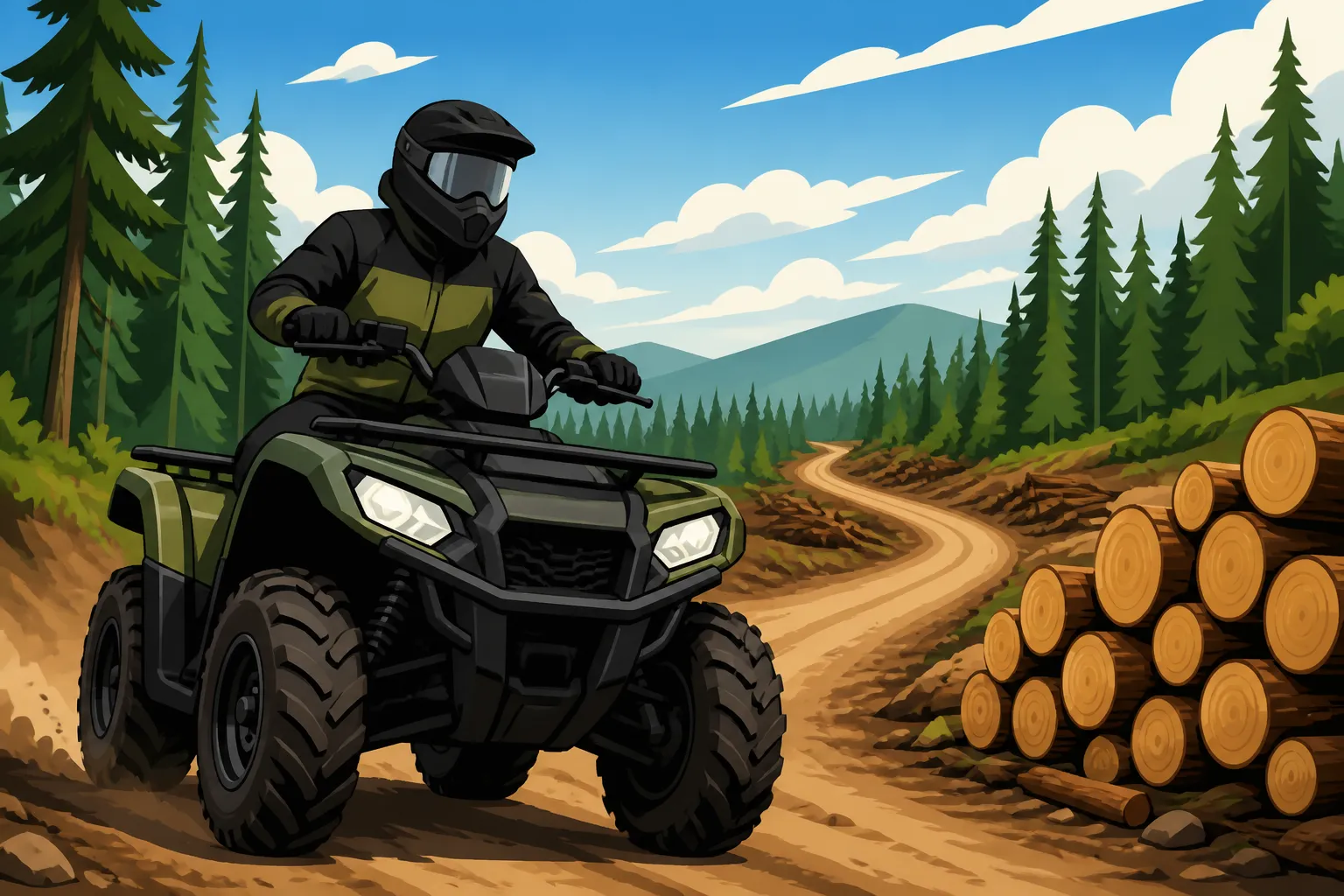
This is perhaps the most critical safety consideration when riding logging roads: you are sharing these roads with active commercial operations. This means huge, multi-ton logging trucks, skidders, excavators, and other heavy equipment. These vehicles are often operating on tight schedules, hauling immense loads, and are not designed to stop quickly for recreational riders. They also create significant blind spots.
Always assume a logging truck is just around the next bend. Here are some crucial safety tips:
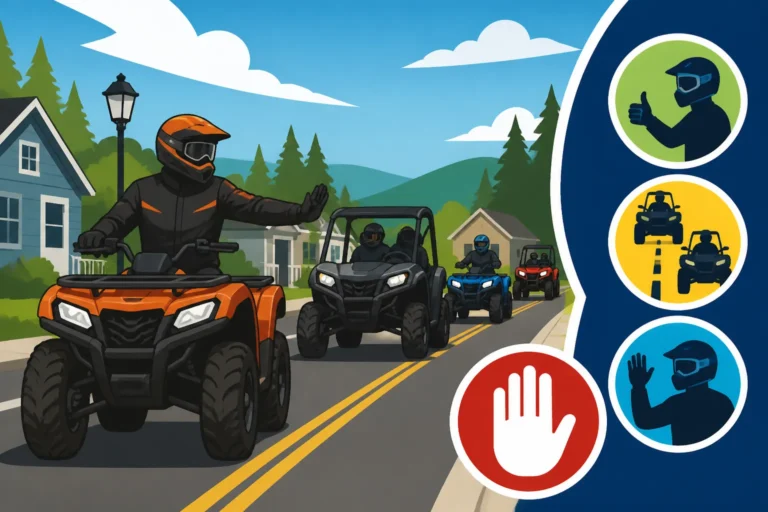
- Yield to Commercial Traffic: Logging trucks always have the right-of-way. Period. If you see one approaching, pull over immediately and safely to the side of the road, stop, and let it pass. If you're coming around a bend and encounter one, slow down, get to the shoulder, and make eye contact with the driver if possible. Our article on [Sharing a Road With Logging Trucks] offers more specific advice.
- Be Visible: Wear bright clothing. Consider adding reflective tape to your machine, especially if riding in low light conditions. The goal is to be seen as early as possible.
- Dust and Blind Spots: Logging trucks kick up enormous amounts of dust, especially on dry days. This can completely obscure oncoming vehicles. Reduce your speed, especially on blind corners and hills. Don't assume the road is clear.
- Radio Channels: Some larger logging operations use specific radio channels to communicate truck movements. While it's not practical for every recreational rider to carry a CB, being aware that these operations are coordinated can help you understand the scale of activity.
Logging roads are working environments. Your leisurely ride is happening in someone else's office. Respect that, prioritize safety, and you'll have a much better experience.
Preparing for a Logging Road Ride
Logging roads present unique challenges compared to groomed trails. They can be rough, rocky, muddy, and remote. Proper preparation of both your machine and your gear is essential for a safe and enjoyable adventure.
Machine Preparedness and Maintenance
Before heading out onto a logging road, a thorough check of your ATV or UTV is non-negotiable. These roads can be unforgiving, so your machine needs to be in top condition.
- Tires: Inspect your tires for proper inflation, cuts, and adequate tread. Logging roads are often covered in sharp rocks and debris, so good tire condition is crucial to prevent flats. Consider a more aggressive tread pattern if you frequently ride these types of roads.
- Brakes: Ensure your brakes are working perfectly. You might need to stop suddenly for a logging truck, wildlife, or an unexpected washout.
- Fluids and Filters: Check your oil, coolant, and brake fluid levels. Make sure your air filter is clean, as dusty logging roads can quickly clog it.
- Suspension: The rough and varied terrain of logging roads will test your suspension. Make sure shocks are in good order and there are no loose components.
- Spark Arrestor: Maine law requires all ATVs to be equipped with a spark arrestor to prevent forest fires. Double-check that yours is properly installed and in good working order. More details are available in our guide on [Spark Arrestor Requirements in Maine].
- Underbody Protection: Many riders who frequently venture onto logging roads choose to install aftermarket skid plates or A-arm guards. While your machine likely came with some basic protection, heavy-duty options can save you from costly damage from hidden rocks and stumps. Companies like SuperATV offer robust skid plates designed for this kind of rigorous use, giving you extra peace of mind against punctures and impacts. For serious adventurers, beefier axles and improved suspension components from SuperATV can also make a huge difference in handling the relentless pounding of a gravel road, turning a jarring ride into a more comfortable experience.
A well-maintained machine is not just about avoiding breakdowns; it's about safety. A sudden mechanical failure in a remote area can turn a fun ride into a desperate situation.
Essential Gear for Logging Road Adventures
Because logging roads often lead to very remote areas with limited or no cell service, carrying the right gear is paramount. Think self-sufficiency.
- Navigation: Don't rely solely on your phone. Carry a physical map of the area – our article on [Carrying a Paper Map in the Backcountry] emphasizes why this is crucial – along with a compass or a dedicated GPS unit. Devices like those from Garmin or apps like onX Offroad on a mounted tablet can be invaluable.
- Communication: Cell service is notoriously spotty in Maine's backcountry. Consider a satellite messenger device (like a Garmin InReach or Spot device) for emergency communication. These devices allow you to send SOS messages and often text loved ones even when miles from the nearest cell tower. We cover this in depth in [Satellite Messengers for Backcountry Riders].
- Repair Kit: A basic toolkit for roadside repairs is a must. This should include tire plug kits, a portable air compressor, wrenches, zip ties, duct tape, and any specific tools for your machine.
- First Aid Kit: A comprehensive first aid kit is non-negotiable. Be prepared for scrapes, cuts, and more serious injuries.
- Water and Food: Carry plenty of water and some emergency snacks. You never know if your ride might extend longer than planned.
- Extra Fuel: Logging roads can be long, and gas stations might be few and far between. Consider carrying a small, approved fuel can.
- Recovery Gear: A winch is a fantastic piece of equipment for any ATV/UTV, and it can be a lifesaver on muddy or tricky logging roads. If you don't have a winch, consider recovery straps or a small shovel. SuperATV offers a range of high-quality winches and recovery accessories that are built to withstand the rigors of off-road use, making them a wise investment for anyone tackling remote logging trails. Even with a winch, knowing how to properly use it and having strong tow straps is crucial.
- Headlamp/Flashlight: Even if you plan to be back before dark, delays happen. A reliable light source is essential.
Planning Your Route and Staying Informed
Logging roads are dynamic environments. What was open last week might be closed today due to active logging operations, mud season, or landowner decisions.
- Check with Clubs: Always check with the local ATV clubs in the area you plan to ride. They are the best source for current trail conditions, access changes, and any temporary closures.
- Logging Schedules: Understand that logging operations don't stop for recreational riders. Routes can be closed without much warning, or you might encounter fresh cuts, active machinery, or freshly graveled sections. Be prepared for sudden changes.
- Weather Conditions: Rain can turn dry, dusty logging roads into slick, muddy quagmires. Pay attention to forecasts and understand how weather will impact the terrain. Our article on [Maine Trail Closures Mid-Season] often highlights how weather impacts trail access.
- Have a Plan B (and C): Don't rely on a single route. Have alternative paths in mind, or be prepared to turn around if you encounter a closure or conditions beyond your comfort level. This is especially true if you're venturing into very remote territory.
Being prepared for the unique environment of Maine's logging roads means respecting the land, understanding the rules, and equipping yourself for self-sufficiency. Embrace the adventure, but do so wisely.
ATV Road Types: Key Differences for Riders
Understanding the distinctions between various road types is crucial for responsible and legal ATV riding in Maine. This table highlights the main differences you'll encounter.
| Feature | Designated ATV Access Route (Town Roads) | Private Logging Road (Typical) | Public Way (State/Town Roads) |
|---|---|---|---|
| Ownership | Public (Town/State) | Private (Timber Companies, Landowners) | Public (Town/State) |
| Access | Explicitly permitted by town ordinance | Implied or permitted by landowner | Permitted for street-legal vehicles |
| Markings | Specific ATV route signs | Often unmarked, or "No Trespassing" | Standard road signs |
| Commercial Use | Minimal, incidental | Heavy logging truck traffic | Standard vehicle traffic |
| ATV Registration | Required | Required | Required (if applicable for crossing) |
| Safety Course | Required for youth | Required for youth | Required for youth (if applicable) |
| Traffic Rules | Specific ATV road rules apply | Landowner rules, common sense | Standard motor vehicle laws |
| Reliability | Generally stable access | Can change quickly (logging operations) | Stable, always open |
Disclaimer
This article is for general informational purposes only and does not constitute professional advice. Laws, prices and regulations vary by location and change over time. Consult a qualified professional for guidance on your specific situation.