Crossing the Maine Turnpike on an ATV
It's a common thought for many ATV and UTV riders here in Maine: you're out on the trails, maybe heading from one amazing riding area to another, and you see that big ribbon of asphalt – the Maine Turnpike – cutting right through the landscape. You might think, "Is there a quick way across? Can I just zip over it?" The short answer is a resounding no, and trying to do so could land you in serious trouble. This guide is here to clear up any confusion and help you understand why ATVs and UTVs are absolutely prohibited from operating on the Maine Turnpike, and more importantly, how you can safely and legally navigate around this major highway barrier to keep your adventures on track.
Understanding Maine's ATV Road Rules and the Turnpike
Navigating Maine's vast network of trails and roads with an ATV or UTV can sometimes feel like a puzzle, especially when major arteries like the Maine Turnpike intersect your planned route. It's crucial to understand that not all roads are created equal when it comes to off-highway vehicle (OHV) access, and the Turnpike stands as one of the clearest examples of a prohibited zone.
The General Prohibition on Major Roadways
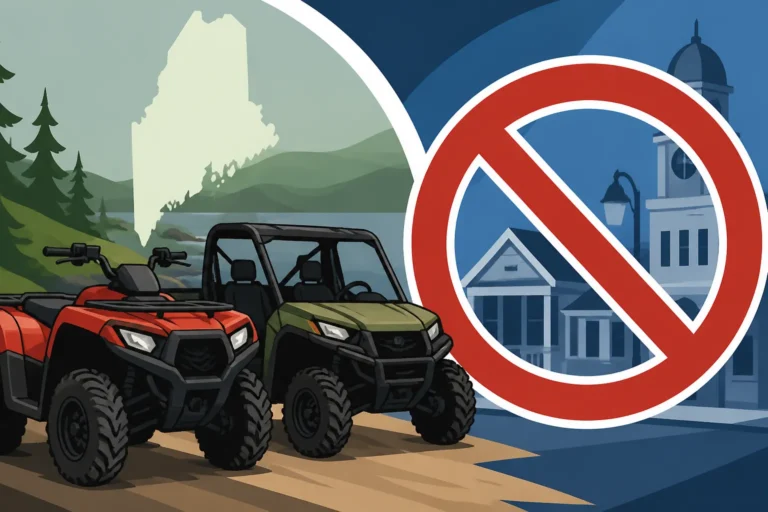
Let's get right to it: the Maine Turnpike is strictly off-limits to ATVs and UTVs. This isn't just a minor rule; it's a fundamental safety and legal prohibition. The Turnpike, like other interstate-style limited-access highways, is designed for high-speed, multi-lane vehicular traffic. The speed differentials between cars traveling at 70+ MPH and an ATV or UTV, which is generally much slower, create an incredibly dangerous environment. There are no shoulders suitable for ATVs, no designated lanes, and absolutely no tolerance for non-highway vehicles.
Imagine trying to merge onto a busy section of the Turnpike near Portland or even a more rural stretch up north. The sheer speed and volume of traffic make it a death trap for an ATV. These highways are engineered with specific ingress and egress points, and the on-ramps and off-ramps are not designed for the acceleration or braking capabilities of an ATV. Attempting to ride on the Turnpike, even for a short distance, is not only illegal but puts your life, and the lives of countless motorists, at extreme risk. While [Maine's 500-Yard Limit on a Public Way] allows ATVs on certain public roads for very short distances under specific conditions, the Turnpike is explicitly excluded from any such allowances due to its nature as a limited-access highway.
Legal Alternatives for Crossing the Turnpike Corridor
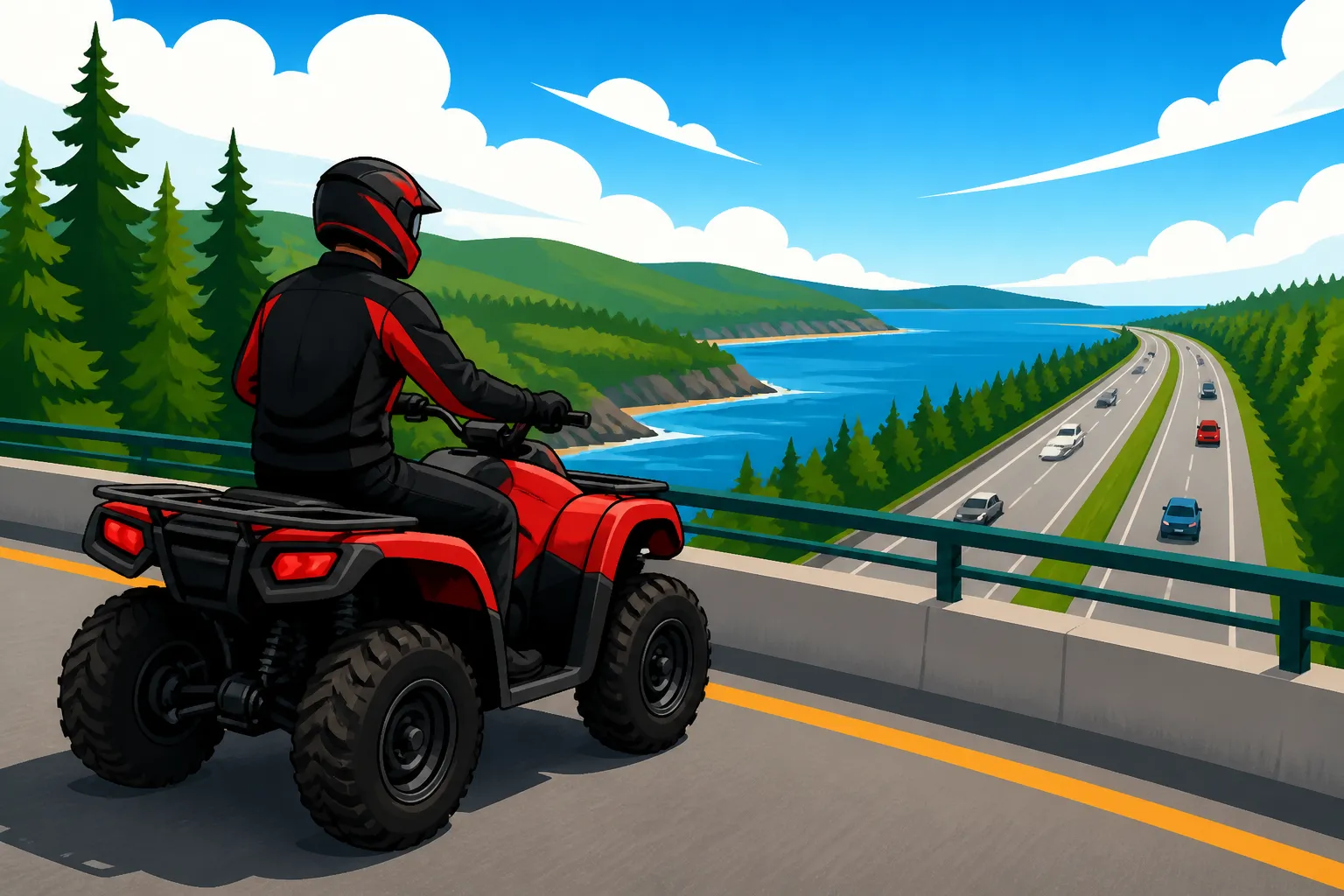
So, if you can't ride on the Turnpike, how do you get your ATV from one side to the other if a trail system crosses its path? The answer lies in designated crossings. These are typically existing bridges or underpasses that were built for other roadways, rail lines, or sometimes even specifically as part of an official ATV trail system. These are not spots where you simply decide to "dart across"; they are legitimate, marked, and approved points where an ATV trail either uses a culvert or an underpass to go under the Turnpike, or a separate bridge carries an ATV trail over the Turnpike.
For example, a local ATV club might have worked with the Maine Bureau of Parks and Lands and the Maine Turnpike Authority to secure permission for an existing farm bridge to be used as an ATV crossing, or a substantial culvert that runs beneath the highway might be integrated into a trail. The key here is "designated" and "approved." You'll find these marked clearly on official trail maps. [Crossing Under a Maine Highway Legally] is possible, but only at these specific, sanctioned locations that are part of the larger, legal trail network, not by improvising your own path. These crossings are often part of the fabric of the [Maine ATV-Access Routes and How Towns Post Them] that towns and clubs have established, which means they are publicly known and maintained for ATV use.
Penalties for Illegally Operating on the Turnpike
The consequences for operating an ATV or UTV illegally on the Maine Turnpike are severe, extending far beyond a simple warning. Law enforcement, including Maine State Police and Maine Warden Service, views such violations with extreme gravity because of the immense danger involved. You're looking at significant fines that can quickly add up, easily reaching into the hundreds or even thousands of dollars. These aren't just minor infractions; they reflect the high-risk behavior of putting an OHV on a high-speed highway.
Beyond monetary penalties, you could face criminal charges, especially if your actions create an immediate hazard to other drivers or result in property damage or injury. Your ATV or UTV could be impounded, leaving you with towing and storage fees on top of everything else, and a significant headache to get your machine back. This is not a hypothetical scenario; wardens and state troopers are vigilant about ensuring safety on public ways, and they will not hesitate to enforce these rules. Compared to [Penalties for Riding an Unregistered ATV in Maine], which are already substantial, the risks associated with Turnpike violations are exponentially higher due to the direct threat to public highway safety. It's simply not worth the risk to your safety, your machine, or your legal standing.
Planning Your Route to Avoid Turnpike Conflicts
Successfully navigating Maine's vast trail systems often means meticulously planning your route, especially when major geographical or infrastructural barriers like the Maine Turnpike come into play. A little foresight can prevent a lot of frustration, and more importantly, keep you on the right side of the law and safe on your ride.
Using Trail Maps and GPS to Identify Crossings
The absolute best tool in your arsenal for avoiding illegal crossings of the Turnpike is an up-to-date, detailed trail map. These maps, often provided by the Maine Bureau of Parks and Lands or local ATV clubs, clearly delineate legal ATV trails, including any designated underpasses or bridges that allow you to cross over or under the Turnpike corridor. These aren't just lines on a map; they represent countless hours of negotiation, planning, and maintenance by clubs and state agencies to provide safe passage. Many riders also use GPS apps like onX Offroad, which integrate official trail data and can be invaluable when navigating the backcountry, helping you to identify these crucial crossing points and plan your approach long before you even get close to the highway.
When reviewing your map or GPS, look specifically for trails that show a clear, continuous path across the Turnpike's footprint, often marked with symbols indicating a bridge or an underpass. Do not assume that every bridge or culvert you see near the Turnpike is an approved ATV crossing. Only rely on official, marked routes. This kind of diligent pre-planning is essential for any significant ride, whether it's a day trip or a [Planning a Multi-Day Ride Across Maine Trails], as it ensures you stay on legal paths and avoid dangerous, prohibited areas.
Working with Local ATV Clubs for Route Information
Maine's ATV clubs are the backbone of our extensive trail system, and they are an incredible resource for route information, especially concerning challenging areas like the Turnpike corridor. These clubs spend countless hours maintaining trails, working with landowners, and coordinating with state and local authorities to create and preserve riding opportunities. If you're planning a ride in an unfamiliar area or suspect your route might encounter the Turnpike, reaching out to the local ATV club is one of the smartest things you can do.
Clubs often have the most up-to-date information on trail conditions, temporary closures, and, critically, approved crossing points for major highways. They can tell you exactly where you can safely and legally get across the Turnpike's path, or if you'll need to find an alternative route entirely. Many clubs also publish their own detailed [Maine ATV Trail Maps and Club Boundaries] which can supplement state-level maps. Engaging with these clubs, perhaps even joining one, not only gives you access to invaluable knowledge but also supports the very trails you enjoy. Their expertise is truly unparalleled when it comes to navigating the nuances of local trail systems and infrastructure.
Understanding Trail Designations Around Major Infrastructure
It's not enough to simply see a bridge or an underpass near the Maine Turnpike and assume it's an open invitation for ATVs. Each piece of infrastructure has a specific designation and purpose, and unauthorized use can quickly lead to trouble. Some underpasses might be strictly for pedestrian use, wildlife crossings, or even private farm access, completely off-limits to OHVs. Similarly, bridges that carry local roads over the Turnpike are for registered street-legal vehicles only, not ATVs.
Look for clear signage. Designated ATV trail crossings will typically have official trail markers, often specific to the ATV system, indicating that you are on an approved route. If you don't see these signs, assume it's not an approved crossing. It's a "when in doubt, don't" situation. Respecting these designations is crucial for maintaining the privilege of trail access throughout Maine. Ignoring them can lead to landowners closing trails, increased restrictions, and negative perceptions of ATV ridership. Always stick to clearly marked trails, and if a section of trail leads to what appears to be an unmarked crossing of the Turnpike, it's a red flag to turn back and consult your map or a local club.
The Broader Context of ATV Use on Maine Roads
The restrictions on ATV use on the Maine Turnpike are just one piece of a larger regulatory framework governing off-highway vehicles in our state. It's important for riders to understand how different types of roads are treated to ensure compliance and, most importantly, safety.
Distinguishing the Turnpike from Other Public Ways
It's easy to get confused by all the different road rules, but the Maine Turnpike is in a category of its own when it comes to ATV access. Think of it this way: while some towns have designated [Maine ATV-Access Routes and How Towns Post Them] that allow brief, controlled ATV travel on certain local roads, and Maine law permits short crossings of other public ways under specific conditions like [Maine's 500-Yard Limit on a Public Way], the Turnpike operates under a completely different set of rules. Its status as a limited-access, high-speed highway means it is fundamentally incompatible with ATV operation.
Secondary roads, county roads, and even some state routes might have specific sections where ATV use is permitted for limited distances, typically to connect trail segments, access services, or cross from one side of a road to another. These permissions are carefully managed by municipalities and the state, often involving specific signage, speed limits, and safety precautions. The Turnpike, however, has none of these provisions for ATVs. Its design – high-speed lanes, minimal shoulders, no intersections – makes it an outright exclusion zone for OHVs. Understanding this critical distinction is paramount for safe and legal riding throughout the state.
When a UTV Might Be Street-Legal (But Still Not for the Turnpike)
A common question arises, especially with the increasing popularity of UTVs: "If my UTV is street-legal, can I ride it on the Turnpike?" The answer, unequivocally, is still no. While it is possible to convert a UTV to be street-legal in Maine, allowing it to be registered and operated on certain public roads, this designation does not extend to limited-access highways like the Maine Turnpike. [Can a UTV Be Made Street Legal in Maine?] involves outfitting your machine with specific equipment – turn signals, horn, rearview mirrors, DOT-approved tires, and more – which can be a significant investment, often utilizing aftermarket parts from companies like SuperATV.
The purpose of making a UTV street-legal is typically for local travel, to connect trails, visit a nearby store, or access a gas station within a town's approved ATV route. Even with all the bells and whistles, a street-legal UTV is generally treated like any other slow-moving vehicle on public roads, and major highways like the Turnpike prohibit such vehicles. The danger of speed disparity remains, regardless of how many street-legal modifications you've added. So, while your machine might be legally capable of driving on some town roads, it will never be permitted on the Turnpike. Always remember that "street-legal" has limitations, and the Turnpike is a hard boundary.
The Importance of Safety and Respecting Regulations
Ultimately, all these rules and regulations, especially those prohibiting ATV use on the Maine Turnpike, are rooted in safety. They are designed to protect not only ATV riders but also the general public. Riding an ATV or UTV on a highway built for cars and trucks traveling at high speeds is an inherently dangerous act, inviting catastrophic accidents. Respecting these regulations is not just about avoiding fines or legal trouble; it's about preserving your life, your passengers' lives, and the lives of other motorists.
Furthermore, compliance with regulations helps to maintain a positive relationship between the ATV riding community and landowners, local communities, and law enforcement. Every time an ATV rider illegally uses a prohibited road or trespasses, it jeopardizes the future of ATV riding for everyone. [Where Maine Lets You Ride an ATV] is a privilege that has been hard-won through the efforts of countless volunteers, clubs, and state agencies. By understanding and adhering to the rules, we ensure that Maine's incredible trail system remains accessible and enjoyable for generations to come.
Practical Strategies for Navigating Turnpike Areas
Since directly riding your ATV or UTV on the Maine Turnpike is strictly out of the question, having practical strategies for getting across its path is essential for uninterrupted trail riding adventures.
Identifying Official Underpasses and Bridges on Maps
The most effective strategy for crossing the Maine Turnpike corridor legally is to rely entirely on official, designated underpasses and bridges that are part of the recognized ATV trail system. When you're poring over your [Maine ATV Trail Maps and Club Boundaries] before a ride, keep an eye out for how trails interact with major highways. Look for clear indications – often represented by symbols for bridges or tunnels – that show the trail continuing on both sides of the Turnpike. These aren't hidden secrets; they're publicly known and marked crossings that have been established through cooperation between trail clubs and state authorities.
It's helpful to cross-reference multiple maps if possible, including those provided by local clubs, to confirm these crossing points. Don't assume that a bridge carrying a local road over the Turnpike allows ATVs on that road; the ATV crossing itself will usually be a separate structure or a dedicated underpass that is explicitly part of the ATV trail. If a trail simply dead-ends at the Turnpike on your map, or if there's no clear, marked crossing, then you must assume there isn't one. The absence of a designated crossing means you'll need to consider alternative methods of transport, which brings us to our next strategy.
Using Support Vehicles for Transport Across
Sometimes, despite all the planning, you'll find yourself in an area where no official ATV crossing for the Maine Turnpike exists along your desired route. Or perhaps the available legal crossing is so far out of your way that it's impractical. In these scenarios, the safest and only legal solution is to use a support vehicle and trailer to transport your ATV or UTV across the Turnpike. This involves loading your machine onto a trailer and driving it across the highway using a conventional, street-legal vehicle.
This strategy requires a bit more logistics: you'll need a suitable vehicle, a trailer (make sure your [Trailer Registration for Hauling ATVs in Maine] is up to date!), and a plan for staging your ATVs on either side of the Turnpike. You might park a truck and trailer at a designated trailhead or parking area on one side, ride your ATV to that point, load it up, drive across the Turnpike, and then unload it to continue your ride on the other side. While it might seem like a hassle, it's a completely legal and safe way to overcome a significant barrier and ensures you avoid any dangerous or illegal operation on the Turnpike itself. Many riders utilize this method, especially when exploring new regions or connecting disparate trail systems that lack direct ATV crossings.
The "Zero Tolerance" Approach to Turnpike Violations
It's absolutely critical to understand that Maine law enforcement, particularly the Maine State Police and the Maine Warden Service, maintains a "zero tolerance" policy for any ATV or UTV operating on the Maine Turnpike. There are no warnings for this type of infraction; it's considered a serious safety violation. Officers are not looking to debate the rules or accept excuses; they are focused on preventing potentially fatal accidents. [Maine Warden Enforcement on Public Ways] is robust, and they are especially vigilant on highways where the risks are highest.
If you are caught riding an ATV or UTV on the Turnpike, you will be stopped, cited, and your machine will likely be impounded on the spot. This isn't a gray area where you might get lucky. The dangers are so profound that authorities treat these violations with the utmost seriousness. The financial costs in fines, towing fees, and impoundment charges will be substantial, not to mention the potential for criminal charges and the loss of your riding privileges. The perceived convenience of a quick, illegal dash across the Turnpike is never, ever worth the profound risks and severe penalties involved. Plan your ride legally, stay on marked trails, and never, under any circumstances, attempt to ride your ATV or UTV on the Maine Turnpike.
Disclaimer
This article is for general informational purposes only and does not constitute professional advice. Laws, prices and regulations vary by location and change over time. Consult a qualified professional for guidance on your specific situation.