Running Lights on a Road Ride
One of the trickiest parts about enjoying Maine's incredible ATV and UTV trails, especially when you encounter those necessary road crossings or designated ATV access routes, is making sure your machine is set up correctly and safely for sharing the pavement with other vehicles. It’s not just about what the law says you have to have; it’s about making sure you’re seen and staying safe out there, whether the sun is shining brightly or the dusk is starting to creep in. This guide will help you understand the ins and outs of running lights for your ATV or UTV when you're navigating Maine's roads.
Understanding Maine's Requirements for ATV and UTV Running Lights
Navigating Maine’s vast network of ATV and UTV trails often means encountering sections where you have to share the road, whether it's a quick crossing, a designated municipal access route, or even a short stretch of public way to get from one trail segment to another. This is where your machine's lighting system becomes absolutely crucial, not just for your own visibility but for adhering to Maine law and ensuring the safety of everyone on the road. Many riders are surprised to learn that "just having a headlight" isn't always enough once you leave the deep woods and venture onto a paved or public dirt road.
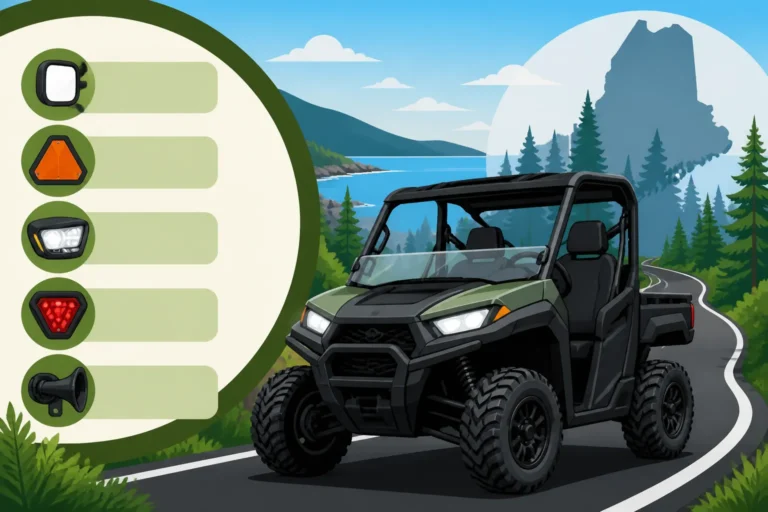
Maine's laws are pretty clear when it comes to operating ATVs and UTVs on public ways, and lighting is a big part of that. The overarching principle is that your machine needs to be as visible as possible, especially during times of reduced light. This isn't just about night riding; it includes foggy conditions, heavy rain, or even just riding at dusk or dawn when visibility can be tricky for other motorists. [Maine Lighting Requirements for Night Riding] covers some of the specifics, but the general expectation is that your machine should have a functional headlight, taillight, and brake light.
Headlight Rules After Dark and Beyond
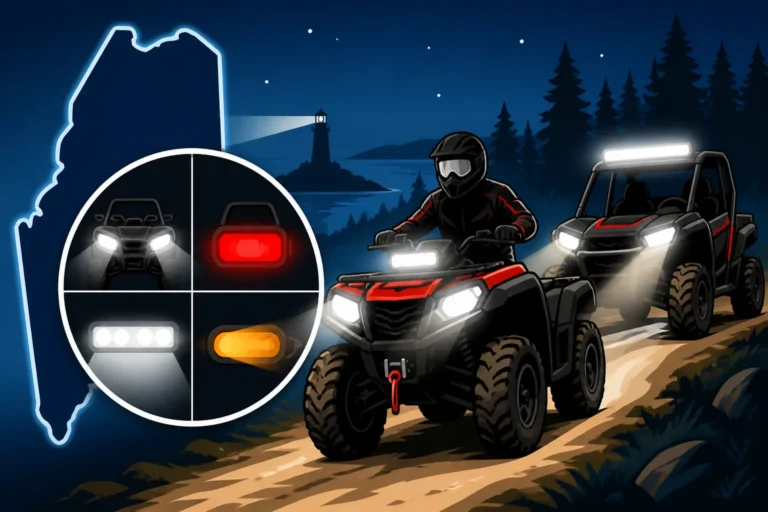
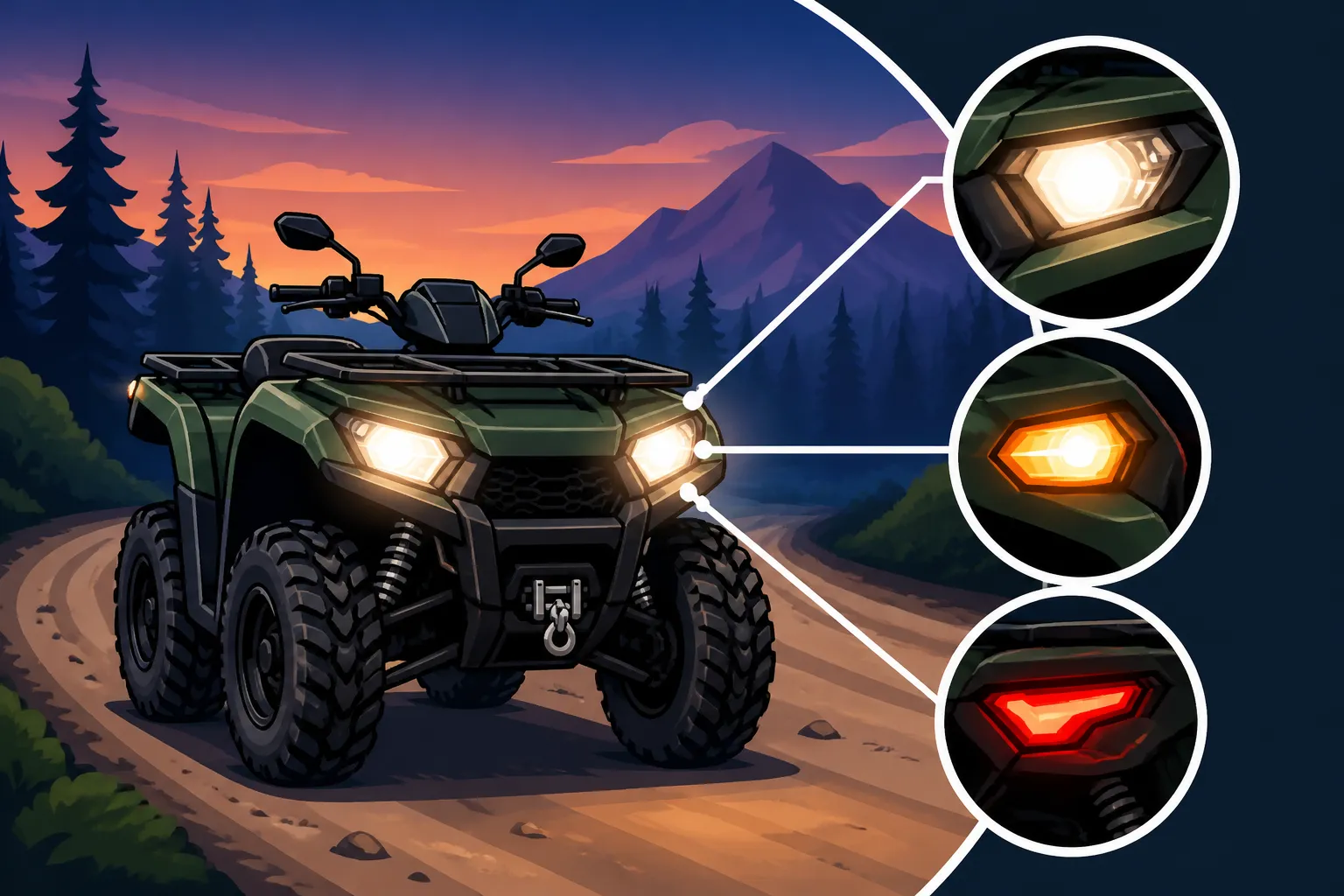
Your ATV or UTV's headlight isn't just there to help you see the trail in front of you. When you're on a public way, it's a critical component for making sure oncoming traffic sees you. Maine law specifies that when operating an ATV or UTV from one-half hour after sunset to one-half hour before sunrise, or at any time when there is insufficient light to clearly see persons or vehicles on the way at a distance of 200 feet, you must have your headlights on. This isn't just a suggestion; it's a legal requirement that wardens take seriously.
Think about those moments when you're finishing a ride a little later than planned, and the sun is dipping below the tree line. That's exactly when you need your headlights blazing. Even on a bright, sunny day, if you're on a designated ATV access route that runs alongside a main road, having your headlights on can dramatically improve your visibility to drivers of larger vehicles who might not be actively looking for an ATV. A dull, yellowing lens or a weak bulb won't cut it. Your headlight should project a beam that allows you to see clearly and, just as importantly, allows others to see you.
Taillight and Brake Light Rules on a Quad
While your headlight is all about making you visible to those ahead, your taillight and brake light are your communication tools for anyone approaching from behind. Just like cars, ATVs and UTVs operating on public ways in Maine need to be equipped with a functional taillight that emits a red light visible from a distance of 500 feet to the rear. This continuous glow lets drivers behind you know you're there.
Even more critical is your brake light. When you hit the brakes, that taillight needs to illuminate much brighter to signal to following traffic that you are slowing down or stopping. This is a non-negotiable safety feature, especially when you're making a road crossing or navigating a shared-use road where you might need to react quickly to traffic or trail conditions. A faulty brake light is not only a safety hazard but also a clear violation that a Maine game warden will spot immediately. [Taillight and Brake Light Rules on a Quad] provides more in-depth information on what's expected. For those looking to upgrade their UTV for more road usage, features like turn signals, while not always explicitly required for all ATV road sections, become essential if you're aiming for full "street legal" status in some limited contexts, as discussed in [Street-Legal UTV Equipment Lists].
The Importance of Reflective Materials
Beyond active lighting, passive visibility measures also play a role, especially when you’re considering the full spectrum of road usage. While not strictly "running lights," reflective materials on your machine and gear can significantly boost your visibility. Many ATVs and UTVs come with some factory-installed reflectors, but adding more to the rear and sides, especially if your machine is a darker color, is a smart move. When a vehicle's headlights hit reflective tape, it creates an immediate, unmistakable beacon that can be seen even if your taillight momentarily flickers or if a driver's attention wanders. This is particularly important for young riders, whose smaller machines might be harder to spot. [Maine ATV Rules for Riders Under 16 on Roads] emphasizes the need for extra caution with youth riders, and enhanced visibility is a key part of that.
Why Proper Running Lights Are Non-Negotiable for Road Safety
When you’re out on the trails, especially in the remote parts of Maine, it’s easy to feel like you’re in your own world. But the moment your tires hit a public way—even for a brief crossing—that changes completely. You’re now sharing the space with cars, trucks, and potentially even pedestrians or cyclists who aren’t expecting a fast-moving off-highway vehicle. This is precisely why proper, fully functional running lights aren't just a legal formality; they are absolutely fundamental to your safety and the safety of everyone around you.
The reality is that ATVs and UTVs, by their very nature, are designed for off-road use and often have a lower profile than traditional road vehicles. This can make them surprisingly hard to spot for an unsuspecting driver, especially if visibility isn't perfect. A motorcycle’s small size makes it vulnerable on the road, and an ATV or UTV carries similar risks. A bright, well-maintained lighting system helps bridge that visibility gap, turning your machine from a potential hazard into a clearly identifiable presence on the road.
Being Seen: Your First Line of Defense
Imagine you’re crossing a state route, making use of [Maine's 500-Yard Limit on a Public Way], or traversing a designated ATV-access road near a town center. A driver approaching from around a bend, or coming out of a shaded area, might not see your ATV until it’s too late if your lights aren’t doing their job. Your headlights, taillights, and brake lights are your primary means of communicating your presence and intentions to other road users.
On a foggy morning, or as the sun begins to set, the ambient light can play tricks on the eyes. Shadows stretch, colors blend, and it becomes much harder for human eyes to pick out objects, especially if they aren't illuminated. This is where your running lights truly earn their keep. They cut through the gloom, providing a clear, unmistakable outline of your machine. It’s not just about avoiding a ticket; it’s about preventing a collision that could have severe consequences. A Maine game warden isn't just checking for a registration sticker; they're checking for basic safety equipment like lights because they understand the inherent dangers of operating these machines on public ways. If you're pulled over during a [Maine Warden Stops and ATV Paperwork] check, faulty lights are a surefire way to escalate the situation.
Communicating Your Intentions Clearly
Beyond simply being seen, your lighting system helps you communicate your intentions. Your brake light, in particular, is an instantaneous signal to vehicles behind you that you’re slowing down or stopping. Without a properly functioning brake light, a driver following you has no advance warning, significantly increasing the risk of a rear-end collision. This is especially true when riding in a group, where staggered stopping distances can quickly lead to trouble.
Think about a common scenario: you're approaching a paved road crossing after a dusty section of trail. You need to come to a complete stop, check for traffic, and then proceed. If your brake light isn't working, the vehicle behind you, perhaps another ATV or a car that hasn't quite registered your presence, might not anticipate your stop. This simple function is a cornerstone of road safety, vital for anticipating movements and maintaining safe distances. As more towns explore options for [Riding an ATV on the Road in Maine], the expectation for clear communication through lighting will only grow.
| Light Type | Purpose | Visibility Requirement (Maine) | Importance on Road Sections |
|---|---|---|---|
| Headlight | Illumination forward, visibility to oncoming traffic | One-half hour after sunset/before sunrise, or insufficient light to see 200 ft | Critical for being seen by oncoming traffic and navigating dimly lit access routes. |
| Taillight | Visibility to trailing traffic, continuous presence | Red light visible from 500 feet to the rear | Essential for indicating your presence to vehicles behind you, especially at dusk/dawn. |
| Brake Light | Signals deceleration or stop to trailing traffic | Brighter illumination than taillight when activated | Prevents rear-end collisions by clearly signaling stops or slowdowns to following traffic. |
Essential Running Light Components for Your Maine ATV or UTV
Making sure your ATV or UTV has the right running lights isn't just about meeting the minimum legal standards for those road stretches in Maine. It’s about equipping your machine with a robust lighting system that can handle everything from a quick dash across a paved road to an unexpected twilight ride back to camp. While most new ATVs and UTVs come with adequate factory lighting, factors like age, wear and tear, and specific riding conditions often call for an upgrade or, at the very least, a thorough inspection of your existing setup.
The core components are, of course, your headlights, taillights, and brake lights. But for those looking to maximize safety and utility, especially if you frequently find yourself on roads or in low-visibility conditions, there’s a whole world of supplemental lighting that can make a huge difference.
Standard OEM Lighting vs. Aftermarket Upgrades
When you first buy your ATV or UTV, it comes equipped with Original Equipment Manufacturer (OEM) lights. For many riders, these are perfectly sufficient for trail riding and occasional road crossings. They meet the basic legal requirements and provide a decent level of illumination. However, OEM lights often use incandescent or halogen bulbs, which can be less bright, draw more power, and have a shorter lifespan compared to newer technologies. Over time, lenses can yellow, and electrical connections can degrade, diminishing their effectiveness.
This is where aftermarket upgrades shine. Companies like SuperATV offer a wide range of lighting solutions designed to be brighter, more durable, and more energy-efficient. Upgrading to LED headlights, for example, can dramatically improve your forward visibility and make your machine much more noticeable to oncoming traffic. LED taillights and brake lights also offer a quicker illumination response time and a much brighter output, giving drivers behind you more warning. It's an investment in safety that pays dividends every time you encounter a public way.
Exploring Supplemental Lighting Options
While headlights and taillights are mandatory, there are other types of lights that, while not always legally required for road use, can significantly enhance your visibility and safety.
- LED Light Bars and Cube Lights: These aren't typically considered "running lights" in the legal sense for public roads, as their intense brightness can blind oncoming drivers. However, for trail use, they are invaluable. When transitioning from a well-lit trail to a dimly lit section of road, having access to powerful auxiliary lighting (which you then turn off when facing traffic) allows for a smoother, safer transition. Many riders install light bars from reputable brands like SuperATV for their ruggedness and impressive light output in off-road scenarios.
- Directional Indicators (Turn Signals): While not universally required for ATVs on all public ways in Maine (depending on the specific road designation and vehicle type), turn signals become absolutely critical if you're attempting to make your UTV street legal. They provide a clear, unambiguous signal of your intentions when turning or changing lanes, which is something drivers of other vehicles rely on heavily. If you're pondering [Can a UTV Be Made Street Legal in Maine?], adding turn signals is usually a key step.
- Running Lights with Daytime Running Light (DRL) Features: Some aftermarket headlight assemblies incorporate DRLs, which are specifically designed to make your vehicle more visible during daylight hours without being as intense as full headlights. This is an excellent feature for those frequent short road sections or crossings on sunny days, ensuring you’re always seen without necessarily needing your full, battery-draining headlight on.
Wiring and Installation Considerations
When upgrading or replacing your lighting, proper wiring and installation are paramount. Poor connections can lead to flickering lights, blown fuses, or even electrical fires. If you're not comfortable with automotive electrical work, it's always best to have a qualified professional handle the installation. Ensure all connections are waterproofed, especially given Maine’s varied weather conditions, to prevent corrosion and maintain reliability. Choosing quality components, like those from SuperATV, often means you're getting lights that are designed for easy installation and long-term durability in rugged conditions.
Upgrading and Maintaining Your ATV/UTV Lighting System
Having a robust set of running lights is one thing; keeping them in top condition is another. Just like any other part of your ATV or UTV, your lighting system requires regular checks and occasional maintenance to ensure it’s always ready to perform, especially when you hit those road sections or unexpected low-light conditions on Maine’s trails. A burned-out bulb or a corroded connection isn't just an inconvenience; it's a significant safety risk and a potential cause for a fine if a game warden spots it.
Riding ATVs and UTVs exposes your machine to vibration, mud, water, and debris, all of which can take a toll on electrical components and light housings. Proactive maintenance is key to avoiding issues when you least expect them, like during a crucial [Riding an ATV on the Road in Maine] segment at dusk.
Routine Checks for Optimal Performance
Make it a habit to do a quick visual check of your lights before every ride, or at least before any ride that might involve public road access.
- Headlights and Taillights: Turn your ignition on and check that both your headlight and taillight illuminate properly. If you have separate running lights (not just the main beam), check those too. Look for any flickering or dimness, which could indicate a loose connection or a failing bulb.
- Brake Light: Squeeze your brake lever or press your brake pedal (or both, depending on your machine) to ensure the brake light comes on brightly. If your taillight simply gets dimmer when you hit the brakes, you have a problem.
- Bulb and Lens Condition: Inspect the lenses for cracks, fogging, or excessive dirt. A dirty or damaged lens can significantly reduce light output. If your lenses are yellowed or hazy, consider a plastic polishing kit or replacement.
- Wiring and Connections: While you don’t need to be an electrician, a quick visual scan for any loose wires, frayed insulation, or corroded terminals can prevent future headaches. Pay attention to areas where wires might rub against the frame or other components.
When to Consider a Lighting System Upgrade
If your existing lights are consistently dim, frequently burn out, or simply don't provide the visibility you feel you need, it might be time for an upgrade. Many riders find that older halogen systems just don't cut it, especially compared to modern LED technology.
- Improved Brightness and Visibility: Modern LED lights are significantly brighter than older halogen bulbs, both for forward illumination and for rear visibility. This is a game-changer for safety, ensuring you can see obstacles and, more importantly, that other drivers can see you.
- Energy Efficiency: LEDs draw much less power from your machine’s electrical system. This is crucial for ATVs and UTVs, which have limited charging capacities. Less power draw means less strain on your stator and battery, and potentially more power available for other accessories.
- Durability and Lifespan: LEDs are more resistant to vibration and typically last much longer than traditional bulbs, meaning fewer replacements and less time spent troubleshooting.
- Enhanced Features: Upgraded lighting often comes with features like better beam patterns, integrated daytime running lights, and sealed units that are more resistant to water and dust. For UTVs, specific kits designed to meet [Street-Legal UTV Equipment Lists] often include advanced lighting with turn signals and brighter marker lights.
Brands like SuperATV specialize in aftermarket parts for ATVs and UTVs, including robust and high-performance lighting solutions. From complete LED headlight assemblies to brighter LED taillight/brake light combos and auxiliary lighting, they offer options that can transform your machine's visibility and safety. Investing in a quality upgrade not only makes your machine safer but also more enjoyable to ride, giving you peace of mind whether you're deep in the Maine woods or just making a quick hop across a paved road.
Disclaimer
This article is for general informational purposes only and does not constitute professional advice. Laws, prices and regulations vary by location and change over time. Consult a qualified professional for guidance on your specific situation.