Maine ATV Rules on Town Landing Roads
Navigating Maine's vast network of trails and roads with your ATV or UTV can sometimes feel like a puzzle, especially when it comes to those seemingly innocuous stretches of pavement or dirt that lead to the water. Town landing roads are a perfect example of this confusion, often leaving riders scratching their heads about what's legal, what's just accepted, and what could land them a stern talking-to from a game warden or, worse, a hefty fine. This guide aims to clear up the mystery, detailing the specific rules and best practices for legally and responsibly operating your off-road machine on Maine's town landing roads.
Understanding What "Town Landing Road" Actually Means in Maine
Before we dive into the nitty-gritty of ATV and UTV regulations, it's crucial to understand what we're talking about when we say "town landing road." In Maine, these aren't just any old dirt tracks leading to a lake or river. A town landing road is typically a municipal right-of-way, officially designated and maintained by a town, that provides public access to a body of water. Historically, these were vital for fishing, logging, and other waterborne activities, and today, they often serve as boat launches, swimming spots, or simply scenic overlooks.
The key distinction here is that while they lead to recreational areas, town landing roads are, by definition, part of the town's public road infrastructure. This immediately puts them in a different legal category than a private woods road or a designated ATV trail. Because they are public ways, even if they look like a bumpy dirt path, they are subject to different rules regarding traffic, signage, and how various vehicles, including ATVs and UTVs, can use them. The casual appearance of many of these roads often belies their official status, leading to misunderstandings among riders.
This designation means that any general statewide laws concerning ATVs on public ways are inherently applicable to town landing roads, unless a specific local ordinance overrides or modifies them. It’s not just about getting to the water; it’s about understanding the specific legal framework governing that particular stretch of road. This can feel like a bureaucratic headache when all you want to do is launch your kayak or enjoy the view, but it's a critical piece of information for responsible riding.
The Legal Status of Public Ways and ATVs
In Maine, the general rule is that ATVs and UTVs are not permitted on public ways, which includes any street, road, highway, or bridge maintained for public travel, unless specifically authorized. This authorization can come in a few forms: a state law exemption, a locally designated ATV-access route, or crossing a public way under very specific conditions. Town landing roads, despite often being unpaved and less traveled, fall under this "public way" umbrella.
The challenge is that many town landing roads feel more like extensions of a trail system than a proper public road. You might ride miles of designated ATV trail, come to a town landing road to reach a lake, and unknowingly be on a public way where different rules apply. This is why knowing the specific local ordinances for the towns you're riding in is so important, especially if your route involves accessing water bodies via these municipal access points.
It’s easy to assume that because a road is unpaved and leads to recreational water, it's automatically fair game for your quad. However, Maine law makes a clear distinction. Riding an ATV on an unauthorized public way, even a town landing road, can result in penalties. This is where the intricacies of [Riding an ATV on the Road in Maine] come into play, as town landing roads are essentially another type of public way that requires careful navigation of the law.
How Town Ordinances Affect Access
While state law provides the overarching framework, individual towns in Maine have the authority to establish their own ordinances regarding ATV and UTV use within their municipal limits. This is particularly relevant for town landing roads, as towns often want to manage access to their waterfronts, control noise, prevent erosion, and ensure safety for all users. What's permissible in one town might be strictly forbidden just a few miles down the road in another.
A town might designate a specific town landing road as an ATV-access route, allowing machines to use it for a certain distance to get to a trail, a body of water, or even a local business. However, these routes are almost always clearly marked with official signs indicating that ATV use is permitted. Without such signage, it's generally safest to assume that ATV travel is prohibited, even on what appears to be an unofficial dirt path. Some towns might also impose specific time-of-day restrictions or seasonal closures on these roads to minimize disruption to residents or to prevent damage during mud season.
It’s not enough to simply guess. Before you plan a trip that involves a town landing, it's a good idea to check the town's website, contact the town office, or look for local postings that detail their ATV ordinances. Ignorance of the law is rarely an acceptable defense if you're caught violating a local rule. [Maine Towns That Restrict ATVs on Public Ways] are more common than some riders realize, and this applies directly to how town landing roads are handled.
Specific Maine ATV Laws on Town Landing Roads
So, what are the actual rules you need to follow when you encounter a town landing road? It boils down to a few key principles, many of which mirror the general rules for ATVs on any public way in Maine. Understanding these specific points can help you avoid problems and ensure your ride remains enjoyable and legal.
The 500-Yard Limit and Crossing Rules
One of the most frequently misunderstood rules for ATVs on public ways, including town landing roads, is the "500-yard limit" and rules for crossing. Generally, you can't ride your ATV along a public way for more than 500 yards to get from one trail to another, or to access an approved destination. Even within this 500-yard limit, you're expected to ride on the extreme right of the road, single file, and only if it's safe to do so. This rule is particularly important when you're trying to connect a trail system to a town landing for water access.
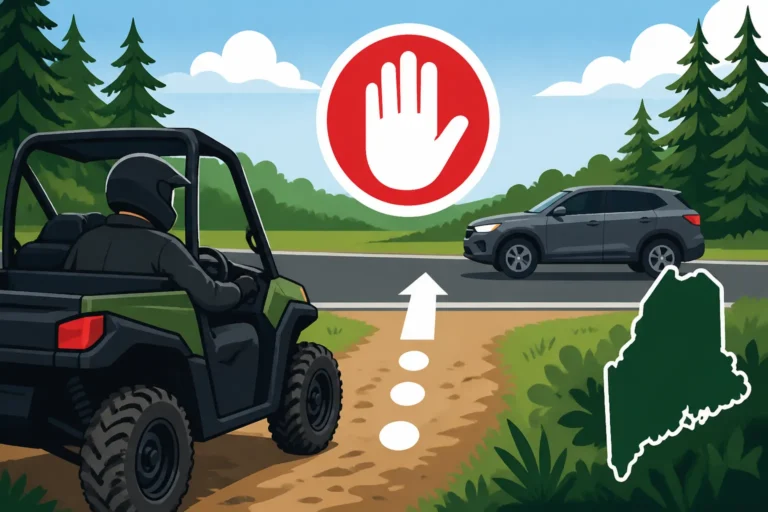
More commonly, ATVs are permitted to cross a public way to get from one section of a trail to another. When crossing a town landing road, you must come to a complete stop, yield to all vehicular and pedestrian traffic, and cross at a right angle to the road. You cannot ride down the road, even for a short distance, unless it's part of a specifically designated ATV access route. This is where [Maine's 500-Yard Limit on a Public Way] becomes critical. It's a very limited allowance, not a free pass to cruise public roads.
The intent of these rules is to minimize interaction between ATVs and other vehicles on public infrastructure, ensuring safety for everyone. On a town landing road, which might see cars pulling trailers for boat launches, pedestrians, or even just local traffic, this caution is paramount. Always be prepared to stop, look, and yield before proceeding, and only cross if it's genuinely safe and legally permissible to do so.
Designated ATV-Access Routes
The clearest path to legal ATV use on a town landing road is when the town has officially designated it as an ATV-access route. These routes are a fantastic way for communities to integrate ATV tourism and provide riders with necessary access points to services, trails, or bodies of water. When a town landing road is part of such a route, it means the town has explicitly allowed ATV and UTV traffic on that specific stretch.
These routes are always clearly marked with official signage, often showing an ATV symbol with an arrow, indicating where machines are allowed to travel. You'll typically see these signs at the beginning and end of the designated section. Without these signs, even if it feels like a logical connection, you should assume it's not a legal ATV route. [Maine ATV-Access Routes and How Towns Post Them] provides more detail on how these routes are established and identified.
It’s important to remember that even on a designated access route, you are still operating on a public way. This means you should still exercise extreme caution, obey all posted speed limits, and be aware of other users, including vehicles, pedestrians, and cyclists. The designation allows access, but it doesn't waive your responsibility as a safe and respectful operator.
Registration and Equipment Requirements
Regardless of whether you're on a designated trail, crossing a road, or (legally) riding on a town landing access route, your ATV or UTV must be properly registered in Maine. This is a non-negotiable requirement for all motorized off-highway vehicles operating on public lands, trails, or approved public ways. An unregistered machine, even if ridden just a few feet on a town landing, can lead to significant fines. [Penalties for Riding an Unregistered ATV in Maine] can put a serious damper on your day.
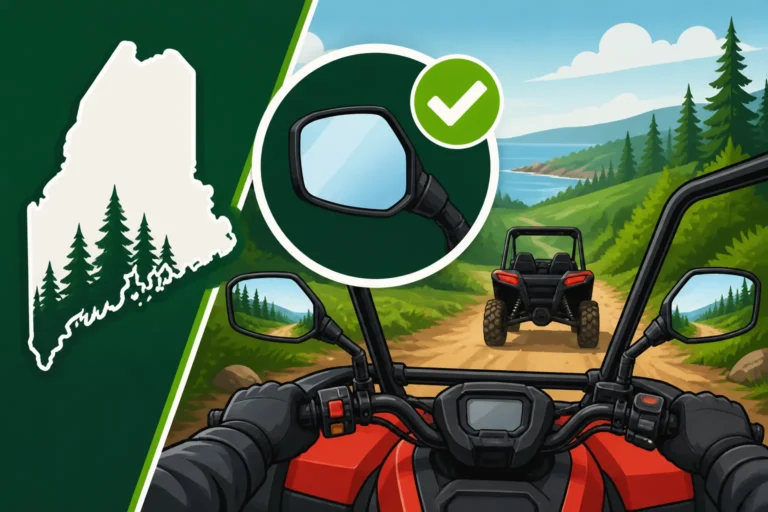
Beyond registration, your machine must also meet basic equipment requirements. This includes having working headlights and taillights if riding at night, and a spark arrestor on your muffler to prevent wildfires. While not always strictly enforced on trails, these requirements are especially relevant on public ways like town landing roads, where you're more likely to encounter other vehicles and wardens conducting checks. Many riders also choose to add aftermarket accessories from companies like SuperATV, such as mirrors or turn signals, to enhance safety and visibility, especially if they anticipate riding on designated public way connectors.
Always carry proof of your current registration with you while riding. Maine wardens frequently conduct checks, and they will expect to see your paperwork. Make sure it’s current and easily accessible, perhaps in a waterproof bag. [Maine Wardens and ATV Paperwork] explains more about what to expect during a trailside stop.
Practical Considerations and Best Practices
Navigating town landing roads with your ATV or UTV isn't just about knowing the law; it's also about exercising good judgment and being a responsible, courteous rider. These practical tips can help ensure a smooth and enjoyable experience for everyone.
Respecting Other Users and Property
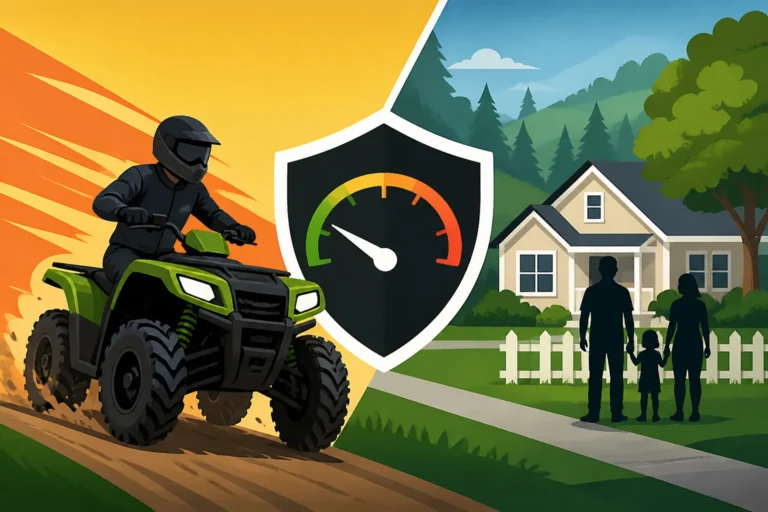
Town landing roads are used by a wide variety of people, not just ATV riders. You'll encounter anglers, kayakers, families heading to the beach, and local residents going about their day. It's crucial to share these spaces respectfully. This means keeping your speed down, especially in residential areas or where visibility is limited. Dust and noise can be major complaints from local residents, and excessive speed only exacerbates these issues.
Always yield to pedestrians, cyclists, and any other vehicles. Remember, you're a guest on these public ways. If you're using a town landing to access the water, be mindful of where you park your machine and trailer, ensuring you don't block access for others or impede traffic flow. Leaving enough room for a boat to launch or a car to turn around is just common courtesy.
Another critical aspect is respecting private property. Many town landing roads are surrounded by private land. Stick strictly to the designated public way and do not venture onto private property without explicit permission. Look out for "No Trespassing" signs or distinctive purple paint marks, which in Maine, legally denote private land where entry is forbidden. Maintaining positive relationships with landowners is vital for the continued access we all enjoy on Maine's vast trail systems.
Checking Local Ordinances and Signage
As mentioned earlier, local ordinances can vary significantly from one town to the next. Before you head out, especially if you're exploring a new area, take a few minutes to check the local town's website for their specific ATV regulations. Many towns post these bylaws online, or you can call the town office directly. This proactive step can save you from an unintended violation.
Always pay close attention to all signage. Look for official ATV-access route signs that explicitly permit ATV travel. If you don't see them, it's safer to assume that the road is not open to ATVs, beyond the 500-yard crossing rule. Speed limit signs, "No Parking" signs, and "Private Road" signs are equally important and must be obeyed. Many of the accessories available through companies like SuperATV, such as enhanced lighting, can help you spot these signs more easily, especially in varied lighting conditions.
It's tempting to follow tracks you see on the ground, assuming others know the rules. However, those tracks might have been made by someone else who was also mistaken, or by a local who has specific permission. Always rely on official signs and documented ordinances, not just visual cues. [Maine ATV Rules on Dirt Town Roads] often overlap with town landing rules, further highlighting the need to verify local regulations.
Riding Responsibly and Safely
Safety should always be your top priority. On town landing roads, this means being extra vigilant. These roads can be narrow, have blind turns, or feature soft shoulders. The surfaces can range from paved to gravel to heavily rutted dirt, sometimes with loose rocks or potholes, especially closer to the water's edge. Adjust your speed and riding style to suit the conditions.
Always wear appropriate safety gear, including a helmet, eye protection, sturdy boots, and gloves. While helmets aren't mandatory for adults over 18 on all Maine trails, they are strongly recommended, and your chances of needing one increase significantly when sharing a public way with other traffic. Children under 18 must always wear a helmet when riding an ATV in Maine.
Be aware of changing conditions. A town landing road that was dry and firm yesterday might be muddy and treacherous after a rain, or icy in colder months. Always ride within your skill level and the capabilities of your machine. If you're pulling a trailer, make sure it's properly secured and that your machine can handle the load safely, especially on inclines or uneven terrain.
| Scenario | Legal Action to Take | Best Practice |
|---|---|---|
| Crossing a Town Landing Road | Come to a complete stop, yield to all traffic, cross at a right angle. | Be highly visible, ensure no blind spots, cross quickly. |
| Riding on an ATV-Access Route | Obey all traffic laws, speed limits, and signage. | Maintain low speed, stay to the extreme right, be alert. |
| No Designated Route | Assume no access beyond 500-yard rule or direct crossing. | Find an alternate, legal route to your destination. |
| Parking at the Landing | Park in designated areas, do not block access points. | Consider others' needs (boat launches, turning radius). |
| Encountering Wardens | Provide registration and safety certificates promptly. | Be polite, cooperative, and have paperwork ready. |
What Happens If You Break the Rules?
Ignoring Maine's ATV laws, whether on designated trails or on public ways like town landing roads, can lead to serious consequences. The Maine Warden Service, along with local law enforcement, actively patrols these areas to ensure compliance and safety.
Fines and Penalties
The most immediate consequence of violating ATV rules on a town landing road is typically a fine. These fines can vary depending on the specific infraction. For example, operating an unregistered ATV carries a different penalty than riding on a prohibited public way or trespassing on private land. These tickets can quickly add up and turn an otherwise enjoyable day into an expensive regret.
Beyond monetary fines, repeated or severe violations could potentially lead to the suspension or revocation of your ATV registration, or even your operator's license. This would mean you wouldn't be able to legally ride your machine anywhere in the state. [Penalties for Riding an Unregistered ATV in Maine] is a good resource to understand the full scope of potential consequences.
It's also worth noting that if you cause property damage or an accident while operating illegally, you could be held civilly liable for damages, in addition to any criminal penalties. This could mean significant out-of-pocket expenses for repairs, medical bills, or legal fees.
Losing Access for Everyone
Perhaps the most impactful, though less direct, consequence of irresponsible riding on town landing roads is the potential loss of access for all riders. When ATVs create excessive noise, dust, or damage, or when riders disregard private property, it creates animosity within the local community. This often leads to landowners withdrawing permission for trails that cross their property, or towns enacting stricter ordinances that completely ban ATVs from specific roads or areas.
Many of Maine's ATV trails exist because of the generosity of private landowners and the hard work of ATV clubs. When riders act irresponsibly on town landing roads or elsewhere, it erodes trust and makes it harder for clubs to maintain and expand the trail network. Every time a landowner posts "No Trespassing" signs or a town bans ATV access, it's a loss for the entire riding community. Being a good ambassador for the sport, especially in sensitive areas like town landing roads, is paramount to preserving the riding opportunities we all cherish.
Disclaimer
This article is for general informational purposes only and does not constitute professional advice. Laws, prices and regulations vary by location and change over time. Consult a qualified professional for guidance on your specific situation.