Loading an ATV on a Roadside Safely
We've all been there: the sun is setting, you've had an incredible day exploring Maine's vast trail system, and now it's time to load your ATV or UTV back onto your trailer or into the truck bed for the journey home. But what seems like a simple task can quickly become a white-knuckle experience, especially when you're pulled over on the side of a busy or remote Maine road. This guide is all about demystifying the process and equipping you with the knowledge to load your machine safely, every single time, without unnecessary stress or danger.
The Unique Challenges of Roadside Loading in Maine
Loading an ATV or UTV is rarely as straightforward as it seems in a perfectly flat, paved driveway. When you add the unpredictable elements of a Maine roadside, the task becomes significantly more complex. We're talking about more than just backing up a trailer; it's about navigating real-world hazards that demand your full attention and preparation.
Traffic and Visibility Concerns on Rural Roads
Maine is famous for its breathtaking natural beauty, but that often comes with long stretches of rural roads that aren't designed for shoulder-side activities. Imagine trying to load your rig on a winding, two-lane road in the Forks or deep in Aroostook County. These roads often lack wide, paved shoulders, forcing you to pull over onto soft gravel, uneven grass, or worse, partially into a travel lane.
The visibility can be incredibly poor, especially around blind corners, over crests of hills, or when thick tree lines hug the roadside. Other drivers, often accustomed to quiet stretches, might not be expecting a stationary vehicle, let alone one with ramps extending into the road. Distracted driving is a real concern everywhere, and a roadside loading operation is a magnet for potential incidents if proper precautions aren't taken. Even at a rural 45 mph speed limit, a vehicle approaching unexpectedly can be upon you in seconds. You need to be aware of your surroundings at all times, not just when you're driving. Having someone act as a spotter can be invaluable in these situations, helping to direct traffic or alert you to approaching vehicles.
Uneven Terrain and Roadside Conditions
Unlike a controlled environment, Maine's roadsides are rarely perfectly level and stable. You might encounter a deep ditch, a soft, muddy shoulder after a rain, loose gravel that shifts underfoot, or even an unexpected rock or stump. Any of these conditions can critically compromise the stability of your tow vehicle, your trailer, and especially your ramps.
Think about it: if your truck or trailer isn't perfectly level, your ramps will have an uneven angle. One ramp might be steeper than the other, or worse, one side might sink into soft ground, creating a dangerous tilt. Loose gravel can cause your ramps to slip out from under your ATV's tires, or worse, from where they're resting on your tailgate or trailer. A slight incline, even one you barely notice, can drastically increase the angle of approach for your ATV, making it harder to maintain a slow, controlled ascent. It's not just about getting the machine up; it's about keeping everything stable and secure while you do it. This calls for a careful assessment of the terrain before you even think about dropping your tailgate.
Legal Considerations and Local Ordinances
While safety is paramount, it's also worth remembering that there are rules governing what you can and can't do on a public way. Maine state law, and even local town ordinances, might have specific stipulations about where you can stop, how long you can remain there, and whether you're obstructing traffic. Pulling over to load your ATV isn't the same as a quick stop for a photo. You're creating a temporary work zone that requires caution and adherence to certain principles.
Blocking a lane of traffic, even partially, can lead to fines and, more importantly, create a significant hazard. Wardens and local law enforcement are vigilant about roadside safety. You certainly don't want to get a ticket or, worse, cause an accident while you're simply trying to head home. When wardens conduct [Maine Warden Stops and ATV Paperwork] checks, they're not just looking at your registration; they're observing your overall conduct and safety practices. Some towns have specific rules about what can be done on their town roads, especially designated [Maine Towns That Restrict ATVs on Public Ways]. Always strive to be as far off the main flow of traffic as possible, and ensure your setup doesn't impede visibility for others.
Essential Gear and Pre-Loading Preparations
Successfully and safely loading your ATV or UTV on a Maine roadside isn't just about technique; it's heavily dependent on having the right equipment and taking the time for thorough preparation. Rushing this stage is often where things go wrong, leading to damaged machines, injured riders, or even traffic incidents.
Choosing the Right Ramps and Securing Them
Your ramps are the bridge between the ground and your transport, and they are arguably the most critical piece of equipment in this whole operation. There's a wide variety out there: arched ramps, straight ramps, folding, bi-fold, tri-fold designs. The key, however, isn't just the style, but their suitability for your machine and your tow vehicle.
First and foremost, weight capacity is non-negotiable. Always ensure your ramps can comfortably handle the combined weight of your ATV or UTV plus your own body weight. Overloading ramps can cause them to buckle or collapse, an incredibly dangerous scenario. Secondly, length and angle are crucial. Shorter ramps create a steeper loading angle, which increases the risk of your ATV high-centering, scraping its underside, or losing traction during the ascent. Longer, arched ramps are generally safer, providing a gentler incline that makes for a smoother, more controlled load. You should also consider the width; if you have a wider side-by-side, ensure your ramps accommodate its stance safely.
Perhaps the most overlooked, yet vital, aspect is securing the ramps. Many accidents happen because ramps kick out from under the ATV. Most quality ramps come with safety straps, chains, or built-in retention systems designed to anchor them securely to your tailgate or trailer. Never skip this step! These straps prevent the ramps from slipping horizontally or vertically, providing a stable path for your machine. When considering loading accessories, many riders look for heavy-duty ramps or specialized tie-downs, often checking brands like SuperATV for their robust offerings designed for stability and durability. Their products often focus on heavy-duty construction that can withstand the rigors of frequent use and challenging loading situations.
Trailer and Tow Vehicle Setup for Stability
The foundation of your loading operation is your tow vehicle and trailer. Without a stable base, everything else becomes inherently risky. Before you even think about deploying ramps, ensure your truck or trailer is properly positioned and secured.
First, always seek out the most level ground available. Even a slight incline can drastically alter the physics of loading, making your ATV harder to control or causing ramps to sit unevenly. Once positioned, engage the parking brake on your tow vehicle. If you're using a utility trailer that's detached from your truck (though generally not recommended for roadside loading unless absolutely necessary and safe), you must use wheel chocks to prevent any movement. For hitched trailers, ensure the hitch is fully engaged and locked, and the trailer's parking brake (if equipped) is set. The goal is to create an immovable platform onto which you will be loading a significant amount of weight. Taking the time to properly position and stabilize your setup can prevent disaster.
Personal Protective Equipment and Visibility Aids
Even though you're not riding at speed, loading an ATV or UTV carries risks. A slip, a fall, or an unexpected shift can happen in an instant. This is why personal protective equipment (PPE) is just as important during loading as it is on the trail.
Always wear a helmet. It might seem overkill for a slow-speed maneuver, but head injuries can occur from even a short fall. Gloves are also advisable to protect your hands from scrapes, pinches, or burns, especially if you're handling metal ramps or tie-down straps. Beyond personal protection, visibility is crucial when you're on the side of a road. Wear a high-visibility vest, especially if visibility is poor due to weather, time of day, or the roadside environment. Turn on your tow vehicle's hazard lights. If you're stopped in a particularly dangerous spot, consider deploying road flares or reflective triangles to warn oncoming traffic well in advance. Remember, when you're focused on loading, your attention might be diverted, and these aids act as an extra layer of protection, alerting others to your presence.
The Safe Loading Process: Step-by-Step
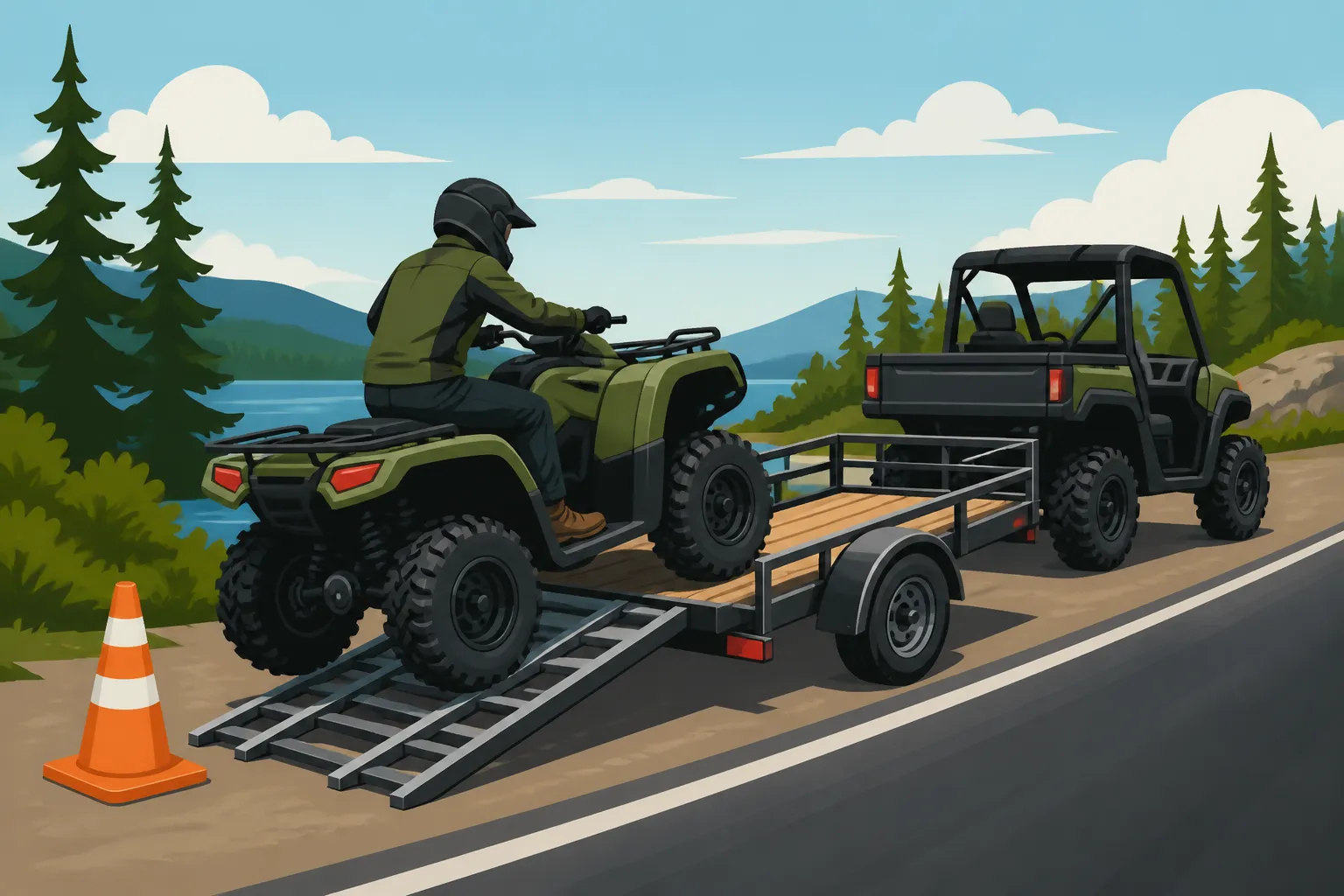
Once your equipment is ready and your site is secure, it's time to execute the loading process itself. This isn't a race; it's a methodical procedure where control and precision trump speed. Taking your time and focusing on each step will ensure your machine gets loaded without incident.
Positioning the ATV and Aligning with Ramps
The first step in driving your ATV or UTV onto the ramps is getting into the correct starting position. This might sound obvious, but improper alignment is a common cause of accidents. You want to position your machine directly in front of the ramps, ensuring it's perfectly straight and centered.
Avoid approaching the ramps at an angle. Even a slight offset can cause one tire to miss a ramp, or worse, put uneven stress on the ramp setup, leading to a slip or a buckle. Take a moment to line up your ATV's tires with the center of each ramp. If you're using a single, wider ramp for a UTV, ensure its wheels are evenly spaced across the ramp's surface. If you feel misaligned, don't try to correct it with a sharp turn on the ramps; back up and realign. A smooth, straight approach gives you the best chance for a stable and controlled ascent. Remember, patience here saves a lot of headaches later.
Controlled Ascent and Descent
This is the moment of truth. Whether you're loading a nimble quad or a heavy side-by-side, the technique for driving onto ramps remains consistent: slow, steady, and controlled.
For ATVs, engage low gear (if applicable) and apply a small, consistent amount of throttle. The goal is to maintain a steady, unhurried pace. Avoid sudden bursts of acceleration, as this can cause the front wheels to lift, shift your weight rearward, and make you lose steering control or even flip backward off the ramps. Keep your body weight slightly forward, especially as the front wheels begin to climb, to help maintain traction and balance. Don't be afraid to use the brakes if you feel you're going too fast.
For UTVs, the process is similar. Low gear and a steady throttle are key. The inherent stability of a UTV's wider stance and lower center of gravity makes it somewhat less prone to tipping, but the risk of ramps kicking out or the vehicle slipping sideways on uneven terrain is still very real. If your UTV has 4WD, engage it before climbing the ramps; this provides maximum traction and control, especially on potentially slippery ramp surfaces or if the ground leading to the ramps is soft. As you climb, look ahead, not down at your wheels, and maintain a clear line of sight to where you want the machine to settle. Once the front wheels are on the truck bed or trailer, continue slowly until the rear wheels are also fully past the edge. You might find that products like heavy-duty winches or recovery gear from SuperATV can be a lifesaver if you get stuck near a loading zone, but the actual loading itself relies on your careful driving.
Securing the ATV for Transport
Once your ATV or UTV is safely on the truck or trailer, your work isn't done. The most crucial step now is to secure it properly for transport. An unsecured machine is a massive hazard, capable of shifting, falling, or even becoming a projectile on the highway. This is particularly important if you're hauling a larger machine or if you're navigating Maine's sometimes bumpy backroads. This is also where understanding [Tying an ATV Down for the Highway] becomes absolutely critical.
You should always use a minimum of four tie-down points, anchoring each corner of the ATV or UTV. These should be strong, heavy-duty ratchet straps, not flimsy bungee cords or ropes. Secure the straps to the frame or sturdy suspension components of your machine, avoiding critical areas like brake lines, wiring harnesses, or plastic bodywork that could be damaged. The goal is to compress the suspension of your ATV slightly, creating tension that prevents the machine from bouncing and shifting during travel. You don't need to crank it down so hard that the suspension is fully compressed and immobile, but enough to eliminate slack.
Double-check all your straps: are they tight? Are they free of twists? Is the excess strap safely secured so it won't flap in the wind or get caught in a wheel? It's a good practice to check your tie-downs again after driving a short distance (5-10 miles) to ensure everything has settled and remains secure. This is an excellent habit, especially when driving on Maine's varied roads. If you're lucky enough to be [Hauling Two Quads on One Trailer], the principles are the same, just multiplied – ensure each machine is individually secured.
Here's a quick reference for common tie-down mistakes to avoid:
| Loading Precaution | Why It's Important | How to Mitigate Risk |
|---|---|---|
| Slipping Ramps | Can cause ATV to fall, injury, vehicle damage | Use safety straps, ensure solid contact with ground and vehicle |
| Uneven Ground | Affects ramp angle, stability of vehicle/ATV | Find the flattest, most stable spot possible; use leveling blocks if needed |
| Traffic Pressure | Risk of collision with distracted drivers; rushed mistakes | Use warning lights, high-vis gear, spotter; choose safest location, don't rush |
| Rushing the Process | Increases likelihood of errors, loss of control, injury | Take your time, focus on each step methodically |
| Incorrect Tie-Downs | ATV can shift, fall off, or become damaged during transport | Use 4+ points, compress suspension slightly, check frequently during travel |
| Overloading Ramps | Ramps can buckle or collapse under weight | Always check ramp weight capacity vs. ATV/UTV weight + rider |
Common Pitfalls and Troubleshooting Roadside Loading
Even with the best preparation, unexpected challenges can arise when loading an ATV or UTV on the roadside. Knowing how to react calmly and safely can prevent a minor inconvenience from escalating into a serious problem.
Dealing with Slipping Ramps or Traction Issues
Picture this: you're halfway up the ramps, and suddenly one ramp shifts sideways, or your tires start spinning on a slick surface. These are immediate red flags that require a prompt and controlled response.
If a ramp begins to slip, the absolute safest thing to do is immediately back off the ramps. Do not try to power through or correct it while the machine is partially loaded. Get the ATV back to solid ground, reassess the ramp setup, and re-secure everything. Perhaps the safety straps weren't tight enough, or the ramps weren't making solid contact with your tailgate or the ground. For traction issues, especially on worn ramps or if the ground leading up is wet or muddy, you might need to try a different approach. Some riders carry anti-slip mats or even a small piece of carpet to place on the ramps if they're particularly slick. If the issue is with the ATV's tires spinning, ensure you're in low gear and applying very gentle, consistent throttle. Avoid jerky movements, which can break traction. If the approach angle is too steep, consider repositioning your tow vehicle or trailer to find a less aggressive slope.
Overcoming Limited Space and Traffic Pressure
Sometimes, you simply can't find that ideal, wide-open, perfectly level pull-off. Maine's roads, especially in some of the more populated or scenic areas, can offer very limited shoulder space. Trying to load a large UTV on a narrow strip of gravel with cars whizzing by can be incredibly stressful and dangerous.
Your first priority should always be safety over convenience. If the spot you've pulled into feels genuinely unsafe—too close to traffic, inadequate visibility, severely uneven ground—then drive to the next safest pull-off. It might add a few minutes to your journey, but it's worth it to avoid an accident. Do not let impatient drivers or the perceived need to "hurry up" pressure you into making a mistake. Flash your hazard lights, and if possible and safe, have a passenger act as a spotter, watching for traffic and signaling to you. Remember, [Maine's 500-Yard Limit on a Public Way] and other rules are in place for safety, and pushing those limits can be risky.
What to Do in Case of a Mishap
Despite all precautions, accidents can happen. An ATV could fall off the ramps, or a rider could slip and get injured. Knowing how to react calmly and effectively in these situations is critical.
Prioritize personal safety and the safety of anyone else involved. If an ATV falls, your first concern should be to ensure no one is trapped or injured. Do not immediately try to lift the machine; assess the situation first. Check yourself and anyone nearby for injuries. If there are injuries, provide first aid and call for emergency services if needed. Once people are safe, then you can assess the damage to the ATV or other vehicles. If the mishap has created a roadside hazard (e.g., the ATV is blocking traffic), take immediate steps to warn other drivers, using flares, hazard lights, or a spotter, if safe to do so. Document the scene with photos if there's significant damage or injury, as this can be important for insurance purposes later. Remember, no ATV is worth risking serious injury or worse.
Loading your ATV or UTV on a roadside, especially in the varied conditions of Maine, is a task that demands respect, preparation, and careful execution. By understanding the unique challenges, preparing with the right gear, following a methodical loading process, and knowing how to troubleshoot common issues, you can ensure that your off-road adventures end as safely as they begin. Happy trails!
Disclaimer
This article is for general informational purposes only and does not constitute professional advice. Laws, prices and regulations vary by location and change over time. Consult a qualified professional for guidance on your specific situation.