Maine Trail Damage Reports to the Bureau of Parks
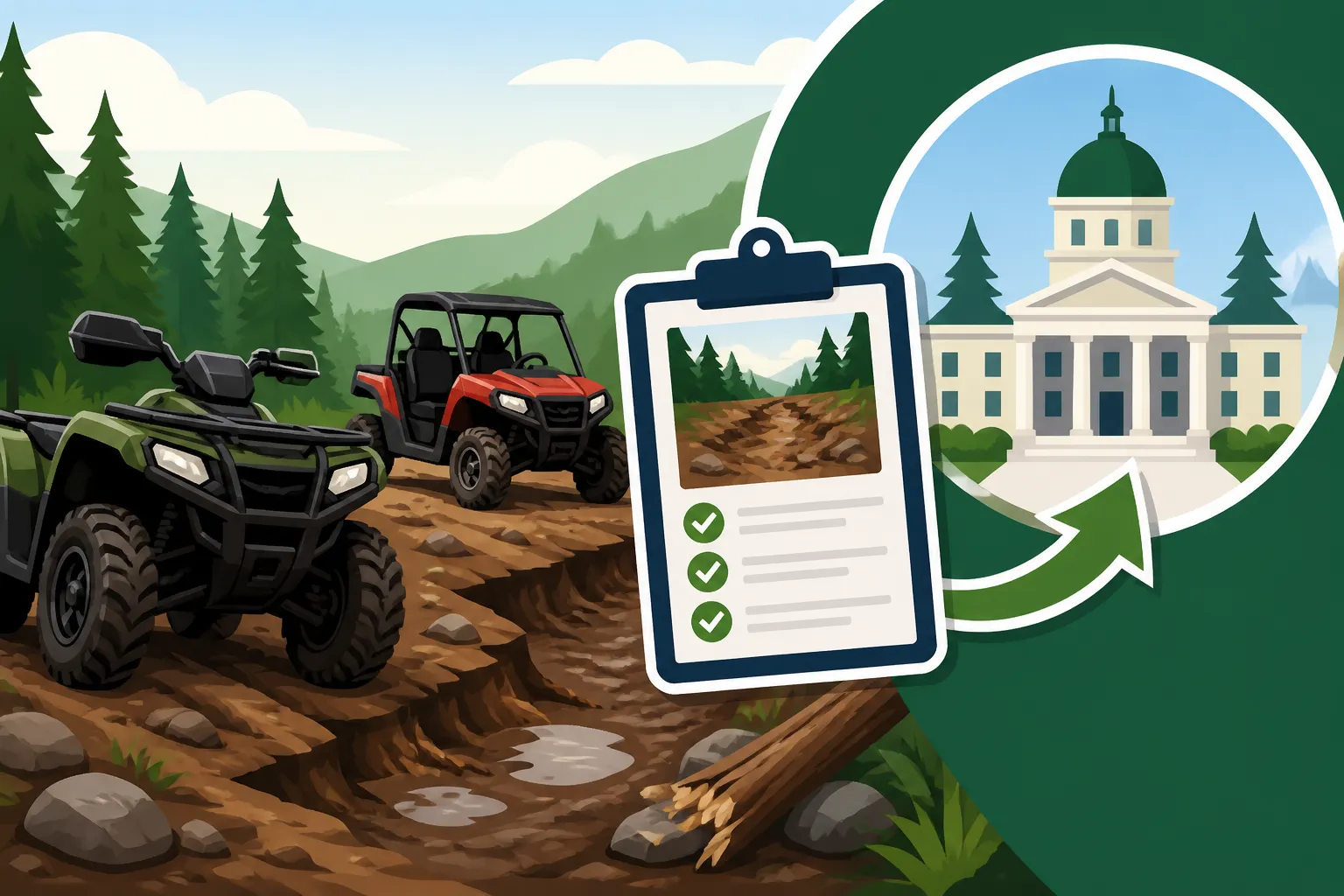
A washout, fallen tree, damaged bridge, or fresh rut can turn a familiar Maine ATV trail into a safety problem surprisingly quickly. Reporting it to the right people helps prevent injuries and keeps a small issue from becoming a bigger repair. This guide explains what to document, who to contact, and how to follow up without making the damage worse.
Identify the trail and the right contact
Start with the club or organization that maintains the trail
Many Maine ATV trails are maintained by local clubs, often with landowner permission and volunteer help. That means the nearest club may be the fastest and most useful first contact for routine trail damage. It may know who is responsible for a particular bridge, gate, sign, or stretch of trail—and whether someone has already reported the problem.
If you know the local club, use its established contact method, such as its website, social media page, or trail reporting process. Include the trail name or nearby landmark, the direction you were travelling, and a clear description of the issue. A report such as “bridge damaged” is harder to act on than “the small bridge north of the trail junction near the old gravel pit has a loose deck board on the east side.”
If you are not sure which club maintains the section, check a local trail map, club boundary information, or nearby trail signage. Maine ATV Trail Maps and Club Boundaries can help explain why identifying the responsible area matters. A map app such as onX Offroad may help you note your approximate location, but cross-check it with posted signs and local information rather than assuming the map identifies the trail manager.
Contact the Bureau of Parks and Lands when the location calls for it
The Maine Department of Agriculture, Conservation and Forestry’s Bureau of Parks and Lands is relevant when damage is on land or a trail area managed by the state, or when the issue concerns a state ATV program or facility. If you are uncertain whether a section is state-managed, provide the location and ask the Bureau to direct your report to the appropriate contact. A local club or town may still be the correct first stop for a club-maintained route.
For damage on private land, the landowner or the club coordinating access may need to be involved. Much of Maine’s trail access depends on permission from private landowners, so the person who can authorize repairs may not be a state agency. Why 80 Percent of Maine Trails Sit on Private Land and Landowner Relations on Maine ATV Trails offer useful context for why routing a report correctly can make a difference.
| What you find | Who to contact first | What to include |
|---|---|---|
| Fallen tree or brush blocking a club trail | Local ATV club or trail maintainer | Exact location, size of obstruction, whether a safe route remains |
| Damaged bridge or culvert | Trail club or the organization responsible for the structure | Which side or section is damaged, visible movement, photos from a safe distance |
| Washout, rutting, or erosion | Local trail club; state contact if it is on state-managed land | Approximate length and depth, water flow, whether the trail is passable |
| Missing or confusing sign | Local club or route manager | Nearest junction, what the sign said if known, direction of travel |
| Immediate danger or injury | Emergency services first | Your location, nature of the danger, people needing assistance |
| Damage on land with unclear ownership | Club or agency that can identify the manager | Trail name, nearby road or landmark, GPS coordinates if available |
When in doubt, send a concise report to the organization most closely connected to the trail and ask who should receive it if they are not responsible. Avoid sending the same message to numerous unrelated contacts; that can create duplicate reports without clarifying who will handle the issue.
Record useful details without putting yourself at risk
Pinpoint the location as carefully as you can
A useful trail damage report makes it possible for someone else to find the problem. Note the trail name or system, the closest junction, road crossing, bridge, trailhead, or other recognizable landmark, and your direction of travel. If you have a GPS location, include it, but label it as approximate unless you have confirmed the pin’s accuracy.
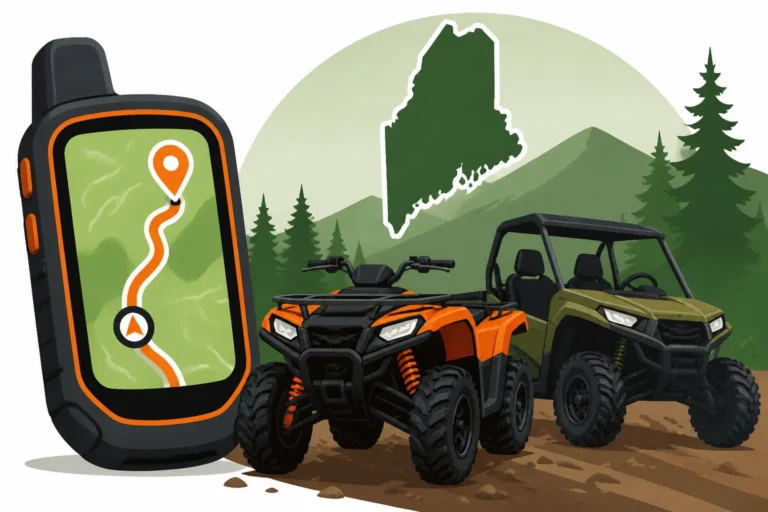
Mapping tools can help capture a location, especially where there are few road names or familiar landmarks. You might use onX Offroad to save an approximate point, then add plain-language directions such as “about a short ride east of the trailhead” or “just past the bridge marked on the club map.” Do not treat an app pin as a substitute for a written description: someone responding to the report may use a different map, device, or trail naming system.
Take photographs only from a safe place. A wide shot can show where the damage sits in relation to the trail, while a closer image can show the broken board, washout, or fallen tree. Do not walk onto a questionable bridge, enter fast-moving water, stand beneath a leaning tree, or put yourself in a machine’s path to get a better picture.
Describe what you saw, not what you assume caused it
State the visible condition and its effect on travel. For example: “Water has cut a channel across the trail, and the outside edge is undercut” is more useful than “someone destroyed the trail.” If you do not know when the damage happened or who caused it, leave that out. Speculation can distract from the information needed to inspect and address the problem.
Describe whether the trail appears passable, blocked, or unsafe, and whether you observed a possible alternate route. Do not recommend that riders take an unofficial bypass. A shortcut around a muddy patch or fallen tree can widen the damaged area, cross private property without permission, or expose riders to hazards that are not obvious from the trail.
Include the date and approximate time you noticed the issue, plus changing conditions if they matter. A culvert that was flowing normally on a dry day may be overwhelmed after heavy rain. If you return later and the problem has worsened, make a follow-up report with the new observation rather than assuming the first message reached the right person.
Submit a clear report and avoid making the damage worse
Keep the message short, specific, and actionable
A practical report can follow this simple structure:
- Identify the trail system and the closest landmark or junction.
- Give the approximate location or GPS coordinates, if available.
- Describe the damage and whether it appears passable.
- Attach clear photos taken from a safe position.
- Share the date you observed it and a way to reach you if clarification is needed.
For example: “On Saturday afternoon, I saw a washout on the trail between the marked road crossing and the next signed junction. The channel crosses the full trail and the outer edge looks undermined. I did not ride through it. I have included an approximate map pin and two photos.” This gives a maintainer the key facts without guessing about the cause or prescribing a repair.
If your report concerns a fallen tree, Reporting a Downed Tree on a Trail covers that more specific situation. For damage involving signs, junctions, or unclear wayfinding, Maine ATV Trail Signs and Markers can help you describe what is missing or difficult to interpret. The clearer your description, the less likely someone will need to make a second trip just to locate the problem.
Do not attempt repairs unless you are authorized
It can be tempting to drag a branch aside, fill a rut, or reposition a damaged sign so the next group can get through. But repairs may require permission, tools, training, or coordination with the landowner or trail manager. Moving material can also conceal a hazard, worsen erosion, or lead riders onto an unsafe detour.
This is especially important with bridges, culverts, water crossings, and steep or unstable slopes. A bridge that looks usable from the trail may have hidden structural damage. Do not test it with your ATV or UTV, and do not invite other riders to cross while waiting for an inspection. If you can safely stop before the hazard, do so; if possible, warn approaching riders without putting yourself in their path.
For a blocked trail, turn around if it is safe to do so and return by a known route. Do not widen the trail by driving around the obstacle, and do not leave the marked route to find a shortcut. Maine ATV Trail Grooming and Bridges explains how volunteer maintenance and trail structures fit into keeping routes usable, while Maine ATV Trail Closures Mid-Season is relevant when a manager needs to restrict access during a repair or safety assessment.
Follow up and help protect access
Check for updates before riding back to the area
A report does not necessarily mean a repair can happen immediately. Volunteers may need to inspect the location, obtain permission, arrange equipment, or wait for suitable ground conditions. If the issue creates an immediate safety concern, say so clearly in the first message. For less urgent damage, give the responsible group time to review it before sending a follow-up.
Before returning, check with the club or trail manager for an update. A route may be temporarily closed, or the damage may have changed after rain, snowmelt, or additional traffic. Checking Maine Trail Status Before You Drive and Maine ATV Trail Closures Mid-Season are useful reminders that posted conditions can change after you have planned a ride.
If you use onX Offroad to save the location, keep the pin and notes for your own reference, but do not treat an old saved point as proof that a trail is currently open or repaired. A later visit may show that the situation has changed; if so, share a factual update with the manager. When information is uncertain, ask before riding rather than relying on a screenshot or an older map.
Support the people who keep trails open
Local trail maintenance often depends on volunteers, clubs, and cooperation from landowners. A considerate report can help those groups prioritize work, but respectful riding matters just as much. Stay on the marked route, obey closures, avoid creating bypasses, and give workers space when crews are repairing a bridge or clearing debris.
Joining or supporting a local club can also help you understand how that area handles trail reports and maintenance. Maine ATV Club Membership and Dues explains the role clubs can play, and Maine ATV Trail Grant Program provides background on how trail work may be supported. A report is most useful when it is paired with patience: the person reading it may be a volunteer fitting the inspection around work and family responsibilities.
A final detail can make a report more helpful: thank the club or agency for checking the issue, and let them know if you are willing to clarify the location. Avoid repeated messages asking for an immediate repair unless the danger has become more urgent. Clear facts, safe decisions, and respect for land access all help protect Maine’s trails for the next ride.
Disclaimer
This article is for general informational purposes only and does not constitute professional advice. Laws, prices and regulations vary by location and change over time. Consult a qualified professional for guidance on your specific situation.