Bog Bridges and How to Ride Them
A bog bridge can look like the easiest part of a muddy Maine trail—until your tires meet a narrow, slick run of boards above soft ground. The safest approach is usually slow, straight, and deliberate, with enough space to assess the crossing before you commit. This guide explains how to recognize bog bridges, ride them with an ATV or UTV, and respond when one looks damaged or unsafe.
What a bog bridge is and why it needs care
How bog bridges are built
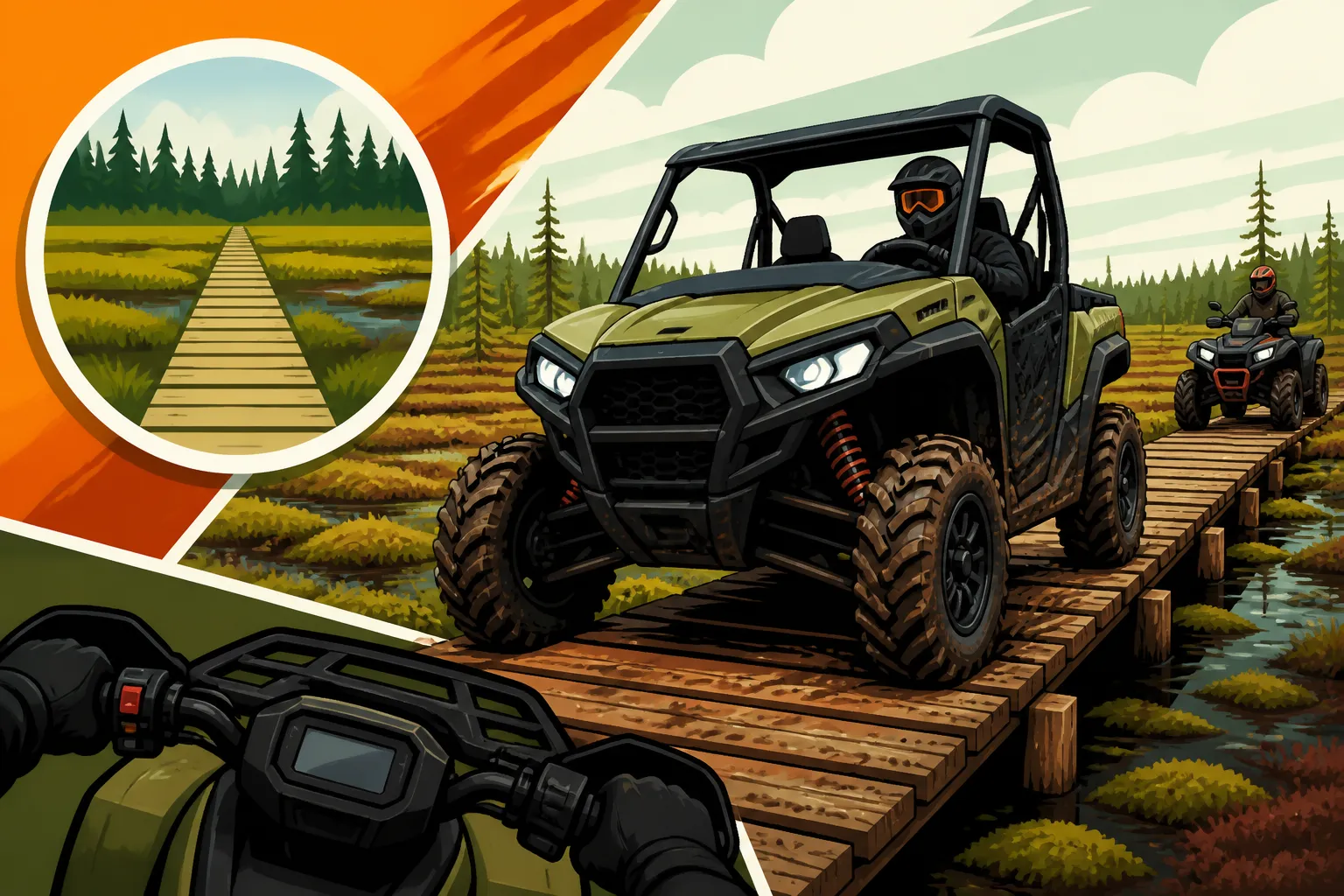
Bog bridges are trail structures placed over wet, soft, or environmentally sensitive ground. Depending on the location, they may be made from closely laid logs, timber planks, or a raised wooden walkway. The goal is to let riders cross without sinking into the bog or widening the trail by going around it.
The surface and width can vary. One bridge might be a broad, sturdy timber deck; another may be a narrow line of logs with gaps between them. Some feel firm under a machine, while others flex or shift slightly. Never assume two crossings are alike just because they’re on the same trail.
Bog bridges may also be called bog walkways or corduroy sections, especially when they’re formed from logs laid across soft ground. They’re different from ordinary trail mud: the bridge is a defined route over the wet area, not an invitation to find a drier line beside it.
Why going around can cause real damage
The ground beside a bog bridge may look solid but can be waterlogged just below the surface. Riding around the structure can sink tires, damage vegetation, widen the trail, or create new ruts that channel water. It may also put your machine at an angle on uneven ground, making recovery more difficult.
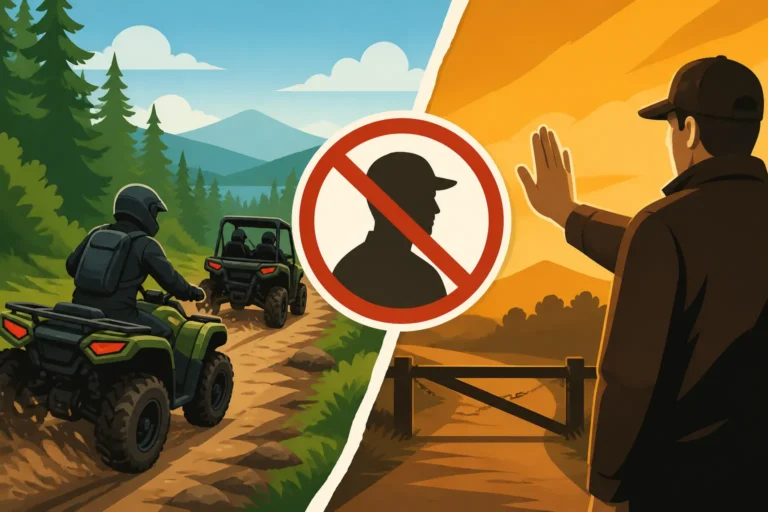
There’s a land-access issue, too. Many Maine ATV trails cross private property, and continued access depends on riders following the marked route and treating the land carefully. If a bridge is blocked or appears unsafe, don’t automatically create a bypass. Turn around if it’s safe to do so, and report the problem to the club or land manager responsible for that trail. [Maine Trails That Cross Private Land] and [Maine ATV Trail Etiquette With Landowners] explain why staying on the intended route matters.
How to ride a bog bridge safely
Stop, look, and make a plan
Before reaching the bridge, slow down and choose a safe place to stop without blocking the trail. Look at the full crossing, not only the first few feet. Check for missing or loose boards, broken logs, deep gaps, standing water, mud on the surface, and a clear exit on the far side.
Also consider whether your machine fits comfortably. A bridge may be passable for a narrow ATV but too tight for a wider side-by-side, particularly if the rails, posts, or surrounding trees reduce usable space. Don’t rely on a vehicle’s advertised width alone; accessories, mirrors, tires, and the way the bridge is built can affect clearance. For more on this issue, see [Wide Side-by-Sides on Narrow Maine Trails] and [Trail Width Limits Set by Clubs].
If you’re riding with a group, leave room for the person ahead to cross and get fully clear before the next rider starts. A crowd gathered at the entrance makes it harder to inspect the bridge and can create pressure to follow before you’re ready. If you need a spotter, agree on simple signals before moving, and have the spotter stand well clear of the machine’s path.
Cross slowly and in a straight line
When the crossing appears sound and your machine fits, approach at a controlled, walking pace. Keep the handlebars straight and aim for the center of the usable surface. Avoid sharp turns, sudden acceleration, hard braking, and unnecessary steering corrections. A steady, gentle throttle helps the tires track across uneven boards or logs without a lurch.
Don’t stop halfway unless there’s an immediate safety reason. A pause on a slick or uneven section can leave you balancing awkwardly, and restarting may cause a tire to spin. At the same time, don’t use speed to “power through.” A fast approach reduces your time to respond to a loose board, shifting log, or unexpected gap.
Use the machine’s normal riding position and keep your movements calm. On an ATV, stay balanced rather than leaning abruptly from side to side. In a UTV, keep occupants seated and belted according to the vehicle’s instructions. Passengers should avoid leaning out or shifting their weight suddenly while the machine is on the bridge.
| What you notice | Safer response |
|---|---|
| A sound, stable crossing with enough room | Cross slowly, straight, and with steady control |
| Wet or slick boards | Pause before the entrance, assess traction, and proceed only if you can maintain control |
| A bridge that looks too narrow for your machine | Don’t force the fit; turn around if safe and report the issue |
| Loose, broken, or missing sections | Do not attempt the crossing; notify the responsible club or land manager |
| Riders waiting on the bridge or blocking the exit | Wait until the crossing and landing area are clear |
| A tempting route around the bridge | Stay off the surrounding bog; don’t create a bypass |
These are practical riding guidelines, not a substitute for posted signs, local trail rules, or the judgment required at the scene. A crossing that seems manageable in dry weather may become a poor choice after rain. [Trail Bridges and Water Crossings] offers related guidance for assessing trail structures, while [Trail Mud After a Heavy Rain] covers why wet conditions can change the ride.
Give the bridge space after you cross
Once across, continue far enough to clear the exit before stopping. Avoid parking on the bridge, even briefly. It may be narrow enough that a stopped machine prevents others from passing or leaves the next rider waiting on an awkward approach.
If you’re traveling in a group, use a clear order: one machine crosses at a time, the rider ahead reaches a safe waiting area, and the next rider proceeds only when the landing is clear. Don’t bunch up at the far end, where a tight turn, soft shoulder, or blocked trail could create another hazard.
What to do when a bridge looks unsafe
Know when not to cross
A bog bridge deserves a second look if it’s visibly broken, tilted, shifting under light pressure, or missing a section. So does a crossing where water hides the surface or the approach has washed away. If you can’t tell where the tires would travel, or you can’t see a safe exit, don’t treat momentum as a solution.
Be especially cautious with heavy or wide machines. A bridge that has held smaller ATVs may not be appropriate for a side-by-side, and a narrow deck may leave little room to correct a line. If the width or condition seems questionable, it’s better to turn around than to discover the problem with a tire already on the structure. [Maine ATV Trail Difficulty by Region] and [Maine Trails for Full-Size Machines] can help with broader planning, but conditions at an individual crossing still need to be assessed in person.
Don’t test a questionable bridge by driving partway onto it and then reversing. That puts the machine on the very section you’re unsure about and can make retreat harder. If the route is clearly unsafe, stop before the structure, keep the group back, and choose a safe way to return.
Report damage clearly
A useful report gives the responsible trail club or land manager enough detail to find the problem. Note the trail name or route marker, the nearest intersection or landmark, and what you saw. A concise description such as “several boards are missing at the crossing just north of the trail junction” is more helpful than “bridge is bad.”
If you use onX Offroad, it may help you identify or record your location when trail markers are hard to describe. You can also use it to check your position against the route before backtracking. Treat any map as a navigation aid rather than proof that a trail or crossing is currently open and passable; posted signs and local trail information still matter.
If it’s safe and appropriate, take a photo from the trail without stepping onto a damaged structure or into the surrounding bog. Don’t move boards or logs, attempt a repair, or mark a new route unless the club or land manager has specifically asked you to. A well-meant repair can shift a structure, create a new hazard, or damage the trail.
For other trail problems, [Reporting a Downed Tree on a Trail] describes the same basic principle: report what you can identify and leave repairs to the people responsible for the route.
Plan for bog bridges before the ride
Check conditions and choose a suitable route
Trail conditions can change after heavy rain, spring thaw, or repeated traffic. Before heading out, check for local opening notices, temporary closures, and reports from the club that maintains the trail. A line shown on a map doesn’t guarantee that every bridge is in good condition today. [Maine Trail Opening Announcements] and [Checking Maine Trail Status Before You Drive] are useful starting points when planning a ride.
For navigation, onX Offroad can help riders understand where they are in relation to mapped routes, especially when a trail network has multiple turns or junctions. It’s sensible to download or otherwise prepare for navigation before entering an area with limited cell service. Keep your attention on the trail when riding; don’t try to operate a phone while approaching a bridge.
Choose a route that suits your machine, your experience, and the people riding with you. A full-size UTV may need more width than a small quad, while a newer rider may be more comfortable on trails with fewer tight structures and technical sections. If you’re unsure whether a particular route suits your vehicle, contact the local club rather than guessing at the trailhead.
Carry a few essentials and ride within your limits
A remote trail ride is easier to manage when you’re prepared to stop, backtrack, or wait for help. Bring water, a charged phone, a paper map or offline navigation option, basic first-aid supplies, and the gear you need for changing weather. Tell someone where you plan to ride and when you expect to return. [What to Carry on a Remote Trail Ride] covers additional items worth considering.
If a bridge makes you uncomfortable, take that feeling seriously. You don’t have to prove anything to the group, and a ride can be adjusted. A calm turn-around is a sound decision—not a failure. On a narrow or damaged crossing, one cautious choice can protect your machine, the trail, and your access to future rides.
The practical rule is simple: inspect before you commit, cross slowly and straight only when the structure is suitable, and never make a path around a bog bridge. If you can’t tell that the crossing is safe, stop and report it instead.
Disclaimer
This article is for general informational purposes only and does not constitute professional advice. Laws, prices and regulations vary by location and change over time. Consult a qualified professional for guidance on your specific situation.