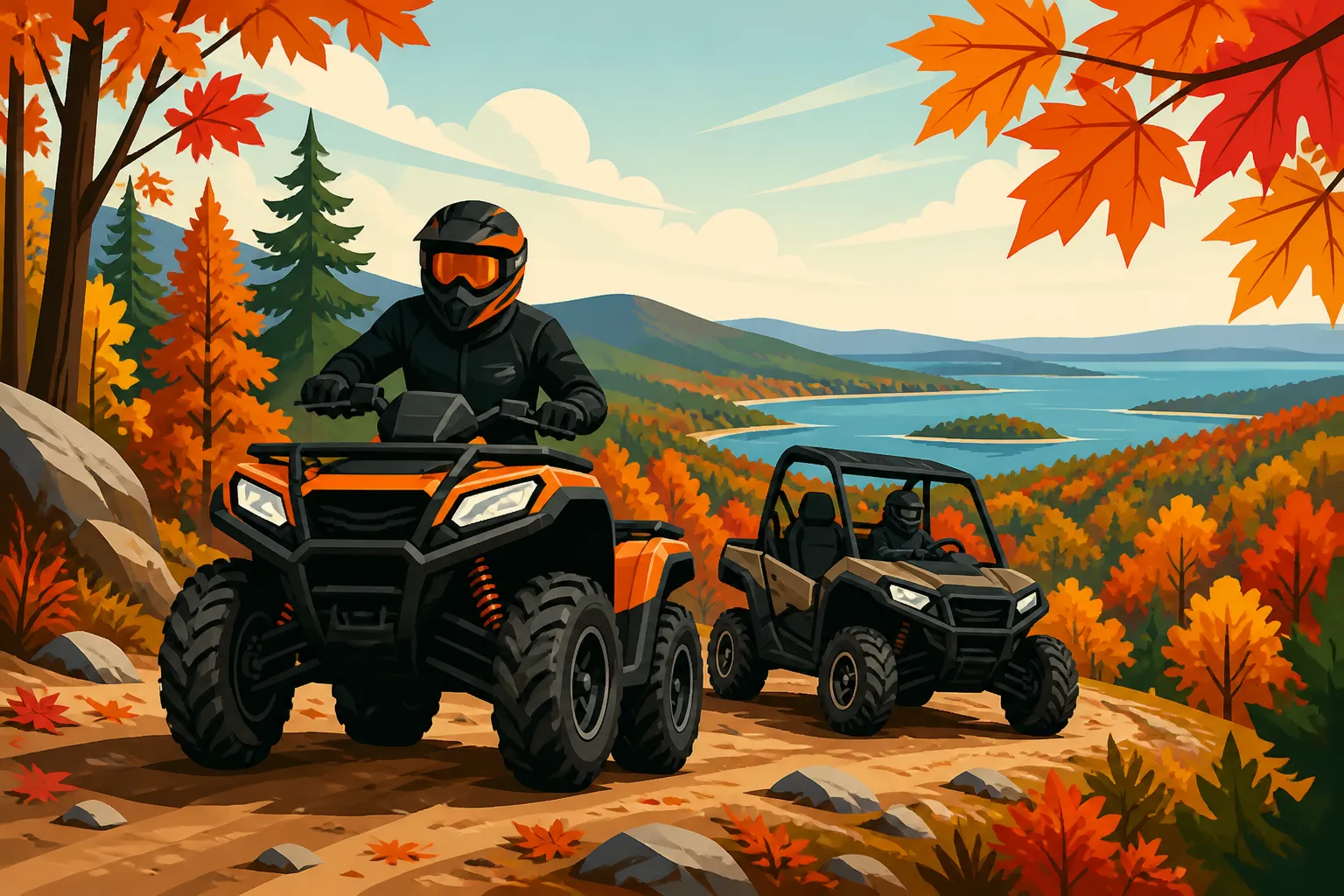
Maine ATV Trails in October
October can be a gorgeous month for riding in Maine: the air is crisp, the woods are full of color, and summer crowds may have thinned. It can also bring early snow, wet leaves, hunting activity, and trail closures with little warning. This guide explains how to plan an October ATV or UTV ride, check access, and stay prepared.
What October riding is like in Maine
Expect changing conditions from one day to the next
October weather in Maine can shift quickly. A sunny afternoon may follow a cold, wet morning, and conditions can vary between coastal areas, central Maine, and higher-elevation routes. Trails that feel firm in the morning may become slippery after rain, while shaded sections can hold damp leaves and frost longer than open ground.
That variety is part of the appeal, but it makes a flexible plan important. A route near Greenville or Rockwood may have different conditions from one near Rangeley or Presque Isle. Even nearby trails can differ if one crosses a sunny ridge and another follows a low, wooded section.
Before heading out, check the forecast for the specific area you plan to ride, not just the nearest large town. Pack for colder conditions than you expect, and be ready to shorten or change the ride if rain, fog, or an early storm makes the route uncomfortable or unsafe.
Treat trail access as a local, changing decision
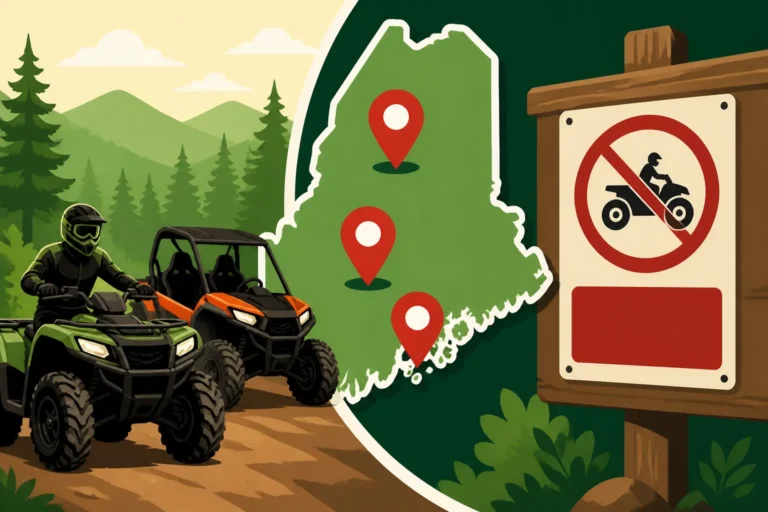
There is no single October opening or closing date that applies to every Maine ATV trail. Access depends on the local trail system, the clubs maintaining it, landowner permission, trail conditions, and any posted restrictions. Some routes may remain available while others close for seasonal reasons or because the ground is too wet.
This matters because many Maine trails cross private land. A route shown on an older map or remembered from a summer ride is not proof that it is open today. Respect signs, gates, and closures, even if the trail appears rideable. For background on seasonal trail conditions, see [Maine Trail Openings and Mud Season] and [Maine Trail Closures Mid-Season].
When a trail is closed, do not assume a detour through a nearby woods road is allowed. It may be private, unmaintained, or unsuitable for an ATV or UTV. Choose another confirmed open route instead.
Fall color is a bonus, not a guarantee
October can bring striking color across Maine, but peak foliage varies by region and by year. A route around Moosehead Lake, The Forks, or the western mountains may look different from one in southern Maine or Aroostook County. Color can also change quickly after wind or heavy rain.
If fall color is a priority, build a ride around the route and the day’s conditions rather than expecting every trail to offer uninterrupted views. Some wooded trails have limited sightlines, and riders should keep their attention on the trail instead of trying to watch scenery while moving.
For ideas on planning a scenic trip, [Maine Fall Foliage ATV Rides] offers related guidance. No matter where you ride, pull over only in a safe, permitted place before taking a break or enjoying a view.
How to check whether a trail is open
Confirm with the club or local trail authority
The most useful trail-status information usually comes from the local ATV club or organization responsible for the route. Check for recent notices, closure updates, and instructions about staging areas. If the status is unclear, contact the club or town office rather than relying on a general map or a social post from an earlier season.
A route may cross several properties or connect trails maintained by different clubs. That means one section can be open while the next is closed. Make sure your planned ride covers the whole route, including the return leg, before you unload.
Use [Checking Maine Trail Status Before You Drive] as a pre-trip step, not a last-minute formality. A little checking can prevent a long trailer trip that ends at a closed gate.
Use maps for navigation, not as permission
A map can help you understand trail connections, identify nearby roads, and avoid getting turned around. It cannot tell you by itself whether every segment is open today or whether a landowner has recently withdrawn permission. Review [Maine ATV Trail Maps and Club Boundaries] alongside current local notices.
Digital tools such as onX Offroad can help riders review routes and orient themselves, especially when cell service is limited. Download or save the information you need before leaving town, and carry a backup plan. A phone battery can drain faster in cold weather, and a screen is not a substitute for following posted signs.
Keep in mind that mapped lines may be approximate or may show a route that is not currently available to the public. If a sign or gate conflicts with what a map suggests, respect the on-the-ground restriction and turn around.
Plan a route with an easy exit
October is not the best time to discover that a long loop has become impassable halfway through. Choose a route with reasonable turnaround options, and identify nearby public roads or staging areas where you can safely end the ride if conditions change. Do not use a private driveway or field as an improvised exit.
For a first October outing in an unfamiliar area, a shorter loop is often a better choice than a full-day backcountry route. That gives you room to learn how the trail surface behaves and how quickly the temperature drops once the sun is low.
| October factor | What to check | Practical response |
|---|---|---|
| Rain or wet ground | Recent rainfall and local trail notices | Avoid soft, muddy sections and choose a shorter route |
| Early snow or frost | Forecast and overnight temperatures | Ride cautiously and be prepared to turn back |
| Seasonal closures | Club updates, signs, and gates | Confirm access for every section before unloading |
| Shorter daylight | Sunrise, sunset, and ride duration | Start early and set a firm turnaround time |
| Hunting activity | Local notices and current rules | Wear visible clothing and avoid riding after dark |
Prepare your ATV or UTV and your ride plan
Adjust for wet leaves, mud, and colder weather
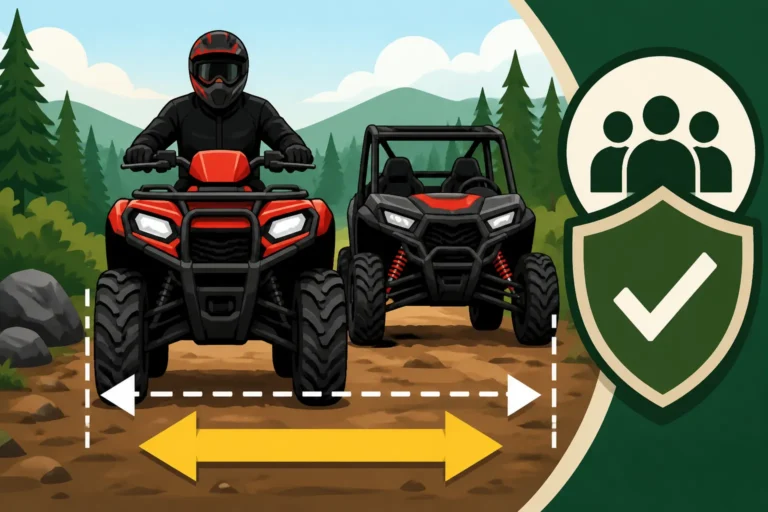
A layer of wet leaves can hide rocks, roots, ruts, and washed-out spots. Reduce speed where the surface is obscured, leave extra space between machines, and avoid abrupt steering or braking. On a UTV, passengers should stay seated and use the safety equipment designed for the machine.
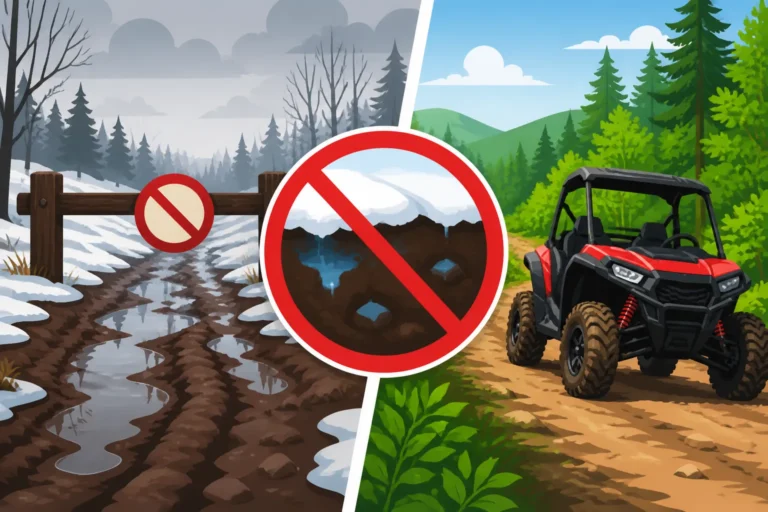
Do not assume that a puddle is shallow or that a muddy track is firm underneath. If you cannot see the bottom or judge the route safely, stop and assess it from a secure location. Turning around is usually easier than recovering a stuck machine in cold, fading daylight.
Before departure, inspect tires, lights, brakes, and controls. Check that your machine is suitable for the route and that registration requirements are met. For registration details, see [What Maine Riders Need Before They Ride]. Bring warm layers in a dry bag, including gloves that remain comfortable if the first pair gets damp.
Pack for a delay, not just the planned ride
Even a familiar trail can take longer than expected when the ground is slick or a route is blocked. Bring water, food, a basic first-aid kit, a flashlight or headlamp, and a way to contact someone. Tell a person who is not riding with you where you plan to go and when you expect to return.
A paper map or downloaded navigation information is useful if your phone loses service. Keep your phone protected from moisture and cold, and carry a backup battery if you rely on it for navigation. Pack a small tool kit and any recovery gear appropriate to your machine and experience.
A remote ride calls for extra caution. If you ride alone, consider choosing a busier, shorter route and avoid pushing into unfamiliar terrain late in the day. [Riding Trails Solo Safely] and [What to Carry on a Remote Trail Ride] can help you think through the added planning involved.
Set a turnaround time before you start
It is easy to keep going when the trail is enjoyable, especially if fall color is at its best. Decide in advance when you will turn back, even if you have not reached the planned destination. In October, slower conditions and earlier darkness can make a modest delay more consequential.
Agree on the plan with everyone in your group. If one rider needs to stop, the group should stay together or follow a clear procedure that keeps nobody isolated. For a mixed-experience group, choose a pace that works for the least experienced rider rather than letting the fastest person set the route.
Check fuel before leaving and account for the possibility that a detour or slow section will use more time than expected. Do not count on finding fuel along the trail. [Maine ATV Trails With Roadside Fuel] can help with route planning, but verify that any intended stop is accessible and open.
Ride responsibly during hunting season
Check local hunting activity and visibility needs
October overlaps with hunting seasons in Maine. The details vary by area and date, so check current state rules and local notices before you ride. Wear highly visible clothing, especially when traveling through wooded areas, and avoid clothing that blends into fall leaves and brush.
Visibility does not replace careful riding. Stay on authorized trails, keep your speed appropriate for the conditions, and make your presence known when approaching a blind corner or a place where sightlines are limited. Do not ride through hunting camps, around active work areas, or into posted land.
For more on seasonal considerations, read [Maine ATV Rules During Hunting Season]. If you are unsure whether a route crosses land where riding is allowed, choose a route with confirmed access rather than trying to interpret permission on the spot.
Respect landowners and trail maintenance
Many trails remain available because landowners allow riders to cross their property. Close gates if instructed, stay on the marked route, and do not widen a trail to avoid a wet or rough section. Riding around a mud hole can damage vegetation and create a wider area of erosion, potentially making the route harder to maintain.
Keep noise under control near homes and camps, and slow down when passing people, livestock, or other trail users. If you see a downed tree or damaged sign, note the location and report it to the responsible club rather than attempting a repair that could put you at risk.
A respectful ride helps protect future access. [Maine ATV Trail Etiquette With Landowners] covers the small choices that can make a real difference to landowners and clubs.
Know when to cancel
Cancel or change the plan if the route is closed, the weather is deteriorating, visibility is poor, or the ground is too soft for responsible riding. It can be frustrating to drive to a staging area and find that conditions have changed, but continuing onto a closed or unsuitable trail can cause damage and create safety problems.
An October ride does not have to be all or nothing. If your preferred trail is unavailable, look for another route with confirmed access, take a shorter ride, or save the trip for a better day. The best fall ride is not necessarily the longest one; it is the one everyone finishes safely, without damaging the trail or putting access at risk.
Disclaimer
This article is for general informational purposes only and does not constitute professional advice. Laws, prices and regulations vary by location and change over time. Consult a qualified professional for guidance on your specific situation.