Riding Maine Trails in Early Spring
Early spring can look like riding weather in Maine: the snow is retreating, the sun feels warm, and familiar trails may appear clear. But thawing ground can be soft beneath the surface, and many routes remain closed to protect trails and private property. This guide explains how to check conditions, choose a responsible plan, and avoid turning a hopeful first ride into trail damage.
Why early spring is hard on Maine ATV trails
Thawing ground can be more vulnerable than it looks
A trail that seems firm from the parking area may be saturated farther along. Snowmelt and spring rain soak the ground, while frost can remain below the surface. As that frozen layer gives way, water has fewer places to drain. Tires can then break through the surface, rut the trail, and churn up soil that may take substantial work to repair.
This is why a sunny afternoon is not a reliable signal that a trail is ready. A south-facing stretch might be dry while a shaded section nearby is wet and soft. Low spots, approaches to bridges, and areas where water runs across the route can be especially vulnerable. A rider who turns around at the first muddy spot may still have caused damage getting there.
Spring conditions also vary across Maine. A route near the coast may be thawing while trails farther north or at higher elevations are still dealing with snow and deep frost. For background on the seasonal closures riders often encounter, see [Why Maine Trails Stay Closed Until May](Why Maine Trails Stay Closed Until May).
Trail opening depends on the route, not the calendar
There is no single date that makes every Maine ATV trail ready for traffic. Clubs, landowners, and local managers may make decisions based on the condition of a particular trail system. Some routes may open before others; some may stay closed after nearby roads look dry. A trail’s status can change after rain or continued thawing, too.
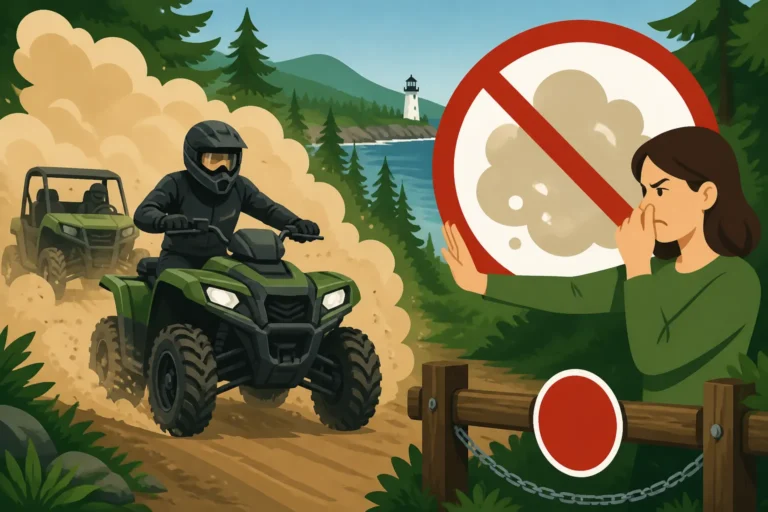
Treat any posted closure as a firm instruction, not a suggestion to weigh against how the trail looks. Riding a closed trail can damage the surface and jeopardize access for everyone. Many Maine trail routes depend on permission to cross private land, so a few riders ignoring a closure can strain relationships that clubs have worked hard to maintain.
For a broader look at how closures and spring conditions interact, read [Maine Trail Openings and Mud Season](Maine Trail Openings and Mud Season). When in doubt, wait for confirmation from the club or land manager responsible for the specific route rather than relying on last year’s opening date or a report from a different town.
How to check conditions before you leave home
Confirm the status of the exact trail system
Start with the local ATV club or the group responsible for the route you hope to ride. Look for recent trail-condition updates, closure announcements, and any instructions about where access is permitted. If the notice is unclear or old, contact the club or a local trail contact before loading your machine.
Check the full route, not just the destination. A trail may pass through several sections with different conditions or landowners. A route that was open last season may have a temporary restriction this spring, and a familiar trailhead does not guarantee that the trails beyond it are open.
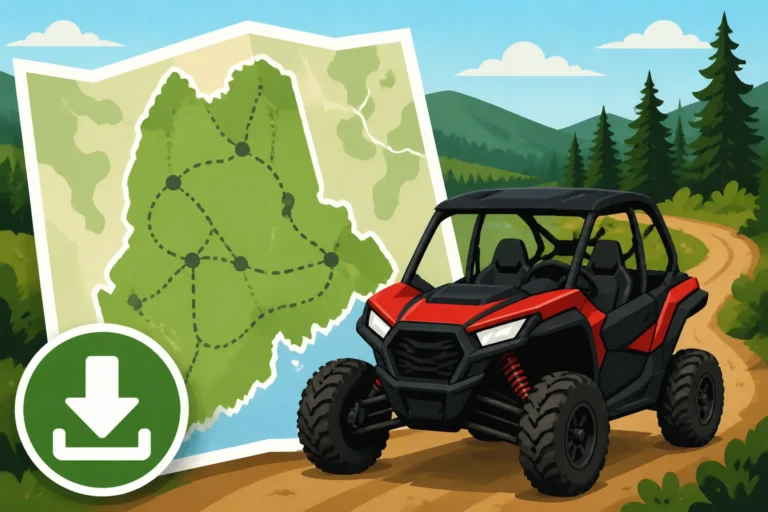
A map is useful for orientation, but it is not proof that a route is open today. onX Offroad can help you review a planned route and understand how it connects to the surrounding area; use it alongside current local notices, not as a substitute for them. For practical ways to verify updates, see [Checking Maine Trail Status Before You Drive](Checking Maine Trail Status Before You Drive) and [Where Maine Trail Closure Notices Are Posted](Where Maine Trail Closure Notices Are Posted).
Use a condition check, not a hopeful guess
Before setting out, look for recent information about rain, snowmelt, and trail closures. If a trail contact reports soft or muddy sections, choose another activity or postpone the ride. Even when there is no closure notice, a recent heavy rain can leave a route vulnerable. The article [Trail Mud After a Heavy Rain](Trail Mud After a Heavy Rain) offers useful context for judging why wet conditions matter.
A simple check-in with a club can save a long drive and an uncomfortable decision at the trailhead. Imagine arriving with a trailer after a long trip, only to find a closure sign. It may be tempting to search for an alternate entrance, but that can lead onto private property or an unapproved route. Confirming status in advance helps you avoid that pressure.
| What to check | Why it matters | A responsible next step |
|---|---|---|
| Current club or landowner notice | A route may be closed even when it looks dry | Follow the latest posted direction |
| Recent rain and snowmelt | Water can soften trail surfaces quickly | Postpone if conditions are reported as saturated |
| The full route, including connectors | Different segments may have different status | Verify each trail system you plan to use |
| Trailhead and parking access | Access points can have separate restrictions | Check for local notices before unloading |
| Map and offline navigation | Cell service may be unreliable in remote areas | Save a route and carry a backup map |
Planning tools can help you visualize options, but don’t treat a colored line on a map as current permission to ride. If you use onX Offroad to look over a route, pair it with direct updates from the responsible club and be prepared to change your plans if the information does not agree.
How to ride responsibly when trails open
Stay on authorized routes and turn back early
Once a route is confirmed open, remain on the marked trail and obey signs. Do not ride around a closed section, make a new path through the woods, or use a road or private connector simply because it appears to lead in the right direction. A shortcut can cross land where you do not have permission or lead into an area that is still too wet for traffic.
If you encounter unexpectedly soft ground, stop before your tires dig in. Turning around on a firm surface is better than spinning, widening a rut, or pushing farther into a damaged section. Avoid repeated passes through the same muddy spot. If you cannot safely turn around without causing more damage, pause and contact a local club or land manager for guidance rather than improvising a new route.
Maine trails rely heavily on the goodwill of landowners. A respectful ride protects future access as much as it protects the ground under your tires. [Landowner Relations on Maine ATV Trails](Landowner Relations on Maine ATV Trails) explains why following closures and posted instructions matters beyond a single outing.
Keep the ride modest and be ready to change plans
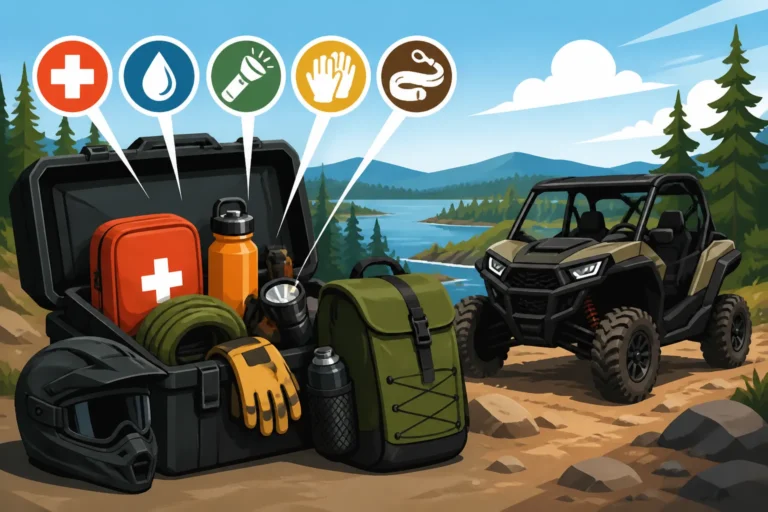
Early-season riding is not the best time to commit to a long route with no easy way back. Choose a shorter, familiar route that has been confirmed open, and leave room in your schedule to turn around. Carry essentials such as water, a charged phone, basic tools, and a paper map or other backup navigation. In remote areas, cell service can be inconsistent, so plan as though you may need to navigate without it. See [Navigating Trails Without Cell Service](Navigating Trails Without Cell Service) and [What to Carry on a Remote Trail Ride](What to Carry on a Remote Trail Ride).
Let someone know where you plan to ride and when you expect to return. Check weather before leaving, and remember that conditions can shift while you are out. A route that seems manageable in the morning may become less comfortable after rain, and shaded or low-lying sections may remain slick even on a mild day.
If you reach a closure notice, respect it and choose another legal activity. Do not assume that a dirt road is an acceptable substitute for a closed trail. Rules for public ways and access routes are different from trail permissions; [Maine ATV Rules on Dirt Town Roads](Maine ATV Rules on Dirt Town Roads) is a useful next read if your plans include riding near roads.
A practical early-spring decision process
Decide before unloading
Use this quick sequence before you take the ATV or UTV off the trailer:
- Check the trail system’s latest notice. Look for a current opening announcement or closure update from the club or land manager.
- Confirm every planned section. Make sure connectors, parking areas, and the route back are also available.
- Consider recent weather. Rain, snowmelt, and overnight freezing can change surface conditions quickly.
- Choose a shorter backup plan. If the trail is closed or reported soft, do not hunt for an unapproved way around it.
- Recheck signs at the trailhead. Local instructions there take priority over an old map, a saved route, or an assumption based on previous seasons.
The key question is not simply, “Can I get through?” It is, “Is this route open, and can I ride it without damaging the trail or crossing land without permission?” If the answer is uncertain, wait for a clear update.
Treat waiting as part of the riding season
It is frustrating to have a machine ready and a free day on the calendar, only to learn that trails are still closed. That disappointment is understandable, especially after a long winter. But a few more days of patience can prevent ruts, protect landowner relationships, and help keep trails available for the rest of the season.
Use the waiting period to check registration and machine condition, organize your gear, review maps, or contact a local club about volunteer work and opening updates. When the trail system does open, you’ll be better prepared and less likely to make a rushed choice at the trailhead. Early spring in Maine rewards flexibility: the best ride is the one that takes place on a route that is actually open and ready for traffic.
Disclaimer
This article is for general informational purposes only and does not constitute professional advice. Laws, prices and regulations vary by location and change over time. Consult a qualified professional for guidance on your specific situation.