Dust Complaints That Close Maine Trails
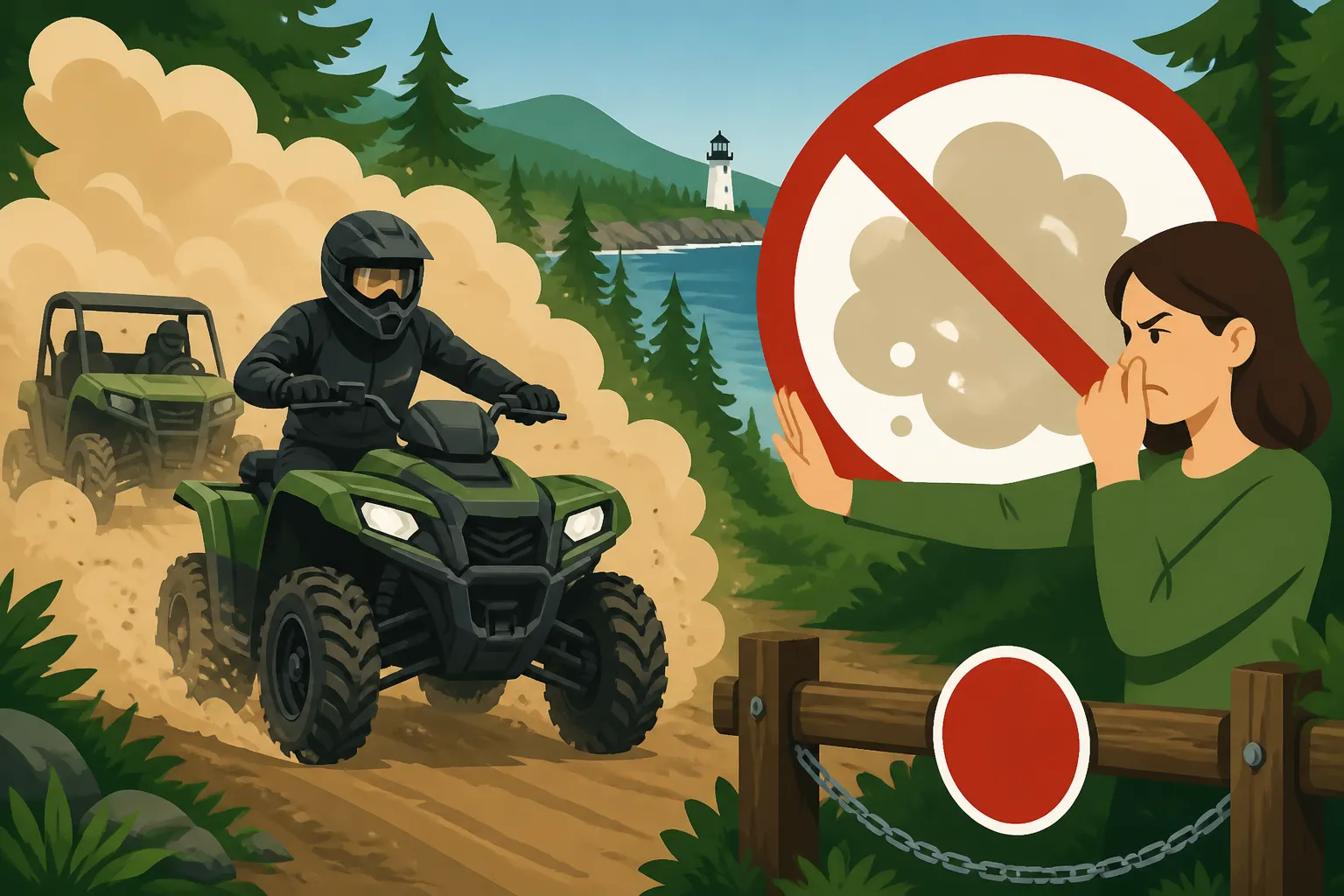
Dust complaints can put a Maine ATV trail at risk, especially where a route passes close to homes, camps, farms, or busy roadways. A cloud of dust may seem like a minor nuisance to riders, but to nearby residents it can mean dirty windows, reduced visibility, and repeated disruption. This guide explains why complaints matter and how riders can help keep trails open.
Why dust complaints can threaten Maine ATV trails
Many trails depend on continued landowner permission
A lot of Maine’s riding network crosses private property. That access can depend on a landowner allowing a club or trail organization to maintain and use a route. When people riding through create persistent dust, noise, speeding, or other problems, a landowner may decide the disruption is no longer worth it.
That does not mean one complaint automatically closes a trail. Often, a resident or landowner raises a concern with a club, local officials, or the property owner who granted access. The people involved may first discuss possible changes, such as asking riders to slow down, adjusting a route, or improving a dusty section. But if the issue continues—or if a landowner withdraws permission—the club may have little ability to keep the route open across that property.
This is one reason Why 80 Percent of Maine Trails Sit on Private Land matters to riders. Trail access is not just a line on a map; it relies on people choosing to share land and on riders treating that choice with care. The details vary from property to property, so don’t assume a trail remains open simply because it was available on a previous trip.
Dust affects more than nearby property
A dusty trail can bother people living along it, but it can also create a safety issue. When a rider follows too closely in dry conditions, dust can block their view of rocks, washouts, other machines, or a stopped group. On a road section, dust can also reduce visibility for people driving cars, trucks, or farm equipment.
The nuisance can be cumulative. One machine passing a farmhouse may not seem like much. A steady stream of machines on a sunny weekend can leave dust on porches, outdoor furniture, vehicles, and open windows. If riders speed up near buildings or gather in a dusty staging area, the impact can feel more intense to people who live there.
Keep in mind that residents may experience the route very differently from riders. A rider sees a short stretch of trail on the way to a destination. A neighbor may hear and see traffic repeatedly through the day, including on weekends or during a dry spell. Understanding that difference is a useful first step toward avoiding conflicts.
What riders can do to reduce dust
Slow down near homes, farms, and road crossings
The simplest way to raise less dust is often to reduce speed where people live or work. Slow down well before reaching a farmhouse, a camp, a barn, or a cluster of homes. A sudden burst of acceleration can throw up more dust than steady, careful riding, and it can make a machine feel more intrusive even if the pass is brief.
Leave extra space between machines. If you are riding in a group, let the dust from the machine ahead settle before following through a dry stretch. This matters especially for riders behind a side-by-side, which can generate a larger dust cloud than a smaller quad. If visibility gets poor, ease off and increase the gap rather than trying to stay close enough to keep pace.
Groups can set expectations before leaving the staging area. A simple reminder—slow near homes, leave room, and don’t bunch up on dry roads—can prevent the familiar situation where the lead riders behave responsibly while the last few machines race to catch up. For more on considerate riding around nearby residents, see Riding Slowly Past Farmhouses and Maine Trail Etiquette With Landowners.
Respect posted limits, closures, and local requests
If a club, municipality, landowner, or trail sign asks riders to slow down or avoid a section, follow the direction. Do not treat a dust-control request as optional just because the trail looks dry or there is no one standing nearby. The reason for a restriction may be a nearby residence, a sensitive property, a narrow road, or a history of complaints that riders passing through cannot see.
Avoid driving around a closure sign or following an old track that appears to continue beyond a blocked section. A route can change, and a familiar trail may no longer have permission for motorized use. Before heading out, check trail status with the relevant club or local source. A map app such as onX Offroad can help you orient yourself, but a mapped line should not be treated as proof that a trail is currently open.
If you see a dust-control sign or a temporary instruction, pass it along to your group. When riders disregard a restriction, it can make it harder for a club to reassure a concerned landowner that the route is being managed responsibly.
How clubs and communities may respond
A complaint may lead to a conversation before a closure
When someone reports dust, a club or local contact may try to understand the specific problem: where it happens, when it is worst, and whether it comes from a particular section or pattern of riding. A short, dusty stretch beside a home calls for different consideration than a long remote trail with no nearby residents.
Possible responses can include asking riders to reduce speed, posting a reminder, encouraging more space between machines, or considering a route adjustment. If the terrain and permissions allow, a club may explore maintenance or other practical changes. Those options are not available everywhere, and no single fix works for every trail. A route may be constrained by property boundaries, terrain, drainage, or the preferences of the people who control access.
Good communication helps. Riders who hear about a concern can avoid dismissing it as “just dust” or blaming the person who raised it. For clubs, listening carefully and sharing clear instructions with members can help prevent a manageable nuisance from becoming a lasting access problem. That relationship-building is part of Landowner Relations on Maine ATV Trails.
A landowner can withdraw access
If a landowner no longer wants a route crossing their property, the club may need to close or reroute that section. The consequences can reach beyond the exact dusty stretch. A lost connection may break a loop, cut off access to a nearby trail segment, or require riders to trailer between areas that were once connected.
That is why riders sometimes hear about closures that feel sudden. The discussion between a club and a landowner may have been going on for a while, but the public may only notice once signs go up or a map changes. Clubs may also need time to confirm an alternate route and secure permission before reopening a connection.
Trail networks can change from season to season. Check for local updates before traveling, particularly if you are planning a longer ride or driving a trailer to an unfamiliar staging area. Trails Lost to Landowner Withdrawal offers more context on how access decisions can affect trail riding. Club membership and volunteer work can also give riders a better way to stay informed; see Maine ATV Club Membership and Dues.
Planning a ride when dust or access is a concern
Check trail information before you leave home
Before setting out, look for recent notices from the club or town responsible for the area. Confirm that the route is open, that the trailhead is usable, and that there are no temporary restrictions. Spring conditions deserve particular attention: trails may remain closed while the ground is wet or vulnerable, and an early opening can damage a route or create conflict with landowners. Check Maine Trail Openings and Mud Season for more on why timing matters.
Digital maps can help you plan, but treat them as navigation aids rather than final authority. onX Offroad can help riders review a route and orient themselves in the field. For an unfamiliar area, compare the map with current trail notices and signs at the trailhead. If the information conflicts, follow the posted closure or ask the local club rather than assuming the digital route is correct. You can also read Checking Maine Trail Status Before You Drive and onX Offroad Maps for Maine Trails.
| Situation | A considerate response | Why it helps |
|---|---|---|
| A home or farm is close to the trail | Slow down early and keep a steady pace | Less dust and less disturbance |
| A machine ahead is creating a dust cloud | Increase following distance | Better visibility and safer riding |
| A group is bunching up | Let the dust clear before moving through | Reduces the combined dust cloud |
| A sign asks riders to slow down or avoid a section | Follow the instruction and tell your group | Supports local efforts to address concerns |
| A trail map and a closure sign disagree | Follow the sign and verify with the local club | Avoids unauthorized access |
| A route is dry and dusty after a long dry spell | Ride smoothly and avoid unnecessary acceleration | Reduces dust kicked up by tires |
Speak up constructively and report problems through the right channel
If dust is making a ride unsafe or creating a problem near homes, make a note of the location and conditions. Share the concern with the trail club or the contact identified on local notices. A useful report describes what happened without speculating about motives: for example, “Visibility dropped on the dry stretch beside the farm entrance when several machines followed closely together.”
If you are a resident or landowner, a direct conversation with the local club may help identify options before the problem escalates. If you are a rider, avoid confronting a neighbor who is upset while emotions are high. Listen, keep the interaction calm, and pass the concern to the club or appropriate local contact. Riders are guests on many routes, and a respectful response can matter as much as the technical solution.
Before your next outing, take a few minutes to check the route, brief your passengers or riding group, and be prepared to change plans if a section is closed. That small amount of preparation can help protect both the ride and the access that makes it possible. On Maine trails, keeping dust and conflict down is not only courteous; it can help preserve the relationships that keep routes available.
Disclaimer
This article is for general informational purposes only and does not constitute professional advice. Laws, prices and regulations vary by location and change over time. Consult a qualified professional for guidance on your specific situation.