Club Work Days and Trail Crews
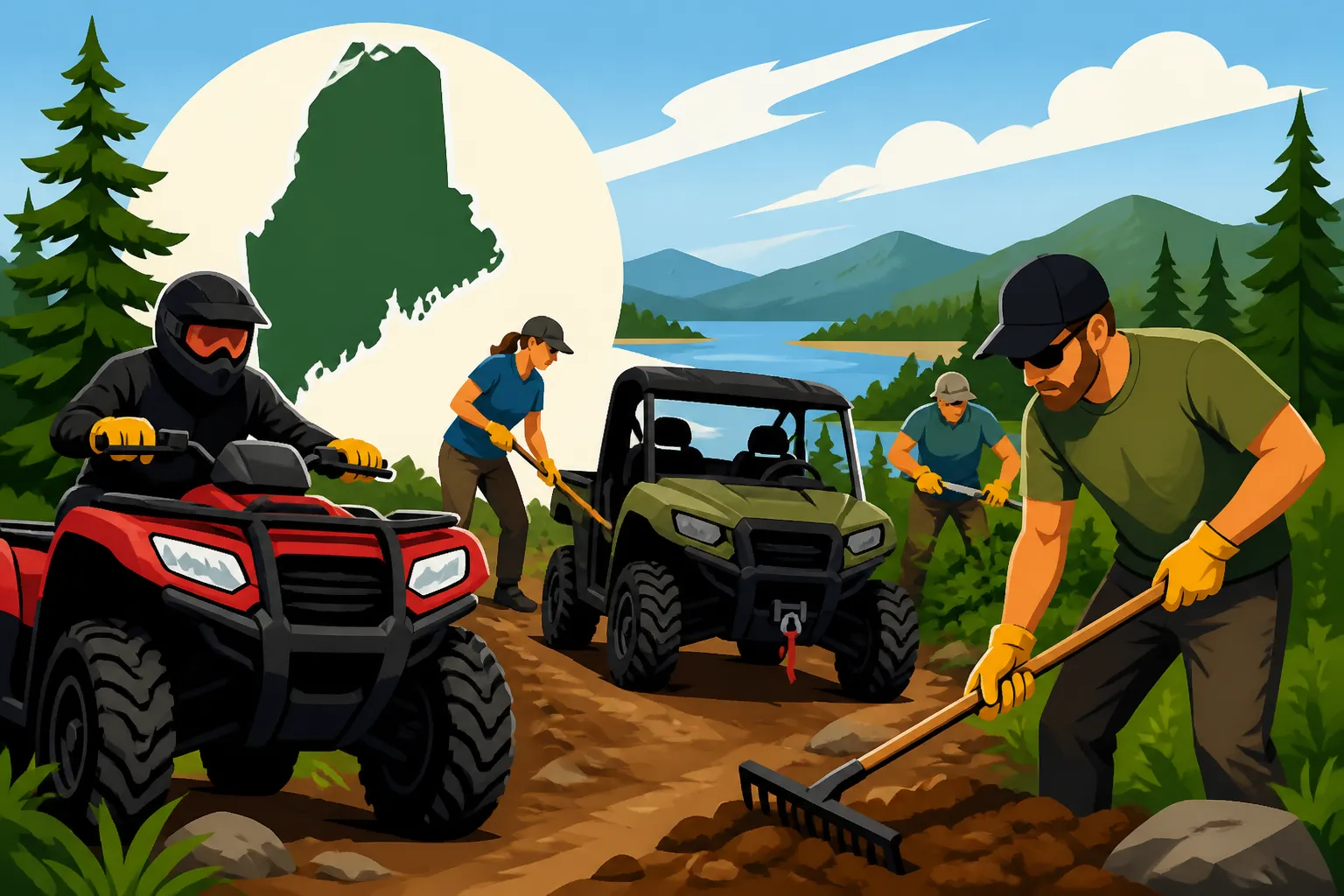
A Maine trail can look ready for a weekend ride and still need hours of volunteer work: a blocked culvert, a washout, a fallen tree, or a sign hidden by summer growth. Club work days bring riders together to fix those problems before they grow. This guide explains what trail crews do, how to join in, and how to help without putting yourself or trail access at risk.
Why Maine ATV club work days matter
Trails depend on people as well as land
Many Maine ATV routes cross private land, so access relies on landowners and clubs maintaining good relationships. A trail is not automatically open just because it appears on a map or was open last season. Landowner permission, local conditions, and club decisions all matter. A volunteer work day is one way riders help show that the club takes its responsibilities seriously.
That work might be visible, such as repairing a bridge, or almost invisible, such as clearing drainage so water does not cut a rut through the trail. Either can make the difference between a route staying usable and becoming unsafe or damaging to the property it crosses. For background on the land-access arrangement, see Why 80 Percent of Maine Trails Sit on Private Land.
Clubs also help communicate trail expectations to riders. A crew that maintains signs, clears debris, and reports damage helps make it easier for visitors to follow the route and avoid wandering onto a nearby road, field, or closed section. The wider picture of club stewardship is covered in Maine ATV Clubs and the Trails They Keep Open.
Small maintenance jobs can prevent bigger problems
A drainage issue may start as a shallow puddle. If riders repeatedly detour around it, the trail can widen, vegetation can be damaged, and the muddy section can grow. A crew may address the water flow or mark a temporary closure, depending on the site and the club’s plan. The right response is not always “add gravel” or “move the trail”; volunteers should follow the club’s direction and any landowner or project requirements.
The same principle applies to downed trees. A small branch may be safe to move by hand, while a large tree under tension can be dangerous even for an experienced worker. Crews assess the situation, use suitable tools, and leave specialized jobs to people trained and equipped for them. If you find a blockage during a ride rather than at a work day, use the club’s preferred process for Reporting a Downed Tree on a Trail.
Work days are also a chance to spot problems riders may miss when moving at trail speed. A bridge rail that has loosened, a marker that has fallen, or erosion near a crossing may not stop a ride that day, but it deserves attention before the next storm or busy weekend.
What trail crews do
Common jobs and who should handle them
A crew’s tasks depend on the trail system, the season, the weather, and the club’s priorities. Some jobs are suitable for first-time volunteers; others need training, special tools, or approval before anyone begins. Ask the organizer what is planned rather than assuming every task is open to everyone.
| Work-day task | What volunteers may do | Important caution |
|---|---|---|
| Trail brushing | Clip or trim light growth as directed | Do not widen the trail or cut beyond the marked route |
| Drainage checks | Clear small debris from approved drainage paths | Avoid changing water flow without guidance |
| Sign maintenance | Clean, replace, or reposition signs under club direction | Keep signs consistent with the club’s route plan |
| Litter pickup | Collect trash and report larger dumping | Do not handle unknown chemicals or hazardous materials |
| Bridge or bog-bridge work | Carry materials or assist an assigned crew | Structural repairs need appropriate skills and approval |
| Fallen-tree response | Help move manageable debris when assigned | Leave unstable trees and chainsaw work to qualified people |
Brushing can make a trail easier to follow, but aggressive cutting can damage vegetation, create a wider corridor, or cross a property boundary. Drainage work also calls for restraint: water needs a path, and an improvised ditch can send it somewhere that creates more erosion. The club leader should define the work area and method before the crew starts.
Bridge and bog-bridge projects can involve heavier materials and more complicated planning. Volunteers may be asked to carry boards, prepare a work area, or help with cleanup, while experienced people handle structural decisions. For more on the different kinds of trail upkeep, read Maine ATV Trail Grooming and Bridges.
Signs, maps, and route clarity
Trail signs help riders stay on the authorized route, especially at intersections, road crossings, and places where a path could be confused with a woods road or private driveway. A work crew may clean a sign, replace a damaged one, or report a missing marker. Placement matters: a sign that points the wrong way or is hard to see can create confusion even if the sign itself is new.
Do not move a sign simply because you think another location would be clearer. A marker can reflect a carefully agreed route, a property boundary, or a traffic-safety decision. If something seems confusing, take note of the location and bring it to the club contact. For more about route markers, see Maine ATV Trail Signs and Markers.
Digital mapping can help volunteers prepare for a work day, locate a meeting point, or understand how a trail connects to nearby routes. Riders may use tools such as onX Offroad to review an area before heading out, but a map should not be treated as proof that a trail is open or that permission is current. Check the club’s instructions and posted closures first. If you use onX Offroad, compare what you see there with current information from the local club rather than relying on a map layer alone.
How to join a Maine trail work day
Find the club and ask what help is needed
Start with the club that maintains the trail system you want to support. A local club can tell you whether it has an upcoming work day, where volunteers should meet, and whether the work is open to new helpers. If you ride in several areas, ask which club is responsible for the particular section; trail networks and responsibilities do not always follow the boundaries a visitor expects.
You do not need to own specialized equipment to be useful. A club may need people to pick up litter, carry supplies, help with signs, or provide a second set of hands. Tell the organizer what experience you have and what tools you can bring, but wait for instructions before using equipment on the trail. Volunteering With a Maine ATV Club offers more context on ways riders can contribute.
If you are not yet connected to a club, ask about joining or attending a meeting. Membership can help you hear about work days and local trail conditions, but participation details vary. You can learn what to ask about in Maine ATV Club Membership and Dues. Even if you are visiting for a short ride, ask whether the club welcomes occasional volunteers and whether you need to sign up in advance.
Prepare for the day, not just the task
Confirm the meeting location, start time, expected duration, and the person to contact if plans change. Remote trailheads can be easy to miss, and cell service may be limited. If the organizer provides directions or a meeting point, save them before leaving home. onX Offroad may be helpful for orienting yourself, but do not assume its route information replaces club directions or permission to travel on a particular segment.
Wear sturdy footwear, gloves, and clothing suited to brush, mud, and changing weather. Bring drinking water, food if the day may run long, and any personal medication you might need. Eye protection is sensible for work around branches or flying debris. Ask whether the club supplies tools and protective gear; do not bring or operate a chainsaw, power tool, or heavy equipment unless the organizer has approved it and you are qualified to use it.
A good first message to a club can be simple: “I’d like to help with trail work. Is there a work day planned, what should I bring, and are there tasks suitable for a new volunteer?” That gives the organizer enough information to point you toward a useful role without creating extra uncertainty on the morning of the event.
Safety, access, and follow-through
Respect the work plan and private property
At the start of a work day, listen to the leader’s briefing. Find out which sections are open for work, what the crew is trying to accomplish, and what should be left alone. Stay within the approved work area. A trail crew does not have general permission to explore, cut brush, or repair features elsewhere on a property.
This is especially important when a trail crosses farmland, a working woodlot, or a road used by residents and equipment. Keep gates as instructed, avoid disturbing crops or stored materials, and do not invite other riders onto a closed or private section. Courtesy on work days supports the same landowner relationships that make riding possible. For practical guidance, see Maine Trail Etiquette With Landowners.
If conditions change during the day—a storm arrives, water rises, equipment fails, or a task appears more hazardous than expected—stop and tell the crew leader. Do not improvise a repair because the crew is eager to finish. A safe, incomplete job that is reported is better than an unsafe fix that creates a new problem.
Close the loop after the crew leaves
Before leaving, check with the organizer about tools, leftover materials, trash, and any issues that still need follow-up. A job that looks finished may need a final check after rain or after riders begin using the route again. If you noticed a damaged structure, confusing sign, or possible landowner concern, report it to the club rather than assuming someone else has already done so.
A simple record can help: note the trail location, what was completed, and what remains to be checked. If the club uses a specific reporting channel, follow that process. Avoid posting details about a temporary closure or a landowner’s property in a way that could send riders onto an unauthorized route. Clubs may also have processes for larger projects or grant-supported work; volunteers should follow the project lead’s instructions rather than treating every repair as an informal task. Maine ATV Trail Grant Program explains the broader role of trail funding.
Finally, remember that helping maintain a trail does not give you special access outside the club’s authorized routes. When you return to ride, check for closures and current club notices, and follow the posted signs. onX Offroad can be one navigation aid for planning, but confirm trail status with the local club before setting out. That small step helps protect the trail, the landowner relationship, and the next volunteer crew’s hard work.
Disclaimer
This article is for general informational purposes only and does not constitute professional advice. Laws, prices and regulations vary by location and change over time. Consult a qualified professional for guidance on your specific situation.