Maine Trail Etiquette With Landowners
Maine’s ATV trails often cross working forests, farm roads, and other privately owned land, so a route can depend on a landowner’s continued willingness to share it. That can feel confusing when a trail is mapped or signed but a gate is closed. This guide explains how to ride considerately, avoid common conflicts, and help keep access open for the next trip.
Why landowner etiquette matters on Maine ATV trails
Many trails depend on private land access
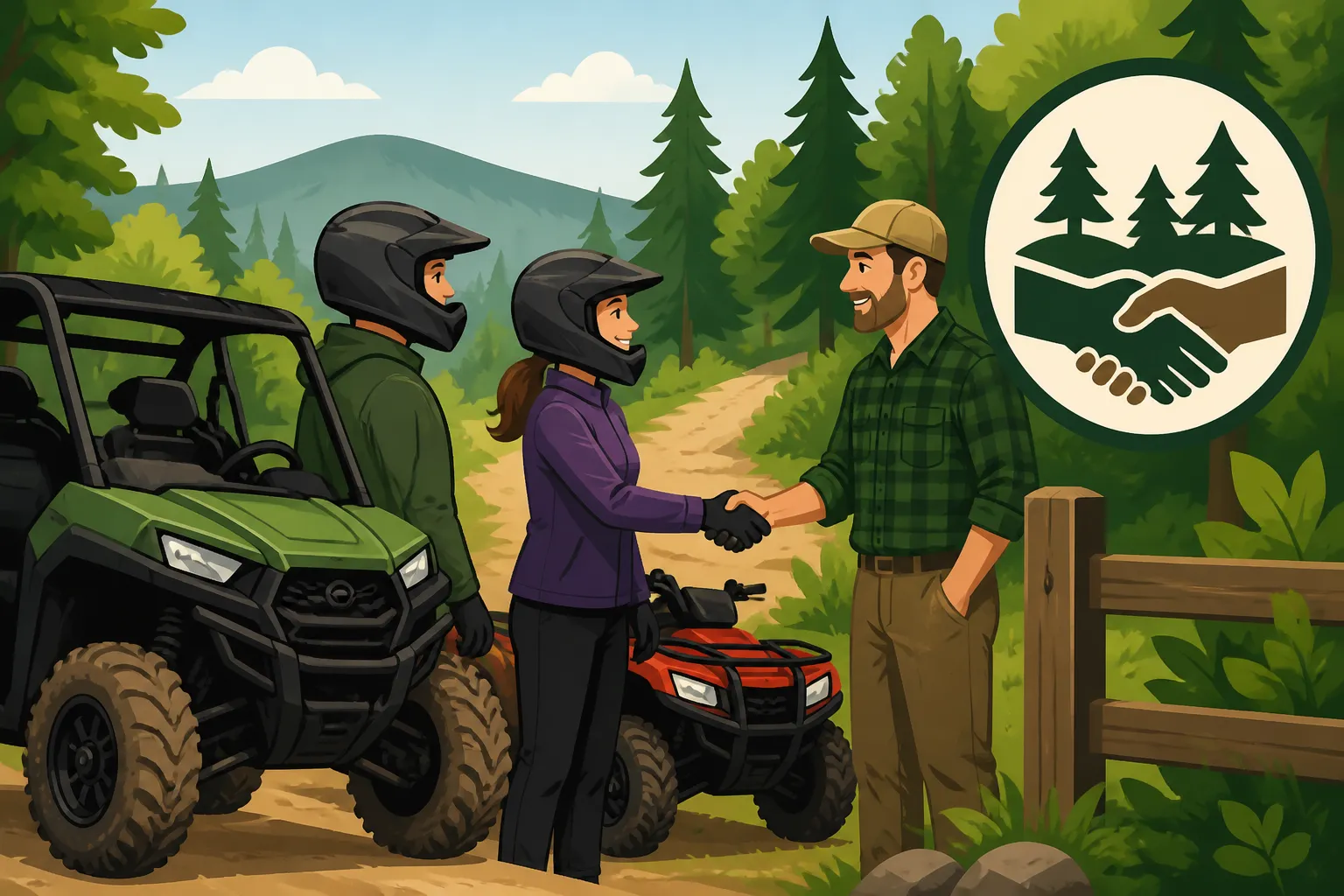
A trail may feel like a public recreation route, but that does not always mean the land beneath it is public. In Maine, many ATV routes cross private property with the owner’s permission. The route may be maintained by a local club, marked on a map, and used by many riders, while the land itself remains privately owned.
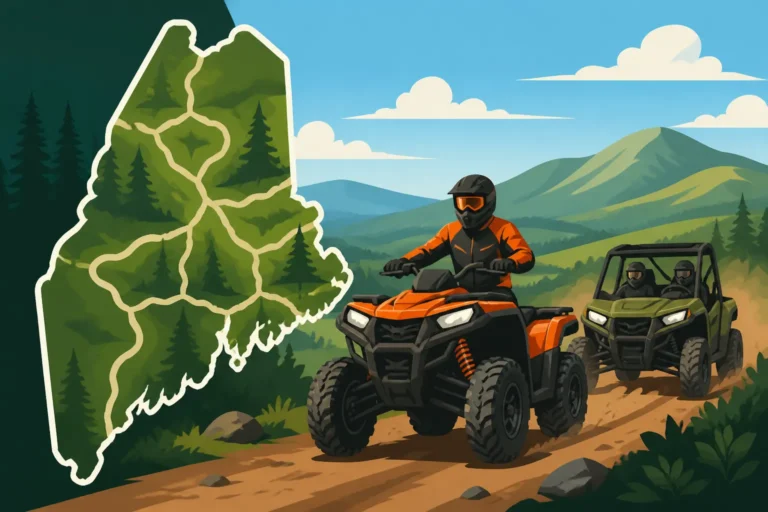
That arrangement can make riding possible across long distances, including in regions such as Aroostook County, Moosehead Lake, Jackman, The Forks, and Rangeley. It also means access depends on a relationship. A landowner may be allowing riders through a particular corridor, not inviting them to explore the surrounding woods, yard, fields, or side roads.
This is why small choices matter. A rider who stays on the marked route and closes a gate helps reinforce the idea that ATV traffic can be managed responsibly. A rider who cuts across a field, leaves litter, or ignores a closure can create problems for the whole trail system. For a closer look at the access arrangement, read Why 80 Percent of Maine Trails Sit on Private Land.
Access can change, even when a trail appears on a map
A trail map is useful for planning, but it should not be treated as permanent permission to ride every line shown. Landowners may temporarily close access for logging, maintenance, hunting activity, wet conditions, or other reasons. A route can also change after a map is published, and a trail that was open on an earlier visit may not be open now.
Before leaving home, check trail status through the local ATV club or another relevant trail information source. Look for closure notices at the trailhead and pay attention to signs along the route. A line on a navigation app, including onX Offroad, can help you understand where a route may go, but it does not replace current local notices or permission.
When there is a conflict between a mapped route and a clear closure sign, do not try to interpret the sign in your favor. Stop, turn around safely, and find out whether the route has been closed or rerouted. The inconvenience of adjusting a ride is small compared with the damage that can follow from crossing land after access has been withdrawn. Learn more about how permission works in Maine Landowner Permission Rules and Losing Permission on a Maine Trail.
Everyday habits that show respect
Stay on the designated route
The most important habit is simple: keep your machine on the marked trail. Do not ride around a muddy spot, take a shortcut through a field, or follow an appealing woods road just because it looks passable. A bypass can widen into a second trail, damage plants and soil, or bring riders closer to a home or livestock.
If a route is muddy, slow down and use the established line where it is safe to do so. If conditions are too poor to pass without causing damage, turn back rather than creating a new track. After heavy rain or during spring thaw, some surfaces are especially vulnerable. Local clubs may close sections when riding would cause lasting damage, so check notices before setting out. Maine Trail Openings and Mud Season explains why timing and trail conditions can affect access.
The same principle applies to side roads and driveways. A road that connects to a trail is not automatically part of the trail. Do not use a private driveway as a turnaround, shortcut, or place to stop unless you have permission. When you are unsure, pause and check local signs or ask the club responsible for the route.
Close gates and leave barriers as you found them
A gate is not an invitation to decide for yourself whether it should be open or closed. If a gate is closed, stop and look for instructions. Do not assume that a gap beside it is a legal or welcome way through. If the marked route specifically requires riders to pass through a gate and the instructions say to close it behind you, leave it in the same position you found it.
This matters on working land. A gate may keep livestock in a pasture, prevent animals from reaching a road, or control access during a particular season. One rider leaving it open can create a difficult problem for the property owner, especially if animals wander or vehicles have to be brought in to retrieve them.
Avoid leaning machines against gates or fences, and do not move a barrier to make the crossing easier. If a gate is damaged or impossible to open safely, turn around and report the issue to the local club. For related guidance on private-property boundaries, see Closing Gates Behind You on a Trail and Maine Trail Etiquette With Landowners.
Ride slowly near homes, animals, and work activity
A machine that seems quiet in the middle of the woods can sound much louder beside a farmhouse, camp, or residential road. Reduce speed well before reaching a home or yard, avoid unnecessary revving, and do not linger nearby with the engine running. A brief, considerate pass is less disruptive than a noisy stop or a group accelerating away together.
Give animals extra space. Livestock, horses, dogs, and wildlife may react unpredictably to engine noise and movement. Slow down, keep a predictable line, and follow any posted instructions. Never chase an animal, ride into a pasture to take a closer look, or assume that a fence means an area is safe to enter.
If you encounter logging or other work, treat the area as active and give workers room. Do not ride around equipment or parked trucks unless the route is clearly open and doing so is safe. A logging operation may involve moving machinery, blind spots, or temporary closures. The most respectful response is to stop, follow signs, and turn back when access is uncertain. For guidance on shared routes, read Sharing a Road With Logging Trucks.
A practical etiquette checklist for the ride
Before you leave the trailhead
A little planning can prevent the awkward moment of reaching a closed gate late in the day with a group behind you. Check current trail information, identify likely closures, and make sure everyone in your party understands that posted signs and local directions take priority over a digital route.
A navigation app such as onX Offroad can help you orient yourself and follow a planned route, particularly where cell service is unreliable. Still, download or carry information in a form you can use offline, and bring a paper map if the route is remote. Apps may not show a landowner’s latest decision or a same-day work closure. A useful rule is to treat mapping tools as planning aids, not as proof that you have permission to ride.
Before starting, agree on a few basics with your group: stay together where practical, stop in safe places, keep noise down near homes, and do not split off onto unmarked roads. If a rider is new to Maine trails, explain that a visible track is not automatically an approved route. Maine ATV Trail Maps and Club Boundaries and Checking Maine Trail Status Before You Drive can help with route planning and status checks.
During the ride
Use established stopping areas when possible. Avoid blocking a trail, gate, driveway, or road entrance while the group waits. If you need to stop to check a map or adjust gear, pull completely out of the way where it is safe and permitted. A line of machines idling beside a home can be far more disruptive than riders passing through quietly.
Pack out everything you bring in. That includes food wrappers, drink containers, broken straps, and items that may fall from a cargo rack. Do not leave trash in a ditch, beside a trail sign, or at a turnout. If you see litter, picking it up when it is safe to do so is a small way to leave the route better than you found it.
If you meet other users, slow down and pass with care. Give pedestrians and other trail users room, and follow posted guidance or club rules for that route. On a narrow section, it may be better to stop and let the other party pass rather than crowding the edge. Courtesy is especially important on busy weekends, when repeated small disruptions can become a major nuisance for people living near the trail.
| Situation | Considerate response | Avoid |
|---|---|---|
| A closed gate or barrier | Stop, read the instructions, and turn back if access is unclear | Riding around it or moving it without direction |
| A muddy section | Use the established trail if safe, or turn back if passing would cause damage | Cutting a new bypass through vegetation |
| A home or camp near the route | Slow down, keep noise low, and continue without lingering | Revving, gathering, or idling nearby |
| Livestock or horses | Reduce speed, leave space, and follow posted directions | Chasing, approaching, or entering a field |
| Logging activity | Obey signs and give workers and equipment room | Riding around equipment or into a closed work area |
| Litter on the trail | Pack out your own items and pick up other litter when safe | Leaving trash or assuming someone else will collect it |
If you are not sure whether access is allowed
Do not rely on guesses such as “there are tire tracks” or “other riders went this way.” Tracks can be old, and another rider’s decision does not confirm that a route is open. If there is no clear sign and the route appears to enter a driveway, yard, field, or unmarked road, stop before proceeding.
Check with the local ATV club or the organization that maintains the route. A club may be able to explain whether a section is part of the trail system, whether a closure is temporary, or which alternate route is appropriate. Avoid confronting a landowner or treating a disagreement as a debate about your map. If the owner asks riders to leave, do so calmly and report the situation through the appropriate club channel.
Using onX Offroad or another map alongside club information can make it easier to understand your options, but neither should override direct instructions from a landowner or a posted closure. If you cannot confirm that the way ahead is part of an open route, turning around is the safest and most respectful choice.
Helping protect access for future rides
Report problems constructively
If you find a downed tree, damaged bridge, confusing sign, or fresh closure notice, report it to the local club or the group responsible for maintaining that trail. Share the location as clearly as possible and describe what you observed without removing signs or making repairs that could create a safety issue. A club can decide how to respond and communicate with the landowner.
Be factual when reporting a problem. For example, note that a gate was down across the marked route or that a sign was difficult to read. Avoid guessing about who caused the issue or posting a landowner’s personal information online. Public accusations can make a repair or access conversation harder, not easier.
If the issue affects a planned group ride, tell the group and update the route plan. Do not encourage people to try an unofficial bypass. Trail reports are most helpful when they give riders a safe alternative and help the club address the problem promptly. For more on stewardship and shared responsibility, see Landowner Relations on Maine ATV Trails.
Make good conduct part of the group ride
A group leader can set the tone before the first machine starts. Explain that riders should stay in line, avoid unnecessary acceleration near homes, leave gates as instructed, and stop if a closure or uncertain route appears. These expectations are not about spoiling the fun; they make it more likely that the route remains available for future rides.
Keep group size and spacing manageable. A long, noisy line of machines can be more disruptive than a smaller group passing at a steady pace. If the group becomes separated, choose safe meeting points away from homes and driveways rather than stopping wherever the last rider happens to be. Make sure less experienced riders know how to turn around safely and how to contact the group if they lose sight of it.
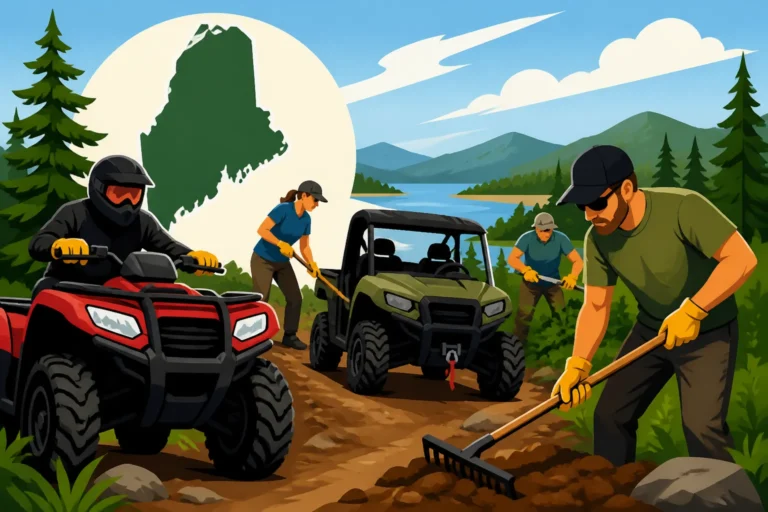
Consider joining or supporting the club that maintains the route. Clubs often coordinate trail work, communicate closures, and help sustain relationships with landowners. Respectful riding does not guarantee that every trail will remain open, but it helps show that riders value the access being shared with them.
Maine’s trail network relies on more than maps and machines. It depends on riders choosing the marked route, respecting barriers, keeping noise and litter under control, and accepting that a landowner may close access. Those habits can feel small on a single ride, but they shape whether the next rider is welcomed through.
Disclaimer
This article is for general informational purposes only and does not constitute professional advice. Laws, prices and regulations vary by location and change over time. Consult a qualified professional for guidance on your specific situation.