Riding Long Trail Days With Kids
A long Maine ATV ride can look manageable on a map and feel endless to a tired child, especially when the trail is rough, the weather shifts, or the next break is farther away than expected. This guide explains how to plan family trail days around kids’ needs, choose a realistic route, pack for changing conditions, and make the ride safer and more enjoyable.
Plan a Maine ATV Ride Around Your Child
Choose a route for the youngest rider, not the most experienced adult
For a family ride, the best route is usually the one everyone can finish comfortably—not the route with the most miles or the biggest views. A child who is happy for an hour on smooth ground may struggle much sooner on washboard gravel, repeated bumps, tight turns, or a trail that demands constant attention. Estimate the day by the terrain and the group’s pace, not just the distance shown on a map.
Start with a short outing close to your lodging or staging area. Around the Moosehead Lake region, for example, the landscape can make a ride feel remote even when you have planned a reasonable loop. In Aroostook County, routes may connect communities across wide stretches of countryside. Wherever you ride, identify a simple turnaround point before you leave and agree that anyone can ask to head back without being teased or pressured.
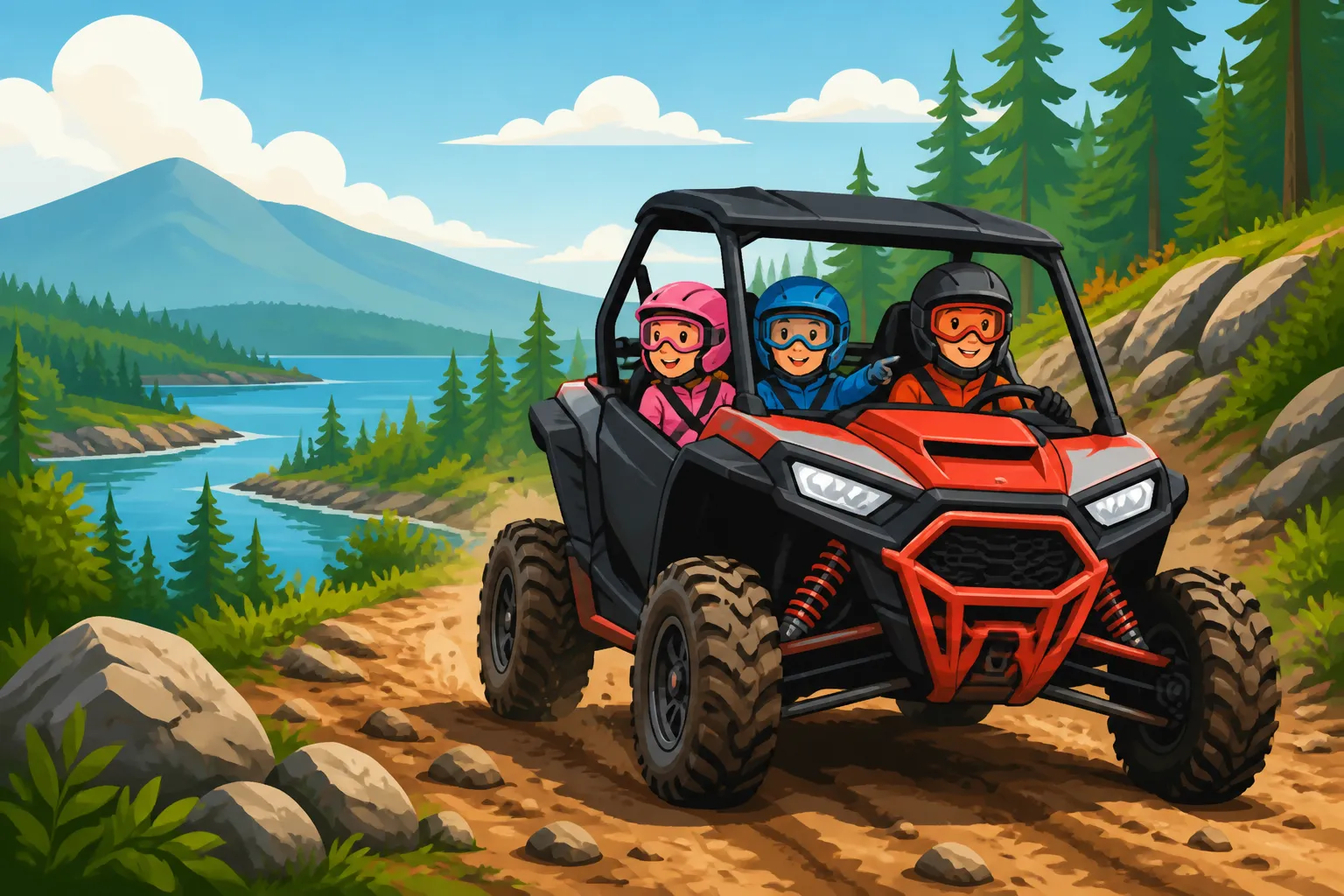
If your child is a passenger, remember that their comfort depends on the machine, the seat, and the ride itself. A long day on a side-by-side is different from a long day on a single-rider quad, and children should only ride in a seat designed for a passenger. Don’t let a child ride on a lap, stand on a machine, or sit somewhere that lacks the appropriate restraint and protection. For age-related requirements, review Helmet Rules for a Maine Passenger Under 18 and [Maine ATV Age Rules for Riders Under 16] before planning the outing.
Use a flexible itinerary instead of a mileage goal
A family itinerary should include more than the route. Build in a relaxed start, planned breaks, a meal stop, and enough daylight to return without rushing. If the trail turns out to be rougher than expected, shorten the day early rather than waiting until a child is overtired. Turning back is a sensible trail decision, not a failed outing.
Think in terms of ride segments. For example, you might ride until the first comfortable rest spot, stop to drink and stretch, then decide whether everyone is ready for another segment. A child may be willing to keep going after a snack and a chance to move around. Another may need a longer break or may have reached their limit. Let the actual mood and conditions guide the next decision.
It can help to identify more than one exit or turnaround option on the route. Before leaving, look for nearby roads, trail junctions, towns, or staging areas where you could shorten the trip. Mapping tools such as onX Offroad can help you study a route and spot junctions before the ride; download or save the information you need in advance rather than assuming you’ll have service in the woods. Pair digital navigation with a paper map when practical, and review Navigating Trails Without Cell Service for backcountry planning ideas.
Keep Kids Comfortable and Ready for the Trail
Pack for changing weather, hunger, and small problems
Maine weather can shift during a ride, and children often feel cold, wet, hungry, or uncomfortable before adults notice. Pack layers that can be adjusted, gloves that fit, eye protection, and rain gear suited to the forecast. A child who starts the day warm and dry may be miserable after a chilly breeze or a sudden shower, particularly when riding at speed.
Bring more water and snacks than you expect to use. Choose easy-to-eat food that won’t make a mess in the vehicle, and stop somewhere safe before anyone eats or drinks. A snack break can also be a chance to check that helmets still fit properly, clothing hasn’t caught or shifted, and everyone is comfortable before setting off again.
A practical family ride kit should cover everyday needs as well as minor delays. Consider packing:
- Drinking water and familiar snacks
- A small first-aid kit and any essential personal medication
- Rain layers, warm layers, and spare gloves
- Sunscreen and insect protection
- A charged phone stored securely
- A paper map or offline route information
- Basic tools and any machine-specific supplies
- A flashlight or headlamp for an unexpected delay
The goal is not to carry every item imaginable. It is to avoid turning a small inconvenience into a stressful situation far from the trailhead. For a more detailed checklist, see What to Carry on a Remote Trail Ride. If your family rides in areas with limited coverage, Maine Cell Dead Zones on ATV Trails can help you think through communication before you go.
Make comfort checks part of the routine
Children may not always say clearly that they are uncomfortable. They may become quiet, irritable, unusually restless, or reluctant to get back on. Make brief check-ins normal: ask about hands, feet, temperature, thirst, and whether the seat or helmet is bothering them. A quick stop to adjust a strap or add a layer can be more useful than pushing through another stretch.
Fit matters. A helmet should be appropriate for the rider and fastened correctly; oversized gear can shift, while gear that pinches can become painful over time. Check that gloves allow a secure grip, that eye protection stays in place, and that loose clothing cannot snag on controls or moving parts. For guidance on choosing suitable head protection, read Buying a Helmet That Meets the Standard.
Also pay attention to how the machine is being operated. A child learning to ride may need shorter practice sessions and close, attentive supervision, not a full day of trail travel. Don’t assume that a young rider who handled a short, familiar section is ready for a long or difficult route. Review Maine ATV Safety Course Requirements and the applicable rules for the rider’s age before setting out.
Choose Trails and Pace That Suit a Family
Match terrain to the group’s experience
Trail difficulty is not just about whether a route is labeled easy or difficult. Surface, width, visibility, weather, traffic, and the number of crossings can all affect how demanding a ride feels. Mud, loose gravel, steep grades, water crossings, and deep ruts can require more concentration than a child expects. When conditions are unfamiliar, choose a route that leaves room to slow down, stop safely, or turn around.
A route that works for an experienced adult may be tiring for a beginner. Keep a generous following distance, ride at a pace that allows everyone to react, and regroup at safe junctions rather than allowing the group to stretch out. If a child is operating a machine, keep the route and conditions appropriate to their ability and follow Maine’s supervision and operating rules. If your group includes both riders and passengers, plan around the person who is least comfortable.
Route information can help with preparation, but it cannot promise that a trail will be open or suitable on the day you arrive. Check local club or landowner updates before travel, and respect closures and posted restrictions. Many Maine trails cross private land, so access depends on permission and responsible riding. For a broader overview, see Maine ATV Trail Maps and Club Boundaries and [Landowner Permission on Maine ATV Trails].
Plan navigation and regrouping before the ride
Before leaving, make sure every adult understands the route, planned stops, and what to do if the group becomes separated. Pick recognizable regrouping points, such as a trail junction or a safe designated stopping area. Tell children not to ride ahead or leave a stopping point without an adult. If you’re using more than one machine, decide who rides at the front and who stays behind the least experienced rider.
Offline navigation is especially useful when cell service is unreliable. onX Offroad can help you review a route, save map information for offline use, and understand where trail connections appear before you ride. Practice using your chosen map while parked, not for the first time at a confusing junction. Keep the device secured and have a backup plan in case its battery runs low or the route display is difficult to read outdoors.
A paper map is a useful companion because it does not depend on a charged device. You can mark the planned route, likely stopping points, and places where you could shorten the trip. Families exploring a larger area, such as northern Maine or the Katahdin region, may appreciate having more than one navigation option. See Carrying a Paper Map in the Backcountry for ways to make a paper map useful alongside digital tools.
| Planning question | Family-friendly approach | Why it helps |
|---|---|---|
| How long should the ride be? | Start with a shorter outing and add distance only when the group is comfortable | Helps prevent fatigue from turning into a stressful ride |
| What route should we choose? | Favor familiar, manageable terrain with clear turnaround options | Makes it easier to adapt when conditions or energy change |
| When should we stop? | Plan breaks and also stop when someone needs one | Prevents hunger, thirst, and discomfort from building |
| What if service disappears? | Save offline route information and carry a paper map | Keeps navigation useful outside cellular coverage |
| What if a child wants to stop early? | Treat turning around as a normal option | Keeps the ride focused on safety and enjoyment |
Handle Breaks, Setbacks, and the Ride Home
Notice fatigue before it becomes a problem
A child who is tired may lose focus, become frustrated, or stop communicating clearly. Those changes matter even if the machine is running well and the route is still open. If someone is cold, upset, thirsty, or struggling to pay attention, stop in a safe place and reassess. Continuing because the group is “almost there” can make a manageable issue worse.
Set expectations before the ride: anyone can ask for a break, and the group will make a decision together. This helps a child speak up instead of staying quiet to avoid disappointing adults. It also makes it easier to change plans when the weather turns, the trail is rougher than expected, or the youngest rider has had enough.
Don’t let a fixed destination override safety. If you planned to reach a particular town or scenic point but the group is moving slowly, consider stopping earlier or returning by the shortest suitable route. The ride is still a success if everyone finishes safely and wants to go again.
Prepare for delays and end the day with enough daylight
A long trail day can take longer than expected because of traffic, a wrong turn, a machine issue, or a trail closure. Keep a buffer in your schedule rather than planning to return at the last possible moment. If you’re traveling with children, reserve time for a calm meal, bathroom stops, and the practical work of loading machines and gear.
Before leaving the trail, check that everyone is warm enough for the ride back and has had water. Confirm that the group is together, your route is still clear, and your devices have enough battery for the return. If a problem arises, stop in a safe location and use your map to decide what to do instead of pressing onward without a plan. For additional remote-ride preparation, review Getting Help on a Remote Trail.
At the end of the day, ask what worked and what felt too long. A child might have loved the trail but found the lunch stop too brief, or may have enjoyed riding but struggled with cold hands. Those details make the next outing easier to plan. If your family is new to the area, Family-Friendly Maine ATV Trails and Maine Trails With Short Family Loops can help you explore options that fit a shorter, more relaxed day.
Disclaimer
This article is for general informational purposes only and does not constitute professional advice. Laws, prices and regulations vary by location and change over time. Consult a qualified professional for guidance on your specific situation.