Fording a Stream on a Trail Ride
A stream crossing can turn an otherwise easy Maine trail ride into a risky situation: water depth is hard to judge, rocks hide beneath the surface, and a current can push a machine off line. This guide explains how to assess a crossing, when to turn around, and how to protect your ATV, UTV, and the trail.
Decide whether the stream crossing is safe
Check that the crossing is allowed and open
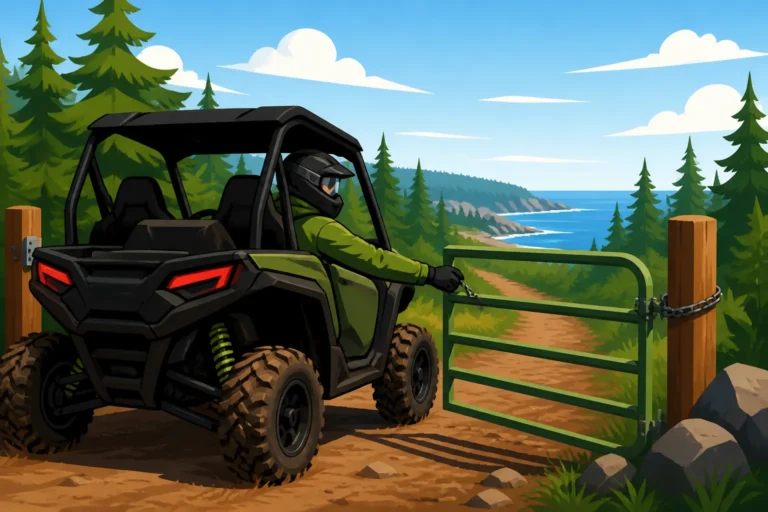
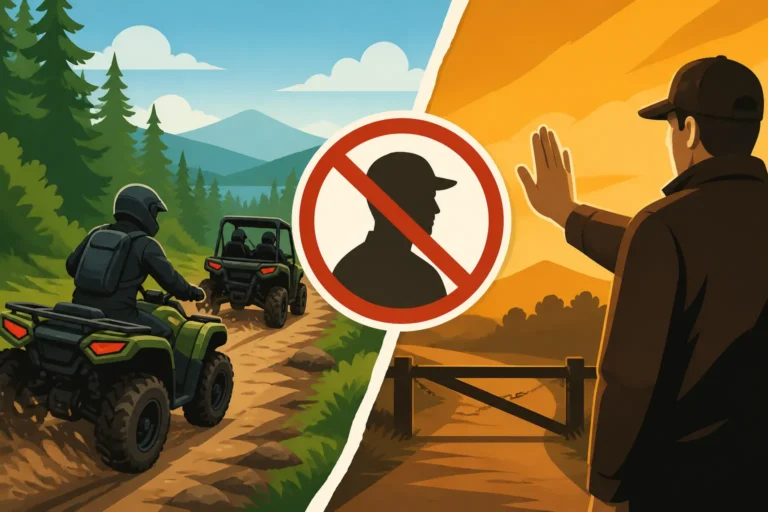
Before you approach the water, confirm that the trail is open and that the stream crossing is part of the permitted route. A stream that looks like a convenient shortcut is not an invitation to leave the marked trail. In Maine, many ATV routes depend on permission to cross private land, and that permission may come with specific conditions—or may be withdrawn. If there is a sign, gate, barrier, or closure notice, respect it rather than trying to find another way through.
Trail conditions can change after heavy rain, snowmelt, or a stretch of dry weather. A crossing that was shallow on your last ride may be deeper, faster, or carrying more debris today. Check local club updates and posted trail notices before heading out, especially if your route follows a remote section. [Checking Maine Trail Status Before You Drive] can help you plan for closures, while [Maine Trails That Cross Private Land] is a useful reminder that trail access depends on respecting the land and its rules.
A map app can help you understand where you are, but it cannot tell you whether a crossing is safe at that moment. Riders may use onX Offroad to review a route and save map information for areas with limited service, but still check current club notices and signs on the ground. If the route or crossing is unclear, ask a local ATV club or choose another open trail rather than guessing.
Read the water from the bank
Stop well back from the edge, park securely, and take time to observe. Look for the direction and speed of the current, the shape of the banks, submerged rocks, branches, and any changes in water color that might suggest a deeper channel. A smooth-looking surface can conceal holes or an uneven bottom. If you cannot see a clear entry and exit, treat that uncertainty as a reason not to cross.
Do not judge depth from one spot alone. The water may be shallow where it enters the stream and much deeper in the main channel. If it is safe to do so from the bank, use a long stick to check the bottom at several points along the intended path. Do not wade into cold, moving water to measure it; a slippery rock or sudden drop can put you in danger before you even start the machine. Follow your owner’s manual for the vehicle’s water-fording guidance, since safe depth and preparation vary by model.
Think about what would happen if the machine stalled halfway across. Is there a safe place to stop? Can you get back to the bank without entering the current? Is another rider available to help without risking their own machine? If the answer is no, or if the current is strong enough to affect your footing, turn around. A ride can be rescheduled; a swept-away rider or damaged machine can become a serious emergency.
Prepare your machine and riding group
Protect the ATV or UTV before entering
Water can enter the engine, transmission, differential, intake, or electrical components, and even a crossing that looks modest may exceed your machine’s limits. Check the owner’s manual for the manufacturer’s instructions before your ride. Pay attention to the machine’s air intake and breather locations, and make sure required protective equipment is in place. A snorkel or other modification does not make every crossing safe, nor does it eliminate the need to assess the water and follow the vehicle’s limits.
Secure loose cargo and keep essential items protected from splashes. On a UTV, confirm that doors, nets, seat belts, and cargo restraints are set up as intended for the ride. Do not assume that a vehicle’s advertised capability means it can handle an unfamiliar stream. Water depth, current, bottom conditions, and the angle of entry all matter.
If your route includes wet terrain beyond the crossing itself, plan for slippery approaches and exits. Mud can reduce traction, and a steep bank may be harder to climb than it appears from the water’s edge. [Bog Bridges and How to Ride Them] covers a different kind of wet-trail challenge, but the same basic habit applies: slow down, stay centered, and avoid sudden steering or throttle changes.
Agree on a plan before anyone crosses
A group should decide who will cross first, where the others will wait, and how everyone will communicate. Keep waiting riders and passengers well back from the water and away from the path of the machine. Avoid crowding the bank; soft ground can collapse under the weight of a vehicle or several people. If visibility or communication is poor, do not rely on hand signals that the operator may not be able to see.
Before the first machine enters, identify the intended line from a stable position on shore. The operator should know where to enter, where to exit, and where to stop if conditions are worse than expected. The rest of the group should not follow automatically just because the first crossing went well. A machine can disturb the bottom, shift stones, or leave a deeper rut, changing the route for the next rider.
Carry a basic recovery and emergency kit appropriate to your machine and trip, and know how to use it before you need it. A tow strap is not a reason to attempt a questionable crossing. Recovery can be dangerous if someone stands in moving water, attaches equipment to an unsuitable point, or pulls from an unstable bank. For more remote rides, [What to Carry on a Remote Trail Ride] can help you think through supplies beyond the crossing itself.
Cross only when conditions are clearly manageable
Use a slow, steady approach
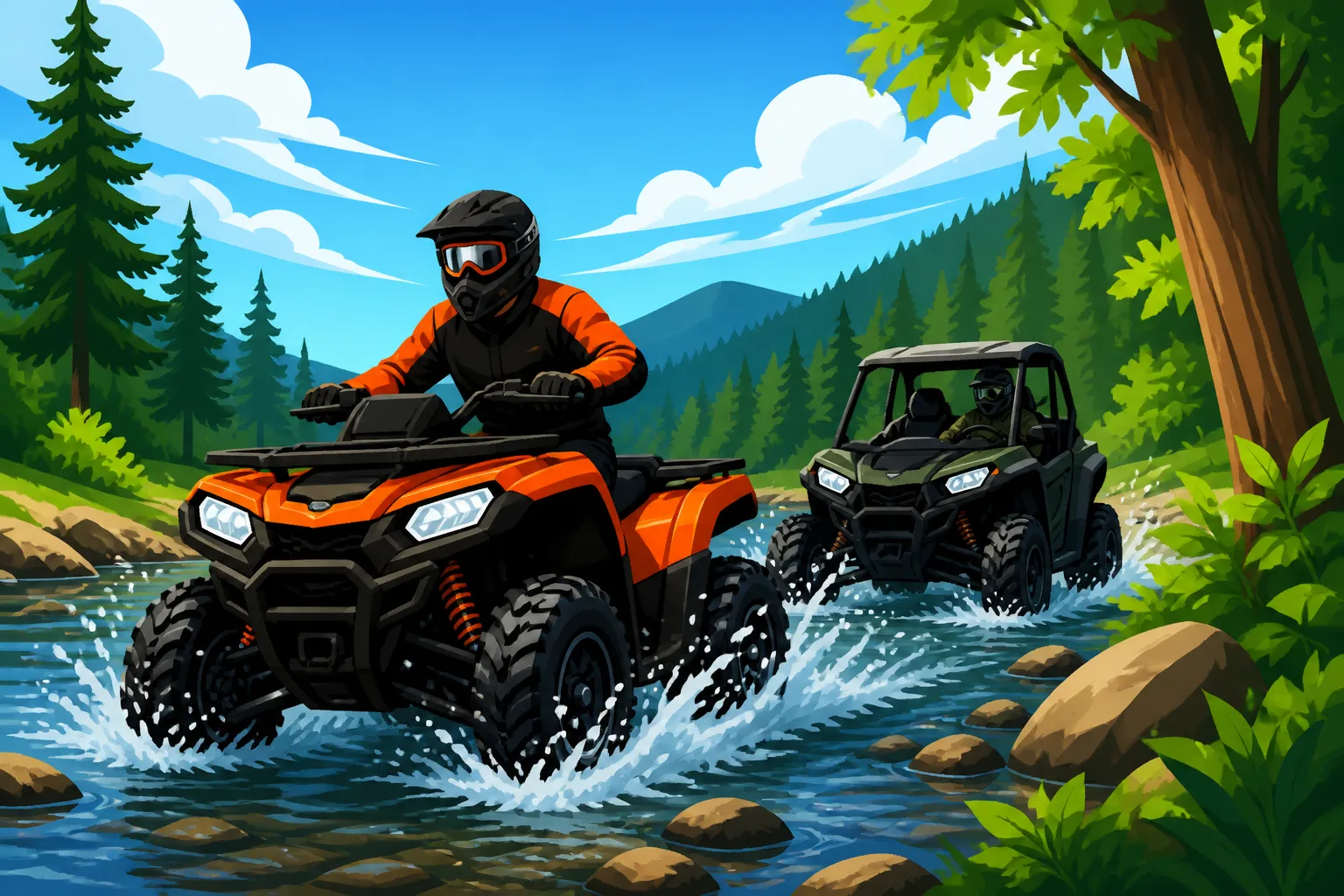
If the crossing is permitted, clearly within the machine’s guidance, and safe for the group, approach at a controlled pace. Select an appropriate low range or gear before entering, if your machine has one, and use a smooth, steady throttle. Avoid a fast run-up: speed can send water into vulnerable components, unsettle the machine, and make it harder to respond to hidden rocks. Do not stop or turn in the middle of the stream unless an immediate hazard makes stopping necessary.
Follow the line you inspected from the bank. Keep both hands on the controls and your feet in their proper riding position. On a UTV, all occupants should remain seated and secured as required by the vehicle’s instructions. Do not lean far out, stand on a moving machine, or ask someone to walk alongside in the water. A passenger should not be expected to steer, balance, or direct the operator while the vehicle is moving.
Cross one machine at a time with space between vehicles. The person waiting should remain on firm ground and watch for a problem without entering the stream to intervene. If the machine begins to drift, lose traction, or behave unexpectedly, do not make a sharp turn or sudden acceleration in an attempt to correct it. Follow the operator’s manual and the group’s plan, and prioritize getting people to safety over saving the machine.
Protect the stream and trail surface
Even a successful crossing can damage a trail if riders churn up the streambed or widen the route around a muddy approach. Stay on the established crossing and avoid creating a new path along the bank. Spinning tires can loosen soil and wash sediment into the water, while repeated detours can damage vegetation and encourage erosion. That damage can affect fish habitat and may contribute to a landowner or club closing access.
Do not use a stream as a place to wash mud from the machine, refuel, or dispose of trash. Keep fuel, oil, and other fluids away from the water, and deal with leaks or spills promptly and responsibly. If the crossing is too muddy or degraded to pass without damaging it, turn back and report the condition to the club that maintains the trail. A quick note can help prevent the next group from making the same mistake. [Reporting a Downed Tree on a Trail] explains one type of trail report; the same considerate approach is useful when you encounter a damaged crossing.
Navigation tools can support trip planning, particularly where cell service is unreliable. onX Offroad may help you keep a saved route available, but it should not replace trail signs, landowner instructions, or current club information. If you find a crossing closed or unsafe, mark your location and report it when you have a reliable connection rather than riding around the closure. [Navigating Trails Without Cell Service] offers additional planning ideas for remote rides.
Know when to turn around and what to do after a problem
Use a simple go or no-go check
A crossing is a no-go if you cannot confirm it is permitted, cannot judge the depth and bottom, see a strong current, or lack a safe way out. It is also a no-go if the water appears beyond your machine’s stated limit, the approach is unstable, or the group has no sensible plan if the vehicle stalls. A rider’s confidence is not a substitute for a clear assessment. When conditions are uncertain, choose a safer route.
| What you observe | Safer decision |
|---|---|
| Trail is marked closed or permission is unclear | Do not enter; find an open route |
| Current is strong or water is rising | Turn around |
| Depth or bottom cannot be assessed | Do not guess; choose another route |
| Safe exit is not visible | Do not cross |
| Crossing is within vehicle guidance and conditions are clear | Proceed cautiously, one machine at a time |
| Machine stalls or water reaches a vulnerable area | Stop and follow the owner’s recovery guidance |
The table is a practical screening tool, not a technical substitute for the vehicle manual. If one rider in the group is uncomfortable, pause and discuss alternatives. A short detour or a turnaround is usually less frustrating than a damaged machine, an injury, or a trail closure.
If you are using onX Offroad or another mapping tool, save the route before leaving service and note a reasonable turnaround point. A mapped line does not guarantee that every section is currently open or passable. Keep a paper map or other backup if the ride is remote, and let someone know your route and expected return. [Carrying a Paper Map in the Backcountry] and [Getting Help on a Remote Trail] are useful companion topics when planning beyond familiar trail sections.
Respond carefully if a machine stalls or takes on water
If a machine stalls in or immediately after a crossing, do not repeatedly try to restart it. Water entering the engine can cause severe damage when the engine turns over. Move people to a safe place first, keeping clear of the current and unstable banks. Then follow the owner’s manual and contact qualified help if needed. Do not attempt a risky recovery simply because the machine is close to shore.
After a crossing, check for obvious problems from a safe, dry location. Look for signs of water around the air intake or other vulnerable components, and pay attention to unusual engine behavior, warning lights, or changes in braking and handling. If you suspect water has entered the engine, drivetrain, or electrical system, stop riding and arrange an appropriate inspection. Continuing the trip may turn a manageable repair into a much larger problem.
Before setting out again, record where the incident happened and notify the relevant club or land manager if the crossing needs attention. That report can help other riders avoid the hazard and help maintain access. For a broader look at staying prepared on a trip, see [Maine ATV Trail Etiquette With Landowners] and [Maine ATV Trails for Beginners]. Safe riding is not just about getting through the water; it is also about leaving the trail usable for the next person.
Disclaimer
This article is for general informational purposes only and does not constitute professional advice. Laws, prices and regulations vary by location and change over time. Consult a qualified professional for guidance on your specific situation.