Weekday Riding in Northern Maine
Weekday riding in Northern Maine can mean quieter trails, easier parking, and more time to enjoy the woods without weekend traffic. It can also mean fewer open businesses, limited cell service, and a longer wait for help if something goes wrong. This guide covers how to plan a practical weekday ride, check access, and prepare for changing conditions.
Why ride Northern Maine on a weekday
Quieter trails are a benefit, not a guarantee
A Tuesday or Wednesday ride may feel less crowded than a holiday weekend, especially around popular trailheads and in towns where riders gather to fuel up or eat. With fewer machines passing, you may have more room to keep a comfortable pace, stop for a map check, or let a faster group go by safely. Less traffic can also make it easier to hear approaching machines and notice trail signs.
But a weekday is not a promise of an empty trail. Local events, school breaks, good weather, and seasonal travel can bring plenty of riders out. Some trails also serve as work or access routes, so you may encounter logging trucks, maintenance crews, or local traffic. Keep to the right where appropriate, ride at a speed that lets you respond to changing conditions, and approach blind corners cautiously.
If you’re choosing between a busy weekend and a weekday, think about the whole trip rather than traffic alone. A quieter trail won’t help much if you arrive to find a closure, a full staging area, or no convenient place to refuel. A little planning makes the quieter day count.
Northern Maine means planning around distance
The Aroostook County area is expansive, and a ride that looks short on a map can take longer than expected once you account for trail surfaces, stops, detours, and machine speed. Riders starting near Presque Isle, Caribou, Fort Kent, or another trail town should plan around a specific staging area and a realistic turnaround point rather than assuming they can improvise once they are out in the woods.
That matters more on a weekday because fewer nearby businesses may be open, and there may be fewer riders around to ask for help. Before leaving, identify where you can park, where you may be able to get fuel, and how you’ll respond if the route is blocked. A ride plan should include a return time and a check-in contact who knows where you expect to be.
The region’s trail systems connect communities and rural areas, but access can depend on local clubs, landowner permission, and the condition of individual sections. Don’t assume that a trail shown on an old map is open today. For a clearer picture of the region’s networks, review Maine ATV Trail Maps and Club Boundaries and Maine ATV Clubs and the Trails They Keep Open.
Check access and conditions before leaving home
Confirm the trail is open for your chosen day
Trail access can change with weather, maintenance, landowner decisions, and seasonal conditions. Spring is especially sensitive: thawing ground and mud can lead to temporary closures or delayed openings. Riding a muddy section can damage the trail and strain relationships with the people who allow access. Before you travel, check the status of the specific trail system you plan to use, not just a general map of the area.
A weekday ride also calls for extra attention to short-notice updates. A club may post a closure or a trail-work notice after you’ve started planning, and a route that was open on your last visit may no longer be available. Check Checking Maine Trail Status Before You Drive and Maine Trail Openings and Mud Season before loading your machines.
| Planning question | What to check | Why it matters on a weekday |
|---|---|---|
| Is the trail open? | Current club or local trail-status information | Closures may not be obvious once you’re on the route |
| Where can you stage? | Designated parking and trailer access | Some lots may be limited or less convenient outside busy periods |
| Can you get fuel? | Open stations along or near your planned route | Business hours can make an unplanned stop difficult |
| Is there cell coverage? | Known dead zones and offline navigation options | You may not be able to call or load a map in remote areas |
| Are there landowner notices? | Posted signs, gates, and club updates | Access depends on respecting current permission |
Treat maps as planning tools, not permission
A digital map can help you understand a trail network, estimate distance, and keep your bearings. Some riders use onX Offroad to review routes before departure and save map information for offline use. Whatever mapping tool you choose, don’t treat a line on a screen as proof that a trail is open or that you’re allowed to ride it. Confirm access with current local information and follow signs and closures on the ground.
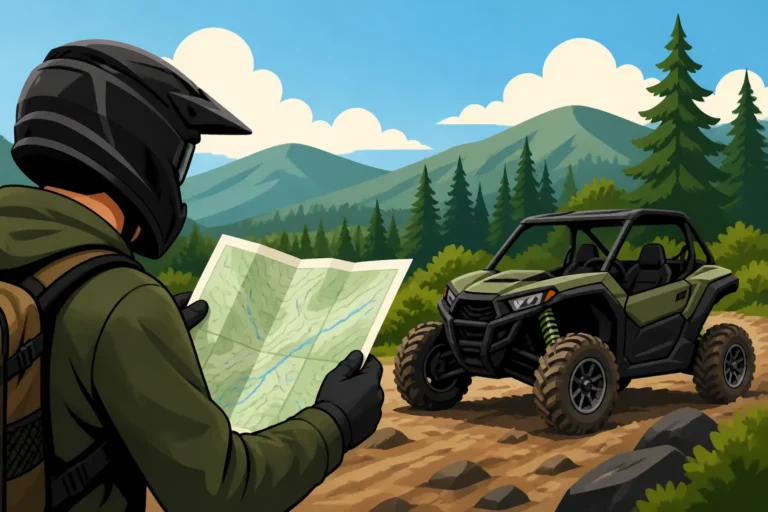
It’s useful to compare the planned route with a second source, such as a club map or printed map. Save the route and key locations before leaving service, and make sure everyone in the group knows how to use the navigation method. If your phone is the only device holding the route, protect it from water and cold, carry a backup power source, and consider bringing a paper map as well. Navigating Trails Without Cell Service offers more planning ideas for areas where reception is unreliable.
When a route crosses private land, ride only where access is permitted. Stay on the marked trail, close gates if instructed, and avoid widening muddy or soft sections to get around a difficult spot. Landowner cooperation is part of what keeps many Maine trails available; Landowner Relations on Maine ATV Trails explains why respectful riding matters beyond your own trip.
Build a weekday ride plan that can adapt
Choose a manageable route and staging point
Start with a route that fits your group’s experience, machine range, and available daylight. If you’re new to the area, a shorter loop from a known staging area is often a better first ride than a long point-to-point trip. Leave room for slower travel, trail intersections, breaks, and a possible detour. The goal is not to cover the most miles; it’s to finish with enough time and fuel to return safely if conditions change.
Check that your truck and trailer can use the planned staging area. A narrow access road, limited parking, or a busy lot can create problems before the ride even begins. Confirm whether overnight parking is allowed if your travel plans require it, and avoid blocking gates, driveways, or equipment access. Maine ATV Trail Parking and Staging can help you think through those details.
Before setting out, share a simple plan with someone who isn’t riding: where you’re parking, the general route, the people in your group, and when you expect to check in. Agree on what that person should do if you miss the check-in. This is especially helpful when your route passes through remote areas and there may be no easy way to update anyone mid-ride.
Plan fuel, food, and the return trip
A weekday ride can be less forgiving when a station, restaurant, or shop is closed. Check fuel options before you go and start with enough fuel for the planned route plus a reasonable reserve. Don’t assume that a town will have an open business at the time you pass through. If the route is long or remote, consider whether your machine’s range and any approved fuel-carrying setup are appropriate for the trip.
Food and water deserve the same attention. Carry what you need rather than counting on a quick stop, and pack an extra layer in case the weather shifts or a mechanical issue keeps you outside longer than expected. Make sure every rider knows the turnaround time. Turning back early is a sensible decision if fuel use is higher than expected, the route is slower than planned, or the group is getting tired.
For route planning, Fuel Stops Along Maine ATV Trails is a useful companion, but verify business hours and access before relying on a stop. A point marked on a map is not a guarantee that a business is open or that you can reach it legally by ATV.
Ride responsibly when fewer people are around
Prepare for limited help and changing conditions
Quieter trails can create a false sense of security. If fewer riders are nearby, you may have less chance of getting immediate help after a breakdown or injury. Carry basic tools suited to your machine, a first-aid kit, drinking water, a charged phone, and a backup power source. A satellite messenger can be worth considering for remote trips where phone service is unreliable.
Before departure, make sure the group has agreed on what to do if someone becomes separated. Pick a safe place to regroup, communicate at trail intersections, and avoid leaving a rider alone with a machine problem. If a machine becomes stuck, assess the ground before applying more throttle. Spinning tires can deepen the rut, damage the trail, and make recovery harder.
Northern Maine weather and trail surfaces can change over a ride. Wet leaves, loose gravel, washouts, soft ground, and standing water may affect traction and visibility. Slow down when conditions are uncertain, leave extra space between machines, and don’t ride around a barrier or closed section just because the detour seems inconvenient.
Be considerate of communities and landowners
A weekday ride may pass close to homes, farms, businesses, and work areas. Keep noise and speed under control, particularly near buildings and road crossings. Stay on the designated route instead of cutting across a field or using an unmarked woods road. If you encounter a gate, closure sign, or fresh trail work, respect it and turn around rather than trying to find a way through.
On shared routes, watch for people walking, working, or using other vehicles. Give them room, make your presence known when appropriate, and follow posted directions. Pack out everything you bring in, including food wrappers and broken parts. Small courtesies make a difference in places where trail access depends on ongoing cooperation.
Before you leave, check the machine, count your group, and let your check-in contact know you’re back. If you changed the route, tell them that too. Weekday riding in Northern Maine can be a rewarding way to enjoy the trails at a calmer pace, as long as the day is built around current access, realistic distances, and the fact that help may be farther away.
Disclaimer
This article is for general informational purposes only and does not constitute professional advice. Laws, prices and regulations vary by location and change over time. Consult a qualified professional for guidance on your specific situation.