Maine Cabins on the ATV Trail Network
A cabin advertised as “on the ATV trail” may still require you to trailer your machine to a legal access point, ride a posted road section, or check whether a trail is open. This guide explains how to choose Maine cabin lodging that genuinely fits your riding plans, what to confirm before booking, and how to avoid surprises when you arrive.
What “On the ATV Trail” Really Means
Direct trail access is not always ride-from-the-door access
In Maine, “trail access” can describe several different arrangements. A cabin might sit beside a maintained ATV trail, have a short connector to one, or be located near a trailhead where you can unload and begin your ride. Those options are convenient, but they are not interchangeable. A nearby trail does not automatically mean you can ride from the cabin to it.
The route between your lodging and a trail matters. It may cross private land, follow a town road, or pass through a section that is closed to ATVs. Some road sections are designated for ATV use, while others are not. A ride that looks simple on a map can therefore be unlawful or unavailable in practice. Ask the lodging provider to explain the permitted route from the property to the trail, rather than relying on a listing phrase alone.
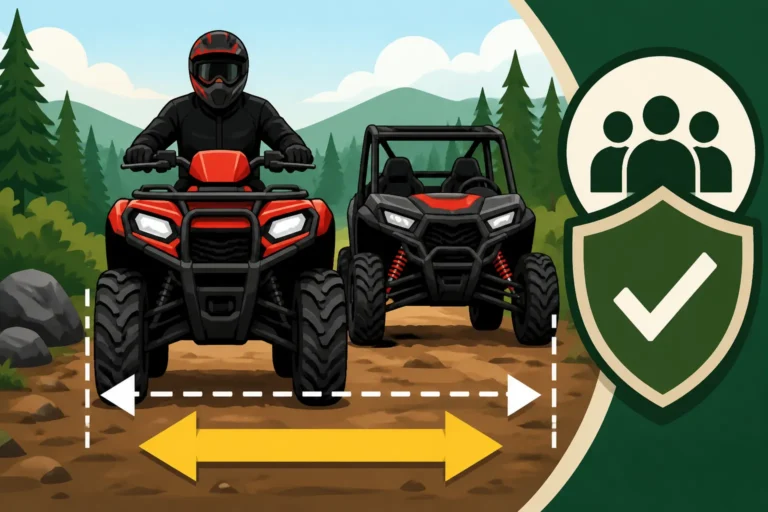
It is also worth asking what “trail access” means for your particular machine. A narrow trail may work for a quad but not a wider side-by-side. If you ride a UTV, ask about trail width limits, gates, tight turns, and any club or landowner restrictions that could affect your route. The property may be trail-adjacent without being suitable for every vehicle.
Why access can change during the season
Many Maine ATV trails rely on permission to cross private property. Landowners and clubs may close a section temporarily because of mud, maintenance, logging, weather, or a change in permission. A cabin can remain open for guests while the trail connection that made it attractive is temporarily unavailable.
Seasonal conditions are especially important in spring. Trails may stay closed while the ground is soft, and riding too early can damage the trail or jeopardize future access. Before traveling, check for local opening information and closures rather than assuming that an advertised route is open. Maine Trail Openings and Mud Season explains why spring access can be unpredictable, while Checking Maine Trail Status Before You Drive is a useful reminder to confirm conditions close to your trip.
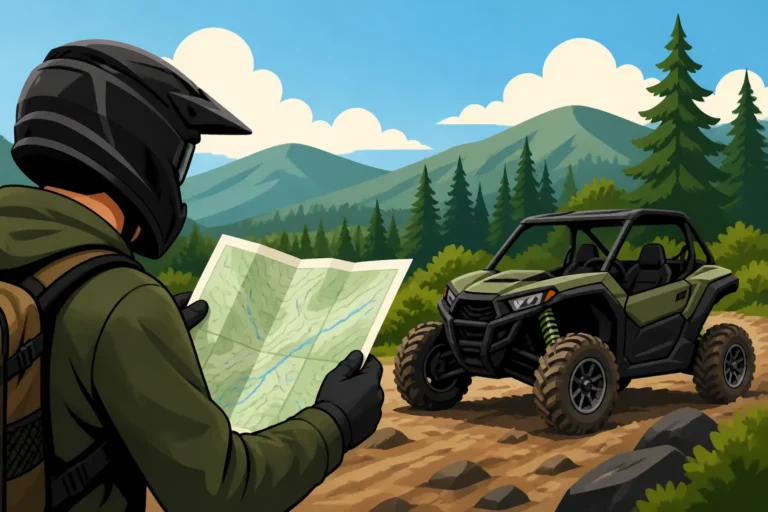
Do not assume that a route shown on a map or saved from an earlier visit remains open. For current local information, ask the lodging host which club maintains the nearby trail and where that club posts updates. A map app such as onX Offroad can help you understand the broader layout and plan your questions, but it should not replace a current status check with the local club or land manager.
How to Choose a Cabin for Your Riding Trip
Match the location to the kind of trip you want
Maine is large, and the best cabin location depends on your itinerary. A group planning long rides between towns may want access to a connected trail network and services along the way. A family planning shorter rides may prefer a cabin near a manageable loop, with a place to rest, eat, and return without covering a full day’s distance. A remote stay can be appealing, but it may mean fewer nearby fuel, food, repair, or emergency options.
Think about the trip you want to have before searching for lodging. Write down the area you plan to ride, your expected daily mileage, who is traveling, and whether you want to leave the machine parked at the cabin between rides. Then check whether the property’s location supports that plan. A place that works beautifully for a quiet weekend may be inconvenient for a multi-day ride if you have to trailer to a different trailhead each morning.
For route planning, compare lodging details with club maps and local information. onX Offroad may help you visualize distances and nearby routes, but a line on a digital map does not confirm that a route is open, permitted, or appropriate for your machine. Use it as a planning aid, then verify the access details with the people who manage the trail or property.
Compare lodging features that affect the ride
A comfortable cabin is only part of the decision. Riders also need to know where to park a truck and trailer, whether there is room to unload, and whether the property can accommodate the size of the group’s machines. Some cabins may have limited driveway space or a narrow approach that makes maneuvering a trailer difficult. Ask for practical details before booking, especially if you are bringing multiple vehicles.
Also ask about machine storage and overnight security. Find out whether ATVs can be parked near the cabin, whether the area is lit, and whether guests are expected to bring their own locks or covers. Confirm whether the cabin has a place to dry wet riding gear, a hose or wash area, and a way to store muddy equipment without tracking it through the living space. These small details can make a multi-day trip much more comfortable.
| What to confirm | Why it matters | A useful question to ask |
|---|---|---|
| Trail connection | “Nearby” may not mean legally rideable from the property | Can guests ride from the property to an open, permitted trail? |
| Trail status | Access can change because of conditions or landowner decisions | Who provides the latest closure and opening updates? |
| Machine fit | Narrow trails or gates may not accommodate a wide UTV | Are there restrictions for my machine’s width or type? |
| Trailer parking | Driveways may be tight or shared | Is there space to park and turn around with my trailer? |
| Fuel and services | Remote areas may have limited options | Where are the nearest fuel, food, and repair services? |
| Storage and cleanup | Muddy gear and machines need a practical place to go | Is there secure parking and an outdoor wash area? |
| Local rules | Cabin, town, and club rules may add conditions | Are there property or local rules riders should know? |
If you are comparing several properties, use the same questions for each one. A clear answer about the route and parking is more useful than a broad promise of “trail access.” For additional lodging ideas and planning considerations, see Maine ATV Trail Camping and Lodging and Trailside Lodging in Northern Maine.
Plan the Access, Not Just the Accommodation
Verify the route and permissions before you unload
Before booking, ask the host to describe exactly how guests reach the trail. Is the trail entrance on the property? Is there a marked connector? Do riders need to trailer to a staging area? Is any part of the route on a public way, and if so, is that road section legally designated for ATV use? Clear answers help you distinguish convenient access from a location that is simply close to a trail.
If an access route crosses private land, permission matters. The fact that a route appears on a map, or that another rider used it in the past, does not necessarily mean you have permission to ride it now. Follow posted signs, gates, and instructions from the landowner or club. Landowner Relations on Maine ATV Trails covers why respectful use and permission are essential to keeping routes open. For a broader look at how access and local trail rules work, review Maine ATV Trail Maps and Club Boundaries.
Carry the lodging provider’s directions and the club’s current trail information with you, especially if cell service may be unreliable. A navigation app such as onX Offroad can help you orient yourself or compare route options, but do not treat an app as proof of permission. If the route is unclear, stop and ask rather than taking an unmarked turn onto private property.
Make the arrival and unloading plan
A smooth trip starts before you reach the cabin. Confirm the address, check whether the road is suitable for your truck and trailer, and ask about arrival instructions if you expect to arrive after dark. Find out where you are allowed to unload and park the trailer for the duration of the stay. If the property is shared with other guests, establish whether parking is assigned or first come, first served.
If you need to stage at a separate trailhead, get the exact location and check whether overnight parking is allowed there. Do not assume that a public parking area permits long-term trailer storage. Maine ATV Trail Parking and Staging can help you think through the parking side of the trip. Ask the host whether the trailhead is suitable for your trailer size and whether there are any local access instructions.
Before unloading, make sure you have the required registration and other documents for your situation. A cabin reservation does not provide permission to ride, replace a registration, or make a road legal for ATV use. If you are bringing a machine from outside Maine, confirm the requirements that apply to your registration and planned riding. [Maine ATV Registration for Non-Residents] is a relevant starting point for visitors.
Ride Considerately From Your Cabin Base
Respect trail users, property, and nearby residents
Cabins near trails often sit in quiet communities where residents share roads and land with riders. Keep speeds conservative around homes, follow posted signs, and avoid revving or unnecessary riding near the property. If you return after a long ride, park quietly and respect any lodging rules about machine movement or outdoor noise.
On the trail, close gates as instructed, stay on marked routes, and do not widen a trail or create a shortcut around a muddy section. Muddy conditions can tempt riders to detour, but leaving the marked route can damage land and put future access at risk. If a trail is closed, turn around and use an approved alternative rather than assuming the closure is optional. Maine ATV Trail Etiquette With Landowners offers useful context on the everyday choices that help preserve access.
Keep your group together and make sure everyone understands the planned route before leaving the cabin. Share the trail map and meeting points, and agree on what to do if the group becomes separated. If you are unfamiliar with the area, leave extra time for navigation and stops. A leisurely ride with a clear plan is often more enjoyable than trying to cover every mapped connection in a day.
Confirm what is included and what is your responsibility
A cabin rental may include lodging and parking, but trail access, permits, machine rentals, or guided services may be separate. Ask what the booking covers and what you need to arrange yourself. If the property provides a map or route suggestions, clarify whether those are general recommendations or verified current instructions. The distinction matters when access depends on seasonal conditions or landowner permission.
For a longer stay, ask how the host communicates trail updates and whether there is a local club contact or visitor information point. Check in again shortly before departure if weather or trail conditions could affect the route. If your plans rely on one particular connector, have a backup riding plan that uses a confirmed open route or a nearby legal staging area.
Finally, leave the cabin and trail area in good condition. Store fuel and equipment as instructed, keep muddy gear contained, and follow the property’s departure and cleanup rules. A little preparation makes it easier to enjoy Maine’s trail network without putting pressure on the landowners, clubs, neighbors, or hosts who help keep access available.
Disclaimer
This article is for general informational purposes only and does not constitute professional advice. Laws, prices and regulations vary by location and change over time. Consult a qualified professional for guidance on your specific situation.