Riding Trails in Black Fly Season
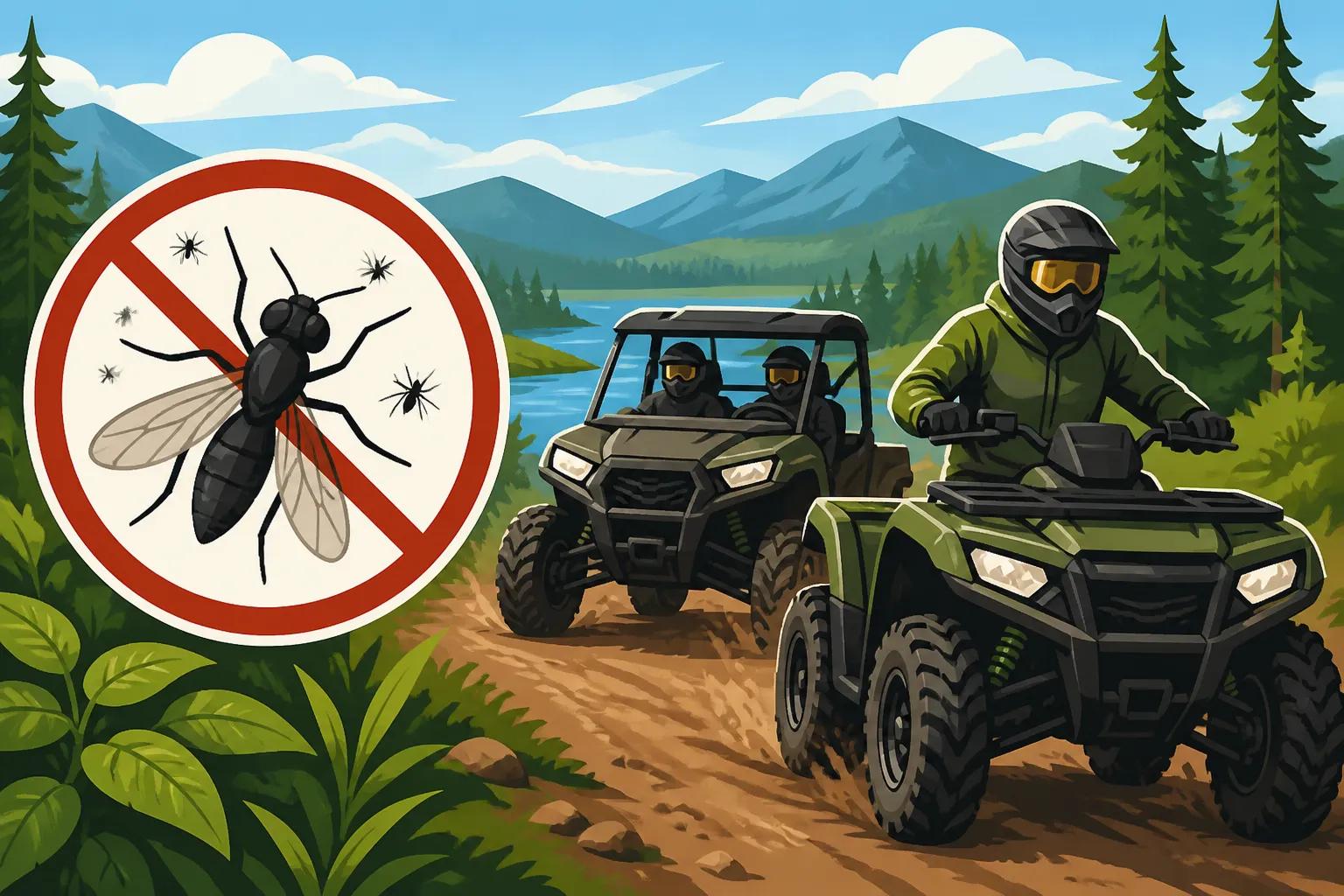
Black flies can turn a peaceful Maine trail ride into a nonstop battle with buzzing insects, especially when the air is still and riders stop in the woods. The season’s timing varies, and spring trail conditions can be muddy or closed just when bugs become active. This guide covers when black flies are most troublesome, how to prepare, and how to plan a ride that stays comfortable and responsible.
When Black Flies Affect Maine ATV Rides
Why timing changes from place to place
Black flies are most commonly a nuisance during spring and early summer, but there is no single statewide date when they appear or disappear. Weather, elevation, shade, nearby streams, and recent rain all influence when they become active. A warm spell can make them noticeable earlier in one area while another remains cool and relatively quiet.
They often feel worst on calm, humid days. A little breeze can make a meaningful difference, while a sheltered trail beside moving water or through dense woods may feel buggy even when an open road does not. The time of day matters, too: black flies may be especially irritating when riders are moving slowly or taking breaks in shaded areas.
That variation makes planning by calendar alone unreliable. A rider heading to Aroostook County, the Moosehead Lake region, or western Maine should check local conditions rather than assume the experience will match a ride elsewhere. Ask a local club or outfitter what the trails and insects have been like recently, and be ready to adjust your route or timing.
The spring trail-opening complication
Black fly season overlaps with a period when trail conditions can be fragile. Snowmelt and rain may leave paths soft, and some trails remain closed until clubs or landowners decide they can handle traffic. A route shown on a map is not necessarily open for riding that day. Respecting a closure helps prevent ruts and damage that can affect access for the rest of the season.
Before planning a spring ride, check [When Maine ATV Trails Open Each Spring] and [Maine Trail Openings and Mud Season]. Opening dates and conditions can differ between trail systems, so confirm the status of the specific area you intend to visit. If it is closed, do not ride around a gate or use an unmarked alternate route.
A bug-heavy day can make it tempting to keep moving even when the ground is soft. Resist that impulse. If the trail is posted closed, muddy enough to rut, or restricted by a landowner, choose another lawful activity or return later. [Maine ATV Trail Closures Mid-Season] is also useful to keep in mind, since access can change after a trail has opened.
How to Prepare for a Black Fly Ride
Choose protective clothing you can ride in
The most reliable defense is reducing exposed skin. Wear lightweight long sleeves, long pants, socks that cover the gap above your boots, and gloves. A head net worn over a brimmed hat can be a big help during breaks or slow sections. Choose gear that fits comfortably under your helmet and does not interfere with your vision, hearing, or ability to control the machine.
Think through how each layer works with your riding equipment. A loose hood or net can catch on straps, while a bulky layer may make a helmet fit poorly. Try your setup at home before the ride: put on the helmet, goggles, gloves, and head net, then check that you can turn your head and see clearly. If netting fogs your goggles or presses against your face, adjust the fit before you are on the trail.
A UTV cab may reduce direct exposure, but it is not a guarantee that insects will stay out. Airflow, open windows, and getting in and out during stops can still leave riders exposed. Keep a head net and light protective layers accessible rather than buried under cargo. For any insect repellent, follow the product label and apply it as directed; avoid getting it in your eyes or on surfaces where it could affect your grip or visibility.
Make stops more comfortable
Long stationary breaks can be the hardest part of a buggy ride. When possible, choose a breezy, open stopping place instead of standing beside a shaded stream or thick brush. Keep the break short if insects are swarming, and close vehicle doors or windows promptly when loading gear. A small change in where you stop can make lunch or a map check feel much less miserable.
Pack a sealable bag for used head nets or clothing that has been treated with a repellent. Bring spare gloves and a clean layer if your first set becomes damp. Sweat and moisture can make clothing uncomfortable, and rubbing your face with dirty or repellent-covered gloves is a particularly easy mistake when you are tired.
A head net can be awkward when you are trying to use a phone or read a paper map. Decide how you will handle navigation before leaving. With a mapping app such as onX Offroad, save the route or map area in advance where the app supports offline use, and check that your device is charged and accessible without removing essential protective gear. Do not rely on a cellular signal in remote areas.
| Ride condition | What may help | What to keep in mind |
|---|---|---|
| Calm, humid weather | Long sleeves, gloves, and a head net | Bugs may feel worse during stops |
| Breezy, open route | Use the breeze for breaks when practical | Conditions can change in sheltered sections |
| Damp clothing | Pack a dry spare layer | Wet fabric can become uncomfortable over a long ride |
| Remote route with weak signal | Save maps and route details ahead of time | Offline navigation does not replace a backup plan |
| Soft or closed spring trail | Choose another open route or postpone | Do not ride around barriers or closures |
Plan a Route Around Bugs and Trail Conditions
Check access before loading the trailer
A successful ride starts with confirming that the trail system is open and appropriate for your machine. Check club notices and local updates close to your departure, not just when you first make plans. A trail may be closed because of mud, maintenance, landowner restrictions, or changing conditions. For a practical checklist, see [Checking Maine Trail Status Before You Drive].
Use [Riding Trails in Early Spring] as a reminder that early-season riding calls for extra patience. A route that looks firm from a parking area may be soft farther along, particularly in shaded or low-lying sections. If you see fresh ruts forming, stop and reassess rather than making the damage deeper. Avoid riding on trails that are posted closed, and follow the instructions of local clubs and landowners.
If black flies are already making the ride unpleasant, do not let the effort of getting there persuade you to ignore a closure or push through unsuitable conditions. Keep a second option in mind: a different open trail system, a shorter loop, or a later departure when conditions may be more comfortable. [Maine ATV Trail Maps and Club Boundaries] can help with general route planning, but verify current access separately.
Use a realistic route and navigation plan
A route that feels manageable in pleasant weather may be tiring when riders are stopping to adjust gear or avoid swarms. Plan a shorter loop than you might choose in midseason, particularly if you are riding with children, new riders, or anyone who has not spent much time on a machine. Build in time for breaks and for changing plans if the trail is soft or the bugs are overwhelming.
Mapping tools can help you understand the layout of a ride, but they cannot confirm that a route is open at the moment you arrive. Riders who use onX Offroad can use it to review route details and prepare navigation ahead of time; still, combine that information with current club or local access notices. Save any available offline information before leaving cell coverage, and carry a paper map or written directions as a backup.
Cell service can be inconsistent in remote parts of Maine. Tell someone where you plan to ride and when you expect to return, and avoid choosing a route that depends on getting a signal to find your way out. See [Maine Cell Dead Zones on ATV Trails] and [What to Carry on a Remote Trail Ride] when preparing for a longer outing. A charged phone is useful, but it should not be your only navigation or emergency plan.
Ride Comfortably and Protect Trail Access
Take breaks without losing track of the basics
When the bugs are bad, riders may rush through stops and overlook simple safety checks. Before moving again, make sure everyone has re-secured helmets and other gear, gloves are fitted properly, and no clothing or netting is caught near controls or moving parts. In a group, check that each rider is ready rather than assuming the person at the front has noticed everyone.
If someone is struggling with the insects, treat that as a reason to change the plan, not as something they must simply endure. Find a more open stopping place, shorten the ride, or head back. A hot, irritated, distracted rider is more likely to make a poor decision. On a family ride, agree in advance that anyone can ask for a pause or an early return without being teased or pressured.
Keep the group together and use sensible spacing, especially where visibility is limited. Do not speed up to escape bugs or follow another machine through a closed or damaged section. The annoyance is temporary; a crash, trail damage, or loss of access can have a much longer impact.
Leave a good impression with landowners and local clubs
Many Maine trails rely on permission and cooperation from landowners. Close gates if you find them closed behind you, stay on marked routes, and avoid stopping in driveways or near homes. Dust, noise, litter, and damage can all affect how welcome riders are. Black fly season is no excuse to cut through private land or leave a trail to find a less sheltered route.
If conditions are poor, turn around rather than widening a muddy path or creating a bypass. Follow signs and club directions even if they add time to the ride. When you notice a downed tree, damaged bridge, or other hazard, report it through an appropriate club or trail contact instead of attempting a repair that could put you at risk.
The best black fly ride is not always the longest one. Choose an open route, dress to limit exposure, keep navigation and backup plans ready, and be willing to turn around when conditions call for it. That approach makes the day more comfortable while helping preserve access for the next ride.
Disclaimer
This article is for general informational purposes only and does not constitute professional advice. Laws, prices and regulations vary by location and change over time. Consult a qualified professional for guidance on your specific situation.