Best Month to Ride Maine ATV Trails
Maine’s ATV season can feel unpredictable: a trail that looks dry near town may still be soft, closed, or damaged farther into the woods. The best month depends on what you value most—reliable access, fewer crowds, comfortable temperatures, or fall color. This guide compares the riding season month by month and helps you plan around trail conditions and local closures.
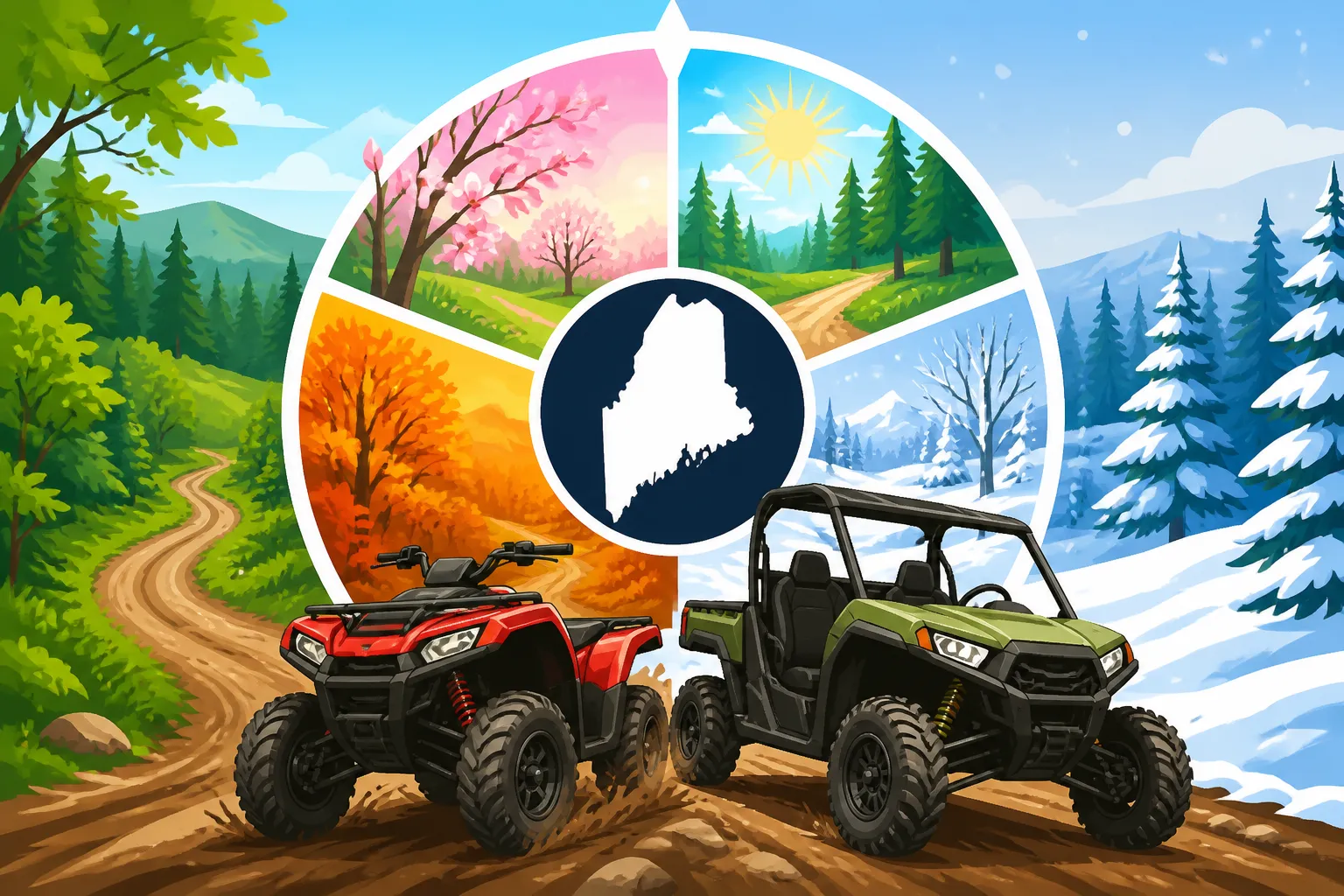
How Maine’s ATV riding season changes through the year
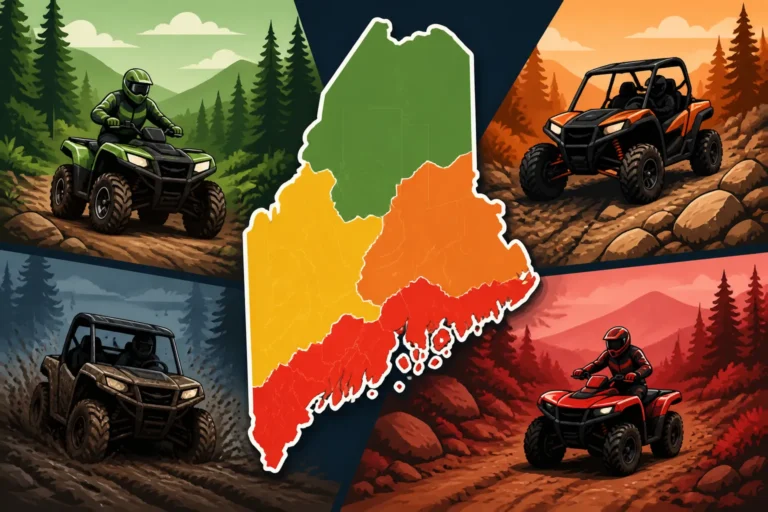
Maine does not have one statewide date when every ATV trail opens or closes. Many routes cross private land, and access depends on landowner permission, club maintenance, local conditions, and posted restrictions. A trail shown on a map may still be unavailable, so checking the status of your specific route is part of planning—not an optional last-minute detail.
Spring brings an early-season gamble
Spring can be appealing if you are eager to ride after winter, but it is often the least dependable part of the season. Snowmelt and rain can leave trails saturated, especially on shaded stretches, low ground, and routes with soft soil. A machine that seems fine on a firm gravel road can rut a muddy trail quickly, and those ruts may make riding harder for everyone who comes after you.
Clubs and landowners may keep trails closed while the ground dries. In some places, the trail network opens gradually rather than all at once. That means a route you rode last year may not be ready when you return this spring. For a closer look at the timing and conditions, see [Why Maine Trails Stay Closed Until May] and [Maine Trail Openings and Mud Season].
If you are hoping to ride in spring, treat your plans as flexible. Check the latest club notices shortly before leaving, and be willing to switch to a different area or postpone the trip. The guidance in [When Maine ATV Trails Open Each Spring] is useful when you are trying to understand why an early-season opening can vary from one trail system to another.
Summer is usually the most dependable choice
For riders who care most about consistent access, summer is often the easiest season to plan around. By then, many trail systems have had time to dry out and receive maintenance, and longer daylight hours make it easier to enjoy a full day without rushing back to the staging area. It can be a comfortable choice for first-time visitors, families, and groups that have travelled a long way to ride.
Summer has trade-offs. Popular trail towns and staging areas can be busy on weekends and holidays. Warm weather can also make long rides tiring, particularly if you are not used to sitting on a machine for several hours. Pack water, plan breaks, and leave room in your schedule for slower sections, fuel stops, and the occasional wrong turn.
Conditions still vary by region and weather. A route in Aroostook County may feel different from a trail near Moosehead Lake, Jackman, The Forks, or Rangeley. Use a current map and confirm that the route is open before you commit to a long loop. [Maine ATV Trail Maps and Club Boundaries] can help you understand how club systems and trail connections fit together.
Fall offers color and a different kind of ride
Fall is a favorite for riders who want cooler temperatures and changing scenery. The combination of crisp air, forest color, and quieter weekdays can make a trail ride feel especially rewarding. September and October can both be attractive, but fall conditions are less predictable than they may look from a roadside view.
Foliage timing varies by location and year, and a colorful ride is never guaranteed on a particular date. Rain can make surfaces slick, while shorter daylight hours mean you need to be more conservative about how far you travel. If you are considering a foliage trip, [Maine Fall Foliage ATV Rides] offers related planning ideas, and [Maine ATV Trails in October] focuses on the later part of the season.
Fall also overlaps with hunting activity in many parts of the state. Be alert for other users, keep noise and speed under control near homes and camps, and check local notices before riding. Some routes may have restrictions or closures. A beautiful afternoon is not a reason to assume that every trail is open.
Which month is best for your kind of ride
There is no single best month for every rider. The right choice depends on whether you want dependable trail access, fewer people, fall views, or the flexibility to travel when weather and local conditions cooperate. The comparison below is a starting point, not a substitute for checking a specific trail system.
| Riding priority | Season to consider | Why it may suit you | Main drawback |
|---|---|---|---|
| Best chance of dependable access | Summer | Trails have generally had more time to dry and be maintained | Popular weekends can be busy |
| Cooler temperatures and fall scenery | Early to mid-fall | Comfortable riding weather and changing foliage | Conditions and color timing vary |
| A quieter weekday trip | Late spring or fall weekdays | Some areas may be less busy than peak weekends | Trail status can be less predictable |
| Earliest possible ride | Late spring | A chance to get out after winter | Mud, closures, and soft ground are common concerns |
| Long daylight for a full day | Summer | More daylight allows a less rushed schedule | Heat and crowds may affect comfort |
Choose summer if reliability matters most
If you are organizing a trip with several riders, booking lodging, or towing a trailer from out of state, summer is often the practical choice. The benefit is not a guarantee that every trail will be open; it is that you are less likely to be dealing with widespread spring saturation. You still need to check the conditions for your intended route.
Summer works particularly well for a first visit because you have more daylight to navigate, stop for food, and adjust your plans. If someone in your group is new to trail riding, avoid planning an ambitious route just because the map makes it look short. Narrow trails, rough surfaces, and frequent stops can make a ride take longer than expected. See [Maine ATV Trail Difficulty by Region] when you are comparing areas and trying to match a route to your group’s experience.
Choose fall if scenery and comfort come first
If your favorite ride is one with cool air and colorful woods, fall may be your best fit. The experience can be especially pleasant on a weekday, when you may have more room at staging areas and less traffic on popular routes. Even then, leave extra time and avoid building your whole trip around a precise foliage forecast.
Fall planning calls for a little more attention to daylight and weather. Bring an extra layer, carry a working light, and make sure your group knows the planned route. If a ride takes longer than expected, you do not want to be navigating an unfamiliar trail network at dusk. A map app such as onX Offroad can help you review routes and prepare for areas where cell service may be limited, but do not rely on a phone alone. Carry a paper map or another backup navigation option as well.
Consider spring only if you can be flexible
Spring can be rewarding for local riders who can check conditions repeatedly and change plans without much trouble. It is less suitable for a costly, tightly scheduled trip where everyone expects to ride on a particular day. The biggest frustration is arriving to find a route closed—or discovering that a trail is technically accessible but too wet to ride responsibly.
Before a spring ride, verify the status of the entire route, not just the trailhead. A short open section may connect to a closed or muddy segment farther in. The advice in [Checking Maine Trail Status Before You Drive] can help you build a last-minute status check into your routine, while [Maine Trail Closure Notices Mid-Season] explains why conditions can lead to restrictions even after a season is underway.
How to plan around weather, closures, and trail conditions
The month matters, but the specific day and route can matter just as much. Two nearby trail systems may have different conditions because of elevation, drainage, shade, maintenance, or landowner decisions. A rainy week can change a trail quickly, and dry weather does not automatically mean that a route has reopened.
Check the route close to departure
Start with the club or local organization responsible for the trails you plan to ride. Look for recent opening or closure notices, and confirm whether your route crosses land managed by more than one club or landowner. If you are riding through several towns, check each relevant area rather than assuming one update covers the whole trip.
A navigation app can be helpful for route preparation. onX Offroad may help you examine trail connections and plan around the general area you intend to visit. Still, a mapped line should not be treated as proof of current access. Trail maps can show where a route has existed without telling you whether it is open today, so confirm status through local trail updates before loading the machines.
Have a backup plan that does not depend on riding a closed trail. That could mean choosing another open route nearby, shortening the day, or saving the trip for another weekend. If your group is travelling from far away, identify an alternative staging area and a non-riding activity before you leave home. It is disappointing to lose a ride day, but trying to push through a closure can damage a trail and threaten future access.
Match your machine and group to the conditions
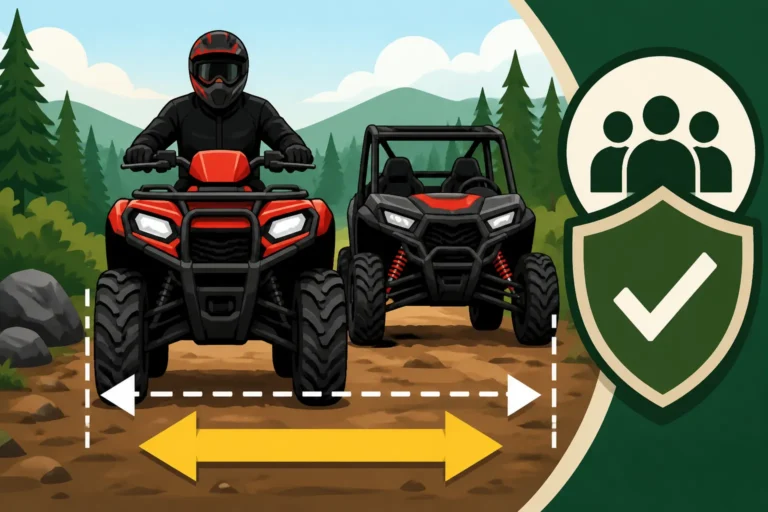
A wide side-by-side may not fit comfortably on every trail, and a beginner may find a rough or narrow route stressful even when it is open. Check the trail character and machine suitability before setting out. [Maine ATV Trail Difficulty by Region] can be a helpful starting point, but local maps and club guidance are important when you need details about width, surface, or restrictions.
Ask your group what kind of day they want. A family ride with young or inexperienced riders may go better on a shorter, less demanding route with obvious stopping points. More experienced riders might enjoy a longer loop, but should still plan for fuel, food, repairs, and a slower pace when conditions require it. Agree on a turnaround time so a minor delay does not become a late return.
Wet conditions deserve particular care. If the trail is soft, do not spin tires or ride around a muddy section in a way that widens the trail. Follow posted directions, turn back when necessary, and avoid creating a new route around a barrier. A little restraint today helps preserve the route for the rest of the season.
Prepare for the part of Maine you are visiting
Maine is large enough that a trip to northern Aroostook County is a different planning experience from a weekend near the Moosehead Lake region or Rangeley. Distances between trail towns, fuel stops, and services can be significant, and cell coverage may not be reliable in remote areas. Plan your fuel range conservatively and let someone know where you expect to ride.
Use onX Offroad or another mapping tool to study your route before you leave, then save or print what you need while you have service. Keep a paper map available, especially for unfamiliar networks or multi-town rides. A phone can lose power, become wet, or fail to load a map when you are far from coverage.
Pack for the month, not just the forecast at the trailhead. Spring can be chilly and damp; summer calls for water and sun protection; fall can start comfortably and turn cold late in the day. Bring basic tools, a first-aid kit, charging equipment, and enough food and water for a longer-than-planned ride. For more background on the riding season, see [Maine Trails That Cross Private Land] and [Landowner Relations on Maine ATV Trails]—respectful riding is part of keeping access available.
A practical way to decide when to go
If you want the simplest answer, pick summer for the best balance of planning reliability and daylight, or choose fall if cooler weather and foliage matter more to you. Spring is best treated as a flexible opportunity rather than a firm promise. In every season, local trail status should outweigh a general month-by-month expectation.
Use this short planning routine before you commit:
- Choose the region and trail system you want to ride.
- Check current notices from the club or organization responsible for that area.
- Confirm that every segment on your planned route is open.
- Review trail difficulty, machine width, and any local restrictions.
- Check the forecast, daylight, fuel options, and likely travel time.
- Save a backup map and choose an alternate route or activity.
- Recheck conditions before loading the machines.
The best month is ultimately the one when the route is open, the conditions suit your group, and you have enough time to ride without rushing. A little checking before you leave can save a long drive to a closed trailhead—and help keep Maine’s shared trail network in good shape for the next ride.
Disclaimer
This article is for general informational purposes only and does not constitute professional advice. Laws, prices and regulations vary by location and change over time. Consult a qualified professional for guidance on your specific situation.