Studded Tires on a Quad
Navigating Maine's vast and often unpredictable winter terrain on an ATV can be a truly exhilarating experience, but it also brings unique challenges, especially when the trails turn to ice or hard-packed snow. Many riders find themselves wrestling with the question of whether studded tires are the answer to gaining that crucial traction and confidence when the mercury plummets. This guide is here to unravel the complexities surrounding studded ATV tires in Maine, from their practical benefits to the regulations and considerations that every rider needs to understand before hitting the frozen trails.
The Allure of Studded Tires for Maine ATV Riders
There's nothing quite like the crisp air and stark beauty of a Maine winter ride, but beneath that beauty often lies a treacherous layer of ice or rock-hard snow. It's precisely these conditions that make the prospect of studded tires so appealing to many ATV enthusiasts.
Why Riders Consider Studs in the First Place
Imagine gliding across a frozen lake for an ice fishing excursion, or tackling a shaded trail where the snow has melted and refrozen into a slick, unforgiving sheet. In these scenarios, standard ATV tires, no matter how aggressive their tread, can feel like riding on greased glass. That's where studded tires enter the conversation. They offer an unparalleled grip on icy surfaces, dramatically improving acceleration, braking, and steering control. This enhanced traction translates directly to increased safety and confidence, allowing you to navigate treacherous patches that would otherwise have you white-knuckling it or turning back altogether. For those who enjoy [Maine ATV Rules on Frozen Lakes] or venturing out for late-season hunting, the ability to maintain control on slick surfaces can be a game-changer, preventing slips and slides that can lead to accidents or frustrating stuck situations. It's about empowering riders to continue enjoying their machines even when winter throws its worst at them, ensuring a more predictable and secure ride over varied frozen terrain.
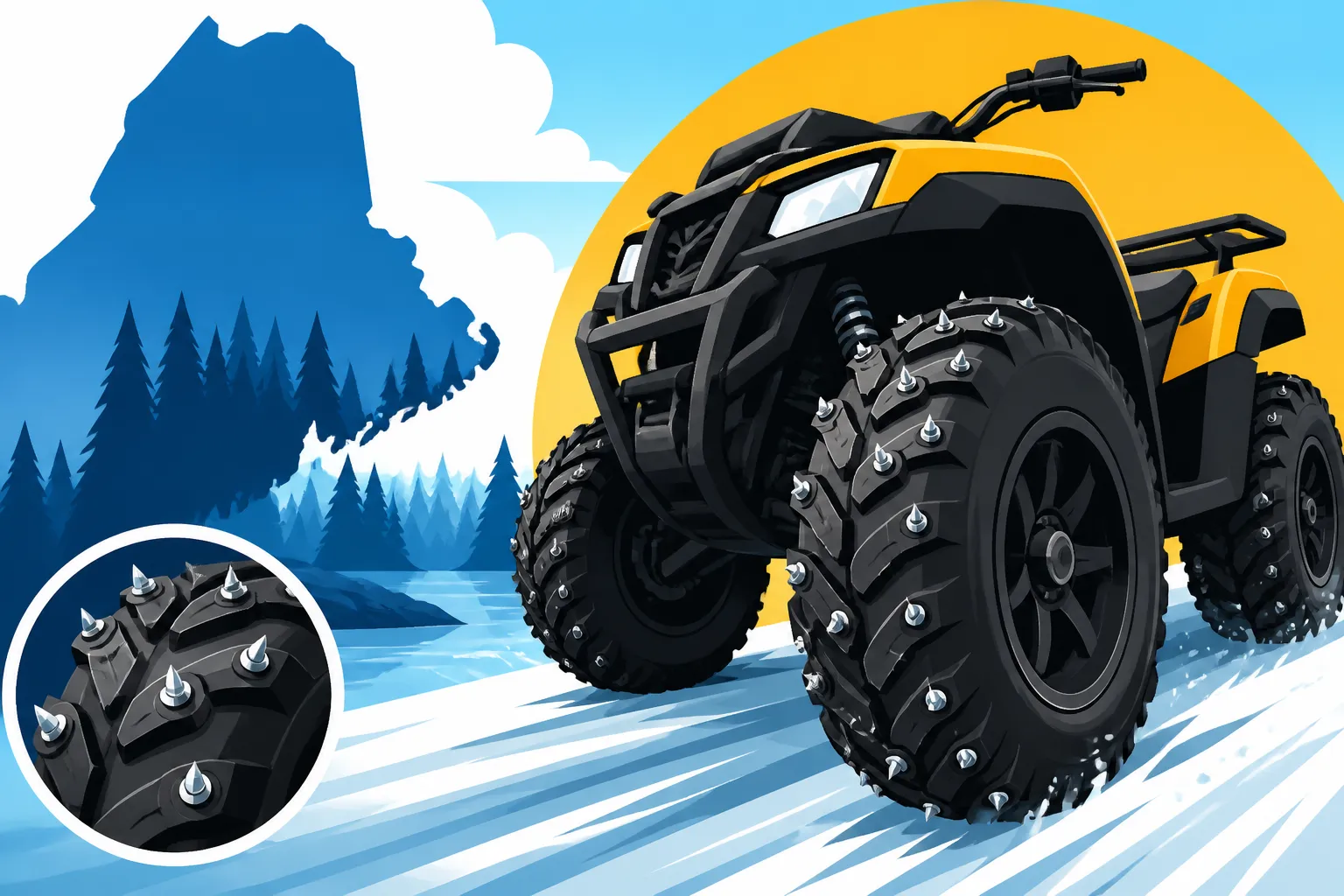
The thought of losing control on a sharp, icy turn or sliding helplessly down a frozen incline is enough to make anyone reconsider their winter riding plans. Studs work by essentially creating hundreds of tiny points of contact that dig into the ice, much like a pair of ice skates. This mechanical grip provides a level of adhesion that rubber alone simply cannot achieve. This enhanced grip isn't just about going faster; it’s primarily about safety and control. When you can brake confidently on packed snow or ice, or maintain a predictable line through a slick corner, your entire riding experience becomes more enjoyable and less stressful. Whether you're hauling gear to a remote ice fishing spot or simply exploring the quiet beauty of the winter woods, the added security that studded tires provide can make all the difference between a frustrating ordeal and a memorable adventure.
Different Types of Studs and Their Applications
When you start looking into studded tires, you'll quickly discover it's not a one-size-fits-all world. There's a variety of stud types, each with its own characteristics and best use cases. The most common types include screw-in studs, which you can install yourself into existing tire lugs, and tire-specific studs, often found on tires designed for winter use. Then there are T-style studs or carbide studs, known for their durability and superior bite, especially when navigating solid ice. Some riders opt for the DIY approach, picking up a kit from a company like SuperATV and meticulously installing hundreds of studs into their current tires. This allows for customization, such as choosing the length and material of the stud based on anticipated conditions – shorter studs for mixed terrain, longer ones for pure ice.
Other riders prefer to invest in dedicated pre-studded winter tires, which often feature specific rubber compounds and tread designs optimized for cold weather performance. These tires come with studs already integrated, offering a professional installation and typically greater longevity. The choice often comes down to budget, how frequently you plan to ride in extreme icy conditions, and your comfort level with modifying your existing tires. For instance, if you're primarily riding on soft snow or deep powder, studs might offer minimal advantage and could even be a hindrance. But if your winter adventures frequently involve crossing frozen ponds, icy logging roads, or trails that see heavy traffic and subsequent ice buildup, then a robust set of carbide-tipped studs can truly shine. Understanding the different types helps you match the right traction solution to your specific Maine winter riding needs.
Maine's Regulations on Studded ATV Tires
While the performance benefits of studded tires on ice are undeniable, it's crucial to understand the legal and practical implications of using them in Maine. Unlike some states with specific rules, Maine's regulations around ATV studded tires aren't always explicitly detailed, leading to some confusion among riders.
What the Law Says About Studs on Public and Private Lands
Maine's official ATV laws, primarily managed by the Department of Inland Fisheries & Wildlife (IF&W), focus heavily on registration, safety courses, and general operating rules. When it comes to studded tires, the state statutes are notably quiet on outright prohibitions for ATVs. This lack of explicit prohibition often leads riders to assume that if it's not forbidden, it's allowed. However, this isn't always the full picture, especially when considering the complex network of trails, many of which are on private land or shared with other user groups. While you might not find a direct state law fining you for studs on your private woodlot or a completely iced-over public trail, the devil is often in the details of local ordinances and, more importantly, the rules set by land managers and ATV clubs.
The real complexity arises when ATVs use shared corridors, such as parts of snowmobile trails or designated [Maine Snowmobile and ATV Shared Road Corridors]. Snowmobile clubs, which often maintain these trails, are particularly sensitive to studded tires because they can cause significant damage to the packed snow base that snowmobiles rely on. This damage can include gouging the surface, tearing up grooming efforts, and even exposing rocks or dirt, creating hazards for other users. While a Maine Warden might not give you a ticket directly for studs, continuous damage to managed trails could lead to trail closures or stricter regulations down the line. It's always best to err on the side of caution and check with the managing authority for any specific trail system you plan to ride. Remember, even if the state law doesn't explicitly forbid it, trail access is often contingent on respecting the rules set by those who maintain it.
The Impact of Studs on Trail Surfaces and Landowner Relations
The silent threat of studded tires isn't usually to your own safety, but to the very trails we all love to ride. While studs excel on hard ice, they can be incredibly destructive on other surfaces. When an ATV with studs drives over frozen dirt, gravel, or even thin layers of snow, those sharp points can dig in, tear up the trail bed, and accelerate erosion once the spring thaw arrives. This kind of damage can be costly and time-consuming for ATV clubs to repair, and it can sour [Landowner Relations on Maine ATV Trails]. Much of Maine's extensive trail system exists through the generosity of private landowners, who allow access over their property. If these landowners see their land being chewed up by studded tires, they might withdraw their permission, leading to trail closures that impact everyone.
Beyond the physical damage, there's the issue of shared-use trails. Many trail systems are multi-use, accommodating ATVs, snowmobiles, and sometimes even hikers or cross-country skiers. Studs can create uneven and dangerous surfaces for these other users. A heavily studded ATV churning up a freshly groomed snowmobile trail is a major point of contention and can lead to frustration among user groups, potentially resulting in restrictions for ATVs. This is why many local ATV clubs and snowmobile clubs explicitly prohibit studded tires on their maintained trails, regardless of state law. Before you venture out, especially if you're riding with a [Riding Trails With a Large Group], it’s paramount to consult the specific rules of the local club responsible for that section of trail. Respecting these rules is not just about avoiding fines from [Maine Warden Service ATV Patrols]; it's about being a responsible rider and ensuring the long-term viability of Maine's incredible trail network for everyone.
Practical Considerations and Alternatives for Winter Riding
Deciding whether to equip your ATV with studded tires involves more than just understanding the regulations; it's also about practical utility, cost, and assessing your actual riding needs throughout a Maine winter.
When and Where Studs Make Sense (and When They Don't)
Studded tires are undeniably kings on pure ice and extremely hard-packed, icy snow. If your winter riding primarily involves venturing onto frozen lakes for ice fishing, or traversing long stretches of ploughed access roads that quickly turn to glare ice, then studs offer a significant advantage in terms of traction and safety. They provide confidence on slippery surfaces where standard tires simply slide. This is especially true when navigating inclines or braking hard on slick ground. The immediate bite they offer can prevent uncontrolled slides and make for a much safer experience.
However, studs aren't a panacea for all winter conditions, and in some scenarios, they can even be a detriment. In deep, fresh powder, the studs do little to help, as the tire's lugs are doing the primary work of paddling through the snow. On bare asphalt or concrete, such as when crossing a public way, studs can actually reduce traction compared to a good winter-specific rubber compound, leading to a squirmy, less stable ride and accelerated wear on both the studs and the pavement. They also create a lot more road noise and can make for a harsher ride. If your winter riding involves a mix of deep snow, groomed trails (where studs are often prohibited), and frequent road crossings, the benefits of studs might be outweighed by their drawbacks. Furthermore, the constant installation and removal of screw-in studs can be time-consuming, and leaving them on for non-icy conditions will quickly wear them down. It’s a specialized tool for a specialized job.
Alternative Traction Solutions for Maine Winters
If studded tires don't quite fit your needs or budget, or if local trail rules prohibit them, don't despair! There are several excellent alternatives that can significantly improve your ATV's performance in Maine's varied winter conditions. One of the simplest and most effective options is to invest in a set of aggressive, cold-weather specific ATV tires. These tires feature softer rubber compounds that remain flexible in freezing temperatures, combined with deep, widely spaced lugs designed to dig into snow and offer better self-cleaning properties. Brands like Maxxis, ITP, and, yes, SuperATV often have tire lines specifically engineered for winter and mud conditions that perform admirably on snow and even provide some grip on lighter ice.
Another popular choice, particularly for deeper snow, is the use of tire chains. While not as effective as studs on pure ice, chains provide excellent traction on packed snow and moderate ice, as well as in deeper, wetter snow where studs might struggle. They are relatively inexpensive, easy to install and remove as conditions change, and generally less damaging to trail surfaces than studs. For the ultimate winter traction and flotation, especially for utility work or exploring truly remote areas, a full track system for your ATV or UTV is the gold standard. Systems from brands like Camso or SuperATV replace your wheels with durable track assemblies, transforming your machine into a snow-going beast. While a significant investment, tracks offer unparalleled performance in deep snow and over diverse winter terrain, making them ideal for heavy snow removal, ice fishing expeditions, or extending your riding season into the harshest winter months.
| Traction Solution | Best Use Case | Pros | Cons |
|---|---|---|---|
| Studded Tires | Pure ice, hard-packed icy snow | Unmatched grip on ice, excellent braking | Can damage trails, loud on pavement, restricted on some trails, expensive |
| Aggressive Winter Tires | Snow, light ice, mixed conditions | Good all-around winter performance, less trail impact, quiet on pavement | Less grip than studs on pure ice, not ideal for deep powder |
| Tire Chains | Packed snow, moderate ice, wet snow | Inexpensive, good traction, easy to install/remove, less damaging than studs | Can be noisy, less effective than studs on pure ice, can affect steering |
| Track Systems | Deep snow, heavy utility, varied winter terrain | Superior flotation and traction in deep snow, transforms machine | Very expensive, reduced top speed, complex installation, heavier steering |
Maintenance and Safety Tips for Studded Tires
If you decide that studded tires are the right choice for your Maine winter adventures, proper installation, maintenance, and awareness of their unique safety characteristics are key. For screw-in studs, ensure they are installed correctly into the tire lugs, following the manufacturer's guidelines for depth and spacing. "Breaking in" new studs by riding gently for the first few miles on mixed terrain can help seat them properly and extend their life. Regularly inspect your studded tires for any missing or damaged studs, replacing them as needed. Lost studs reduce traction and can be a costly endeavor if neglected.
From a safety perspective, while studs provide exceptional grip on ice, they can behave differently on other surfaces. On dry pavement or bare dirt, the studs lift the tire's rubber off the ground, reducing the overall contact patch. This can lead to decreased traction and longer braking distances compared to non-studded tires on these surfaces. Always be mindful of transitioning from icy sections to bare ground. Your handling will change, and you might experience a slightly squirmier, less stable feel. Always adjust your speed and riding style to match the specific conditions and the characteristics of your studded tires. Good judgment is paramount, as even the best traction system can't compensate for reckless riding.
Making an Informed Decision for Your Maine ATV
Ultimately, the choice to use studded tires on your ATV in Maine comes down to balancing the benefits of superior traction with the practical, regulatory, and financial implications. It's a decision that every responsible rider needs to consider carefully.
Weighing the Pros and Cons for Your Riding Style
For the rider who frequently navigates frozen lakes for ice fishing, or regularly encounters severe black ice on trails and access roads, the enhanced safety and control offered by studded tires can be a significant advantage. The ability to accelerate, brake, and steer confidently on otherwise treacherous surfaces can dramatically improve your winter riding experience. However, this comes with important considerations. The potential for trail damage, especially on groomed snowmobile trails or vulnerable dirt paths, means that many [Maine ATV Clubs and the Trails They Keep Open] may prohibit their use. This could limit your access to some of the most popular and well-maintained trail systems. The initial cost of studded tires or stud kits can also be substantial, and there's the added hassle of installation, maintenance, and potential wear if used on non-icy surfaces.
Consider your primary winter riding habits: are you mostly in deep snow, where studs offer little benefit? Or do you frequently encounter glare ice, making them a necessity for your safety and confidence? If you're a casual winter rider, or if your local trails have strict anti-stud policies, then aggressive winter tires or tire chains might offer a more versatile and less controversial solution. If you're a non-resident contemplating a trip, it's especially important to understand that [Maine Non-Resident ATV Registration Price] is only part of the equation; understanding the local rules around equipment like studs is just as critical for a trouble-free visit. Think about the terrain, the expected conditions, and the potential impact on both your machine and the trails you ride.
Consulting Clubs and Local Resources
Given the nuances of studded tire regulations and trail access in Maine, the best advice always comes from local sources. Before making any purchase or heading out with studded tires, make it a priority to contact the local ATV clubs in the areas you plan to ride. These clubs are the backbone of Maine's trail system, and they often have specific rules regarding studded tires to protect the trails they work so hard to maintain. Many clubs operate on private land through agreements with landowners, and their rules reflect those agreements and the need for trail preservation. You can often find contact information for clubs through ATV Maine or on their individual websites.
Beyond clubs, checking with local [Maine Town Offices That Register ATVs] or the Maine Department of Inland Fisheries & Wildlife website for any official statements or guidelines is a smart move. While state law might be silent, local ordinances can vary. Talking to experienced local riders who know the specific trails and conditions can also provide invaluable insights. They can tell you what's generally accepted, what causes problems, and what alternatives work best in their area. Being proactive and informed not only ensures you stay within the rules but also helps foster positive relationships with landowners and other trail users, preserving the incredible access we all enjoy on Maine's diverse winter trails. Making the effort to ask a few questions before you ride can save you a lot of grief and ensure that your winter ATV adventures are safe, legal, and enjoyable for everyone.
Disclaimer
This article is for general informational purposes only and does not constitute professional advice. Laws, prices and regulations vary by location and change over time. Consult a qualified professional for guidance on your specific situation.