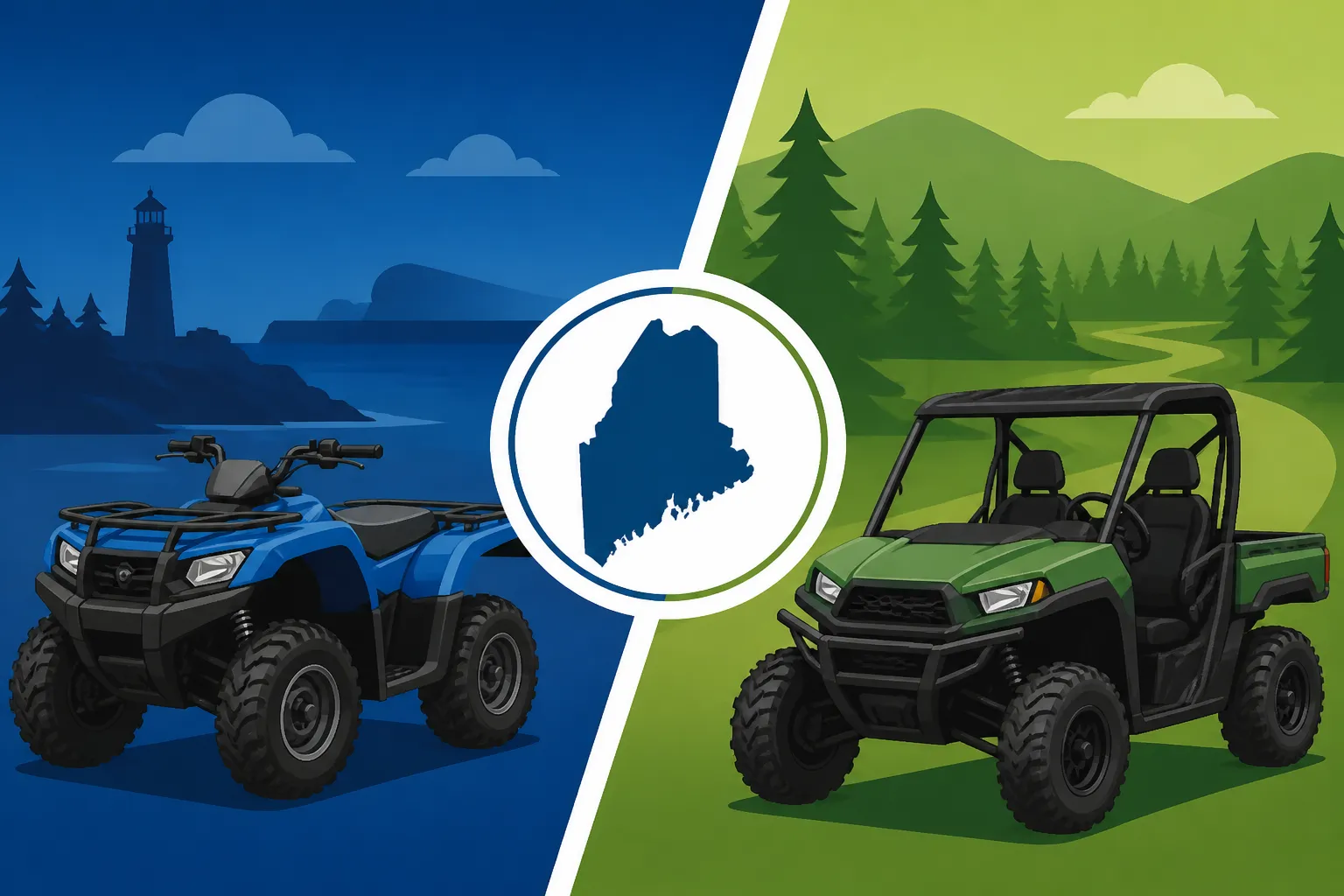
Maine UTV Registration and How It Differs
Trying to make sense of Maine's registration rules for your UTV can feel like navigating a winding, unmarked trail. It's easy to assume a side-by-side is just a bigger ATV, but the reality is that the Pine Tree State has some distinct ways of classifying and registering these machines. This comprehensive guide will clear up the confusion, walking you through everything you need to know about registering your UTV in Maine and highlighting how it might differ from the process you'd follow for a traditional ATV.
Understanding the Basics: ATV vs. UTV in Maine
Before we dive deep into the paperwork and fees, it's crucial to understand how Maine actually defines an All-Terrain Vehicle (ATV) versus a Utility Terrain Vehicle (UTV), often called a side-by-side (SxS). This isn't just bureaucratic jargon; these definitions directly impact how you register your machine, where you can ride it, and the safety equipment you might need.
What Defines an ATV in Maine?
When you think of an ATV, you're likely picturing the traditional four-wheeler that many of us grew up riding on dirt roads and wooded trails. In Maine, an ATV is legally defined as a motorized, off-highway vehicle designed to travel on four or more low-pressure tires, having a seat designed to be straddled by the operator and handlebars for steering control. Think about machines like a Polaris Sportsman or a Honda Rancher. These are generally single-rider machines, though some might have a seat for a second passenger behind the operator, still straddled.
The core characteristics here are the straddle seating and handlebar steering. This design is what makes an ATV agile and suitable for navigating tighter trails and more challenging terrain where the rider often shifts their weight to control the machine. It's a very active riding experience, demanding a certain level of physical engagement from the operator. For generations, these have been the go-to machines for hunters, farmers, and recreational riders looking for an exhilarating outdoor experience in Maine's vast wilderness.
What Defines a UTV (Side-by-Side) in Maine?
UTVs, or side-by-sides, are a different beast entirely, and their popularity has absolutely exploded in recent years. Instead of straddling a seat and steering with handlebars, UTVs feature a steering wheel, side-by-side seating (like a car), and often seatbelts, doors, and a roll cage. They are designed to carry multiple passengers and cargo, making them much more "utility-focused" than traditional ATVs, even when used purely for recreation. Think of models like a Can-Am Defender, Polaris RZR, or a John Deere Gator.
Maine law recognizes UTVs as a distinct category because of these fundamental design differences. Their greater width, stability, and carrying capacity mean they operate differently on trails and roads. They provide a more comfortable and secure ride, often preferred by families, older riders, or those who need to haul gear for work or recreation. The roll cage and seatbelts offer a different level of occupant protection compared to an ATV, though they aren't without their own unique safety considerations. Understanding that your side-by-side falls into this specific UTV category is the very first step toward ensuring you're compliant with all of Maine's registration rules.
Why the Distinction Matters for Registration
The distinction between ATVs and UTVs isn't just for fun; it's the foundation of Maine's registration system. While many of the core registration steps are similar, the separate classifications can sometimes lead to different fees, specific trail access rules, and even unique requirements for things like safety courses or where you can operate your machine. For instance, some older, narrower ATV trails might not be suitable or even legally accessible for wider UTVs.
Maine's Bureau of Parks and Lands, along with the Maine Warden Service, maintains these distinctions to ensure safety, manage trail impacts, and fund different aspects of the state's extensive trail system. When you register a UTV, you're explicitly telling the state what kind of machine you own, which then funnels your registration fees into the appropriate channels and helps ensure you receive the correct decals and documentation. Don't assume that just because you've registered an ATV before, the UTV process will be identical; paying attention to these nuances can save you headaches down the road.
The Maine UTV Registration Process: Step-by-Step
Registering your UTV in Maine, whether it's brand new or new to you, involves a fairly straightforward process. However, gathering the right documents and understanding your options beforehand can make the experience much smoother. Maine prides itself on its vast network of trails, and properly registering your UTV is your ticket to enjoying them legally.
Where to Register Your UTV
Maine offers several convenient options for UTV registration, allowing you to choose the method that best fits your schedule and location. The primary places you can register your machine are:
- Online through Maine IF&W: For renewals or even some first-time registrations if you have all your ducks in a row, the Maine Inland Fisheries & Wildlife (IF&W) website is often the quickest route. This is especially handy if you're trying to get out on the trails right away and live far from a town office. You can often print a temporary registration immediately, allowing you to ride while you wait for your decals to arrive in the mail. For a detailed guide on this process, check out [Maine IF&W Online Registration Walkthrough].
- Your Local Town Office: Many town and city clerks across Maine are authorized agents for ATV and UTV registrations. This is a popular option, particularly for first-time registrations where you might have questions or need to present original documents. The clerk can guide you through the forms, collect fees, and issue you a temporary registration on the spot. It's a great way to support your local municipality as well, as they often receive a small portion of the registration fee.
- Authorized IF&W Agents: Beyond town offices, various sporting goods stores, convenience stores, and outdoor recreation businesses are licensed to process registrations. These agents are usually found in areas popular with outdoor enthusiasts, making it convenient to register your UTV while picking up other supplies for your trip. Just like town offices, they can typically issue temporary registrations.
No matter which option you choose, the key is to ensure you have all your required documentation in order before you go. This will prevent delays and ensure you get your UTV registered as efficiently as possible.
Required Documents for UTV Registration
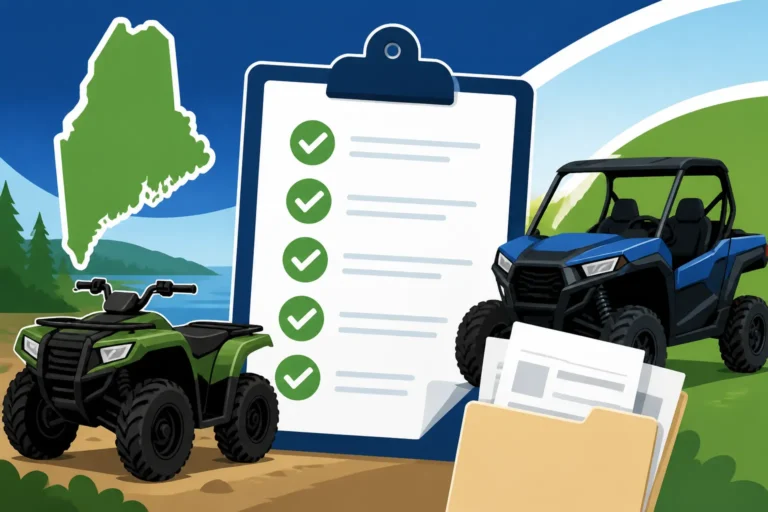
The paperwork side of things can sometimes feel a bit daunting, but it's essential to have everything in order. For a UTV registration in Maine, you'll generally need:
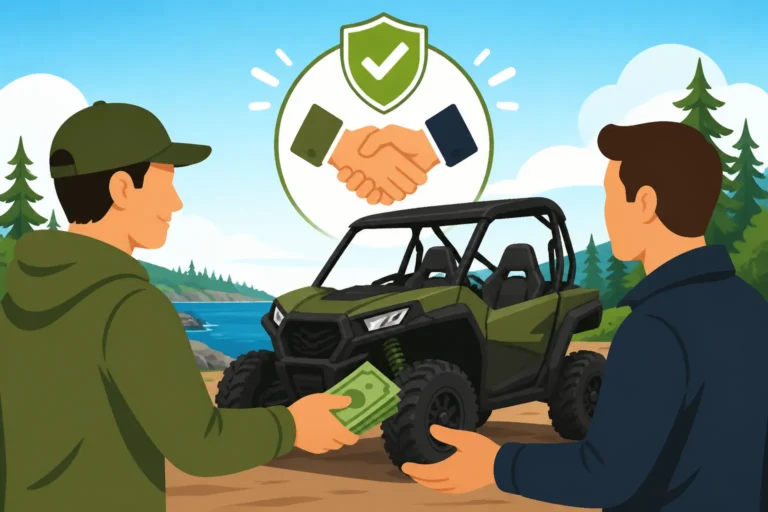
- Proof of Ownership: This is paramount. For a new UTV bought from a dealer, this will typically be the Manufacturer's Certificate of Origin (MCO) or Manufacturer's Statement of Origin (MSO). If you're buying a used UTV, you'll need a properly executed bill of sale. Make sure it clearly identifies the UTV, including its Vehicle Identification Number (VIN), the buyer, the seller, the date of sale, and the purchase price. A robust bill of sale is critical, and resources like LawDepot can provide templates to ensure all necessary details are included. For more information on what to include, see [Maine ATV Bill of Sale: What to Include]. If you're transferring a registration from a previous owner, their old registration certificate might also be useful.
- Proof of Maine Sales Tax Payment (or Exemption): If you purchased your UTV in Maine, you'll need proof that sales tax was paid. Dealers typically handle this as part of the purchase. If you bought it from a private seller, you're responsible for paying the Maine sales tax at the time of registration. If you bought your UTV out of state and bring it into Maine, you'll owe a "use tax" if you haven't already paid a comparable sales tax in another state. This is something the town clerk or agent will calculate. For a deeper dive into sales tax, check out [Maine Sales Tax on an ATV Purchase].
- Your Driver's License or State ID: This is for identification purposes and to confirm residency if you're registering as a Maine resident.
- Payment for Fees: Be prepared to pay the registration fee and any applicable agent fees. Most locations accept cash, checks, and often credit/debit cards, though it's always wise to check beforehand.
Having these documents neatly organized will make the registration process a breeze, whether you're dealing with a friendly town clerk or filling out an online form.
Paying Your UTV Registration Fees
The cost to register your UTV in Maine varies primarily based on whether you're a resident or non-resident, and how long you want the registration to be valid. These fees are vital, as they directly contribute to the maintenance and expansion of Maine's extensive network of ATV and UTV trails.
- Maine Resident Fees: For Maine residents, the annual UTV registration fee is generally standardized. This allows you to ride your UTV on designated trails throughout the state from July 1st through June 30th of the following year. It's a great value for year-round access. You can find more specific information on resident costs in articles like [Maine Resident ATV Registration Fee].
- Maine Non-Resident Options: If you're visiting Maine from out of state, you have a couple of choices:
- Annual Non-Resident Registration: This is valid for the same July 1st to June 30th period as resident registrations. It's ideal if you plan multiple trips to Maine or stay for an extended season. You can learn more about this in [Maine Non-Resident Annual ATV Registration].
- Seven-Day Non-Resident Registration: Perfect for a quick vacation or a weekend getaway, this option provides registration for a consecutive seven-day period. It's a cost-effective way to enjoy Maine's trails without committing to a full year.
- Agent Fees: When you register at a town office or through an authorized IF&W agent, there's usually a small additional agent fee on top of the state's registration fee. This fee helps cover the administrative costs for the location processing your registration. It's a minor cost but good to be aware of.
These fees are critical, as they support the Maine Bureau of Parks and Lands and the ATV/UTV trail grant program, which in turn helps local clubs maintain and groom thousands of miles of trails. Your contribution directly enhances the riding experience for everyone.
Key Differences in UTV Registration Compared to ATVs
While the general framework for registering off-road vehicles in Maine applies to both ATVs and UTVs, there are subtle yet significant differences that UTV owners should be aware of. These distinctions often stem from the UTV's larger size, multi-passenger capacity, and different operating characteristics.
Ownership Documentation and Titling Nuances
One of the most frequent points of confusion for new UTV owners in Maine revolves around titling. In many states, all motorized vehicles, including ATVs and UTVs, are issued a title. However, Maine has a unique approach:
- No Titles for Most Off-Road Vehicles: Historically, Maine has not titled ATVs. For the vast majority of ATVs, your proof of ownership is typically the Manufacturer's Certificate of Origin (MCO/MSO) for new machines, or a detailed bill of sale for used ones. This is a common practice across the state, and many riders are used to this system. For more on this, you might find [Does Maine Title ATVs?] helpful.
- UTV Titling Exception: Here's where the difference for UTVs can sometimes emerge. Some UTVs, particularly those designed to be potentially street-legal in other jurisdictions or those that blur the lines with small cars, might have a manufacturer's statement of origin that suggests a title. However, for most purposes within Maine's off-road registration system, the UTV follows the same "no title" rule as ATVs. Your registration relies on a solid paper trail, usually starting with the MCO/MSO from a dealer or a comprehensive bill of sale from a private party.
- Importance of a Strong Bill of Sale: Because a formal state title is often absent, a meticulously drafted bill of sale is your absolute best friend when purchasing a used UTV from a private seller. It serves as your primary evidence of ownership. Services like LawDepot can help you create a legally sound bill of sale that includes all the necessary details to protect both buyer and seller. This document, combined with previous registration records, forms the backbone of your ownership proof in Maine.
Without a title, maintaining clear records of purchase and sale is even more critical for UTVs. This ensures a smooth transfer of ownership and registration down the line.
Sales and Use Tax Considerations
The imposition of sales tax (or use tax for out-of-state purchases) is another area where UTVs are treated much the same as ATVs in Maine, but it's crucial to understand how it works to avoid unexpected costs.
- Maine Sales Tax on New and Private Sales: When you purchase a new UTV from a Maine dealer, sales tax is typically collected by the dealer at the time of sale. If you buy a used UTV from a private seller within Maine, you are responsible for paying the sales tax directly to the state (usually through the registration agent) when you register the machine. This is a percentage of the purchase price.
- Use Tax for Out-of-State UTVs: If you buy a UTV outside of Maine and bring it into the state for use, you generally owe Maine's "use tax." This tax is equivalent to the state sales tax and is designed to ensure fair treatment for Maine businesses and prevent people from avoiding tax by purchasing out of state. You would declare the purchase price and pay this tax when you register your UTV in Maine. There might be an exemption or credit if you can prove you already paid a sales tax in another state that is equal to or greater than Maine's rate.
- No Different Rates for UTVs: Crucially, Maine does not impose a different sales or use tax rate specifically for UTVs compared to ATVs. The tax rate is based on the state's general sales tax rate at the time of purchase. However, because UTVs often have a higher average purchase price than many ATVs, the total dollar amount of sales tax paid will naturally be higher. Always be prepared for this expense when budgeting for your UTV purchase and registration.
Understanding these tax obligations is a key part of the financial aspect of UTV ownership and registration in Maine.
Registration Numbers and Decal Placement
When it comes to the visual proof of your UTV's registration, Maine follows a consistent system with its decals and registration numbers, which generally mirrors the ATV process. However, the larger size and different body styles of UTVs can sometimes lead to practical considerations for decal placement.
- Standard Decals and Numbers: Maine issues a distinct registration decal for UTVs, much like ATVs. This decal typically includes the registration number, the expiration date, and sometimes a specific color coding for the year. The format of the registration number itself is also consistent across off-road vehicles. For details on the number format, you can refer to [Maine ATV Registration Numbers and Where They Go].
- Placement on the Machine: The law requires the registration decal to be prominently displayed on the forward half of the UTV. This means it needs to be visible to enforcement personnel (like the Maine Warden Service) when they are approaching your machine. For ATVs, this often means the front fender or cowling. For UTVs, with their larger body panels, finding a flat, visible spot is usually easy. Many UTV owners will place it on the front hood, a flat section of the fender, or even a visible part of the roll cage, as long as it adheres to the "forward half" and "prominently displayed" requirements.
- Ensuring Visibility: The main goal of proper decal placement is visibility. Wardens need to be able to quickly identify your registration status without having to search for the decal. Make sure it's not obscured by mud, accessories, or other modifications. Also, consider the elements; choose a spot that's less prone to peeling due to extreme weather or frequent washing. If you're ever in doubt, the best practice is to err on the side of making it as obvious as possible.
While the rules are the same, the sheer size of a UTV simply offers more real estate for effective decal display, making it generally less of a challenge than on some compact ATV models.
Special Considerations for UTV Owners in Maine
UTVs, with their versatility and growing popularity, bring a few unique scenarios into play when it comes to registration and operation in Maine. From commercial ventures to aspiring young riders, understanding these specific considerations will help you navigate the nuances of UTV ownership.
Registering a UTV for Commercial or Farm Use
Many UTVs are designed from the ground up to be workhorses, and Maine recognizes their utility beyond purely recreational riding. If you're using your UTV for commercial purposes or as part of a farm operation, there are specific registration considerations.
- Commercial Registration: If your UTV is primarily used for a business—such as guiding services, land management, or even as part of a rental fleet—it will often require a commercial registration. This typically means a different fee structure and specific classification on your registration documents. Commercial registrations help the state track the impact of business operations on trails and ensure appropriate funding for maintenance. Companies that use UTVs for things like trail grooming, delivering supplies to remote camps, or as part of an adventure tour business will fall under this category.
- Farm and Woodlot Exemptions: Maine offers some exemptions for ATVs and UTVs used exclusively for farming or woodlot activities on your own property or land you manage. If your UTV is only used for these purposes and never travels on state-maintained public ATV trails, you might be exempt from registration. However, this exemption is very specific and has strict limitations. The moment you take that UTV off your farm or woodlot and onto a public trail or public access road, it needs to be registered. It's vital to clearly understand these rules to avoid penalties. You can find more specific details on exemptions in articles like [Maine ATV Registration for Farm and Woodlot Use].
- Proof of Use: If you are claiming an exemption or applying for a specific commercial registration, be prepared to provide documentation or attest to the primary use of your UTV. The state wants to ensure these categories are used appropriately to maintain the integrity of the registration system.
Navigating commercial or farm use registration means understanding the fine print, as misclassifying your UTV can lead to fines or denial of trail access.
Street Legal UTV Conversions in Maine
The idea of making a UTV "street legal" to drive on public roads is a hot topic among owners, and the rules vary wildly from state to state. In Maine, this is a complex area, and it's essential to manage expectations.
- Maine's Stance on Street Legal UTVs: Generally speaking, Maine's regulations are quite strict regarding the operation of UTVs on public roads. While some towns may designate specific "ATV Access Routes" that allow UTVs on short sections of public roads to connect trails or access services, these are not considered "street legal" in the sense of being able to cruise down a highway. The primary purpose of an ATV or UTV in Maine is for off-highway recreational or utility use.
- Equipment Requirements: To even consider a UTV for street use in any capacity (even a limited one, like an ATV Access Route), it would need to meet a litany of safety equipment requirements typically associated with motor vehicles: headlights, taillights, brake lights, turn signals, mirrors, a horn, a windshield, and DOT-approved tires, among others. These are often outlined in lists like [Street-Legal UTV Equipment Lists].
- Registration and Licensing for Road Use: Even if you equip your UTV with all the necessary gear, the process of registering it as a street-legal vehicle in Maine's motor vehicle system (distinct from IF&W off-road registration) is incredibly challenging and often not feasible for most UTV models. Maine does not have a clear pathway for most factory-produced UTVs to be licensed and titled as traditional on-road vehicles. There are specific classifications for "low-speed vehicles" or "golf carts" in some towns, but these typically have speed and use restrictions that don't apply to a UTV.
- Insurance Implications: If by some rare chance your UTV could be deemed street-legal, it would then require traditional automotive insurance, separate from any off-road vehicle insurance you might carry. The best advice for UTV owners in Maine is to assume your machine is not street legal for general public road use and to strictly adhere to designated ATV/UTV access routes where permissible.
The dream of a fully street-legal UTV in Maine is, for most practical purposes, just that: a dream. Focus on enjoying the thousands of miles of off-road trails instead!
Youth Riders and UTVs
UTVs are often seen as a family-friendly option due to their stability and multiple seating, but Maine still has strict rules governing youth operation, similar to ATVs. Safety is always paramount, especially when younger riders are involved.
- Age Requirements: In Maine, a person must be at least 10 years old to operate an ATV or UTV. However, riders aged 10 to 15 must have successfully completed an approved ATV safety course. They must also be under the direct supervision of an adult at least 18 years of age who holds a valid driver's license. This adult must be riding on the same trail and capable of controlling the youth's machine if necessary.
- Safety Course Mandate: The ATV safety course is not optional for youth in this age bracket. It covers essential topics like safe operating procedures, trail etiquette, environmental protection, and emergency preparedness. This course is crucial for developing responsible riding habits.
- Adult Supervision: The requirement for direct adult supervision cannot be overstated. A young rider cannot operate a UTV independently on public trails or land open to the public if they are under 16. The supervising adult is responsible for the youth's adherence to all laws and regulations.
- Passenger Rules: UTVs are designed to carry passengers, but youth passenger rules still apply. Children must be able to reach the floorboards, grasp a handhold, and sit upright. Helmets are mandatory for all riders and passengers under the age of 18 in Maine, regardless of the type of machine.
Encouraging youth to ride UTVs can be a wonderful way to introduce them to the outdoors, but it must be done responsibly and in full compliance with Maine's stringent safety regulations. Always prioritize their safety and proper training.
Common Hurdles and How to Overcome Them
Even with the best intentions, the UTV registration process can sometimes throw a wrench in your plans. Whether it's missing paperwork or a machine purchased out of state, unforeseen obstacles can arise. Knowing how to tackle these common hurdles will save you time and frustration.
Registering a UTV Without a Bill of Sale
It's a surprisingly common scenario: you bought a used UTV, perhaps years ago, or maybe the seller just wasn't diligent, and now you can't find or never received a proper bill of sale. This can be a major roadblock for registration, as Maine relies heavily on this document for proof of ownership.
- The Challenge: Without a bill of sale, the state has no clear legal record of how the UTV transferred into your possession. This raises red flags about theft and proper ownership.
- Steps to Take:
- Contact the Seller: Your first and best option is to try and reach the original seller and request they provide a valid bill of sale. If they're willing, use a template (like those from LawDepot) to ensure it's comprehensive.
- Previous Registration: If the seller can't be reached, or if you were the previous owner but lost the bill of sale, try to locate the most recent Maine registration document for the UTV. This can sometimes serve as secondary proof of your ownership history, especially if the registration is in your name.
- Affidavit of Ownership: In some rare cases, if all other avenues fail, the state might accept a sworn affidavit of ownership. This is a legal document where you solemnly declare that you are the rightful owner, detailing how you acquired the UTV and why you don't have a bill of sale. This should only be pursued after consulting with the Maine Bureau of Parks and Lands or a knowledgeable registration agent, as it's not a guaranteed solution and often requires additional verification.
- VIN Check: Always have the VIN handy. Running a VIN check can sometimes help establish a history for the machine, which might corroborate your story, and definitely verifies it isn't stolen. You can find out [How to Check If a Used ATV Is Stolen] which applies to UTVs as well.
The key here is persistence and thorough documentation. Maine wants to ensure that legitimate owners can register their machines, but they also have a responsibility to prevent fraud and the registration of stolen property.
Dealing with Out-of-State UTV Purchases
Bringing a UTV into Maine from another state introduces a few additional steps, primarily related to ensuring all taxes are paid and the machine meets Maine's definitions. This is a very common scenario, especially with Maine's popularity as a recreational destination.
- Maine Use Tax: As mentioned previously, if you purchase a UTV outside of Maine, you'll owe Maine's use tax when you register it, unless you can prove you paid an equivalent sales tax in another state. Be prepared with the purchase price and proof of any sales tax paid elsewhere. This tax is typically collected by the registration agent.
- Proof of Purchase and Ownership: Just like in-state purchases, you'll need a clear bill of sale and/or the MCO/MSO from the dealer. If the UTV was titled in another state, bring that title with you. While Maine doesn't title most off-road vehicles, the out-of-state title is crucial proof of ownership for the initial registration here.
- Registration Deadline for New Residents: If you're moving to Maine, you'll generally have a set period after establishing residency to register your UTV. Don't delay, as operating an unregistered machine can lead to fines.
- Check for Prior Registrations: It's a good idea to check if the UTV was previously registered in Maine, even if it was bought out of state. This can sometimes help streamline the process by showing a history within the state's system. Knowing [What It Takes to Register an ATV in Maine] will give you a good idea of the general process for any off-road vehicle.
Being proactive about these steps when bringing a UTV into Maine will prevent last-minute scrambling and ensure your machine is ready for the trails when you are.
Troubleshooting Lost or Damaged Registration Materials
We've all been there: paperwork gets misplaced, decals peel off, or things simply get damaged by the elements. While annoying, losing your registration documents or decals doesn't mean you're out of luck, and replacements are usually easy to obtain.
- Lost Registration Certificate: If you've lost the paper copy of your UTV's registration certificate, you can typically get a duplicate from the Maine IF&W online portal, by visiting a town office, or contacting an authorized agent. There might be a small fee for a duplicate. It's always a good idea to keep a digital copy on your phone or in the cloud as a backup. While you must carry proof of registration, a physical paper copy is often preferred by wardens.
- Damaged or Missing Decals: Maine's registration decals are designed to be durable, but they can peel, fade, or get torn. If your decal is no longer clearly visible, you need a replacement. You can request new decals through the same channels as a lost registration certificate. When you receive them, ensure you clean the application surface thoroughly before applying to help them stick properly and last longer. You can often ride on your printed confirmation page while you wait for the physical stickers to arrive; see [Riding Before Your Stickers Arrive] for more details.
- Timeliness is Key: Don't wait until you're pulled over to realize your registration is incomplete or damaged. Check your UTV's registration and decals regularly, especially before heading out for a ride. Operating without a valid, visible registration can lead to fines, even if you technically registered it but simply lost the proof.
Staying on top of your registration materials is a small but important part of responsible UTV ownership in Maine. A quick check before each season can save you a lot of hassle.
Understanding Your UTV Registration Status and Responsibilities
Once your UTV is registered, the journey isn't over. As a responsible owner, you have ongoing responsibilities to ensure your registration remains current, you understand the rules of the trail, and you're prepared for any interaction with law enforcement.
When and How to Renew Your UTV Registration
Like all vehicle registrations, your UTV registration in Maine isn't a one-and-done deal. It needs to be renewed annually to keep your machine legal for trail use.
- Annual Expiration: Maine UTV registrations typically expire on June 30th each year, regardless of when you initially registered your machine. So, if you register your UTV in January, that registration will still expire on June 30th of the same year. This common expiration date helps streamline renewals for the state and makes it easier for riders to remember. If you're registering mid-season, the fee covers you until the next June 30th.
- Renewal Reminders: The Maine Department of Inland Fisheries & Wildlife (IF&W) usually sends out renewal reminders by mail or email as the expiration date approaches. Keep an eye on your inbox or mailbox!
- Renewal Options:
- Online: Renewing online through the IF&W portal is often the easiest and fastest method. You'll need your previous registration number and some personal information. The renewed registration confirmation can usually be printed immediately.
- Town Office or Agent: You can also renew your UTV registration in person at your local town office or any authorized IF&W agent. This is a good option if you prefer face-to-face service or have questions.
- Mail: While less common now, you can sometimes renew by mail by sending in your renewal notice and payment.
Always aim to renew your registration before it expires to avoid any lapse in legal riding status. A temporary registration from an online renewal allows you to ride while you wait for your new decals to arrive.
Penalties for Unregistered UTV Operation
Operating an unregistered UTV on land open to the public in Maine is a serious offense, and wardens are diligent in enforcing registration laws to ensure fair play and funding for the trail system.
- Fines and Penalties: If you're caught operating an unregistered UTV on a public trail or designated access route, you can face significant fines. These penalties are designed to deter non-compliance and reinforce the importance of proper registration. The specific amount can vary depending on the circumstances, but it's always an unpleasant surprise that far outweighs the cost of registration itself. For more details on potential fines, you can look at [Penalties for Riding an Unregistered ATV in Maine].
- Loss of Privileges: Beyond monetary fines, repeated offenses could lead to more severe consequences, such as temporary suspension of your riding privileges in Maine.
- Impact on Trail Funding: Every registration fee contributes to the maintenance and expansion of Maine's extensive trail network. When UTVs are ridden unregistered, it means those riders are not contributing their fair share to the system they are using. This impacts trail quality and future development.
- Enforcement: The Maine Warden Service regularly patrols trails and access routes, especially during peak riding seasons. They are trained to identify unregistered machines and will issue citations to violators. Don't assume you won't be caught.
It's simply not worth the risk. Ensure your UTV is always properly registered before you hit the trails.
Carrying Your Registration While Riding
Just having a registered UTV isn't enough; you also need to be able to prove it if asked by a Maine Warden or other law enforcement official.
- Physical Document Requirement: Maine law states that you must carry your UTV's registration certificate (or a legible copy) with you whenever you are operating the machine on land open to the public. This means keeping it in a waterproof bag in your UTV's storage compartment, a fanny pack, or somewhere easily accessible. Relying solely on a decal on your machine is not sufficient proof of current registration status.
- Digital Alternatives: While a physical copy is explicitly mentioned in the statute, many wardens will accept a clear, legible digital image of your current registration on your smartphone. However, always be prepared for areas with no cell service, where a physical copy becomes indispensable. It's often best practice to have both.
- Warden Checks: During routine patrols or at trailside checkpoints, Maine Wardens will often ask to see your registration, along with your safety course certificate (if applicable) and driver's license. Having these documents ready and easily accessible demonstrates responsibility and can make the interaction quick and pleasant.
- Consequences of Not Carrying Proof: If you are stopped and cannot produce your registration certificate, even if your UTV is technically registered, you could still face a fine for failure to carry the document. This is distinct from the penalty for an unregistered machine but still an infraction.
The takeaway is clear: always have proof of your current UTV registration on hand when you're out riding in Maine. It's a simple step that avoids unnecessary trouble.
Disclaimer
This article is for general informational purposes only and does not constitute professional advice. Laws, prices and regulations vary by location and change over time. Consult a qualified professional for guidance on your specific situation.