Maine ATV Registration Exemptions
It can be incredibly frustrating to figure out the maze of rules surrounding ATV and UTV ownership, especially when it comes to registration. Many folks assume that if they're just using their machine for specific purposes, like on their own property or for work, they might be exempt from the annual registration hassle. This comprehensive guide is here to clear up that confusion, diving deep into the legitimate scenarios where a Maine ATV registration isn't required and, perhaps more importantly, dispelling common myths about when you can't skip registration.
Understanding the Maine ATV Registration Mandate
Before we get into the nitty-gritty of what qualifies as an exemption, it’s really important to understand the baseline rule in Maine: almost every ATV and UTV needs to be registered. This isn't just about collecting fees; it’s a fundamental part of maintaining our incredible trail system and ensuring responsible riding. When you're thinking about whether your machine needs to be registered, always start from the assumption that it probably does, and then look for the very specific exceptions.
Why Registration Exists
The primary reason Maine requires ATVs and UTVs to be registered is multifaceted. First and foremost, a significant portion of the registration fees goes directly into the Maine Off-Road Vehicle (ORV) Program, which supports the development, maintenance, and signage of the state’s vast network of ATV trails. Without these funds, the trails we all love to ride simply wouldn't exist or would quickly fall into disrepair. This means every time you register your machine, you're directly contributing to the sport you enjoy.
Beyond trail funding, registration also serves as a crucial tool for law enforcement and public safety. When an ATV is registered, it has a unique registration number and a decal that can be easily identified. This helps the Maine Warden Service track down stolen machines, identify operators in the event of an accident, and enforce rules and regulations on the trails and public ways. It creates a level of accountability that is essential for managing such a popular outdoor activity across the state. It also helps manage user impact on private lands, as so many of Maine's trails rely on the generosity of private landowners.
General Rule: Everyone Needs to Register
So, let's be super clear: if you plan to operate your ATV or UTV anywhere other than under a very specific exemption, you must have it registered with the Maine Department of Inland Fisheries and Wildlife (IF&W). This includes riding on public lands, designated club trails, approved ATV-access routes on public roads, and even on private property if you don't own that land. Whether you're a resident or a non-resident, the general rule applies. There's no escaping it just because you only ride a few times a year or only stick to certain trails. The system is designed to be comprehensive, ensuring that all users who benefit from the trail system contribute to its upkeep and adhere to safety standards. If you're a new owner, figuring out [What It Takes to Register an ATV in Maine] is a great first step.
Penalties for Riding Unregistered
Ignoring the registration requirement isn't just a minor oversight; it carries real consequences. Operating an unregistered ATV or UTV in Maine can lead to fines and other penalties. Wardens actively patrol trails and access routes, and they are well-versed in checking for current registrations. If you're stopped and your machine isn't properly registered, you could be looking at a significant fine, which can quickly outweigh the cost of a registration.
Beyond the monetary penalty, there’s also the risk of having your machine impounded in certain situations, which is a massive headache no one wants. Think about the time, effort, and additional costs involved in retrieving an impounded ATV. It’s far more sensible and cost-effective to ensure your machine is properly registered before you ever hit the trails. Knowing the [Penalties for Riding an Unregistered ATV in Maine] can really put the importance of registration into perspective. It's not just a suggestion; it's a legal requirement designed to keep everyone safe and our trails funded.
Riding on Your Own Land: The Most Common Exemption
This is arguably the most widely known, and sometimes misunderstood, exemption for ATV registration in Maine. Many people purchase an ATV with the sole intention of using it on their own large parcel of land, whether for chores, recreation, or simply getting around their property. The good news is, under specific conditions, you generally do not need to register your ATV if its operation is confined solely to land you own.
Defining "Your Own Land"
The key phrase here is "land you own." This exemption applies when you are operating the ATV or UTV exclusively on property that is legally titled in your name, or in the name of an entity you directly own, such as a family trust or an LLC. It also extends to land you are leasing if your lease agreement explicitly grants you exclusive operating rights for ATVs and effectively makes it your private domain for the duration of the lease. The critical factor is that the land must be private, and you must have clear, legal authority to use it as you see fit.
However, "your own land" doesn't magically extend beyond your property lines. This means if your property abuts a public road, a utility corridor, or even a neighbor's field, and you cross onto those areas, the exemption no longer applies. Even if you briefly touch a town-maintained gravel road that runs through your property, you've left the bounds of this specific exemption. For many, this means being very mindful of property boundaries and ensuring all riding activities remain strictly within the confines of their deeded land.
Family and Guests on Your Land
A common question that arises with the "own land" exemption is whether family members or guests can also ride an unregistered ATV on your property. Generally, yes, if the machine itself falls under the "own land" exemption. If you don't need to register the ATV because it's exclusively used on your property, then anyone you permit to ride it on that same property does not need a registration. The exemption applies to the operation of the machine on the specified land, not necessarily to the specific individual operating it, provided they have your permission.
However, this comes with a huge caveat: all other operating laws still apply. This includes age restrictions, helmet requirements for youth riders, and prohibitions against operating under the influence. Just because the ATV doesn't need to be registered doesn't mean it's a free-for-all. You, as the landowner, are responsible for ensuring anyone riding on your property adheres to all other applicable safety and operating laws. It’s also wise to consider liability issues, as allowing others to ride, even on your property, carries inherent risks.
Crossing Public Ways on Your Own Land
This is where the "own land" exemption gets tricky and is often misunderstood. While you can operate an unregistered ATV on your own property, the moment you interact with a public way, the rules change. Maine law is very clear: you cannot operate an unregistered ATV on, over, or across any public way, which includes roads, streets, and even public easements. This means if your property is bisected by a public road, or if you need to cross a short stretch of town road to get from one part of your land to another, your ATV must be registered.
There are no "just for a second" or "it's only 20 feet" exceptions here. The intent is to keep unregistered machines off public infrastructure where they could potentially pose a hazard to other traffic or where enforcement would be difficult. If your access requires crossing any public way, even briefly, you need to have a current registration. This often catches landowners off guard, especially those with large parcels that might have a town road running through them. For these situations, the only legal way to cross is with a registered machine. If you're ever in doubt, the safest bet is to register your ATV.
Farm and Woodlot Use: Exemptions for Commercial and Agricultural Work
Maine understands that ATVs and UTVs are incredibly useful tools for various agricultural and forestry operations. For bona fide farmers and those involved in woodlot management, there are specific exemptions that can save you the hassle of annual registration for machines used primarily for work, provided they meet strict criteria. This isn't a blanket exemption for anyone who owns a few acres and a chainsaw, though. It's tightly defined to ensure it's for legitimate commercial or substantial personal use.
Bona Fide Farm Use
An ATV or UTV can be exempt from registration if it is used exclusively for bona fide farm purposes. What does "bona fide farm purposes" mean? It generally refers to machines used in the production of agricultural commodities, such as crops, livestock, or dairy products, on land that is actively farmed. This could include tasks like hauling feed to animals, checking fences, transporting tools for field work, or moving irrigation equipment. The emphasis here is on the machine's primary function being directly tied to the operation of a working farm.
This exemption does not cover recreational riding on the farm, nor does it apply if the machine is also used for personal pleasure rides off the farm property. If you take your "farm ATV" out on the local trails on a weekend, it immediately loses its exemption status and would require registration. The intent is to support farming operations by reducing regulatory burdens on essential equipment, not to create a loophole for recreational use. Understanding [Farm ATV Exemptions From Maine Registration] fully means appreciating the "exclusively" part of the rule.
Logging and Woodlot Operations
Similar to farm use, ATVs and UTVs used exclusively for logging or woodlot management operations are also generally exempt from registration. This covers machines used for tasks such as cruising timber, hauling small amounts of firewood for personal use from your own woodlot, transporting tools for forestry work, or accessing remote areas for tree felling and processing. Again, the key word is "exclusively." If your UTV is primarily used to haul logs out of your back forty, but you also take it to the store on an approved ATV-access route, it needs to be registered.
This exemption is designed to assist landowners and loggers in conducting necessary forestry activities, recognizing the ATV's utility in rugged terrain where other vehicles might struggle. However, like the farm exemption, it does not extend to recreational riding on the woodlot or any use that isn't directly related to the commercial or personal management of timber resources. If you have any doubts about whether your specific woodlot activities qualify, it's always best to consult with IF&W or a legal professional.
Limitations of Farm/Woodlot Exemptions
It's crucial to understand that these farm and woodlot exemptions are not a free pass. They come with significant limitations. As mentioned, the machine must be used exclusively for these purposes. Any deviation, even occasional recreational use, invalidates the exemption. Furthermore, like the "own land" rule, these exemptions typically apply only while the machine is on the farm or woodlot property. If you need to transport your farm ATV on a public road, even to get it from one field to another across a town road, it generally needs to be registered.
Another important limitation is the interaction with public ways. Operating an unregistered farm or woodlot ATV on an approved ATV access route or designated trail is strictly prohibited. The exemption is very specific to the activity and location – purely work-related and purely on the private property where the work is being done. If you find yourself needing to leave the immediate confines of your farm or woodlot for any reason, even to cross a small section of a neighbor's land or a town road, you'll need that registration. This highlights the importance of careful planning for property access and understanding where your land boundaries end.
Dealer and Repair Shop Exemptions: Moving Machines for Business
For businesses involved in the sale, service, or transport of ATVs and UTVs, there are specific provisions that allow them to handle unregistered machines without violating the law. These exemptions are essential for the smooth operation of dealerships, repair shops, and transportation services, enabling them to move inventory, conduct test rides, and service vehicles efficiently. These aren't loopholes for the public but necessary practical allowances for commerce.
Dealer Inventory and Test Drives
Authorized ATV and UTV dealers in Maine operate under a different set of rules when it comes to the machines in their inventory. New ATVs and UTVs on a dealer's lot are typically not registered in the name of the dealership. Instead, dealers use special dealer plates or temporary permits to move these machines for display, transport between lots, or for customer test drives. When you're at a dealership and take a new UTV for a spin around their test track, you're usually riding a machine under the dealer's exemption.
This exemption is critical for the sales process. Imagine having to register every single machine on a dealership's floor—it would be an administrative nightmare! The dealer plate system allows for the lawful demonstration and movement of unregistered machines that are for sale. However, these dealer plates are strictly for business purposes and cannot be used for personal recreational riding by the dealer or their employees. Once a machine is sold, it's then the responsibility of the new owner to register it before taking it out of the dealer's possession for general use.
Transporting for Service
Repair shops also have a limited exemption when it comes to unregistered ATVs and UTVs. If you drop off your unregistered ATV for service, the repair shop can typically move it around their property, from the parking lot to the service bay, without needing to register it. They can also perform test runs on their private property to ensure repairs are complete. However, this exemption does not mean they can take your unregistered ATV for a joyride on local trails.
If a repair shop needs to transport your unregistered ATV on public roads—say, to another shop for a specialized repair or back to your home—they would typically need to do so by trailer. They generally cannot operate an unregistered customer ATV on a public way, even briefly, unless they have a specific temporary permit or the machine falls under another exemption. This ensures that while a shop can service your machine, they're not inadvertently putting an unregistered vehicle on the public roads.
Auction and Sale Scenarios
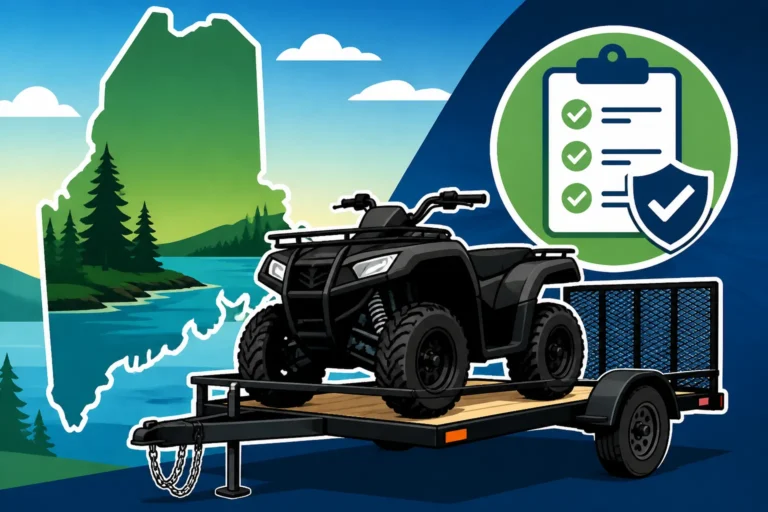
There can be brief periods during the sale of an ATV where it might be legally unregistered. For example, if you purchase an ATV from a private seller, there's a short window where you're transporting it home via a trailer before you have a chance to register it. Or, if you buy an ATV at an auction, it might be moved from the auction site to your property on a trailer without needing a current registration. The key here is transport via trailer. You cannot ride an unregistered ATV from the point of sale, even if you just bought it.
It's absolutely critical that buyers understand their responsibility to register the ATV promptly after purchase, especially if they plan to ride it anywhere other than their own land. Many folks mistakenly believe they have a grace period to ride before registering. In Maine, that's not the case for active operation. The moment you want to ride that machine on a trail, it needs to be registered. Having a proper bill of sale, perhaps using a template from a resource like LawDepot, is crucial for proving ownership during this transition period, but it doesn't grant you permission to operate an unregistered machine. For guidance on buying used, check out [Maine ATV Registration After a Private Sale].
Out-of-State Registrations and Reciprocity: The Three-Day Rule
Maine has a unique set of rules regarding ATVs and UTVs from other states and provinces, which often leads to confusion, particularly for visitors eager to explore our vast trail network. While many states have reciprocity agreements for vehicle registrations, Maine’s approach to ATVs is much more specific, largely due to its commitment to funding its extensive trail system.
Canadian Visitors and the Three-Day Exception
This is one of the most significant and often appreciated exemptions for non-residents. Maine offers a specific three-day exception for ATVs and UTVs legally registered in New Brunswick or Quebec. This means if you're visiting from one of these Canadian provinces, and your machine is currently registered and displaying valid plates/decals from your home province, you can legally ride in Maine for up to three consecutive days without needing a separate Maine non-resident registration. This is a fantastic allowance for a quick weekend trip or a short border-crossing adventure.
However, there are critical limitations to this. First, it only applies to New Brunswick and Quebec. Second, it's strictly a three-day period. If your stay extends beyond three consecutive days, you are required to purchase a Maine non-resident registration. Third, it's assumed you're abiding by all other Maine ATV laws, including helmet rules for youth, age restrictions, and operating under the influence laws. This exception is detailed in [Maine's Three-Day Agreement With New Brunswick and Quebec], and it's something Canadian riders should definitely be aware of when planning their trips.
Why No Reciprocity with Other US States
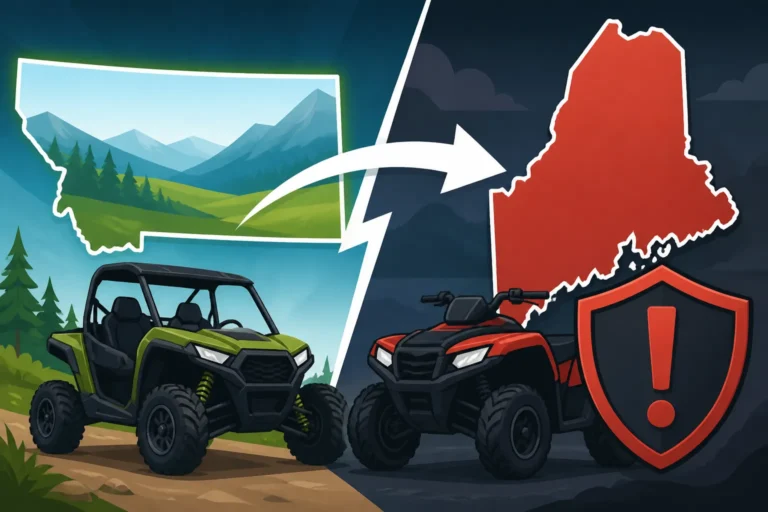
Unlike the Canadian exception, Maine generally does not offer reciprocity for ATV or UTV registrations from other U.S. states. This means if you're visiting Maine from New Hampshire, Massachusetts, New York, or any other state, your home-state registration is not recognized for riding on Maine's trails. The moment you cross into Maine and want to ride anywhere other than private land you own, your ATV or UTV must be registered in Maine.
This lack of reciprocity is primarily driven by the funding model for Maine's trails. As mentioned earlier, registration fees are crucial for maintaining the trails that everyone enjoys. By requiring all non-residents from other U.S. states to purchase a Maine registration, the state ensures that everyone who uses the trail system contributes to its upkeep. This can sometimes be a surprise to riders from states where ATV reciprocity is more common, so it's vital to plan ahead. Non-residents have options like the [Maine Non-Resident Seven-Day ATV Registration] for shorter visits.
Planning Your Trip: When a Non-Resident Registration Is Absolutely Necessary
Given Maine's specific rules, careful planning is essential for any non-resident. If you're coming from New Brunswick or Quebec and your trip is longer than three days, you need a Maine registration. If you're coming from any other U.S. state, you need a Maine registration regardless of how long you plan to stay or whether your machine is registered in your home state. There are no exceptions for "just passing through" or "only riding for an hour."
The easiest way for non-residents to get registered is often online through the Maine IF&W website, or by visiting an authorized registration agent once you arrive. Having your registration in hand, or at least a printed confirmation page, before you even unload your machine at the trailhead will save you a lot of potential headaches and fines. Do not assume your out-of-state registration is valid here; assume you need a Maine registration unless you fit the very narrow Canadian three-day exception.
Special Cases and Misconceptions About Exemptions
The world of ATV registration is rife with myths and misunderstandings. Beyond the legitimate exemptions, many riders operate under false pretenses, believing their particular situation grants them a pass when, in fact, it doesn't. It's important to separate these common misconceptions from actual legal exemptions to avoid unintended legal trouble.
Gifting and Inheriting an ATV
When an ATV changes hands through a gift or inheritance, the registration process can sometimes feel like a gray area. However, the exemption rules generally don't change based on how you acquired the machine. If you receive an ATV as a gift, for example, it still needs to be registered in your name before you can operate it on public trails or land you don't own. The act of gifting itself doesn't transfer a magical "registered" status, nor does it create a new exemption.
Similarly, if you inherit an ATV, the same rules apply. You'll need to transfer ownership into your name and then register the machine if you intend to ride it. While the documentation for proving ownership might differ slightly (a bill of sale for a gift, probate documents for inheritance), the end result for registration is the same. The machine must be properly registered for general use. For more on this, check out [Gifting an ATV and the Registration That Follows]. It's a crucial step to make sure your newly acquired machine is trail-ready.
Very Old or Antique ATVs
Some owners of older ATVs, perhaps classic three-wheelers or early-model quads, might wonder if their machine's age grants it an antique exemption from registration. Unfortunately, in Maine, there's no specific "antique ATV" registration category or exemption that allows you to bypass the standard registration process based on the machine's age. If an old ATV is operational and will be ridden on trails, it needs to be registered just like a brand new one.
The law focuses on the operation of the machine, not its vintage. While you might treasure an antique quad for its historical value, its age doesn't make it exempt from contributing to trail maintenance or being identifiable by law enforcement. So, if you've restored an old beauty and want to show it off on the trails, plan on getting it properly registered first.
The "Parts Machine" Myth
A very common and dangerous misconception is the idea of a "parts machine" exemption. This myth suggests that if an ATV is not fully functional, missing a few components, or is clearly intended for parts, it doesn't need to be registered even if you move it. The reality is, if a machine could be operated, even with some effort, or if you're moving it on a public way (even just across a road), the spirit of the law implies it should be registered or trailered.
Unless an ATV is truly disassembled to the point of being scrap metal, treating it as a "parts machine" to avoid registration is risky. If it's a complete chassis with an engine, even if not currently running, and you try to push it or tow it across a public way, you could run into trouble. The safest practice for any non-functional ATV that still resembles an ATV is to transport it via a trailer if it leaves your private property. This also links to [Maine ATV Registration for a Machine Without Paperwork], as these machines often lack proper documentation too.
Homemade Machines
Building your own UTV or ATV can be a rewarding project, but it doesn't exempt you from registration. In fact, homemade machines often require an extra step: obtaining a Vehicle Identification Number (VIN) from the state before it can even be registered. Once a VIN is assigned and the machine is considered operational, it falls under the same registration requirements as commercially manufactured ATVs and UTVs.
The state needs to be able to identify the machine for safety, theft prevention, and accountability purposes. So, if your garage project turns into a trail-ready monster, be prepared to go through the proper channels to get it registered and legal for Maine trails.
Proof and Documentation for Exemptions
Even if your ATV or UTV falls under a legitimate exemption, it doesn't mean you can ride without any paperwork at all. In fact, being able to quickly and clearly demonstrate why your machine is exempt can save you a lot of time and potential hassle if you encounter a game warden. Think of it as having your "get out of registration free" card, but you still need to show proof.
Carrying Proof of Ownership
For any ATV or UTV, whether registered or exempt, carrying proof of ownership is always a wise move. This is especially true if you're operating on your own land or a woodlot. While it doesn't directly prove an exemption, it establishes your legal right to the machine and, by extension, your right to operate it on your property. This could be a bill of sale, a title (if your machine was titled in another state, though Maine doesn't title ATVs), or a previous registration document.
If a warden stops you, being able to quickly show that the machine belongs to you and that you have a legitimate reason for operating it where you are can de-escalate a situation quickly. For private sales, ensuring you have a robust bill of sale, perhaps generated through a service like LawDepot, is critical for proving you own the machine. This is particularly important when considering situations like [Proof of Ownership for a Maine ATV Registration].
Written Agreements for Land Use
When relying on the farm or woodlot exemption, or even if you're riding on land you lease, having a written agreement or documentation can be invaluable. For farm/woodlot use, having evidence of your bona fide agricultural or forestry operation (e.g., tax records, timber harvest plans, farm registration documents) can support your claim to the exemption. For leased land, a copy of your lease agreement clearly outlining your rights to operate ATVs on the property would be crucial.
Verbal agreements, while common, offer very little protection if questioned by law enforcement. A written document provides clear, undeniable evidence of your right to be on the land and the purpose for which your machine is being used, reinforcing the validity of your exemption claim.
Dealer Plates and Temporary Permits
For dealers and repair shops, the documentation of their exemption comes in the form of official dealer plates or temporary permits issued by the state. These are specific to businesses and are not something the general public can obtain. If you're observing a dealer moving an unregistered machine, they should be displaying these official indicators.
As a consumer, when you purchase a new or used ATV from a dealer, they are typically responsible for providing you with the necessary paperwork to get it registered, and often handle the initial sales tax and application process. For individuals, however, relying on any kind of "temporary permit" for personal use outside of a very specific, official process (like a specific event permit) is generally not an option. Always ensure you have a physical registration before you head out, or you're strictly on your own property.
| Exemption Type | Primary Condition | Key Limitations | Required Documentation (Recommended) |
|---|---|---|---|
| Own Land | Operated exclusively on land you own. | Cannot cross or operate on public ways; all other laws apply. | Deed, property tax bill, proof of ownership for ATV. |
| Farm Use | Used exclusively for bona fide farm purposes. | Cannot be used for recreation; generally limited to farm property. | Farm ID, tax forms, proof of ownership for ATV. |
| Woodlot Use | Used exclusively for logging/woodlot management. | Cannot be used for recreation; generally limited to woodlot property. | Timber harvest plan, proof of ownership for ATV. |
| Dealer/Repair | For business operations (inventory, service, test drives). | Only for registered businesses; not for personal use. | Dealer plates, temporary permits (issued by state). |
| Canadian Visitor | Registered in NB or QC. | Limited to 3 consecutive days; all other laws apply. | Valid NB/QC registration, ID. |
Disclaimer
This article is for general informational purposes only and does not constitute professional advice. Laws, prices and regulations vary by location and change over time. Consult a qualified professional for guidance on your specific situation.