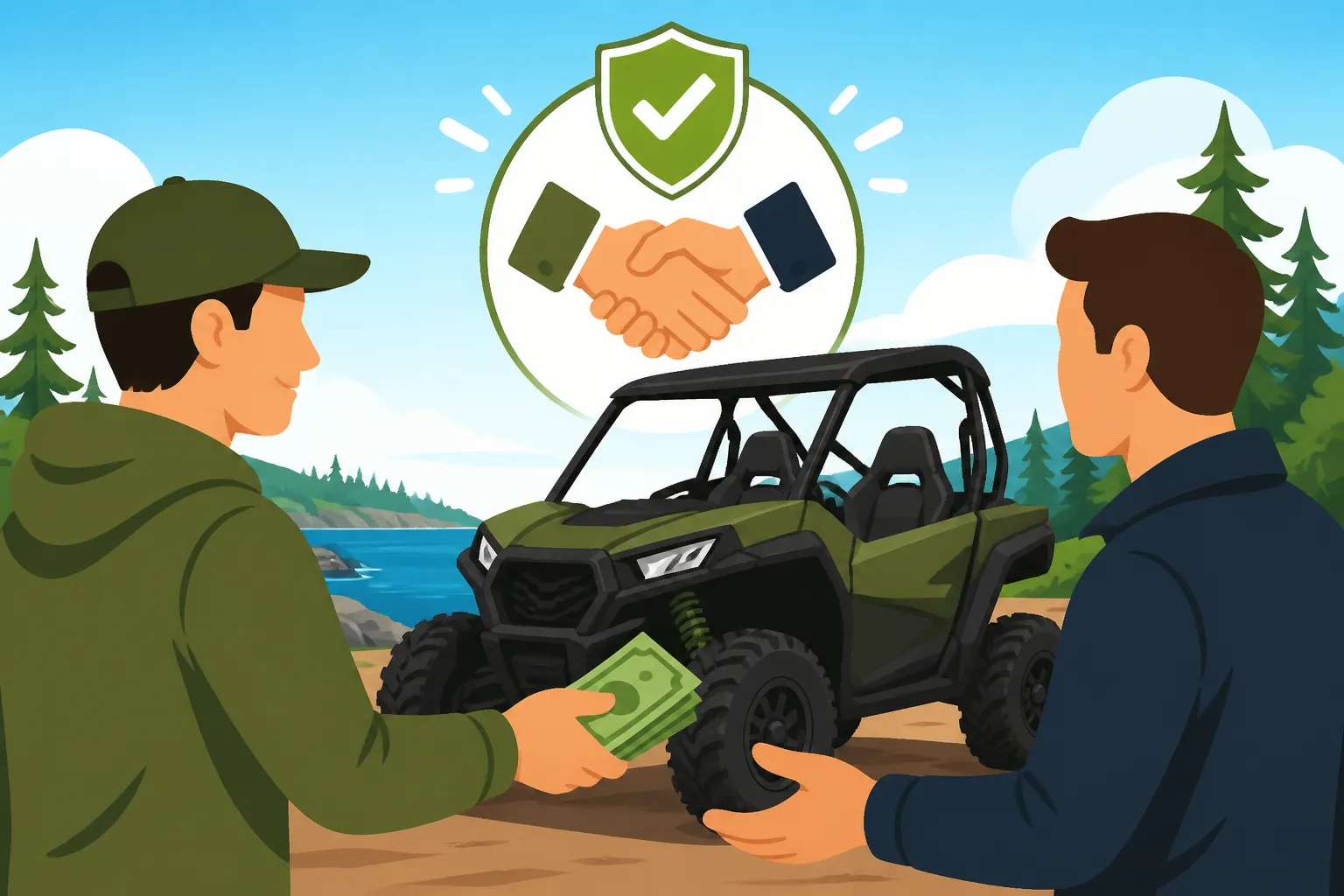
Deposit Rules When Buying a Used UTV Privately
Buying a used UTV privately in Maine can feel like navigating a minefield, especially when it comes to money changing hands before the deal is done. Many folks get nervous about putting down a deposit, wondering if their hard-earned cash is really safe, or if they're signing up for a headache if something goes wrong. This guide is here to walk you through the ins and outs of deposit rules when you're looking to purchase a used UTV directly from a private seller, ensuring you protect yourself and your investment.
Why a Deposit Matters in a Private UTV Sale
Let's face it, when you find that perfect used UTV that fits your budget and your adventuring dreams, you want to secure it. The seller, on their end, wants to know you're serious and not just window shopping. This is where a deposit comes in. It's essentially a good-faith payment that tells the seller, "Yes, I'm committed to buying this machine," and it tells you, the buyer, that the seller won't just turn around and sell it to the next person who waves cash in their face.
The Risks of a Verbal Agreement
We've all heard the saying, "a handshake is as good as a contract," but in the world of private sales, especially with something as significant as a UTV, that old adage can get you into a world of trouble. Maine law, like most places, generally prefers written agreements when it comes to substantial transactions. If you hand over a deposit based solely on a verbal agreement, and then either you or the seller backs out, proving who said what, when, and under what conditions can be nearly impossible. You might find yourself out of a deposit with little recourse, or the seller might feel they've lost a genuine buyer. It's a lose-lose situation born from good intentions but poor planning. Always, always get something in writing, even if it feels a little formal for a casual sale. This is why resources like LawDepot can be so incredibly helpful for creating simple, clear agreements that protect both parties.
Protecting Both Buyer and Seller
A well-structured deposit agreement isn't just about protecting your money; it’s about establishing clear expectations for both parties. For you, the buyer, it ensures the seller takes the UTV off the market while you arrange financing, complete a pre-purchase inspection, or simply get your ducks in a row. It gives you peace of mind that the machine you're set on isn't going to vanish. For the seller, it acts as a commitment from you. If you suddenly change your mind for no agreed-upon reason, the deposit might be forfeited, compensating them for the time and potential lost sales. It creates a framework of trust and accountability, making the transaction smoother and less stressful for everyone involved. Without this mutual understanding, either party could walk away, leaving the other feeling slighted and financially inconvenienced. This kind of upfront clarity is vital for a [Safe ATV Sale Agreement].
Crafting a Solid Deposit Agreement: What to Include
When you decide to put down a deposit, it’s not enough to just hand over the cash. You absolutely need a written agreement that outlines the terms of that deposit. Think of it as your safety net. A well-written agreement doesn't have to be long or filled with legal jargon, but it does need to be clear and comprehensive.
Essential Elements of a Written Deposit Agreement
To ensure your deposit is protected and everyone is on the same page, your written agreement should cover several key points. First and foremost, specify the exact amount of the deposit being paid. Then, clearly identify the UTV in question, including its make, model, year, and most importantly, its Vehicle Identification Number (VIN). This ensures there's no confusion about which machine the deposit is for. The agreement should also state the full purchase price of the UTV and the remaining balance due after the deposit is applied. This prevents any last-minute surprises or disagreements on price.
Beyond the numbers, you'll need to establish timelines. This includes the date the deposit is made and the firm date by which the full purchase must be completed. A common frustration buyers face is when a seller isn't ready by the agreed-upon pickup date. Having this in writing creates accountability. Another crucial element is outlining the conditions under which the deposit is either fully refundable, partially refundable, or non-refundable. For example, if a [Pre-Purchase Inspection Before You Buy a Quad] reveals a major, undisclosed issue, you'd want to ensure your deposit is returned. Conversely, if you simply change your mind without cause, the seller might retain the deposit. Both buyer and seller should sign and date the document, and it's a good idea for both to keep a copy. LawDepot is an excellent resource for generating these types of customized legal documents quickly, ensuring all the necessary fields are covered.
Conditions for Refund, Forfeiture, or Partial Retention
This is where many private sales run into trouble if not explicitly stated. A good deposit agreement anticipates potential hiccups and clearly defines what happens to the money.
Refundable Conditions: Your agreement should specify scenarios where you, the buyer, are entitled to a full refund. This often includes:
- The UTV failing a mechanical inspection by a third party.
- The seller being unable to provide clear proof of ownership or a proper [Maine ATV Bill of Sale: What to Include].
- The seller backing out of the sale for any reason before the agreed-upon completion date.
- If the UTV is found to have undisclosed liens or a salvage title that wasn't previously revealed.
Forfeiture Conditions (Non-Refundable): On the flip side, the agreement should state when the deposit is forfeited to the seller. This typically occurs if:
- You, the buyer, simply change your mind and decide not to purchase the UTV without a valid, pre-agreed reason.
- You fail to complete the purchase by the agreed-upon deadline, assuming the seller has met all their obligations.
- You fail to secure financing (unless securing financing was an explicit contingency for a refund in the agreement).
Partial Retention Conditions: Less common but still an option, a partial retention clause might exist for specific circumstances. For instance, if you cause damage during a test ride, or if the seller incurs minor costs related to the sale (like specific paperwork fees) that are then deducted from the deposit if the deal falls through for certain reasons. This often requires very careful wording to avoid ambiguity.
It's vital to discuss these points openly with the seller and ensure they are written down clearly and without room for misinterpretation. Again, using a template from a service like LawDepot can help ensure you don't miss any critical clauses, providing a framework for [Writing a Safe ATV Sale Agreement].
Navigating Deposit Disputes and Protecting Your Funds
Even with the best intentions and a clear agreement, sometimes things go sideways. Knowing how to handle a dispute over a deposit can save you a lot of heartache and potential financial loss. It's a situation no one wants, but it's important to be prepared.
When the Deal Falls Through: Buyer's Perspective
Imagine you've put down a deposit on a UTV, you've got an agreement in hand, and then a week later, the seller calls to say they've decided to keep the machine, or they sold it to someone else for more money. Or, perhaps, your independent mechanic finds a catastrophic engine problem that the seller swore wasn't there. These are frustrating scenarios, to say the least.
If the deal falls through due to the seller's actions or a major undisclosed issue (as specified in your agreement), you are absolutely entitled to your deposit back. Your first step should always be to communicate directly and politely with the seller, reminding them of the terms of your written deposit agreement. Provide evidence if applicable, such as the mechanic's report. If they refuse to return the deposit, you might then consider sending a formal letter (certified mail is best) outlining your claim. Keep meticulous records of all communications, the original agreement, and any evidence. If all else fails, your next step would likely be small claims court. While it sounds intimidating, for typical UTV deposit amounts, it's designed to be a relatively straightforward process for individuals to resolve disputes without needing expensive lawyers. Remember, your detailed deposit agreement, potentially drafted using a tool like LawDepot, will be your strongest piece of evidence.
When the Deal Falls Through: Seller's Perspective
From the seller's point of view, it's equally frustrating if a buyer puts down a deposit, and then simply vanishes or backs out without a legitimate reason. The seller has likely turned away other potential buyers, spent time communicating, and perhaps even incurred minor costs. In this situation, if your written agreement clearly states the deposit is non-refundable or forfeited under such circumstances, you, the seller, have a right to keep it.
Again, clear communication is key. Remind the buyer of the terms of the agreement. If the buyer tries to argue, you have the written agreement to fall back on. If they persist in demanding the deposit back despite clearly violating the terms, you can reiterate that the deposit is forfeited as per your mutual agreement. Selling a machine can be a hassle, and a deposit helps offset some of that burden if the buyer isn't serious. Having that paper trail from the start helps you avoid undue pressure or guilt, especially when dealing with pushy buyers. This is why having a robust written agreement, whether from scratch or a template, is crucial for both sides.
The Role of a Solid Written Agreement in Dispute Resolution
This cannot be stressed enough: a solid, written deposit agreement is your shield and your sword in any dispute. Without it, you're relying on memory, hearsay, and subjective interpretations, which rarely hold up in formal dispute resolution. A written agreement clarifies:
- Intent: It proves both parties intended to enter a binding agreement.
- Terms: It lays out the specific conditions for the sale, including the deposit amount, the total price, the machine details, and the completion deadline.
- Contingencies: It defines the "what ifs" – under what circumstances the deposit is returned, forfeited, or partially retained.
- Signatures: It confirms both parties acknowledged and agreed to these terms.
Think of it this way: if you go to small claims court, the judge isn't going to be interested in who said what over the phone. They'll want to see a signed document that clearly outlines the agreement. That document protects both your financial interest and your peace of mind. Investing a little time upfront to create a thorough deposit agreement is a small price to pay for significant protection down the road. For other critical documents in private sales, look into [Maine ATV Bill of Sale: What to Include].
Common Deposit Scenarios and Best Practices
To really nail down how deposits work, let's explore a few typical scenarios you might encounter when buying or selling a used UTV privately in Maine. Understanding these can help you better navigate your own transaction.
Scenario 1: Buyer Backs Out Without Just Cause
You've put down a deposit on a beautiful Polaris Ranger, signed a solid agreement, and the seller has taken it off the market. Then, a few days later, you find a different UTV you like even better and decide you don't want the Ranger anymore.
- Outcome: In this common scenario, unless your deposit agreement had an incredibly generous "change of mind" clause (which is rare), your deposit would almost certainly be forfeited to the seller. The seller held up their end by taking the machine off sale; your backing out without a stipulated reason means you've breached the agreement.
- Best Practice: As a buyer, be absolutely sure you want the machine before putting down a deposit. Do your research, ask all your questions, and ideally, perform a [Pre-Purchase Inspection Before You Buy a Quad] before you put down any money, or at least ensure your deposit is contingent on a satisfactory inspection. As a seller, ensure your agreement clearly states the deposit is non-refundable if the buyer simply changes their mind.
Scenario 2: Seller Sells to Another Party
You found a great deal on a Can-Am Defender, handed over a deposit, and got a signed agreement saying the seller would hold it for you for a week. Two days later, a friend of the seller offers them more money, and the seller takes it.
- Outcome: This is a clear breach of contract by the seller. You are unequivocally entitled to a full and immediate refund of your deposit. The seller agreed to hold the machine for you and failed to do so.
- Best Practice: As a buyer, ensure your agreement explicitly states the seller cannot sell the machine to another party once the deposit is received. As a seller, honor your commitment! Once you accept a deposit and sign an agreement, the machine is effectively sold, pending final payment. Don't be tempted by a higher offer; it can lead to legal hassle and a damaged reputation.
Scenario 3: UTV Fails Inspection After Deposit
You place a deposit on a used Yamaha Wolverine, with the deposit agreement stating it's refundable if a professional mechanic finds major undisclosed issues. The mechanic's report reveals serious frame damage that the seller never mentioned.
- Outcome: Because your deposit agreement included a contingency for a satisfactory inspection, you are entitled to a full refund of your deposit. The UTV failed to meet a crucial condition of the sale.
- Best Practice: Always, always try to make your deposit contingent on a satisfactory inspection if you can't inspect it thoroughly beforehand. This is one of the most important protections for a buyer. For sellers, be transparent about known issues. It builds trust and avoids disputes later. A simple table can illustrate common scenarios:
| Scenario | Buyer Action | Seller Action | Deposit Outcome (Typical) | Key Protection |
|---|---|---|---|---|
| Buyer changes mind | Refuses to buy | Held UTV off market | Forfeited to seller | Clear non-refundable clause in agreement |
| Seller sells to another | Ready to buy | Sold UTV to 3rd party | Fully refunded to buyer | Agreement states UTV reserved for buyer |
| UTV fails inspection | Refuses to buy | Inspection failed | Fully refunded to buyer | Deposit contingent on satisfactory inspection |
| Buyer fails to secure funds | Cannot pay remaining | Ready for sale | Forfeited to seller | Agreement sets deadline; no finance contingency |
| Seller can't provide paperwork | Ready to buy | Missing title/bill of sale | Fully refunded to buyer | Contingent on valid ownership documents |
Remember that when you're purchasing a used UTV from a private individual, the state of Maine wants you to register it eventually. You'll need solid proof of ownership for that. For more information on this, check out [Maine ATV Registration After a Private Sale]. And don't forget, when you're looking to acquire an off-road vehicle in Maine, understanding the various paperwork is essential for a smooth transaction. You might also find it helpful to look into [Maine ATV Bill of Sale: What to Include] to ensure you're getting all the right documents. For broader questions about your purchase, consider [Buying an ATV From a Private Seller in Maine]. Knowing what to expect when registering your new-to-you UTV is also important, so check out [What a Maine ATV Registration Costs].
Disclaimer
This article is for general informational purposes only and does not constitute professional advice. Laws, prices and regulations vary by location and change over time. Consult a qualified professional for guidance on your specific situation.