Riding an ATV on the Road in Maine
It's incredibly tempting to hop on your ATV or UTV and just cruise down the road, especially when you're trying to get from one trail section to another, or just need to run to the store. But here in Maine, throwing a leg over your quad or sliding into your side-by-side and heading onto a paved road isn't as simple as it sounds. This comprehensive guide will untangle the often-confusing web of regulations, helping you understand exactly when and where you can legally ride your ATV or UTV on Maine's public ways.
The Core Rules: Can You Even Ride on the Road?
This is the burning question for almost every ATV and UTV owner in Maine. You see others doing it, sometimes, and you hear rumors. The short answer is: yes, but with very strict limitations, and almost never as casually as you might hope. Maine law is quite specific, and misunderstanding it can lead to hefty fines, or worse, dangerous situations.
The 500-Yard Limit: A Lifeline, Not a License
Maine's ATV laws include a critical provision known as the 500-yard limit. This rule is often misunderstood as a free pass to ride on any road for a short distance, but that's not its intent at all. This provision is primarily designed to allow riders to legally cross a public way or to access a trail or private property that is just off the main road. Think of it as a brief, necessary transition, not a scenic cruise. You are permitted to operate your ATV on the extreme right of the traveled way for a distance not exceeding 500 yards. This is strictly for the purpose of getting to or from a trail, a legal crossing point, or your own property. It's not for joyriding, commuting, or even just going to visit a friend down the street. It's a precise allowance for practical access. Ignoring this nuance is where many riders get into trouble with local wardens. Always remember, the spirit of this law is about connection, not sustained travel. For a deeper dive into this, check out [Maine's 500-Yard Limit on a Public Way].
Designated ATV-Access Routes: Your Best Bet
While the 500-yard rule is a limited allowance, designated ATV-access routes are where you'll find the most freedom to ride on roads. These are specific sections of public ways that a municipality (town or city) has formally approved and signed for ATV and UTV use. These routes are usually established by a vote of the town's select board or city council, often in cooperation with local ATV clubs. They are clearly marked with official signs that indicate where ATV traffic is permitted, and for what purpose (usually to connect trails, access businesses, or reach specific destinations). When you're on one of these designated routes, you're generally allowed to operate your machine much like a motor vehicle, albeit with specific speed limits and often still on the extreme right of the road. These routes are invaluable for connecting trail systems, allowing riders to access restaurants, gas stations, or lodging in a town. The rules on these routes are typically more lenient than the 500-yard rule, but they are still not an invitation for full "street legal" operation. Your machine still needs to be registered and you must follow all posted rules and speed limits. Understanding how these routes are established and marked is key; it's not enough to simply think a road is an access route. Information about how these routes are designated can be found in [Maine ATV-Access Routes and How Towns Post Them].
When a Road is Not a Road: Camp Roads and Private Ways
Here in Maine, especially in the more rural and recreational areas, the line between a "public way" and a "private way" can get blurry. Many unpaved camp roads, logging roads, and private subdivision roads aren't considered public ways under the law, even if they're used by the public. This distinction is incredibly important for ATV and UTV riders. On private roads, the rules about ATV use are primarily determined by the landowner or the private association that manages the road, not by state public way laws. This means that if you have permission from the landowner, you might be able to ride your ATV or UTV on these private roads with far fewer restrictions than on a state or town public way. However, "permission" is the operative word. Riding on a private road without express or implied permission is trespassing, regardless of whether it looks like a public road. Always seek clarification and permission before riding on any road that you suspect might be private, as local wardens do enforce trespass laws rigorously, even on what appear to be abandoned or widely used dirt roads.
Understanding Maine's Road Classification and ATV Access
Maine's road system is a patchwork of classifications, and each one comes with its own set of rules regarding ATV and UTV access. It's not a one-size-fits-all situation, and ignorance of these classifications is a common reason riders run afoul of the law.
Public Ways vs. Private Ways: What's the Difference for ATVs?
The core distinction hinges on who owns and maintains the road.
- Public Ways: These are roads maintained by the state, county, or a municipality (town/city). They are open for public travel and are subject to all state traffic laws. This includes paved state routes, town-maintained gravel roads, and even some unpaved municipal roads. On these roads, ATVs and UTVs are generally prohibited unless specifically allowed by state law (like the 500-yard rule) or by a municipal ordinance creating a designated ATV-access route.
- Private Ways: These roads are owned and maintained by private entities, individuals, or associations. Examples include camp roads, logging roads on private timberland, and private driveways. On these roads, state public way laws regarding ATVs typically don't apply. Instead, you need explicit permission from the landowner to ride. Even if a private road looks like a public shortcut or connector, it's vital to confirm its status and get permission before riding. Many conflicts arise from riders mistakenly assuming a private road is public and riding without permission. Always err on the side of caution: if you don't know for sure, assume it's private and seek permission.
State Highways and Interstate Rules: The Absolute No-Go Zones
Let's be unequivocally clear: you cannot ride your ATV or UTV on state highways or interstate roads in Maine, with extremely rare and specific exceptions for sanctioned events or emergency situations that are almost never applicable to recreational riders. This includes routes like US-1, I-95, US-2, and other numbered state roads. These are high-speed, high-traffic corridors designed for conventional motor vehicles, and ATVs and UTVs simply do not belong there. The risks are astronomical, both to the rider and to other motorists. Maine law strictly prohibits ATV operation on these types of roads. Even the 500-yard rule does not apply to interstates. Attempting to ride on these roads will almost certainly result in immediate law enforcement intervention, significant fines, and potential confiscation of your machine. There's no grey area here; these are absolute no-entry zones for recreational ATV and UTV use. For more on restricted road access, consider [Maine Interstate and Toll Road Restrictions].
Town Roads and Municipal Control
This is where things get interesting and localized. While state law sets the baseline, towns and cities in Maine have the authority to establish their own ordinances regarding ATV and UTV access on town-maintained roads.
- Designated Routes: As mentioned, many towns have embraced ATVs and UTVs as an economic driver and have officially designated certain town roads (often unpaved, but sometimes paved sections) as ATV-access routes. These are posted with clear signs. These routes are a fantastic way to connect trails and access local businesses.
- Restrictions and Bans: Conversely, some towns, for various reasons like noise complaints, safety concerns, or preserving residential tranquility, have opted to restrict or even ban ATV use on all their public ways, beyond the limited 500-yard crossing rule. It's crucial not to assume that just because one town has ATV routes, the neighboring town will too. Always check local ordinances or look for official signage. Local ATV clubs are often the best resource for current information on town-specific rules and designated routes. [Maine Towns That Restrict ATVs on Public Ways] has more on this.
Making Your UTV (Almost) Street Legal: Equipment and Limitations
The term "street legal" often comes up in discussions about UTVs, and it's a topic ripe for confusion, especially in Maine. While you can equip a UTV with many features that make it look street legal, Maine law has very specific definitions and limitations.
What "Street Legal" Really Means for a UTV in Maine
Let's clarify what "street legal" doesn't mean for a UTV in Maine: it doesn't mean you can just drive it anywhere a car can go, like major state highways or interstates. Maine law still primarily classifies UTVs as off-road vehicles. However, Maine does allow UTVs to be registered for use on some public ways under specific conditions, largely mirroring the rules for ATVs (500-yard limit and designated access routes). For a UTV to be considered "street legal" in the context of these allowances, it must meet certain equipment standards that enhance its safety and visibility when sharing the road with conventional vehicles. This isn't about transforming it into a full-fledged automobile; it's about making it safer for limited, permitted road use. This topic is explored in depth in [Can a UTV Be Made Street Legal in Maine?].
Essential Equipment for Designated Road Use
If you plan to use your UTV on designated ATV-access routes or for brief road crossings, it absolutely must be equipped with certain items to meet safety and legal requirements. This isn't optional; it's a matter of safety and compliance.
- Headlights and Taillights: These are non-negotiable for visibility, especially if you're ever near a road at dusk, dawn, or in inclement weather. [Maine Lighting Requirements for Night Riding] details this.
- Brake Lights: Crucial for signaling to vehicles behind you.
- Turn Signals: Essential for communicating your intentions, just like any other vehicle on the road. Many aftermarket kits, including those from SuperATV, offer robust, easy-to-install turn signal kits specifically designed for UTVs.
- Mirrors: You need at least one rearview mirror, typically on the left side, to see traffic behind you.
- Horn: A functional horn is required for safety warnings.
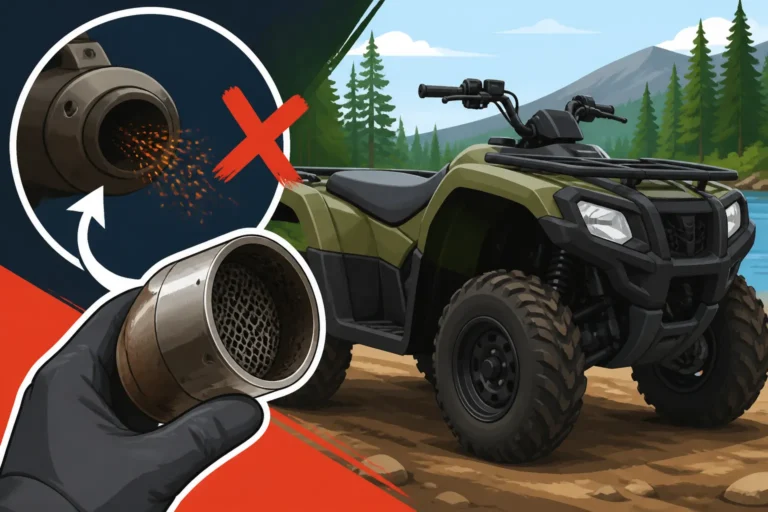
- Muffler and Spark Arrestor: Your exhaust system must meet noise regulations and have a spark arrestor to prevent forest fires.
- Windshield and Wipers (Recommended): While not always strictly mandated for all limited road use, a windshield improves visibility and comfort, and wipers are essential in rain.
- Seatbelts/Restraints: If your UTV has seatbelts, they must be worn by all occupants.
- DOT-Approved Tires: While not always explicitly required for all limited road use, using DOT-approved tires for UTVs that see road time is a smart safety choice, as they offer better handling and durability on pavement than purely off-road tires.
Outfitting your UTV correctly makes a huge difference in both safety and avoiding tickets. SuperATV is a brand many riders trust for these kinds of aftermarket accessories, offering everything from full street-legal kits to individual components like mirrors, turn signals, and horns designed to meet these safety standards.
Insurance and Registration for Road-Approved UTVs
Even when operating your UTV on designated routes or for brief crossings, you need to ensure it's properly registered and insured.
- Registration: Your UTV must be currently registered with the Maine Department of Inland Fisheries & Wildlife (IF&W) or through a town office. This applies whether you're a resident or non-resident. The registration sticker and number must be displayed correctly. You can find more about this at [Maine ATV Registration for a Road-Legal Side-by-Side].
- Insurance: While Maine does not require all ATVs or UTVs to carry liability insurance for trail riding, if you're operating your UTV on a public way, even on a designated access route, liability insurance is an absolute must-have. Accidents can happen quickly, and if you're involved in a collision with a car or truck on a public road, the financial consequences without adequate insurance could be devastating. Many standard auto insurance policies do not cover off-road vehicles, so you'll likely need a specific ATV/UTV policy. Always confirm with your insurance provider about your coverage limits and what scenarios are covered when operating on public ways. For more on insurance, see [Insurance for a Road-Ridden UTV].
Specific Road Riding Scenarios and Rules
Navigating the nuances of ATV and UTV use on Maine roads means understanding the specific rules for common situations you'll encounter.
Crossing a Public Way: Stop, Yield, and Angle Rules
The most common reason an ATV or UTV will touch a public road is to cross it to access another trail section or private property. Maine law has very specific rules for this maneuver to ensure safety:
- Complete Stop: You must bring your ATV or UTV to a complete stop before entering or crossing a public way. This isn't a rolling stop; it's a full, momentary halt.
- Yield to Traffic: You must yield the right-of-way to all vehicular traffic on the public way. Do not attempt to cross until it is safe and clear. Drivers of cars and trucks may not expect an ATV to cross, so always assume they haven't seen you.
- Cross at a Right Angle: When crossing, you must do so at approximately a right angle (90 degrees) to the public way. This minimizes the time you are exposed to traffic and makes your path more predictable. Do not travel parallel to the road for any distance beyond the 500-yard limit.
- Visibility: Choose your crossing point carefully, ensuring you have clear lines of sight in both directions for oncoming traffic. If visibility is poor, find an alternative.
These rules are critical for your safety and to avoid fines. Wardens and local law enforcement are vigilant about improper road crossings because they represent a significant safety risk. For detailed rules on this, refer to [Maine's Stop-and-Yield Rule Before a Public Way] and [ATV Yield Rules in Traffic].
Riding to a Gas Station or Restaurant: The "Destination" Rule
This is where designated ATV-access routes truly shine. If a town has established such a route, it's typically for the purpose of allowing riders to access services like gas stations, restaurants, general stores, or lodging.
- Stay on the Designated Route: The most important rule is to stay strictly on the marked route. Do not deviate onto other public ways that are not designated.
- Follow Posted Limits: Respect speed limits and other posted restrictions for the ATV-access route. These are often lower than the regular vehicle speed limits on the same road.
- Direct Path: While on the route, you're generally expected to take a reasonably direct path to your destination. Lingering or extended joyrides on these routes are typically not the intent.
- Parking: Park your ATV or UTV responsibly and in a way that doesn't obstruct traffic or pedestrians. Many businesses along these routes will have designated ATV parking.
Without a designated route, riding to a gas station or restaurant on a public way is generally not permitted, unless the business is within the 500-yard limit of a trail, and you are using that allowance to temporarily access it. Even then, the intent is access, not extended travel on the road. Many Maine towns, like Jackman or Greenville, have embraced ATV tourism and have well-marked access routes leading right to local establishments, making these stops convenient and legal. Check out [Riding to Dinner on an ATV Route] for more practical scenarios.
Sharing the Road: Etiquette and Safety with Vehicles
When you are legally operating your ATV or UTV on a public way, even for a short distance or on a designated route, you are sharing that road with cars, trucks, and potentially motorcycles. This requires heightened awareness and good road etiquette.
- Stay to the Extreme Right: Always operate your machine on the extreme right of the traveled portion of the public way. This maximizes space for other vehicles to pass safely.
- Single File: If riding in a group, ride in a single file line, especially on public ways. Do not ride side-by-side.
- Visibility: Ensure your machine is highly visible. Bright clothing, working lights, and reflective tape (especially at night) are crucial. As mentioned before, SuperATV offers excellent lighting upgrades that can significantly enhance your visibility.
- Predictability: Make your movements predictable. Use turn signals if your UTV has them, or clear hand signals if on an ATV. Avoid sudden swerving or stopping.
- Yield to Cars: Remember that cars and trucks generally have the right-of-way and are less maneuverable than your ATV. Be prepared to yield and give way.
- No Aggressive Driving: Aggressive or reckless operation of an ATV or UTV on a public way will draw unwanted attention from law enforcement and can jeopardize future access. Maintain a safe speed and operate courteously.
Youth Riders, Passengers, and Helmet Laws on Public Ways
Safety is paramount, especially when ATVs and UTVs interact with public roads. Maine has specific rules regarding age, supervision, and helmets that are even more stringent when operating near or on public ways.
Age Restrictions for Road Crossings and Routes
Maine law is very clear about the age at which a rider can operate an ATV or UTV, especially in areas that bring them into contact with public ways.
- Under 10: Children under the age of 10 are generally not permitted to operate an ATV or UTV on any public way, including designated access routes or for road crossings. Their operation is typically restricted to private land under direct adult supervision.
- 10 to 15 Years Old: Riders aged 10 to 15 who have completed a Maine ATV Safety Course may operate an ATV or UTV on designated ATV-access routes or cross public ways, but only if under the direct supervision of an adult (18 years or older) who is either on the same machine or on another machine within 200 feet. This adult must also be safety-course certified. This direct supervision is not just a suggestion; it's a legal requirement designed to ensure young riders have experienced guidance in potentially risky situations.
- 16 and Older: Riders 16 years of age or older, with a valid driver's license (or equivalent for non-residents), and who have successfully completed a Maine ATV Safety Course (if born after December 31, 1988), can operate on designated access routes and cross public ways without the requirement for direct adult supervision. However, all other rules regarding registration, equipment, and safe operation still apply. For more on youth riding, see [Can a 14-Year-Old Cross a Road on an ATV in Maine?].
Helmet Requirements for All Ages on Public Ways
This is a critical safety rule that often surprises adult riders. While helmets are not universally mandated for adults on private trails in Maine, the rules change significantly when you are operating on a public way.
- Under 18: Any operator or passenger under the age of 18 must wear a securely fastened, approved helmet whenever operating or riding on an ATV or UTV, regardless of where they are riding. This includes trails, private land, and absolutely applies to any public way. This is a non-negotiable safety measure.
- 18 and Older, on a Public Way: If you are 18 years of age or older and operating an ATV or UTV on a designated ATV-access route or crossing a public way, you must wear a securely fastened, approved helmet. This is a specific provision for road-related travel. So, while you might ride helmet-free on a private trail, the moment your wheels touch a public way for legal access, that helmet needs to be on your head. This requirement emphasizes the increased risk of sharing space with motor vehicles. [Maine Helmet Rules for Riders Under 18] provides further information.
Carrying Passengers on Designated Road Sections
The ability to carry passengers on an ATV or UTV, especially on public ways, depends entirely on the design of your machine and the specific rules for the road section you're on.
- ATVs (Quads): Generally, single-rider ATVs are designed for one operator only. Carrying a passenger on a single-rider ATV, even on a designated road route or during a crossing, is usually illegal and extremely dangerous. It compromises balance, visibility, and control. If your ATV is designed for two riders (a "two-up" model), then carrying a passenger is permitted, provided they meet age and helmet requirements.
- UTVs (Side-by-Sides): UTVs are typically designed with multiple seating positions and seatbelts, making them suitable for carrying passengers. However, all passengers must utilize the available seatbelts, and if they are under 18, they must wear an approved helmet. Never exceed the manufacturer's stated passenger capacity for your UTV.
Always prioritize safety and follow manufacturer guidelines regarding passenger capacity. Operating an ATV or UTV with too many passengers, or with passengers on a machine not designed for them, is a common violation that can lead to fines and serious injury.
Enforcement, Penalties, and What Wardens Look For
Maine game wardens and local law enforcement are the primary enforcers of ATV and UTV laws. They are highly visible in popular riding areas and on roads where illegal operation might occur. Knowing what they look for and the potential consequences of violations is crucial.
Fines for Riding an Unregistered or Illegal ATV on the Road
The penalties for operating an ATV or UTV illegally on a public way can be significant.
- Unregistered Machine: Riding an unregistered ATV or UTV on any public way (or trail) is a direct violation. Fines for this can be substantial, often hundreds of dollars, and your machine could potentially be impounded. Always ensure your registration is current. [Penalties for Riding an Unregistered ATV in Maine] details these consequences.
- Operating on Prohibited Roads: Riding on state highways, interstates, or town roads not designated as access routes will result in fines. This isn't just a slap on the wrist; it's a serious offense due to the inherent danger to public safety.
- Violating 500-Yard Rule: Exceeding the 500-yard limit, failing to stop, or failing to yield when crossing a public way will also lead to fines. Wardens know these rules inside and out.
- Equipment Violations: Missing headlights, taillights, mirrors, or not having a spark arrestor can also result in citations, especially if you're on or near a public way.
- Operating Under the Influence (OUI): Just like with a car, operating an ATV or UTV under the influence of alcohol or drugs on any public way or trail is strictly prohibited and carries severe penalties, including hefty fines, loss of driving privileges, and even jail time.
These fines are not just about revenue; they are about deterring dangerous and illegal activity that jeopardizes the safety of riders and the general public.
Warden Stops and What Paperwork You Need
If a game warden or law enforcement officer stops you while you're operating an ATV or UTV on or near a public way, be prepared to present specific documentation.
- Registration: Your current Maine ATV/UTV registration certificate. You should carry the original or a clear copy with you.
- Proof of Ownership: A bill of sale or other proof of ownership is sometimes requested, especially if there are questions about the registration.
- Safety Course Certificate: If you were born after December 31, 1988, you must carry your Maine ATV Safety Course certificate. Youth riders (10-15) must also carry theirs.
- Driver's License (if applicable): If you are 16 or older and operating on a public way, you should be able to produce a valid driver's license.
- Insurance Card (for road-approved UTVs): If your UTV is equipped and used on designated access routes, having proof of liability insurance is a good idea.
It's always best to cooperate fully, remain calm, and present the requested documents clearly. Wardens are out there to ensure everyone's safety and the responsible use of Maine's trails and roads. Keeping your paperwork organized, perhaps in a waterproof pouch on your machine, makes these interactions smooth. More about what wardens look for can be found in [Maine Warden Stops and ATV Paperwork].
Avoiding Trespass and Landowner Complaints on Access Routes
Even on designated ATV-access routes, you're not entirely in the clear regarding private property. Many access routes, especially unpaved ones, might cross or border private land.
- Stay on the Route: Never deviate from the clearly marked ATV-access route. Veering off onto what appears to be a side trail or private driveway could easily lead to trespassing.
- Respect Private Property Markings: Pay attention to "No Trespassing" signs, purple paint markings on trees, or any other indicators of private property. These are legally binding.
- Noise and Dust: Be mindful of noise levels and dust, especially when riding past homes or businesses. Excessive noise or dust complaints can lead to towns reconsidering or even revoking ATV access routes.
- Gates and Barriers: If you encounter a gate or barrier, respect it. Do not open closed gates unless explicitly marked as an ATV access point that should be opened and re-closed.
- Landowner Relations: The continued existence of ATV access routes, and trails in general, depends heavily on good relations with landowners. Disrespectful behavior or trespassing jeopardizes access for everyone.
Remember, designated access routes are a privilege, not a right. Responsible riding helps ensure these routes remain open for all to enjoy.
Town Ordinances and Local Variations
Maine's home rule tradition means that individual towns and cities have a significant say in how ATVs and UTVs operate within their municipal boundaries, especially on local roads. This creates a patchwork of rules that riders must navigate.
How Towns Designate ATV Access Routes
The process for designating ATV-access routes typically involves local government.
- Local Initiative: Often, a local ATV club or a group of concerned citizens will petition the town's legislative body (like the Board of Selectmen or City Council) to create an access route.
- Public Hearings: The town will usually hold public hearings to gather input from residents, landowners, businesses, and riders. Concerns about safety, noise, dust, and economic impact are all discussed.
- Ordinance Creation: If there's enough support and the town leadership agrees, an ordinance is drafted. This ordinance outlines which specific roads or sections of roads are open to ATVs, what hours, what speed limits apply, and any other specific rules.
- Signing: Once the ordinance is approved, the town is responsible for clearly signing the designated routes. These signs are critical; they not only tell riders where they can go but also inform other motorists to expect ATV traffic. Don't assume a road is an access route without official signage. For details on this process, see [Maine Select Board ATV Route Votes].
Petitioning Your Town for New Access
If you believe your town would benefit from additional ATV or UTV access routes, or if you want to connect existing trails more effectively, you can get involved in the local process.
- Join a Local ATV Club: This is by far the most effective way. ATV clubs are organized, have established relationships with landowners and local governments, and understand the process. They also often have the resources to help with trail maintenance and signage.
- Research and Propose: Identify specific road sections that would logically connect trails or provide access to services. Think about safety, minimizing impact on residents, and economic benefits.
- Gather Support: Talk to other riders, local businesses, and residents. A proposal with broad community support is much more likely to succeed.
- Attend Meetings: Be prepared to present your case at town meetings and public hearings. Be respectful, realistic, and focus on the benefits for the community.
- Volunteer: Offer to help with signage, maintenance, or any other tasks that show you're a responsible member of the riding community.
Towns That Restrict or Ban ATVs on Roads
It's important to understand that not all towns are enthusiastic about ATV or UTV road access. Some municipalities, due to specific local concerns, have ordinances that are more restrictive than state law.
- Reasons for Restriction: These can include heavy residential populations, narrow or winding roads where ATV operation is deemed unsafe, concerns about noise pollution, or a desire to maintain a particular quiet character for the community.
- How to Find Information: The best way to know a town's specific rules is to check their municipal website for ordinances, contact the town office, or consult a local ATV club. Don't rely on word-of-mouth.
- Respect Local Decisions: Even if you disagree with a town's decision to restrict ATV access, it's crucial to respect their local ordinances. Violating these rules not only leads to fines but also erodes trust and makes it harder for ATV advocates to gain future access.
Being a responsible and informed rider means understanding that Maine's ATV and UTV landscape is diverse, and rules can change from one town line to the next. Always do your homework before you ride.
| Road Type | ATV/UTV Access (General Maine Rule) | Exceptions / Conditions | Key Considerations |
|---|---|---|---|
| Interstate Highways | Absolutely Prohibited | None for recreational use. | High fines, impoundment, extreme danger. Never attempt to ride on interstates. |
| State Highways | Generally Prohibited | Very limited 500-yard crossing for trail access, or if designated by state (rare). | Use 500-yard rule only if absolutely necessary and safe; extreme caution required. Always yield. |
| Town Roads (Paved) | Generally Prohibited | Designated ATV-Access Routes (with town ordinance & signage); limited 500-yard crossing for trail access. | Check local town ordinances! Many towns restrict or ban. Only ride on clearly signed routes. Use extreme right of way. |
| Town Roads (Unpaved) | Generally Prohibited | Designated ATV-Access Routes (with town ordinance & signage); limited 500-yard crossing for trail access. | Similar to paved town roads, but often more likely to be designated as access routes. Still requires town approval and signage. Check local rules. |
| Private Roads / Camp Roads | Permitted with Landowner Permission | Requires explicit permission from the landowner(s) or private association. Often unpaved, widely used, but remain private. | Crucial to obtain permission. Riding without it is trespassing. Do not assume public access. Respect gates and private property markings (e.g., purple paint). |
| ATV Trails (Designated) | Permitted | Must be a registered machine, and operator must follow all trail rules, safety course requirements, and age restrictions. | The primary and safest place to ride. Follow trail etiquette and stay on marked trails. Many trails are on private land with landowner permission. |
| Public Reserved Land | Permitted | Specific areas may be designated for ATV use; generally follows state trail rules. Check specific unit rules. | Not all public reserved lands allow ATVs. Always check with the Bureau of Parks and Lands for current regulations for the specific area. |
| Private Property (Your Own Land) | Permitted | Exempt from registration requirements if exclusively on your own land, but all other safety and age rules apply. | No registration needed for exclusive use on your own land, but if you leave your property, even briefly onto a public way or trail, your machine must be registered. Be mindful of noise and property lines with neighbors. |
Disclaimer
This article is for general informational purposes only and does not constitute professional advice. Laws, prices and regulations vary by location and change over time. Consult a qualified professional for guidance on your specific situation.