Maine Sidewalk and Crosswalk Rules for ATVs
Navigating the intricate web of rules for riding your ATV or UTV in Maine can feel like trying to untangle a particularly stubborn fishing line. One area that causes a lot of head-scratching and frustration for riders, especially those new to the Pine Tree State or just visiting, is the question of sidewalks and crosswalks. It's a common misconception that if you can ride on the shoulder of a road for a short distance, a sidewalk might be fair game, or that crosswalks are simply extensions of trails. This guide is here to clear up that confusion, explain the specific regulations, and help you understand why these rules exist, ensuring you stay safe, legal, and respectful of other users and landowners.
Why Sidewalk and Crosswalk Rules Are So Strict for ATVs
Let's be honest, when you're out enjoying Maine's incredible trail system, the idea of hopping onto a sidewalk or using a crosswalk like a quick shortcut can be tempting, especially if you're just trying to get from one trail segment to another. However, Maine's laws regarding ATVs, UTVs, and their interaction with public ways are quite specific, and sidewalks and crosswalks fall into a category that's generally off-limits. The core reason behind these strict rules boils down to safety, property rights, and the fundamental design purpose of these pedestrian facilities.
Safety for Pedestrians and Riders
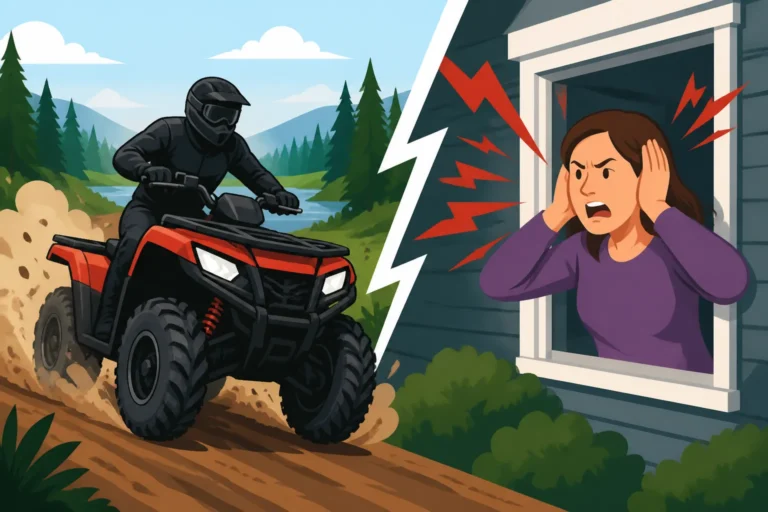
Sidewalks are designed for foot traffic, plain and simple. They're where children learn to ride bikes, where people walk their dogs, and where folks enjoy a leisurely stroll without the constant worry of motorized vehicles. Introducing an ATV or UTV, even at low speeds, immediately creates a significant safety hazard. These machines are heavy, can accelerate quickly, and have blind spots. A collision between an ATV and a pedestrian, especially a child, would likely result in serious injury or worse. The speed differential, the noise, and the sheer physical presence of an ATV are simply not compatible with a pedestrian environment.
Think about it from a pedestrian's perspective. You're walking down a quiet street, perhaps listening to music or chatting with a friend. The last thing you expect is a motorized vehicle rumbling up behind you on the sidewalk. This unexpected presence can be startling, disorienting, and frankly, dangerous. Maine law prioritizes the safety of pedestrians in these dedicated spaces, which is why motorized vehicles, including ATVs, are typically prohibited. It's not about singling out ATV riders; it's about protecting the most vulnerable users of that space.
Protecting Public and Private Infrastructure
Beyond direct safety, there's the issue of infrastructure. Sidewalks, while appearing sturdy, are not designed to withstand the weight and wear of ATVs and UTVs. The concentrated weight of tires, especially on turns or when stopping quickly, can damage pavement, crack curbing, and tear up grass verges adjacent to the sidewalk. This damage creates tripping hazards for pedestrians and can be costly for towns and cities to repair. These costs ultimately come back to taxpayers, often through property taxes.
Crosswalks, while part of the road, are specifically marked areas for pedestrians to cross safely. Riding an ATV through a crosswalk, even if you are otherwise legally crossing a public way, can interrupt the flow of pedestrian traffic and put walkers at risk. The markings themselves, the ramps for accessibility, and the adjacent infrastructure are all part of a system designed to protect pedestrians. Misusing these areas, even unintentionally, can lead to wear and tear that impacts their primary function and longevity.
The Letter of the Law: Sidewalks and ATVs in Maine
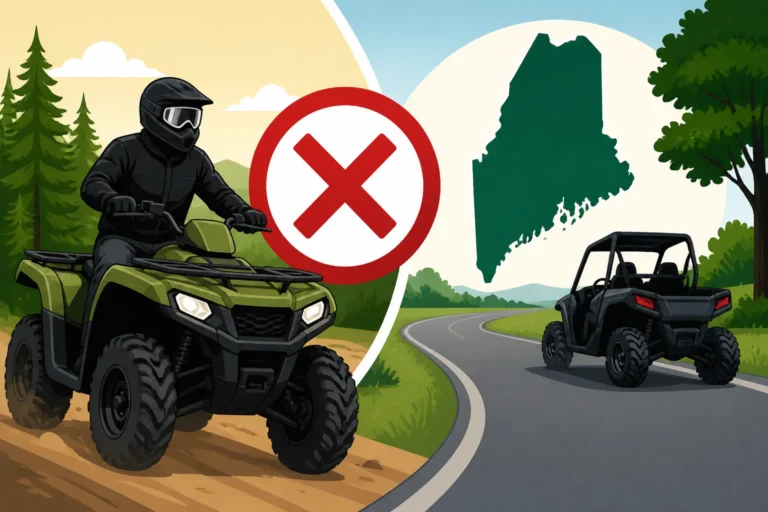
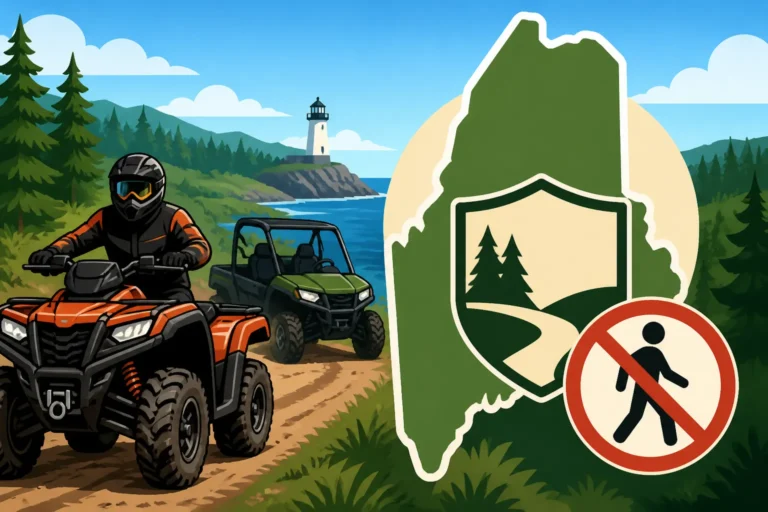
When it comes to the legalities of riding your ATV in Maine, the rules are pretty clear: sidewalks are generally off-limits. This isn't just a suggestion; it's a specific prohibition designed to maintain order and safety on our public ways and in our communities. Understanding the specific statutes helps clarify why you shouldn't consider a sidewalk a viable path for your machine.
Explicit Prohibitions on Sidewalks
Maine law defines "public way" quite broadly, but it also specifically delineates what constitutes a "sidewalk." According to Maine Revised Statutes Title 12, Chapter 941, §7823, which governs ATVs, operation on a sidewalk is expressly prohibited. A sidewalk is generally understood as the portion of a public way between the curb lines or the lateral lines of a roadway and the adjacent property lines, intended for the use of pedestrians. This means that paved, gravel, or even grass strips specifically designated for walking alongside a road are not places for your ATV.
Imagine a typical town street in Maine. You've got the asphalt for cars, maybe a gravel shoulder, and then a paved or grassy strip where people walk their dogs, jog, or push strollers. That strip is the sidewalk, and it's reserved for non-motorized traffic. The law doesn't make exceptions for slow speeds, short distances, or emergencies when it comes to riding on sidewalks. The intent is to keep these areas exclusively safe for pedestrians. Trying to bypass traffic or shorten a route by cutting across a sidewalk is a direct violation of this fundamental rule, and wardens and local law enforcement are well aware of these restrictions.
Understanding the Definition of "Public Way" vs. "Sidewalk"
It's crucial to distinguish between a "public way" and a "sidewalk" in the context of ATV laws. Maine allows for limited operation of ATVs on public ways under specific conditions, such as for the purpose of crossing, or for a very short distance (up to 500 yards) to get from one trail segment to another or to access services, provided the municipality has not enacted stricter ordinances. You can find more information about these specifics in [Maine's 500-Yard Limit on a Public Way]. However, even when legally operating on a public way, this permission does not extend to the sidewalk.
A public way is the entire width between the boundary lines of every way or place in this State when any part of it is open to the use of the public for the purposes of vehicular traffic. The sidewalk is part of that public way, but it has a distinct legal definition and a distinct purpose: pedestrian use. Therefore, while you might be legally crossing a public way, you must do so on the vehicular travel surface, not on the adjacent sidewalk. Even with modifications to your ATV that might seem to make it more road-friendly, like those from SuperATV, the fundamental classification of a sidewalk as a pedestrian-only zone remains unchanged.
Navigating Crosswalks and Public Ways
While sidewalks are largely off-limits, crosswalks present a slightly different, though equally important, set of considerations for ATV riders in Maine. Crosswalks are integral to pedestrian safety when interacting with traffic, and ATVs must treat them with the utmost respect, even if they aren't directly "riding" on the crosswalk for an extended period. The key is understanding how ATVs legally interact with public ways and how crosswalks fit into that picture.
Approaching and Crossing Public Ways
When an ATV trail system in Maine intersects with a public way, you are almost always required to stop completely before entering the roadway. This isn't just good manners; it's the law. [Complete Stop Before Entering a Maine Public Way] delves into this in more detail, but the principle is paramount for safety. You must yield to all vehicular traffic on the public way, and importantly, you must yield to any pedestrians who are using or are about to use the crosswalk.
Even if you're not planning to ride on the crosswalk itself, your approach to and departure from a public way that has a crosswalk must be done with extreme caution. Imagine you're crossing a two-lane road in a small town. There's a marked crosswalk directly in front of you. While your ATV is crossing the street on the paved surface, you still need to be acutely aware of anyone using that crosswalk. Your duty is to ensure pedestrian safety first, even if it means waiting for several groups of people to pass before you proceed. This courtesy helps maintain good relations with towns and preserves trail access.
Yielding to Pedestrians in Crosswalks
Maine law is unequivocal: pedestrians in a crosswalk have the right-of-way. This applies universally to all vehicles, including ATVs. If you are operating your ATV on a designated ATV-access route that utilizes a public way for a short stretch, or if you are simply crossing a public way to connect two trail segments, and you encounter a pedestrian in a crosswalk, you must yield to them. [ATV Yield Rules in Traffic] outlines many of these scenarios. This means stopping your machine, allowing them to pass safely, and only proceeding once the crosswalk is clear.
Attempting to "beat" a pedestrian across a crosswalk, or to squeeze by them, is not only incredibly dangerous but also a serious traffic violation. It undermines the very purpose of a crosswalk, which is to provide a safe passage for walkers. Showing proper respect for crosswalks and pedestrians is a small act that goes a long way in ensuring the continued goodwill of Maine communities towards ATV riders. Remember, every positive interaction reinforces the idea that ATV riders are responsible and considerate members of the outdoor recreation community.
The "What Ifs": Real-World Scenarios and Consequences
Understanding the strictures around ATVs on sidewalks and crosswalks is one thing, but knowing the real-world implications of violating those rules is another. It’s easy to think, "Oh, I'll just zip down this sidewalk for a second, no one will see," but the consequences in Maine can be significant, ranging from hefty fines to potential liability in an accident.
Penalties and Fines for Violations
Operating an ATV on a sidewalk in Maine is a clear violation of state law, and law enforcement, particularly the Maine Warden Service, takes these infractions seriously. The fines for operating an ATV on a prohibited area can be substantial. While specific amounts can vary, you could be looking at hundreds of dollars for a first offense. These fines are designed to deter unsafe and illegal operation, and they can quickly add up, turning a fun day on the trails into a very expensive lesson. You can learn more about general penalties in [Penalties for Riding an Unregistered ATV in Maine], though specific fines for sidewalk violations might be even more targeted.
Beyond monetary fines, repeated violations or particularly egregious actions could lead to other consequences, such as the suspension of your ATV registration privileges or even impoundment of your machine. Maine communities value their peace and safety, and repeated instances of ATVs on sidewalks or reckless behavior in crosswalks can erode public trust and lead to stricter local ordinances, potentially limiting access for all riders. It's a lose-lose situation that responsible riders work hard to avoid.
Liability in Accidents and Damage Claims
This is where things can get truly serious. If you operate your ATV on a sidewalk or recklessly through a crosswalk and cause an accident, you could be held personally liable for injuries to pedestrians or damage to property. Because you would be operating your machine illegally, your insurance coverage might not apply, leaving you to shoulder the full financial burden of medical bills, property repairs, and potential lawsuits. This could amount to tens or even hundreds of thousands of dollars, a financial disaster that far outweighs the convenience of a shortcut.
Imagine hitting a pedestrian on a sidewalk. Beyond the immediate trauma and potential legal charges, you would face the devastating reality of someone's life being irrevocably altered due to your actions. Similarly, if your ATV damages public or private property—cracking a sidewalk, tearing up a lawn, or hitting a mailbox—you would be responsible for those repair costs. Even if your ATV is equipped with robust aftermarket protection like skid plates or heavy-duty bumpers from SuperATV for trail riding, those modifications don't protect you from liability when operating outside the law. These "what if" scenarios underscore why adherence to these rules isn't just about avoiding a ticket, but about personal and public safety.
Beyond the Basics: Safety, Courtesy, and Community Impact
While the legal statutes provide the framework, responsible ATV riding in Maine goes beyond simply knowing the letter of the law. It encompasses a broader understanding of safety, a commitment to courtesy, and an awareness of the significant impact riders have on local communities and the future of trail access.
Promoting a Positive Image for ATV Riders
Every time an ATV rider respects the rules, yields to pedestrians, and stays off prohibited areas like sidewalks, they contribute positively to the overall image of the ATV community. Conversely, every time a rider acts irresponsibly—blasting down a sidewalk or ignoring a crosswalk—they create a negative impression that impacts all riders. [Maine Town Ordinances That Restrict ATVs] are often born out of negative experiences and public outcry, making it harder for responsible riders to enjoy the trails.
We, as riders, are ambassadors for our sport. We want to ensure that Maine's incredible network of trails remains open and accessible for generations to come. This means building and maintaining goodwill with landowners, local residents, and town officials. A simple act of riding where permitted, parking respectfully, and being mindful of others goes a long way. When communities see ATV riders as responsible and courteous, they are more likely to support trail development and access.
Respecting Pedestrians and Shared Spaces
It’s easy to get caught up in the thrill of riding, but it's crucial to remember that we share public spaces with a diverse range of users. Pedestrians, cyclists, and even other vehicles all have their designated areas and expectations. Sidewalks are fundamentally pedestrian spaces, places where people often feel safe from motorized traffic. By adhering to the rules and staying off sidewalks, we reinforce that sense of safety and respect their right to those spaces.
Think of it as a mutual respect. Just as we want landowners to respect our right to use trails (with permission!), we must respect others' rights to their designated spaces. Slowing down when approaching residential areas, being mindful of noise, and always yielding to pedestrians are not just legal obligations but ethical responsibilities that foster a harmonious coexistence. If you're on a public way, remember that [Maine ATV Speed Limits Near Buildings] also apply, and maintaining a slow, cautious pace is always a good idea.
Making Sense of Local Ordinances
One of the unique challenges of riding ATVs in Maine is understanding that state law provides a baseline, but individual towns and municipalities have the authority to enact their own, often stricter, local ordinances. This means that what might be permissible in one town might be strictly prohibited just a few miles down the road. Sidewalks and crosswalks, while generally regulated by state law, can also be subject to additional local rules that you absolutely need to be aware of.
How Local Ordinances Can Differ
Maine's home rule allows towns a significant degree of control over their local infrastructure and public spaces. While state law generally prohibits ATVs on sidewalks, a town might further reinforce this with specific language or even expand the definition of what constitutes a "sidewalk" or "pedestrian area" within its municipal limits. Some towns might have specific signage, while others might rely solely on the state statutes. The variability can be frustrating, but it's a reality riders must contend with.
For example, a town might have an ATV-access route that allows you to ride on a specific section of a public road, but that access route will explicitly exclude sidewalks and crosswalks. Other towns might have blanket prohibitions on any ATV use within certain village center areas, regardless of state allowances for crossing or short distances. [Maine ATV-Access Routes and How Towns Post Them] provides valuable insights into how these local decisions are made and communicated. The onus is always on the rider to know and follow the rules of the specific town they are riding in.
Finding and Understanding Local Rules
So, how do you figure out what the local rules are? The best way is to check with the town office or municipal clerk of the specific town you plan to ride in. Many towns now have their ordinances posted online on their official websites. You can look for sections pertaining to "recreational vehicles," "off-road vehicles," or specific ATV/UTV ordinances. Additionally, local ATV clubs are an invaluable resource. These clubs work directly with towns and landowners, and their members are typically very knowledgeable about local regulations and nuances.
It's also worth paying close attention to signage. Towns that designate ATV-access routes or have specific restrictions will often post clear signs. "No ATV" signs, "Pedestrian Only" signs, or signs indicating special conditions for ATV operation are there for a reason and must be obeyed. A quick check of local regulations before heading out can save you a lot of grief and ensure you have an enjoyable, legal ride. When in doubt, err on the side of caution and assume that sidewalks and crosswalks are off-limits, because more often than not, they are.
| Feature | Sidewalks (General Rule) | Crosswalks (General Rule) |
|---|---|---|
| Primary Purpose | Pedestrian traffic | Pedestrian road crossing |
| ATV Operation | Strictly Prohibited | Prohibited on for continuous travel; must yield to pedestrians when crossing roadway. |
| Safety Concerns | High risk of pedestrian collision, infrastructure damage | Risk of pedestrian collision, traffic disruption |
| Legal Basis | Maine State Law (12 MRSA §7823), local ordinances | Maine State Law (right-of-way laws), local ordinances |
| Enforcement | Maine Warden Service, local law enforcement | Maine Warden Service, local law enforcement |
| Potential Penalties | Fines, registration suspension, liability | Fines, registration suspension, liability |
| Best Practice | Avoid entirely | Stop, yield to pedestrians, cross safely on roadway surface, do not linger |
Disclaimer
This article is for general informational purposes only and does not constitute professional advice. Laws, prices and regulations vary by location and change over time. Consult a qualified professional for guidance on your specific situation.