Riding an ATV on a Maine Beach
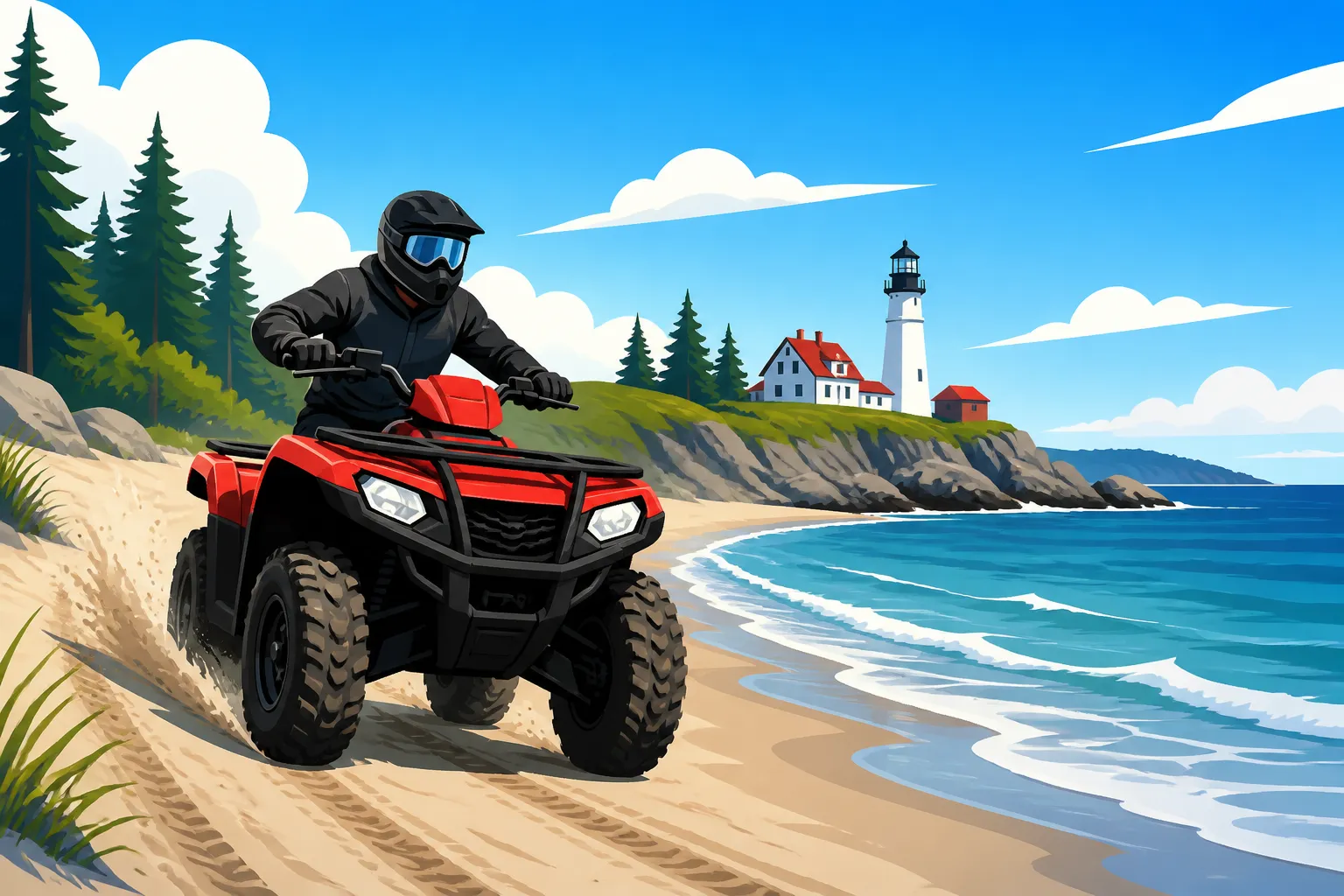
It's a common daydream, isn't it? Picture this: the salty air, the roar of the ocean, and the thought of cruising along the vast, open sands of a Maine beach on your ATV or UTV. For many of us who love the freedom of off-road riding, the idea of combining it with the stunning beauty of Maine's coastline is incredibly appealing. However, if you've ever found yourself wondering about the legality of such an adventure, you're not alone. The reality for recreational ATV or UTV riding on Maine's beautiful beaches is quite a bit more complex than the dream, and for the vast majority of riders, it's simply not permitted. This guide will walk you through the stringent rules and environmental considerations that make beach riding in Maine a rare, if not impossible, recreational pursuit for ATV and UTV enthusiasts.
The Unspoken Rules of Maine's Coastline: Why ATVs and Beaches Don't Mix
Maine’s coastline is a national treasure, renowned for its rugged beauty, pristine ecosystems, and vital role in the state’s economy and natural heritage. Because of this, access and usage are tightly controlled, especially for motorized vehicles like ATVs and UTVs. While the vision of speeding along the tide line might be a thrilling one, it's a vision that collides directly with environmental protection and legal frameworks designed to safeguard these fragile areas.
The primary reason you won't see recreational ATVs or UTVs zipping across Maine's sandy shores is rooted in a deep understanding of ecological vulnerability. Beaches, dunes, and the intertidal zone (that dynamic area between high and low tide) are incredibly delicate habitats. They serve as critical nesting grounds for shorebirds, nurseries for marine life, and buffers against coastal erosion. The very presence of a heavy, fast-moving vehicle can disturb or destroy these delicate balances. Tire tracks can crush eggs, displace crucial sands, and compact the substrate, making it harder for vital organisms to thrive. It’s not just about what you see; it’s about the hidden world underfoot that’s easily damaged.
Furthermore, Maine's beaches are often either privately owned or managed by state and municipal entities that have strict regulations against motorized vehicle access. Even public access points, like state parks or town-owned beaches, will almost always have clear signage prohibiting ATVs and UTVs. The intent is to preserve the natural character of the beach for traditional recreational activities like walking, swimming, and sunbathing, and to protect it from the potential noise, exhaust, and physical impact of motorized vehicles. It's a fundamental conflict between a desire for off-road adventure and the need for environmental stewardship and public enjoyment.
Environmental Sensitivities of Coastal Zones
Imagine a tiny sandpiper nesting in a shallow depression in the sand, its eggs camouflaged perfectly. Or consider the intricate web of life just beneath the surface: tiny crustaceans, worms, and mollusks that form the base of the marine food web. These are the kinds of populations that are incredibly vulnerable to even a single pass of an ATV or UTV. The weight and churning action of tires can crush nests, compact the sand, and disrupt feeding patterns. The noise can scare away birds and other wildlife, causing them to abandon critical foraging or nesting activities.
Dune systems, often found directly behind beaches, are equally, if not more, fragile. Dunes are held together by a delicate network of specialized vegetation, like beach grass, which prevents erosion and provides a natural barrier against storm surges. Driving an ATV over these grasses or up a dune face can rip apart this protective cover, leading to significant erosion and destabilization of the entire dune system. Once a dune starts to erode, it can take decades, if not centuries, to naturally rebuild, and often requires extensive human intervention. This is why you'll see strict rules about staying off dunes, even on foot, let alone with a motorized vehicle.
Beyond the immediate physical impact, there's also the concern of fluid leaks – oil, gas, or hydraulic fluid – which can contaminate the sand and water, posing a direct threat to marine life and potentially rendering areas unsafe for human recreation. Protecting these environmental sensitivities isn't just a suggestion; it's often enshrined in federal, state, and local laws.
Local Ordinances and State Regulations
While the federal government has some overarching environmental protection laws, the nitty-gritty of beach access and vehicle restrictions often falls to the state of Maine and individual municipalities. Maine's Department of Environmental Protection (DEP) and the Bureau of Parks and Lands manage many coastal areas and enforce strict rules regarding vehicle access. These rules are usually in place to protect sensitive ecosystems, ensure public safety, and minimize conflicts between different types of recreational users.
Most towns along the Maine coast, from Kittery to Lubec, have their own ordinances that specifically prohibit or heavily restrict motorized vehicles on beaches. These local laws are often a response to historical issues of damage, safety concerns, or simply a desire to preserve the peaceful character of their shoreline for residents and visitors. You might find signs at beach entrances explicitly stating "No Motorized Vehicles" or "Foot Traffic Only." Ignoring these signs isn't just a minor infraction; it can lead to significant fines and penalties for trespass. [Maine Town Ordinances That Restrict ATVs] are a serious matter and can vary greatly from one municipality to the next, so checking local rules for any specific beach you might be curious about is absolutely essential – though, as we'll explore, the answer for recreational ATV use on the beach will almost certainly be a no.
Rare Exceptions and Special Permits: When an ATV Might Touch Sand
Now, before you completely abandon the dream, it's important to understand that there are indeed some very limited, highly specific circumstances where an ATV or UTV might be allowed on a Maine beach. However, these are almost exclusively for commercial, municipal, or scientific purposes, and they always require specific permits and adherence to strict guidelines. These are not recreational opportunities, and they don't apply to the average ATV owner looking for a joyride.
Think about utility crews needing to access remote coastal infrastructure after a storm, or researchers needing to transport equipment for a critical study of marine life. In these rare cases, special permits can be issued by the relevant state or local authorities. These permits are typically granted for a very specific duration, for a very specific purpose, and often come with conditions such as designated access routes, speed limits, and requirements to avoid sensitive areas. The process for obtaining such a permit is rigorous and involves proving a legitimate, non-recreational need.
For instance, a commercial clammer might use a small ATV to access mudflats at low tide to transport their catch, but even this is usually restricted to specific, non-sandy areas, and they would need to prove commercial activity and obtain the necessary local permits. This is a far cry from someone heading out for a casual ride. These exceptions are so narrow that they effectively close the door on any recreational beach riding for the general public.
Commercial Harvesting and Research Access
One of the most common exceptions you might hear about for motorized vehicles on Maine's coast involves commercial harvesting, particularly clamming or worm digging. In certain designated intertidal zones, and under very strict local regulations, commercial harvesters might be allowed to use ATVs or UTVs to access their harvesting grounds and transport equipment or their catch. This is not open access; it's a privilege granted to licensed commercial operators in specific areas, often mudflats rather than recreational sandy beaches, and always requires a specific permit from the town or state. These vehicles are tools for a livelihood, not recreational machines. They're typically smaller, slower, and operated with a deep understanding of the local environment and regulations.
Similarly, scientific research projects, coastal clean-up efforts, or emergency response situations might necessitate the use of an ATV or UTV on a beach. For example, a wildlife biologist might use a UTV to access a remote nesting site for endangered birds to monitor their population, or a beach clean-up crew might use one to haul away large pieces of debris. In every one of these instances, a detailed plan, justification, and specific permits from the Maine Department of Environmental Protection, the Bureau of Parks and Lands, or the relevant municipality would be absolutely mandatory. These are not casual exemptions; they are carefully considered and controlled operations where the need for the vehicle outweighs the potential environmental impact under controlled conditions.
Emergency Services and Law Enforcement Patrols
Of course, you might occasionally see an ATV or UTV on a Maine beach that isn't engaged in commercial harvesting or scientific research. These vehicles almost certainly belong to emergency services or law enforcement. Think of beach patrols by local police or sheriff's departments, or the Maine Warden Service making their rounds to ensure compliance with regulations and public safety. These vehicles are used for official duties, whether it's responding to a medical emergency, searching for a lost person, or enforcing coastal laws. [Maine Warden Service ATV Patrols] are a regular sight in many parts of the state, including coastal areas where access by traditional vehicles is impossible.
These emergency and law enforcement vehicles are exempt from the general prohibitions because their presence is critical for public safety and regulatory oversight. They are operated by trained professionals who understand the sensitive nature of the environment and are authorized to be there as part of their official capacity. So, if you ever spot an ATV on a Maine beach, it's almost certainly not a recreational rider, but rather someone performing a vital service that falls under one of these very limited exceptions. It’s important not to see their presence as an invitation for personal use; it’s quite the opposite.
Navigating Maine's Diverse Coastal Access: What's Allowed and What Isn't
The general rule of thumb for anyone dreaming of beach riding in Maine is simple: assume it's prohibited for recreational purposes. This approach will save you from potential fines, environmental damage, and frustrating encounters with law enforcement. Instead of focusing on what you can't do, let's look at how you can responsibly enjoy Maine's stunning coastline and where your ATV or UTV can truly shine.
Maine offers thousands of miles of incredible trails, many of which provide breathtaking scenic views, including some that might get you near the coast, but not directly on it. These trails are maintained by dedicated ATV clubs and the state, and they offer legitimate, exhilarating riding experiences. [Where Maine Lets You Ride an ATV] is vast and varied, but it primarily points to inland trails, old logging roads, and designated access routes.
If you love the challenge of varied terrain, perhaps you're someone who appreciates the robust durability of a machine outfitted with components from companies like SuperATV, designed for everything from rocky trails to deep mud. These kinds of aftermarket parts are fantastic for enhancing your ATV or UTV's performance and resilience on approved trails, ensuring it can handle Maine’s diverse and sometimes rugged inland terrain without issues. It’s about channeling that desire for adventure into legal and responsible riding areas.
For coastal enjoyment, think about traditional methods: walking, kayaking, paddleboarding, or simply relaxing on the sand. Many coastal towns have designated parking areas for vehicles, allowing you to walk to the beach and enjoy it on foot. While this might not satisfy the urge for motorized adventure, it's the legal and environmentally responsible way to experience Maine's beautiful shorelines. Respecting these boundaries helps ensure that these precious natural resources remain vibrant and accessible for everyone, for generations to come.
Respecting Private Property and Designated Public Lands
Maine's coastline is a patchwork of private property and public lands. Even where a beach appears open and inviting, much of it might be privately owned. [Maine ATV Trespass Rules Along Roads] are very clear, and these rules extend to coastal areas. Riding an ATV or UTV on private land without explicit permission from the landowner is trespassing, plain and simple, and can lead to serious legal consequences. This is especially true on the coast where property values are high and landowners are often very protective of their frontage.
Public access to Maine's coast is often limited to specific areas like state parks, town beaches, and some land trusts. Even on these designated public lands, rules are in place to manage usage and protect resources. [Maine ATV Rules on Public Reserved Land] primarily refer to inland tracts managed by the Bureau of Parks and Lands, not typically coastal beaches. It's crucial to understand that "public land" doesn't automatically mean "open to ATVs." Always look for official signage and consult local municipal websites or the Maine Bureau of Parks and Lands for specific regulations concerning vehicle access in any coastal area. When in doubt, assume motorized vehicles are prohibited.
| Coastal Access Type | ATV/UTV Recreational Riding | Typical Permitting | Notes |
|---|---|---|---|
| Public Sandy Beaches | Generally Prohibited | None | Strict environmental and public use regulations. |
| State Parks & Preserves | Prohibited | None | Focus on passive recreation and conservation. |
| Private Beaches | Prohibited Without Permission | Landowner consent (rare for ATVs) | Trespassing if no permission; highly unlikely for recreational ATV use. |
| Designated Mudflats (Commercial) | Limited Exception | Municipal/State Commercial Permits | Only for licensed commercial harvesters, not recreational. |
| Remote Coastal Areas | Generally Prohibited | Highly Restricted (Scientific/Emergency) | Very rare, specific, non-recreational purposes only. |
Exploring Nearby Coastal Trail Systems (Not on the Sand!)
While riding on the beach is a no-go, Maine does offer some fantastic trail systems that can get you near the coast or through coastal plain forests, providing that scenic, ocean-air experience without violating any rules. These trails are often maintained by local ATV clubs and are part of Maine's extensive network. You might find trails that lead to scenic overlooks of the ocean, or through quaint coastal towns where you can ride on approved [Maine ATV-Access Routes and How Towns Post Them] to grab a bite to eat before heading back to the trails.
These are the kinds of rides where your ATV or UTV, especially one equipped for rugged use with quality parts, truly excels. You can experience diverse terrain, from wooded paths to gravel roads, enjoying the unique natural beauty that Maine offers. Remember to always respect trail signage, stay on marked trails, and adhere to all local and state regulations for ATV operation. That means carrying your [Maine ATV Registration Confirmation for Immediate Riding] and ensuring your machine meets all safety requirements. This approach allows you to enjoy the coastal ambiance responsibly and legally, creating lasting memories without harming Maine’s precious beaches.
Disclaimer
This article is for general informational purposes only and does not constitute professional advice. Laws, prices and regulations vary by location and change over time. Consult a qualified professional for guidance on your specific situation.