How Far You Can Ride on a Maine Public Way
It's incredibly frustrating when you just want to get to the next section of trail or access a local business, but you're constantly worried about whether you're breaking the law by riding your ATV or UTV on a public road in Maine. The rules can seem like a jumbled mess of exceptions and limits, leaving many riders scratching their heads. This guide is here to untangle the complexities of how far you can legally ride your off-highway vehicle on Maine's public ways, giving you the clear answers you need to ride with confidence.
Understanding Maine's General 500-Yard Rule for ATVs
Let's get right to the heart of the matter: Maine law generally limits how far you can ride an ATV or UTV on a public way to 500 yards. This isn't a suggestion; it's a strict rule designed to manage the safety of both ATV riders and other motorists on shared roads. Think of it as a bridge between trail sections, a quick hop to a gas station, or a direct path to a local eatery. It's not intended for extended travel, cruising down scenic routes, or bypassing long stretches of trail just because the road seems easier.
The concept behind this 500-yard limit is quite simple: minimize the interaction between off-highway vehicles and conventional vehicle traffic. Public ways, whether paved or gravel, are primarily for cars, trucks, and motorcycles. ATVs and UTVs, by their design, typically don't offer the same visibility, speed, or maneuverability, especially in traffic. This rule aims to keep those interactions brief and controlled. So, if you're on a trail and need to cross a short section of town road to pick up another trail, or to reach a small store that's just off the path, that 500-yard window is your legal allowance. Just remember, this isn't a blanket permission slip to ride down every road you see. It's a very specific, limited allowance. We've gone into more detail on this specific allowance in [Maine's 500-Yard Limit on a Public Way].
The Purpose Behind the 500-Yard Limit
Maine's diverse landscape means our ATV trail systems often weave through towns, cross public roads, and connect via short stretches of local infrastructure. Without some allowance for road travel, many of our beloved trail networks would be fragmented and inaccessible. Imagine trying to ride from one side of a small town to another if a main road cut off your access, and you had no way to legally bridge that gap. The 500-yard rule acknowledges this reality. It's a practical compromise that allows riders to maintain trail continuity while still prioritizing road safety.
However, this compromise comes with strict expectations for riders. When you're on a public way, even for that short 500-yard stretch, you're expected to operate your machine as if you're driving any other vehicle. This means obeying all traffic laws, including speed limits, stop signs, and yield rules. You also need to be acutely aware of your surroundings, as drivers of cars and trucks may not anticipate an ATV or UTV on the road. The wardens and local law enforcement take these rules seriously, and violations can lead to hefty fines, as explored in [Penalties for Riding an Unregistered ATV in Maine]. It's not just about avoiding a ticket; it's about ensuring everyone's safety on the road.
Measuring 500 Yards and Staying Legal
So, how do you actually measure 500 yards in the real world when you're out on the trails? It's not like you're carrying a tape measure. Generally, 500 yards is roughly five football fields laid end-to-end, or about a quarter of a mile. It’s not a huge distance. For most riders, this means using common sense and, when in doubt, erring on the side of caution. If you feel like you’ve been on the road for more than a couple of minutes at a slow pace, you’re probably pushing or exceeding the limit.
Many experienced riders use GPS devices or phone apps that can track distance, which can be incredibly helpful for staying within legal parameters. Some riders will even pre-plan their routes to identify exactly where these short road sections occur and measure them virtually before they ever hit the trail. The key is to be intentional about your road use and not just casually assume you're within the limit. If you're using a side-by-side, consider installing a SuperATV rearview mirror kit to ensure maximum visibility, especially when briefly sharing the road with other vehicles. While not explicitly required for all road sections, enhanced visibility is always a smart move when operating on any public way.
Designated ATV-Access Routes: Your Path to Longer Road Rides
While the 500-yard rule is the general standard, there's a significant exception that allows for much longer rides on public ways: designated ATV-access routes. These are specific roads or sections of roads that a town or municipality has officially approved for ATV and UTV use, often to connect trail systems, allow access to services, or promote local tourism. When you see signs indicating an "ATV-Access Route," that means the 500-yard restriction generally does not apply on that specific section of road, and you can ride for the length of the designated route.
These routes are a game-changer for riders looking to explore more extensively or connect larger trail networks. They represent a partnership between local communities, landowners, and ATV clubs to create a more integrated and enjoyable riding experience. Many towns, especially those that embrace outdoor recreation, have worked hard to establish these routes, understanding the economic benefits that ATV tourism can bring. You'll often find these routes clearly marked with official signage, guiding you on where you can and cannot ride. It's crucial to pay attention to these signs, as they dictate the legal parameters for your ride on that specific public way. We cover more about these vital connections in [Maine ATV-Access Routes and How Towns Post Them].
How Towns Designate ATV-Access Routes
The process for designating an ATV-access route in Maine isn't a spontaneous decision; it typically involves local ordinances, public hearings, and careful planning by town officials. Usually, a local ATV club or a group of concerned citizens will petition their town's select board or city council to consider an ATV-access route. This often involves identifying specific roads that would serve as critical links for the trail system, conducting traffic studies, and addressing any potential concerns from residents regarding noise, safety, or dust.
Once a route is proposed, the town will often hold public meetings to gather feedback. This is where residents can voice their opinions, and riders can advocate for the benefits of the proposed route. If approved, the town then formally designates the road section, often posting specific signs to inform both ATV riders and other motorists of the new shared-use status. These signs are absolutely critical, as they transform an ordinary public way into a legal thoroughfare for ATVs. Without official signage, even if you think it's an access route, you're likely still bound by the 500-yard rule. Understanding the process of how a town makes these designations is key to appreciating the privilege of riding on them, as discussed in [How a Maine Town Designates an ATV-Access Route].
Riding on Designated Routes: Rules and Etiquette
Even though designated ATV-access routes allow you to ride further than 500 yards, they are still public ways shared with other vehicles, pedestrians, and cyclists. This means all the rules of the road apply, and then some. You must maintain appropriate speeds, especially through residential areas, and yield to conventional traffic. Headlights and taillights are often required, particularly if you're riding at dawn, dusk, or night, regardless of whether you're using a stock setup or an aftermarket lighting kit from a company like SuperATV. Being predictable and visible is paramount.
Riding single file, particularly in groups, is also good practice, as is slowing down when passing homes or other vehicles. Remember, while these routes are a fantastic amenity for riders, they exist because of community cooperation. Abusing the privilege can lead to towns rescinding access, which nobody wants. Always carry your [Maine ATV Registration Confirmation for Immediate Riding] paperwork, and if you're a non-resident, ensure you have your [Maine Non-Resident Annual ATV Registration] or [Maine Non-Resident Seven-Day ATV Registration] in order, ready to show a warden. It’s about being a responsible ambassador for the sport.
| Rule / Type of Road | General Public Way (No Designation) | Designated ATV-Access Route |
|---|---|---|
| Distance Limit | 500 yards (approx. 0.28 miles) | Entire length of the designated route |
| Purpose | Connect trail sections, access services | Link trails, access services, promote tourism |
| Speed Limit | Posted speed limit for all vehicles | Posted speed limit for all vehicles |
| Traffic Laws | All traffic laws apply | All traffic laws apply |
| Signage | No specific ATV signage | Clearly marked "ATV-Access Route" signs |
| Visibility | Highly Recommended (lights, flags) | Required (lights, reflectors) |
| Etiquette | Extreme caution, minimal interaction | Courteous, share the road, respect residents |
What Doesn't Count as a Public Way Ride
It's just as important to understand where the general 500-yard rule and designated routes don't apply. Not every road-like surface falls under the "public way" definition for ATV riding. Knowing these distinctions can save you a lot of headache and potential trouble.
For instance, private roads, even if they're gravel and look like town roads, are generally off-limits unless you have explicit permission from the landowner. Just because a road is open to the public for cars doesn't mean it's an open invitation for ATVs, especially if it's not a town-maintained public way or a designated access route. Many logging roads, while extensively used in Maine's backcountry, are also private. Riding on these without permission is trespassing, regardless of how short the distance. [Maine Trespass Law for ATV Riders] is something every rider should be intimately familiar with.
Then there are parking lots. While you might briefly ride through a parking lot to access a business that's on a designated route, parking lots themselves are typically private property and aren't subject to the 500-yard rule or designated route status. You need to be respectful of businesses and their customers when navigating these areas. The primary purpose of the rules is about travel on the road, not maneuvering through private commercial spaces.
Private Roads and Landowner Permission
Maine is unique because a vast majority of its ATV trails actually traverse private land, often with the generous permission of landowners. This spirit of cooperation is what makes our trail system so extensive. However, this also means that when you encounter a private road that isn't part of the officially signed trail system, you absolutely must have permission to ride on it.
A good example is a private camp road that leads to a remote sporting camp or lake house. Even if it's graveled and well-maintained, it's not a public way in the legal sense. Riding on it without permission can damage landowner relations and lead to trail closures. Many landowners will post "No Trespassing" signs or use the distinctive [Purple Paint Marks Along a Maine Road] to indicate that access is restricted. Always respect these markings. The future of our trails depends on it. If you're unsure, it's always best to turn around rather than risk trespassing.
Understanding the Difference: Crossing vs. Riding On
There's a critical difference between crossing a public way and riding on a public way. Maine law explicitly allows ATVs to cross a public way, provided they do so safely, stop before entering, yield to all traffic, and cross at a right angle. This is generally permitted even if you're not within a 500-yard limit or on a designated access route, as long as it's a direct crossing from one trail segment to another. The intent is not to travel down the road, but simply to get across it.
When you're crossing, you're expected to make it as quick and safe as possible. Come to a complete stop, check for traffic in both directions, and proceed only when it's absolutely safe. This quick, perpendicular movement is distinct from traveling along the road, even for a short distance. This distinction is vital for safety and legality. For example, [Maine's Stop-and-Yield Rule Before a Public Way] emphasizes the importance of these safe crossing practices, which are different from simply riding the road shoulder.
Safety and Legal Considerations for Road Riding
Whenever you're on a public way, even for those short 500-yard stretches or designated access routes, safety should be your absolute top priority. You're sharing the road with much larger, faster vehicles, and the consequences of an accident can be severe. This means making sure your machine is up to the task and that you're well-equipped and highly visible.
Beyond just the machine, your personal preparation is key. Knowing the rules, having the right gear, and understanding the potential hazards are all part of being a responsible rider. Maine wardens are out on the trails and roads, and they're not shy about enforcing the rules. They're there to protect riders and maintain the integrity of our trail system. A quick check of [Maine Warden Service ATV Patrols] shows their active presence.
Essential Gear and Visibility
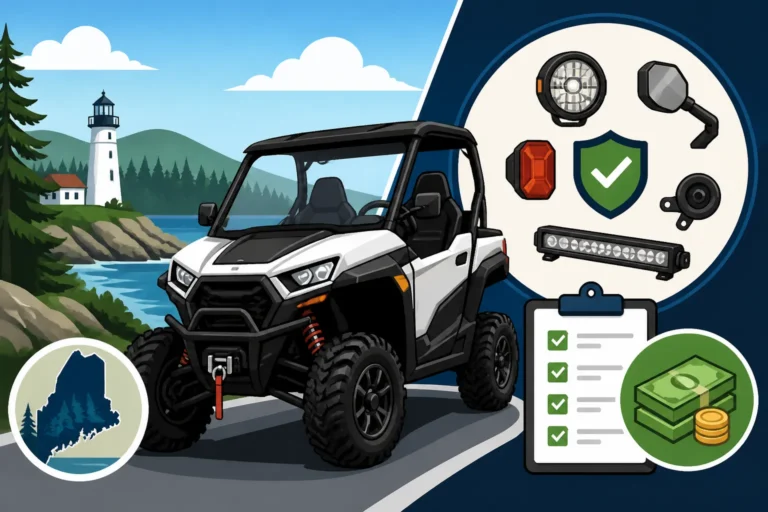
When riding on a public way, even briefly, you need to maximize your visibility. This includes ensuring your headlights and taillights are functional and illuminated, even during the day. Consider adding reflective tape to your machine or helmet, and a bright, visible flag can make a huge difference, especially if you're riding through wooded sections that open onto roads. If your UTV or ATV is equipped with SuperATV's enhanced turn signal kit, for example, utilizing those signals becomes crucial for communicating your intentions to other drivers. This isn't just about legality; it's about making sure other drivers see you coming, turning, or stopping.
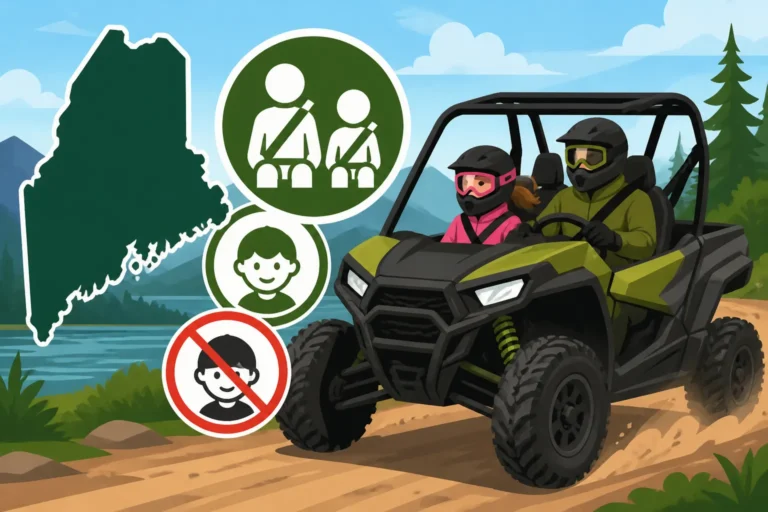
Furthermore, always wear appropriate safety gear. While helmets are not universally required for adults over 18 on all Maine trails, they are strongly recommended, especially when interacting with road traffic. For riders under 18, helmets are mandatory, as outlined in [Maine Helmet Rules for Riders Under 18]. Eye protection is also essential to prevent dust, debris, or insects from impairing your vision. Remember, being prepared and visible protects you and others.
Obeying Traffic Laws and Speed Limits
This point cannot be stressed enough: when on any public way, whether it's a 500-yard connector or a miles-long designated route, you must obey all traffic laws. This means stopping at stop signs, yielding at intersections, and adhering to the posted speed limits. Ignoring these rules not only puts you at risk but also jeopardizes the privilege of riding on these routes for all ATV users.
Many towns that have designated ATV-access routes have done so with the understanding that riders will be responsible and considerate. Excessive speed, loud exhausts (which could be an issue if you've modified your machine with certain aftermarket parts not designed for noise compliance), or reckless operation can quickly lead to public complaints and, ultimately, the closure of these valuable access points. Your behavior on these public ways reflects on the entire ATV community. So, be a good ambassador, ride safely, and show respect for the community and other motorists.
Disclaimer
This article is for general informational purposes only and does not constitute professional advice. Laws, prices and regulations vary by location and change over time. Consult a qualified professional for guidance on your specific situation.