Maine ATV Passenger Age Rules
Riding the trails and logging roads of Maine on an ATV or UTV is an incredible experience, but it’s one that often comes with a whole lot of questions, especially when you want to bring friends or family along. Many folks assume that if there’s a seat, it’s fair game, but Maine has specific rules about who can ride as a passenger, particularly concerning age and machine type. This guide will unravel the complexities of Maine’s ATV and UTV passenger age rules, helping you ensure every ride is both legal and safe for everyone on board.
The Core Rules for Carrying Passengers on ATVs in Maine
Let's start with the basics for ATVs, often called "quads" or four-wheelers. Unlike side-by-sides, which are designed from the ground up for multiple occupants, traditional ATVs often present more ambiguity when it comes to passengers. It’s easy to think, "Oh, I'll just have my kid sit behind me," but the law in Maine is very particular about this.
What Makes an ATV "Passenger-Ready"?
First and foremost, your ATV needs to be designed for a passenger if you intend to carry one. This isn't just about having enough room on the seat; it's about the manufacturer's intent and the machine's engineering. A single-rider ATV, by its very design, is built for one person to control and balance effectively. Adding a passenger to a machine not designed for it fundamentally changes its handling characteristics, making it significantly harder to steer, brake, and navigate uneven terrain safely. You're talking about shifting weight, higher center of gravity, and an entirely different dynamic.
If your ATV has a designated passenger seat, often called a "2-up" model, it will typically feature a longer seat, separate footrests or floorboards for the passenger, and often handholds. These machines are engineered with a more extended wheelbase and suspension calibrated to handle the additional weight, which is critical for stability and control. Without these specific features, even if you could physically squeeze someone on, it's not legally considered a passenger-ready ATV in Maine, and attempting to ride double on a single-rider machine could lead to fines and, more importantly, a dangerous situation for both you and your passenger.
Age Restrictions for ATV Passengers
Now, let's talk about the specific age rules, which can be a real head-scratcher for many. For traditional ATVs in Maine, the general rule is quite clear: no one under the age of 16 is permitted to operate or be a passenger on an all-terrain vehicle unless the ATV is specifically designed by the manufacturer to carry more than one person and the passenger is at least 7 years of age. This means that even if you have a 2-up ATV, a passenger younger than seven years old cannot ride with you. This rule is in place for very good reasons, primarily safety. Younger children simply don't have the strength, balance, or cognitive ability to safely ride as passengers on an ATV, even a purpose-built one.
Furthermore, any ATV passenger under the age of 18, regardless of the ATV type, is required to wear an approved helmet. We'll delve deeper into helmet specifics shortly, but it's crucial to understand this foundational age requirement. [Maine ATV Age Rules for Riders Under 16] covers the operator side, but the passenger rules are an equally vital part of keeping youth safe on our trails.
Riding Solo vs. Riding Double: When It's Legal and When It's Not
The distinction between riding solo and riding double boils down to your ATV's design and, consequently, its legality for carrying passengers. If your ATV is a single-rider model, meaning it wasn't manufactured with a dedicated seat and footrests for a second person, then it is strictly prohibited to carry a passenger. This applies to all ages, whether it’s a small child or another adult. Trying to get around this by adding an aftermarket seat or having someone simply "hold on" is not only illegal but extremely hazardous. The machine isn't balanced for it, and the rider's ability to shift weight and react to terrain changes is severely compromised.
Conversely, if you own a manufacturer-designed "2-up" ATV, then carrying a passenger is permissible, provided they meet the age requirement of at least 7 years old. These machines are built with the necessary structural integrity, wheelbase, and seating arrangements to safely accommodate two riders. Always consult your ATV's owner's manual to confirm its design specifications. When riding a two-up machine, ensure your passenger understands proper riding etiquette, like keeping their feet on the footrests and holding on securely, especially when traversing bumps or turns.
Special Considerations for UTV Passengers and Young Riders
Side-by-sides, or Utility Terrain Vehicles (UTVs), operate under slightly different passenger rules in Maine, primarily due to their design which more closely resembles a small off-road car. These machines almost always come with multiple seats, seat belts, and a roll cage, which inherently makes them safer for multiple occupants. However, specific requirements still apply, especially for youth.
UTV Passenger Rules: Seat Belts, Roll Cages, and More
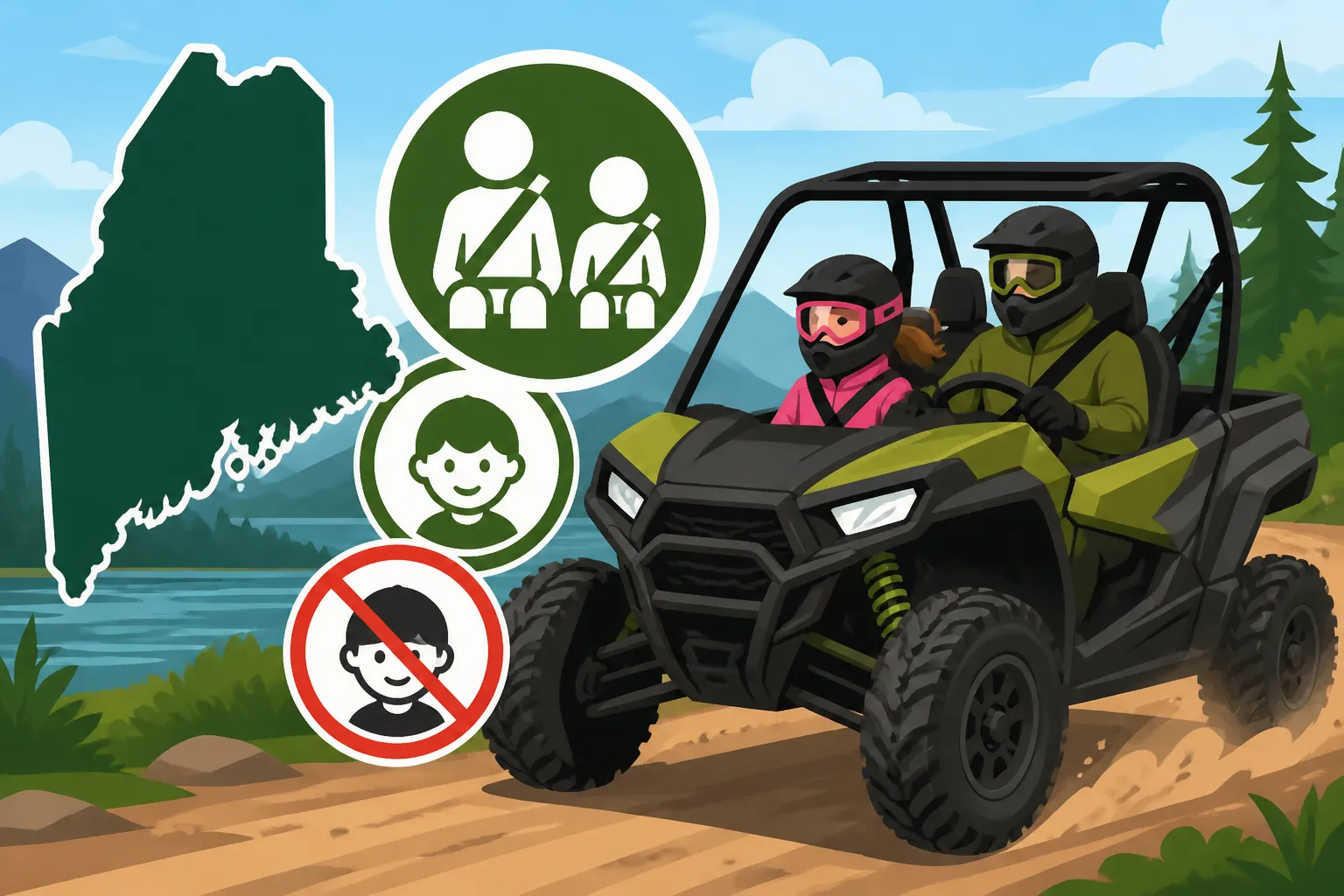
UTVs are a popular choice for family outings or group rides because they are explicitly designed to carry multiple passengers comfortably and safely. Each passenger in a UTV is required to occupy a designated seating position and wear a seat belt. This isn't just a recommendation; it's a legal mandate that significantly enhances safety in the event of a sudden stop, rough terrain, or rollover. The presence of a roll cage also provides a critical layer of protection, which is why UTVs have become so favored for their perceived safety. [Seat Belt Rules in a Side-by-Side] provides more detail on this crucial safety measure.
Furthermore, it's essential that the UTV's roll cage and any other safety nets or doors are intact and properly maintained. While you might consider upgrading your UTV's safety features with aftermarket parts from a company like SuperATV, always ensure any modifications comply with Maine's regulations and do not compromise the original safety design of the vehicle. These accessories can offer additional comfort and protection, but they must be installed correctly. For those interested in enhancing their UTV's safety, looking into robust roofs or full doors from reputable brands like SuperATV can add an extra layer of security.
Helmet Requirements for Young Passengers
This is a critical point that often causes confusion, so let's be crystal clear: In Maine, any ATV or UTV passenger under 18 years of age must wear a helmet. This rule is non-negotiable and applies universally, whether they are on a traditional ATV (if legally permitted to be a passenger) or a UTV. The helmet must be securely fastened and meet industry safety standards, such as those set by ANSI or DOT. [Helmet Rules for a Maine Passenger Under 18] and [Maine Helmet Standards: ANSI and FMVSS 218] go into greater depth on what constitutes an acceptable helmet. This isn't just about avoiding a fine; it's about protecting fragile heads from serious injury in the event of an accident.
Even if an adult passenger over 18 is not legally required to wear a helmet on a UTV in Maine (though it's always strongly recommended for their own safety), the rules for minors are absolute. As the operator, you are responsible for ensuring that all young passengers are appropriately equipped before you even start the engine. Don't take chances here; a good helmet is an investment in safety that pays dividends when you least expect it.
Who Can Supervise a Young Passenger?
While Maine law focuses on the age of the passenger and the design of the machine, the concept of supervision is inherently linked to operating an ATV or UTV with youth aboard. While there isn't a specific "supervision" requirement for passengers as there is for young operators (who need an adult within 200 feet), the adult operating the machine with a young passenger is implicitly acting as the supervisor. This means that if you're carrying a passenger who is, for example, 7 years old on your 2-up ATV or UTV, you, as the operator, are solely responsible for their safety, comfort, and adherence to all rules, including the helmet law.
For any operator under the age of 16, they are not allowed to carry any passengers, regardless of the machine type or passenger's age. This rule prioritizes the young operator's focus on safely controlling the machine before adding the responsibility of another person. The legal and safety implications are clear: the more experience and maturity an operator has, the better equipped they are to handle the dynamics of carrying a passenger. [Supervising a Young Rider on the Road] speaks to operator supervision, but the principle of responsible adult oversight extends to passengers as well.
Real-World Scenarios and Practical Passenger Safety
Navigating the rules is one thing, but applying them to real-world situations and ensuring true safety is another. Let's look at common scenarios and practical tips for riding with passengers on Maine's diverse trails and roads.
Family Rides: How to Keep Everyone Safe and Legal
Family rides are often the highlight of many Maine outdoor adventures. To ensure they are both memorable and compliant, meticulous planning is key. First, assess your equipment: do you have enough UTV seats with working seat belts for everyone? If you're considering a 2-up ATV, ensure your young passenger meets the 7-year-old minimum and wears a helmet. Always double-check that all passengers, especially children, can comfortably reach footrests or floorboards and have secure handholds.
Before heading out, conduct a thorough safety briefing. Explain to children how important it is to keep their hands and feet inside the machine, to hold on, and to follow your instructions. For UTVs, ensure seat belts are snugly fastened. For ATVs, teach them how to lean with the machine in turns, if they are old enough to understand and react appropriately. Consider the terrain you'll be riding; beginners and young children should stick to easy, well-maintained trails, not challenging, rocky terrain. You want to make it an enjoyable experience, not a white-knuckle ride.
| Requirement | Traditional ATV (Single-Rider) | Traditional ATV (2-Up / Designed for Passenger) | UTV (Side-by-Side) |
|---|---|---|---|
| Passenger Allowed? | No | Yes (if passenger is 7+ years old) | Yes (if passenger occupies designated seat) |
| Passenger Age Min. | N/A | 7 years old | No specific minimum, but common sense applies |
| Helmet Under 18? | N/A | Yes (Mandatory) | Yes (Mandatory) |
| Seat Belt Required? | N/A | No (footrests & handholds expected) | Yes (Mandatory for all passengers in designated seat) |
| Designed Seating? | No | Yes (dedicated seat & footrests) | Yes (individual seats for each passenger) |
| Roll Cage? | No | No | Yes (standard safety feature) |
Riding on Roads and Access Routes with Passengers
Riding on designated public roads and ATV-access routes with passengers adds another layer of scrutiny. Maine law outlines specific rules for operating ATVs and UTVs on public ways, and these rules often come with increased enforcement, especially around population centers. If you're [Carrying Passengers on a Road Ride], ensure your machine is appropriately registered and equipped with the necessary lights and mirrors. All the passenger age and helmet rules still apply here, with an even greater emphasis on compliance due to the potential for interaction with conventional vehicle traffic.
When using ATV-access routes, remember that these are often shared with cars, bikes, and pedestrians. Slow down, be highly visible, and ensure your passengers are aware of their surroundings. This is especially true for young passengers who might be excited or distracted. Any modifications from SuperATV or similar brands, such as brighter LED lighting or reflective elements, can significantly improve visibility on shared roadways, adding an extra layer of safety when carrying precious cargo. [Maine ATV Rules for Riders Under 16 on Roads] highlights specific challenges and rules for younger operators, but the safety principles extend to passengers too.
What Wardens Look For: Avoiding Fines and Staying Safe
Maine's Warden Service is dedicated to ensuring safe and responsible use of our trails and public ways. When they encounter an ATV or UTV with passengers, they'll primarily be checking for compliance with the rules we've discussed. This means they'll be looking to see if your ATV is a legitimate 2-up model, if your UTV has all passengers properly belted and seated, and crucially, if any passengers under 18 are wearing an approved, securely fastened helmet.
They'll also confirm the age of young passengers if there's any doubt about them meeting the 7-year-old minimum for ATVs. Operating an ATV with an underage or illegally carried passenger, or one without a helmet when required, can result in significant fines and potentially put your riding privileges at risk. It’s not just about the law; it's about the safety message it sends. A quick stop by a Warden can be a great opportunity to ask questions, but it's far better to be fully compliant from the start. [Maine Warden Checks and What They Ask] provides insight into common interactions with game wardens on the trails.
In the end, Maine’s ATV and UTV passenger age rules are designed with safety in mind. By understanding and adhering to them, you’re not just avoiding penalties; you’re fostering a safer environment for everyone to enjoy the incredible outdoor recreation opportunities our state has to offer.
Disclaimer
This article is for general informational purposes only and does not constitute professional advice. Laws, prices and regulations vary by location and change over time. Consult a qualified professional for guidance on your specific situation.