Planning a Multi-Day Ride Across Maine Trails
A multi-day ATV ride in Maine can look connected on a map and still run into a closed trail, a missing fuel stop, or a stretch of private land where access is not permitted. This guide helps you plan realistic daily routes, confirm access, arrange overnight stops, and prepare for the communication gaps that come with riding far from town.
Build a route around open, connected trail sections
Choose a region before planning the whole trip
Maine is large, and its trail systems do not always join into one continuous route. Start by choosing a riding region—such as Aroostook County, the Moosehead Lake area, Jackman, or the Katahdin region—and decide how many days you want to spend there. A regional trip is often easier to plan than a long route that tries to cross much of the state.
A practical first step is to identify your starting point, finish point, and overnight locations. Then look for trail connections between them. A route that appears to connect two towns may rely on a public-road section, a seasonal trail, or permission from a private landowner. Confirm each connection before treating it as rideable.
Give yourself room to change the plan. A group may make slower progress than expected because of rough terrain, stops, weather, mechanical problems, or a rider who is new to trail riding. Rather than filling every daylight hour with miles, plan a manageable main route and a shorter alternative for each day.
Confirm trail access and seasonal status
A line on a map does not automatically mean a trail is open to ATVs. Maine routes may depend on permission from private landowners, club agreements, and local conditions. Access can change during a season, so check trail status with the relevant clubs or local sources shortly before you leave and again during the trip if conditions shift.
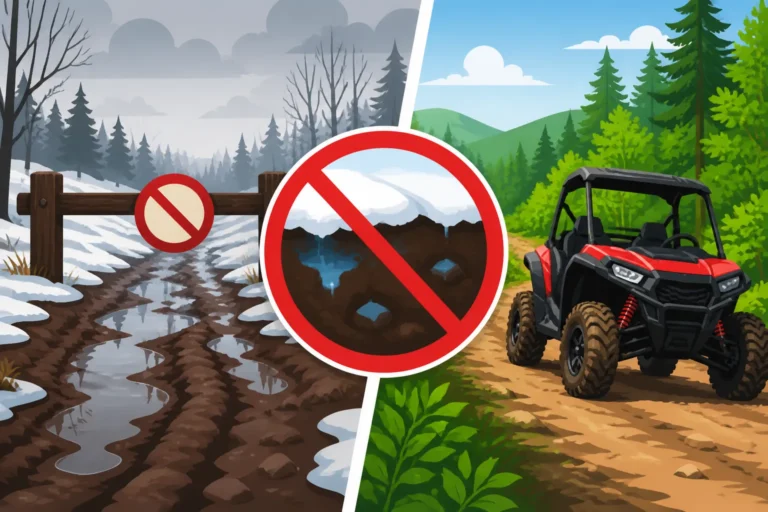
Spring mud season deserves particular caution. Trails may remain closed while the ground is soft, and riding too early can damage the trail surface and put future access at risk. Even after a trail opens, a heavy rain can make a route muddy, slow, or unsuitable for a loaded machine. For background on the seasonal pattern, see Maine Trail Openings and Mud Season and Maine Trail Closures Mid-Season.
Private-land access is an especially important part of planning in Maine. Do not assume that a route remains open because it was available on a previous visit, or because another map shows a track there. Review Why 80 Percent of Maine Trails Sit on Private Land and follow posted restrictions, club guidance, and any local closure notices. If a connection is uncertain, plan a legal alternative rather than riding through and hoping access is allowed.
Design daily distances that leave room for real life
Plan by riding time, not just map distance
A trail distance can be misleading. A smooth, familiar section may take less time than a rocky, muddy, narrow, or unfamiliar one, and a group ride includes more stops than a solo ride. Fuel breaks, lunch, route checks, photo stops, and helping a rider with a stuck machine all add time. Make the first day conservative so the group can learn how quickly it actually travels.
Estimate the day in blocks: morning ride, a planned break, afternoon ride, and arrival buffer. That final buffer matters. Reaching a lodge or campsite before dark gives you time to fuel, check machines, sort out gear, and respond calmly if the route takes longer than planned. A schedule that only works if everything goes perfectly is too tight.
Build flexibility into the itinerary rather than treating it as a failure to complete the route. Mark a shorter route to the same overnight stop, and note a safe place where the group can turn back if weather or trail conditions deteriorate. For a multi-day trip, arriving rested is more valuable than squeezing in an extra stretch and starting the next morning tired.
Make route options easy to understand
Share the daily plan with everyone before riding. Identify the intended trail connections, planned stops, overnight destination, and the point where the group will decide whether to continue or take a shorter option. Riders should know the plan well enough to recognize when the group has wandered off it.
Use more than one navigation reference. A phone-based map such as onX Offroad can help you review route lines and terrain, but do not treat any app as a substitute for checking access and current trail status. Download or save the information you need before entering an area with weak service, and carry a paper map or other backup that the group can use if a device fails.
Also make sure everyone knows the group’s riding order and regrouping expectations. On unfamiliar trails, riders can spread out quickly around turns or intersections. Agree in advance to wait at forks and other decision points, and make sure the last rider is accounted for before the group continues. See Maine ATV Trail Maps and Club Boundaries for why map coverage and local boundaries matter when building a route.
Sort out fuel, food, lodging, and staging
Treat fuel as a route-planning requirement
Do not assume that a fuel stop will be available exactly where you want one. Some sections pass through remote areas with limited services, and a business that serves riders may have different hours or access arrangements than you expect. Check likely stops directly, confirm that they can serve your machine, and have a backup plan if a stop is closed or unreachable.
Estimate fuel needs using your own machine and riding conditions. A heavily loaded UTV, difficult terrain, long idling periods, or a route with detours can affect consumption. Leave a reserve rather than planning to reach a station with the tank nearly empty. If you carry extra fuel, use suitable approved containers and secure them safely according to the manufacturer’s guidance.
Make fuel planning part of the daily itinerary: mark where you expect to refuel, how much range you want before the next stop, and what the group will do if a machine uses more fuel than expected. It can help to review Fuel Stops Along Maine ATV Trails and Fuel Range Between Remote Trail Towns while comparing possible routes. Verify local services before relying on them.
Book overnight stops and trailer parking together
For each night, confirm that your lodging or campsite is appropriate for an ATV trip. Ask whether machines can be parked securely, whether a trailer can remain there, where riders may access the trail, and whether any route crosses roads or land where permission is restricted. A place described as “near the trail” may still require a separate connection that needs checking.
Think through the arrival as well as the stay. If you finish the day at a different location from where the truck and trailer are parked, you need a legal, workable plan for the vehicle and machines. Do not count on leaving a trailer overnight in a lot without permission. For trip ideas and questions to ask, see Maine ATV Trail Camping and Lodging and Trailhead Parking That Fits a Trailer.
Book with your group’s actual needs in mind. A family may need separate sleeping arrangements or a place to dry wet riding gear; a larger group may need enough parking for several trailers. Confirm arrival procedures, food options, and any restrictions on machine storage before you set out. These small details can prevent a tired end-of-day search for a place to eat or a safe place to leave equipment.
| Planning item | Confirm before departure | Backup to identify |
|---|---|---|
| Daily route | Open status, legal connections, and shorter alternatives | Alternate route or turn-back point |
| Fuel | Stops, operating details, and expected machine range | Reserve fuel plan or alternate stop |
| Overnight stay | ATV access, parking, and arrival arrangements | Another permitted place to stay |
| Navigation | Saved maps and route notes | Paper map and offline device access |
| Communication | Group check-in plan and coverage expectations | Agreed meeting point and emergency plan |
Prepare for remote riding and changing conditions
Carry navigation and communication backups
Cell service can be unreliable in remote parts of Maine. Do not make an emergency plan that depends on being able to call, message, or load a map at every intersection. Before the ride, save routes and relevant map information offline, charge devices, and carry a power source. A waterproof case or protected storage can help keep electronics usable through rain and mud.
A paper map is useful when a phone is wet, damaged, out of power, or hard to read in bright conditions. Mark the main route, overnight stops, fuel options, and key junctions before leaving. Make sure at least two riders know how to use the backup map instead of leaving navigation entirely to one person.
Agree on how the group will respond if riders become separated. Set obvious regrouping points, such as a trail junction or planned break location, and decide how long the lead group will wait before taking action. If the route enters an area with poor coverage, tell someone outside the group where you expect to ride and when you plan to check in. Review Cell Service on Maine ATV Trails and Navigating Trails Without Cell Service when building your communication plan. Tools such as onX Offroad may be useful for preparation, but download the needed maps before service drops.
Pack for breakdowns, weather, and delays
A multi-day ride calls for more than the gear you might bring on a short local loop. Pack clothing for changing weather, drinking water, food for delays, basic first-aid supplies, and tools suited to your machines. Carry spare items that are practical for your group, such as tire-repair supplies or a way to address common minor issues, while keeping the load safely secured.
Check each machine before departure and at the beginning of each riding day. Look for obvious wear or damage, confirm that tires and controls are in suitable condition, and follow the manufacturer’s maintenance guidance. A small problem caught at camp is usually easier to handle than the same problem on a remote trail. Keep registration and other required documents accessible, and confirm that each rider understands the route and applicable rules.
Weather can change the character of a day’s ride. Rain may slow progress, reduce visibility, and make some surfaces more difficult; cold or wet conditions can also affect riders who are not dressed for a long day outdoors. Decide in advance what conditions would make the group shorten or cancel a segment. If a machine becomes disabled, keep the group together and use the planned communication and recovery approach rather than splitting up without a clear plan.
Ride in a way that protects access for the next trip
Respect landowners, clubs, and local communities
A successful multi-day ride depends on keeping routes open. Follow signs and closures, stay on authorized trails, and avoid widening muddy sections to go around a difficult patch. Close gates if the landowner’s instructions call for it, keep noise and speed reasonable near homes, and leave campsites and parking areas clean.
When a trail crosses private land, access is not something to take for granted. Do not ride around a closure, use a nearby road as an unofficial shortcut, or assume that permission for one trail applies to another. Club volunteers and landowners help maintain access, and considerate behavior by visitors makes a real difference. Maine ATV Trail Etiquette With Landowners offers additional context for riding respectfully.
Be especially thoughtful when groups pass through villages or share areas with cars, pedestrians, and other trail users. Keep the group orderly, follow posted signs, and avoid blocking roads or business entrances. A route through town is not an invitation to ride anywhere you choose; confirm which connections are permitted and follow the applicable rules.
Recheck the plan each morning
Before leaving each overnight stop, check whether the day’s route remains open and whether conditions have changed. Ask a local club, lodging host, or other reliable local contact about trail closures, washouts, or access concerns. A quick check can prevent the group from discovering a problem several miles into the day.
Review fuel, weather, machine condition, and rider comfort together. If someone is tired, cold, or uncomfortable, adjust the plan rather than pressuring them to keep pace. The group should know who is carrying the map, who has the first-aid supplies, and how to handle a breakdown or separation.
At the end of the trip, note what worked and what did not: actual riding time, fuel use, trail conditions, useful stops, and any confusing junctions. Keep these notes for your next Maine ride, but verify access again before reusing the route. Conditions and permissions can change, and a route that was appropriate on one trip may not be open the next time.
Disclaimer
This article is for general informational purposes only and does not constitute professional advice. Laws, prices and regulations vary by location and change over time. Consult a qualified professional for guidance on your specific situation.