Greenville ATV Trailhead Parking
Finding a place to park an ATV trailer near Greenville can be less straightforward than finding the trail itself. A lot that looks convenient may be private, too small for a truck and trailer, or unsuitable for overnight parking. This guide explains how to plan your staging spot, verify access, and avoid common parking headaches before you head toward Moosehead Lake trails.
How to plan ATV trailhead parking in Greenville
Start with the ride, then choose the parking spot
Greenville is a popular base for riding in the Moosehead Lake region, but the right place to park depends on the route you intend to take. A short local ride, a longer trip toward Kokadjo, and a ride connecting with trails near Rockwood can involve different access points and different parking arrangements. Don’t pick a staging location simply because it appears close to a trail on a map.
First, identify the trail system and your intended starting point. Then confirm that the access point is open to riders and that parking is permitted there. In a region where trails may cross private land and rely on landowner permission, a visible gravel pull-off or wide driveway is not automatically a public trailhead or a place where a truck and trailer may be left.
Planning around the route also helps you estimate how much space you’ll need. A pickup with an enclosed trailer takes up more room than a car carrying a single ATV, and turning around can be difficult on narrow roads. If you’re traveling with several machines, agree on one staging location before the group arrives rather than having everyone search for space separately.
For route ideas, start with [Greenville and Rockwood ATV Trails] and [Riding From Greenville to Kokadjo]. Use those as planning starting points, then check the specific route and access details before driving to a launch area.
Match the lot to your vehicle and trailer
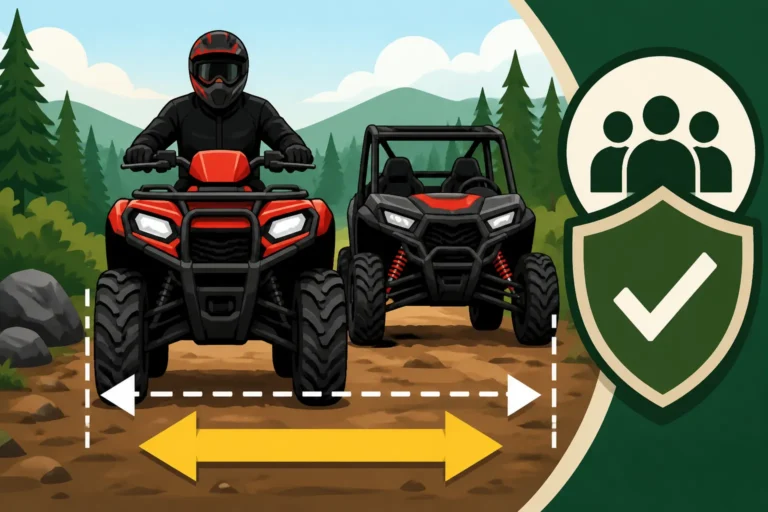
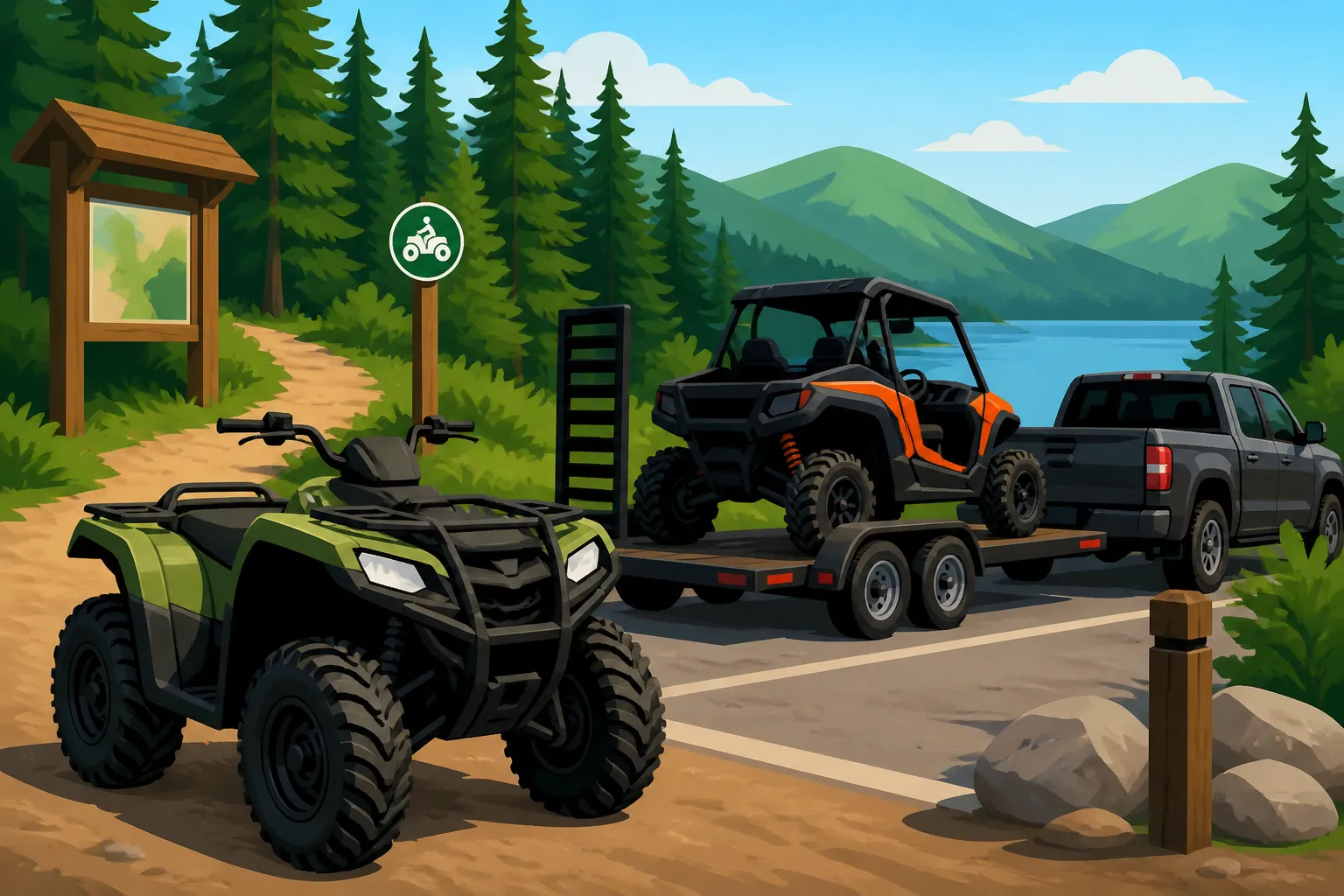
A parking area can be suitable for a passenger vehicle without being practical for a trailer. Before leaving home, consider the full footprint of your tow vehicle and trailer, not just whether you can fit the truck into a space. You’ll need room to maneuver, unload, secure the trailer, and leave without blocking other visitors or access roads.
The dimensions and layout of trailhead parking can vary. Some places may have marked spaces or a defined staging area; others may have limited room or no obvious place to turn around. A longer trailer can make a tight entrance or crowded lot especially stressful. If you’re unsure, contact a local ATV club, property manager, town office, or lodging host and ask specifically whether a truck and trailer can park there.
| Parking situation | What to confirm before you go | Best fit |
|---|---|---|
| Designated trailhead or staging area | Whether ATV parking is currently allowed, space for your trailer, and any posted restrictions | Riders unloading at an approved access point |
| Business or lodging parking | Permission from the owner, parking duration, and whether trailer parking is allowed | Guests or customers with direct approval |
| Roadside pull-off | Whether stopping and leaving a vehicle there is permitted and safe | Only when clearly allowed and appropriate |
| Overnight parking area | Permission, security arrangements, and whether unattended trailers are allowed | Riders staying nearby or returning the next day |
A few minutes spent checking these details can prevent a frustrating arrival, especially on a busy weekend. For more planning help, see [Maine ATV Trail Parking and Staging] and [Trailhead Parking That Fits a Trailer].
Confirm that access and parking are actually available
Check more than one source before you leave
Trail access and parking are related, but they are not the same thing. A route may be open while the nearby area you hoped to use for parking is restricted, full, or intended for another purpose. Likewise, a familiar parking spot may no longer be available if a property owner has changed access arrangements or a temporary closure is in place.
Check current trail and access information close to your travel date. Look for notices from the local club or land manager, and pay attention to signs when you arrive. If information is unclear, ask rather than assuming that a trail line on a map gives you permission to park or ride across the adjoining property.
A digital map can help you understand the general layout, but it should be one part of your planning. onX Offroad can be useful for reviewing mapped routes and orienting yourself, particularly when you’re comparing possible approaches around Greenville. Check the map’s details alongside local trail information, posted signs, and permission from the people responsible for the access point.
For broader route planning, read [Maine ATV Trail Maps and Club Boundaries] and [Checking Maine Trail Status Before You Drive]. If your plans include a longer connection toward the Rockwood area, also review [Rockwood to Pittston Farm Trail] and confirm that the relevant sections are open.
Don’t treat a business lot as public parking
Restaurants, stores, lodging properties, and other businesses can be helpful stops for riders, but their parking areas are not automatically public staging areas. Even when a business is near a trail route, leaving a truck and trailer there may interfere with customers, deliveries, or the property’s normal use. Ask the owner or manager before unloading or leaving a vehicle for an extended period.
This matters even more if you plan to park overnight. A business may welcome riders who are actively visiting but not permit unattended trailers after closing. Some lodging properties may offer guest parking, while others may have limited space or specific instructions. Confirm the arrangement directly, explain what you’re bringing, and ask where the vehicle and trailer should go.
Avoid blocking gates, driveways, access roads, or space needed by emergency and service vehicles. Don’t assume that an empty lot is available simply because no one is using it at the moment. Respectful parking helps maintain good relationships with local businesses and landowners, which matters in a riding area where access depends on cooperation.
Arrive prepared and park considerately
Make unloading and turning around safer
Before you reach the parking area, think through how you’ll unload. Choose a stable, level spot when one is available, and avoid setting up where you obstruct the entrance or force other vehicles to squeeze past. If the lot is busy, take a moment to watch how traffic is moving before backing or unloading.
A spotter can make backing a trailer into a tight space much easier. Agree on simple signals before the maneuver begins, and have the spotter stand where the driver can see them. Keep children and pets clear of the truck and trailer while you’re backing, lowering ramps, or moving machines. If there isn’t enough room to maneuver safely, don’t force it; find an approved alternative.
Secure your trailer and gear before leaving for the ride. Check that ramps are stowed, straps and tools are put away, and the vehicle is locked. Don’t leave fuel containers or valuables visible inside an unattended vehicle. These are sensible precautions anywhere, but they’re especially helpful when you’ll be away from your parking spot for several hours.
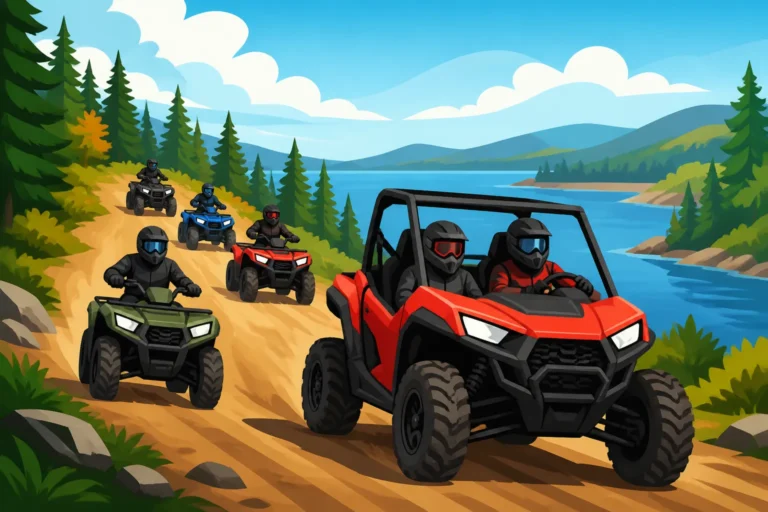
If you’re traveling with a group, decide how many tow vehicles will go to the staging area and where any extra vehicles can stay—with permission. A convoy of trucks and trailers can fill a small lot quickly, leaving other riders unable to park or turn around. Keep the group’s footprint as small as practical.
Follow signs and local instructions
Signs at an access point can explain where to park, where not to ride, and whether an area is closed or restricted. Read them before unloading. If a sign directs visitors to a particular area or prohibits parking, follow it even if another location looks easier. When instructions are unclear, stop and ask someone responsible for the property or trail access.
Stay on established roads and marked routes when approaching a staging area. Don’t cut across a lawn, field, or unmarked path to reach what looks like a more convenient starting point. This can damage property and create the impression that riders disregard boundaries. For guidance on respectful access, see [Maine Trail Etiquette With Landowners].
Keep noise and dust in mind, especially near homes, camps, and businesses. Avoid unnecessary engine revving while loading or waiting for other riders, and don’t idle longer than needed. A tidy, quiet departure is a small courtesy that can make a real difference in how welcome riders feel in the area.
If the parking spot is full, don’t create an informal overflow area on private land or along a narrow road. Move to a permitted alternative, contact a local club or business for guidance, or adjust the day’s plan. A few extra minutes spent finding an authorized place is better than risking a blocked road, a damaged relationship, or a ticket.
Plan for overnight stays and changing conditions
Ask about overnight trailer parking directly
If you’re staying in Greenville and riding on more than one day, clarify parking before booking or arriving. Ask whether the property allows a truck and trailer to remain overnight, whether the trailer can stay attached, and whether there is enough room to turn around. If you’re meeting friends, confirm whether their vehicles can use the same area or whether they need separate arrangements.
Don’t rely on a general statement that a property has “parking.” That could mean a small area for passenger cars rather than space for a long truck-and-trailer combination. Describe your setup clearly, including the approximate trailer length if you know it, and ask where the vehicle should be parked. A quick call can prevent the awkward situation of arriving late and discovering there’s no suitable space.
If you need to leave a trailer unattended while riding, confirm that the property permits it and follow any rules about locking or positioning it. Keep access lanes clear, and don’t use a neighboring lot or driveway as overflow unless you have permission. For more on planning a longer stay, see [Overnight Trailer Parking in Trail Towns].
Have a backup plan for closures and crowded lots
Parking and trail access can be affected by weather, seasonal conditions, maintenance, private-property decisions, or local events. The best response is to check conditions before you leave and keep a second option in mind. If your preferred lot is closed or full, having another approved place to stage can keep the day from turning into a stressful search.
A backup plan doesn’t mean choosing a random pull-off. Identify a second location where parking is permitted, and make sure it works for your vehicle and trailer. If no alternative is confirmed, be ready to change the route, ask a local contact for guidance, or postpone unloading until you can verify access.
Keep maps available even if your phone has service. Apps such as onX Offroad can help you review route context, but download or save the information you’ll need before heading into areas with unreliable coverage. A paper map or written directions can also be useful if your phone battery runs low or your connection drops.
Before setting out, run through a simple checklist:
- Confirm the route and trail access are open.
- Verify that the planned parking area permits ATV trailer parking.
- Check that your truck and trailer can fit and turn around safely.
- Ask separately about overnight parking if you’re staying in the area.
- Save a backup location and local contact information.
- Follow posted signs and leave the parking area clean and unobstructed.
A little advance coordination is what makes Greenville trailhead parking manageable. Confirm the specific access point, get permission where needed, and choose a spot that fits your vehicle rather than hoping space will appear when you arrive.
Disclaimer
This article is for general informational purposes only and does not constitute professional advice. Laws, prices and regulations vary by location and change over time. Consult a qualified professional for guidance on your specific situation.