Riding Trails With a Large Group
A large ATV or UTV ride can turn into a long, frustrating day when the group gets separated, a trail narrows, or the planned route crosses a closure. Maine’s trail network also depends heavily on landowner permission and local club stewardship. This guide explains how to plan a group ride, keep machines together safely, and adapt when trail conditions change.
Plan a Maine group ride before anyone unloads
Choose a route that fits the whole group
Start with the riders and machines, not the most ambitious line on the map. A trail that suits nimble quads may be tiring or impassable for a wide side-by-side. Ask about the narrowest machines in the group, how much experience riders have, and whether anyone needs frequent breaks. Then choose a route that leaves room for the least experienced rider rather than pushing them to keep up.
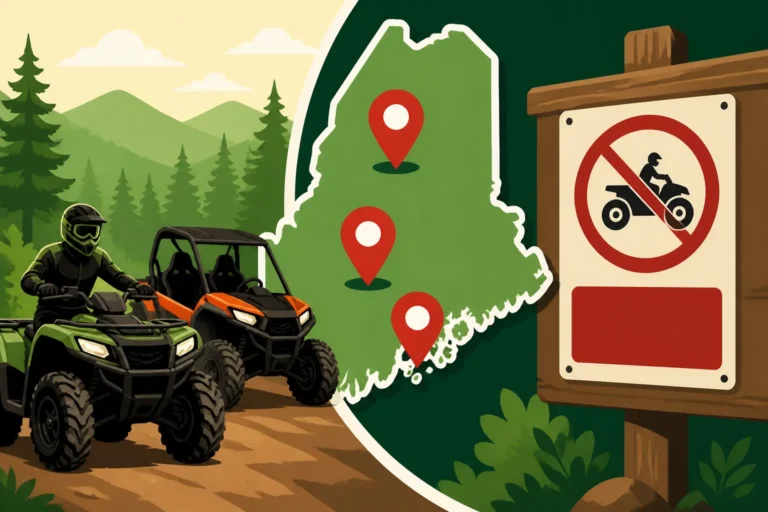
In Maine, a route can cross private land, club-maintained trails, and public roads or trail connections. Access may depend on permission, seasonal conditions, and local restrictions. Don’t assume that a line shown on a map is open simply because it appears rideable. Review Maine ATV Trail Maps and Club Boundaries and check local club notices or signage before setting out. If a section is closed, treat the closure as part of the route planning—not as an obstacle to work around.
Build in an easier alternative. For example, a group riding near Greenville might plan a shorter loop for newer riders and an optional extension for experienced riders, but only if the connection is confirmed open and appropriate for every machine taking it. A route with a clear turnaround point is usually better than a long out-and-back that leaves the group committed when weather, fatigue, or a mechanical problem changes the day.
Confirm trail access, width, and staging
Contact a local club or land manager when you have questions about a route, its conditions, or whether a large group is welcome. Club volunteers often know about temporary closures, washouts, gates, and narrow bridges that may not appear on a general map. Keep in mind that access can change; respect posted signs and any instructions from the people responsible for the trail.
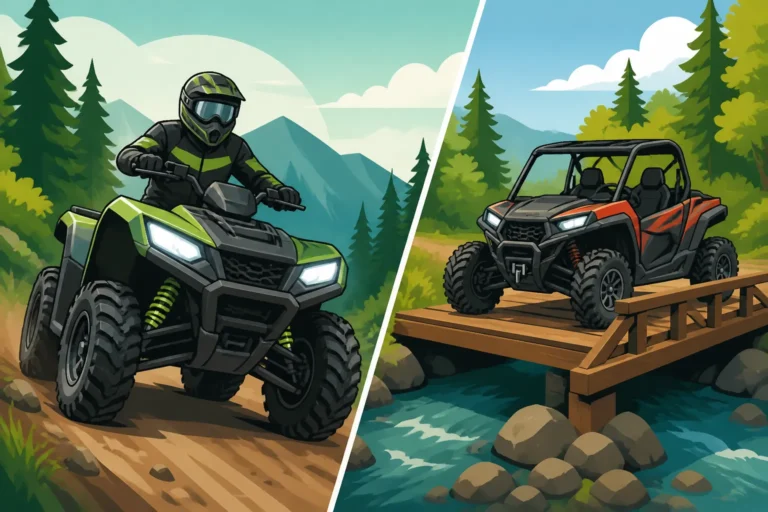
Machine width deserves special attention when side-by-sides are coming along. A route that works for a standard quad may not safely accommodate a wide UTV, particularly at bridges, gates, or tight turns between trees. Before inviting a large group, check Wide Side-by-Sides on Narrow Maine Trails and Trail Width Limits Set by Clubs. If the route’s suitability is uncertain, choose a different trail rather than finding out at a pinch point with several machines behind you.
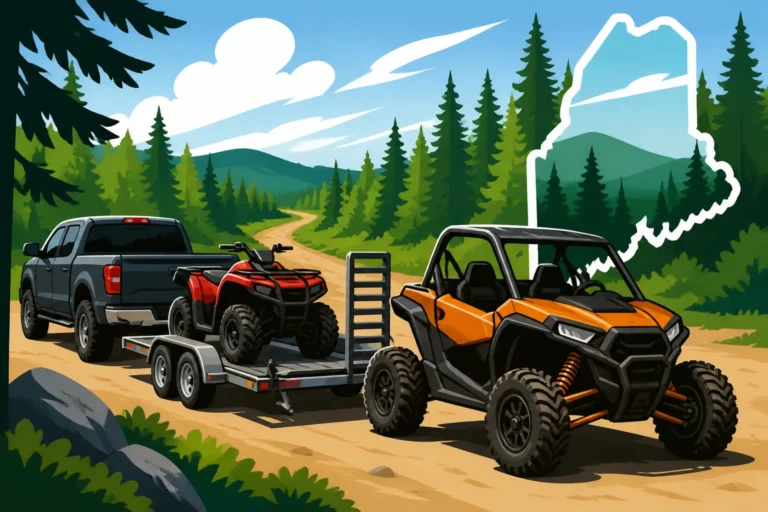
Work out where everyone will meet, park, unload, and regroup. A crowded trailhead can become chaotic when several trailers arrive at once, especially if some riders are still loading gear while others are ready to go. Confirm that the staging area can accommodate the group’s vehicles and trailers, and avoid blocking access for other riders or local traffic. These basics are easier to settle before the convoy is assembled than at the edge of a busy parking area.
Organize riders so the group stays together
Assign simple roles before you start
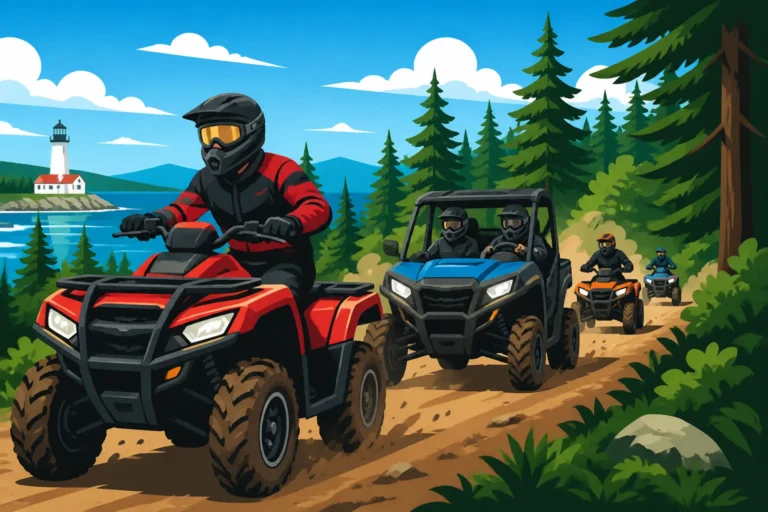
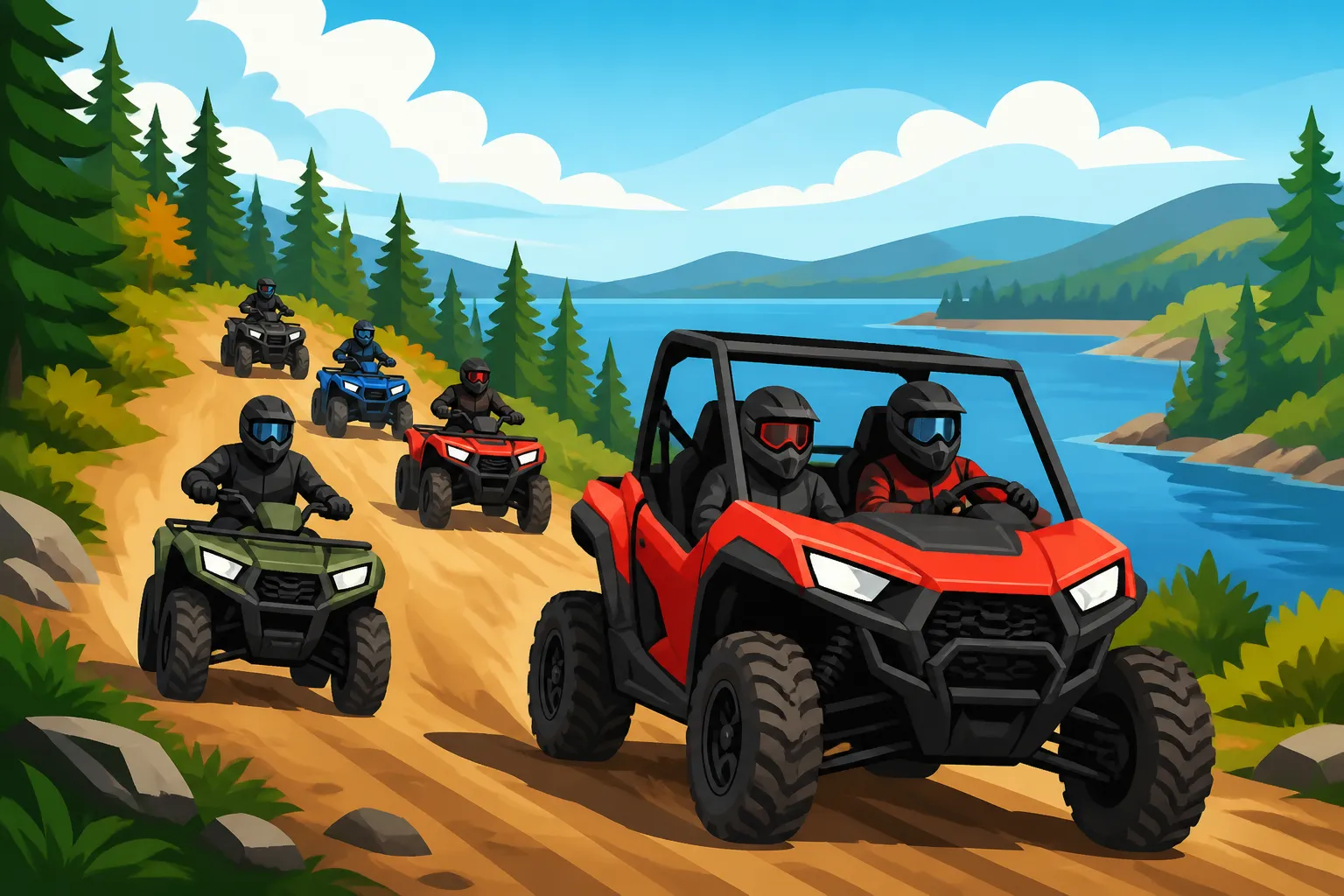
A large ride benefits from a lead rider and a sweep rider. The lead knows the intended route and sets a pace that the group can comfortably follow. The sweep stays behind the last rider and lets the lead know when the entire group has passed a turn or regroup point. Neither role should be treated as a race position: the lead is not trying to pull away, and the sweep is not expected to solve every problem alone.
Choose a few regroup points before leaving the trailhead. Good locations are wide, visible places away from intersections, narrow bridges, road crossings, and other spots where stopped machines could create a hazard. At each point, wait until the sweep arrives and account for everyone. If one rider is missing, the group should stop somewhere safe and use the agreed communication plan rather than sending several people back in different directions.
Keep roles and expectations clear when riders have different experience levels. A capable rider can stay near someone who is new to the area, while the lead avoids sudden changes in speed or direction. If a rider wants to leave early, gets separated, or needs to turn back, the group should already know who is accompanying them and how the rest will continue or return.
Set a pace and spacing that work for everyone
The safest group pace is the pace that lets riders maintain control and react to the trail—not the pace of the fastest machine. Leave enough room between vehicles for dust, bumps, braking, and unexpected stops. On a narrow section, ride in an orderly line and avoid trying to pass. Near homes, farms, trail intersections, and other riders, slow down and keep noise and dust in mind.
A large convoy can stretch out quickly. If the lead accelerates after a turn, riders at the back may not see which way the group went. Use planned regroup points and clear turn procedures: riders should wait at confusing junctions until the next rider has arrived and understands the direction. That way, the last rider is not left guessing because a dust cloud hid the trail marker.
Talk about signals before riding. Agree on how riders will communicate a stop, a turn, a hazard, or a mechanical issue. Hand signals can help when machines are close enough to see one another, but they may not travel reliably through a long group. Radios or another communication method can be useful, but don’t rely on a device as the only plan. Before heading into an area with patchy reception, review Navigating Trails Without Cell Service and consider what the group will do if someone cannot be reached.
Prepare for route changes and common group problems
Carry maps and a backup communication plan
Have a route everyone can understand, not just a track saved on one person’s phone. Share the intended route, key turns, meeting points, and turnaround options with the group before departure. A paper map can help when a phone battery dies or a screen is difficult to read in bright sun. Digital tools such as onX Offroad may help riders review routes and prepare offline maps; check the app’s available features and save what you need before leaving reliable service.
Ask riders to bring charged phones and portable power if they plan to use navigation apps. Keep devices secured and accessible without distracting the operator. A map is useful only if someone knows how to interpret it, so take a few minutes to review the route together and make sure more than one rider can navigate. If the planned trail is blocked, pause somewhere safe, check posted information, and agree on a revised route before moving.
For remote rides, plan how the group will handle a breakdown or separation. Decide where the rest of the group will wait, who will stay with a stranded rider, and who will contact help if needed. Cell service can be inconsistent in wooded and backcountry areas, so don’t make “call someone” the entire emergency plan. Getting Help on a Remote Trail can help you think through what information and equipment may be useful when a problem occurs far from the trailhead.
Keep breaks, fuel, and mechanical issues manageable
Long waits can make a group ride feel much longer than the mileage suggests. Set expectations for breaks and tell riders to speak up early if they need one. A short stop in a safe pull-off is better than a rider silently struggling until they fall behind. Choose rest spots that allow machines to pull fully clear of the trail, and keep intersections and narrow sections open.
Fuel planning should account for the machine with the shortest practical range, not just the one that goes farthest. Terrain, load, riding style, and detours can affect consumption. Identify fuel options in advance rather than assuming every trail town has a convenient stop open when you arrive. For remote routes, review Fuel Range Between Remote Trail Towns and Carrying Extra Fuel on a Trail Ride. Carry fuel safely and in suitable containers, and follow the product and local handling guidance.
Do a basic machine check before departure: tires, controls, lights where relevant, fuel, and any equipment needed for the planned route. Ask riders to bring essentials such as water, weather-appropriate layers, a first-aid kit, and basic tools suited to their machines. If someone breaks down, move the group to a safe location, make sure the rider is not left alone, and avoid blocking the trail while deciding what to do.
| Group ride issue | What to agree on beforehand | Safer response on the trail |
|---|---|---|
| A rider misses a turn | Turn-wait procedure and regroup points | Stop at a safe location and account for riders before backtracking |
| A machine breaks down | Who stays with the rider and how to request help | Move clear of the trail and keep the group together |
| The route is closed or blocked | Alternate route and turnaround option | Obey signs and confirm a permitted alternative |
| The convoy stretches out | Lead and sweep roles, plus signals | Slow down and regroup rather than speeding to catch up |
| A rider needs to leave early | Who accompanies them and where the group reconnects | Use the agreed plan instead of splitting without notice |
Ride considerately and leave the trail open for others
Be thoughtful around landowners and other trail users
Maine’s trail access relies on good relationships with landowners, clubs, and nearby communities. Keep to marked routes, close gates as instructed, and never treat a trail crossing private land as permission to explore adjoining woods or fields. A large group makes a stronger impression than one machine, so riders should be especially mindful of speed, noise, dust, litter, and how long they occupy a narrow trail.
Give other users room and be patient when meeting traffic. Follow signs and local direction at crossings, and don’t assume that a road section is open to ATVs just because the trail reaches it. If the route uses public ways, review Maine ATV-Access Routes and How Towns Post Them and Group Ride Etiquette on Town Roads before departure. The group leader should remind everyone that road access and trail access are not interchangeable.
If a landowner, club member, or other responsible person asks the group to stop or change course, respond calmly and follow the direction. Avoid arguing as a convoy blocks a route. One person can speak for the group while the others move to a safe place. A courteous response can help protect access for future rides; careless behavior by a few riders can affect many people.
End the ride with a clear head count
Before leaving the staging area, account for each rider and make sure everyone knows the return plan. If the group splits into different loops, agree on a meeting time and place, and confirm that each smaller group has a capable leader, a map, and a way to contact the others. Don’t let a casual “we’ll meet back at the lot” stand in for an actual plan.
At the end of the ride, check that no one is still on the trail, especially if a rider turned back or stopped with a mechanical issue. Take a moment to report a significant hazard or damage through the appropriate club or land-management channel. Specific information—a trail name, nearby junction, and description of the problem—is more useful than a vague report that “something is wrong out there.”
A well-run large group ride is not about keeping every machine moving constantly. It is about choosing a suitable route, staying within the rules and posted access, checking on one another, and making sensible changes when conditions demand them. With a little planning, riders can spend less time sorting out confusion and more time enjoying Maine’s trails responsibly.
Disclaimer
This article is for general informational purposes only and does not constitute professional advice. Laws, prices and regulations vary by location and change over time. Consult a qualified professional for guidance on your specific situation.