Maine Fall Foliage ATV Rides
Fall foliage makes a Maine ATV ride feel special, but peak color, open trails, and comfortable riding weather rarely line up perfectly across the state. A route that looks inviting on a map may cross private land or be closed for the season. This guide helps you choose a region, plan a responsible autumn ride, and check the details before towing your machine north.
Choose a Maine region for fall colors and riding
Maine’s foliage changes gradually, and the timing can vary between northern, western, and coastal areas. Elevation, weather, and the season’s conditions all matter, so it’s wiser to choose a general region and stay flexible than to plan around a single “peak” date.
Northern Maine and Aroostook County
Northern Maine offers a wide-open feeling that suits a long fall ride. Aroostook County’s working landscapes include farm fields, wooded stretches, and communities linked by extensive ATV trail networks. If you’re exploring around Presque Isle, Caribou, or Fort Kent, the changing colors can appear as a patchwork rather than a solid wall of red and gold: bright foliage along a wooded trail may give way to broad fields and distant ridgelines.
The scale of the region is part of its appeal, but it also makes preparation important. Distances between services can be substantial, and cell reception may be inconsistent once you leave town. Plan a route that fits your fuel range and daylight, and don’t assume that a line on a map is an open trail. Local clubs and landowners help maintain access, and seasonal conditions can affect which connections are available. [Aroostook County ATV Trail Riding] offers useful regional context, while [Maine ATV Trail Maps and Club Boundaries] can help you understand how trail systems and boundaries fit together.
Aroostook can work well for riders who want to spend a full day exploring rather than squeezing in a short loop between other activities. Pick a staging area, confirm where parking is permitted, and identify a realistic turnaround point before setting out. If you’re traveling with a group, agree on what to do if someone falls behind or a route is unexpectedly closed. Having a plan prevents a scenic ride from turning into a rushed search for a way back.
Moosehead Lake, Greenville, and the western mountains
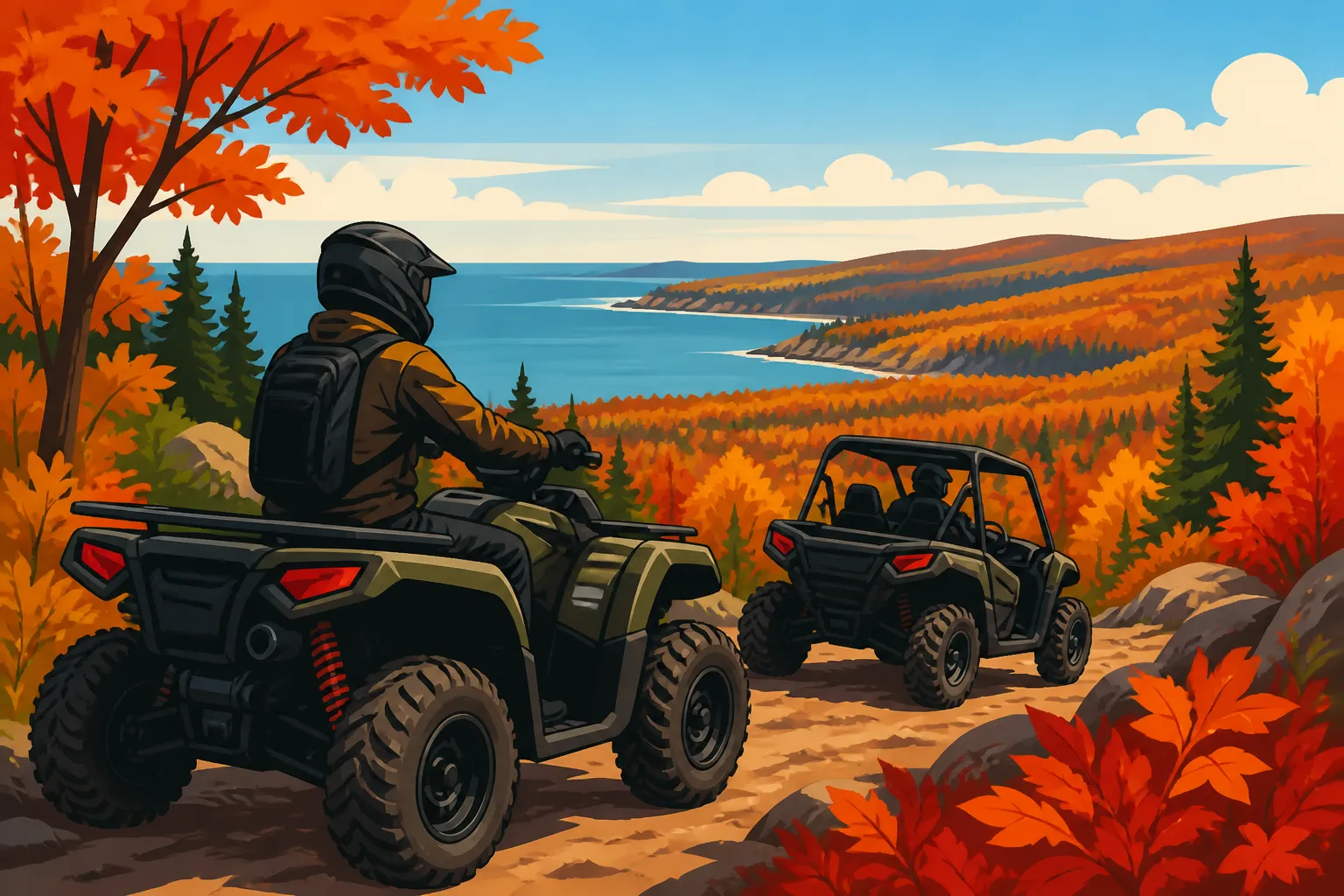
The Moosehead Lake region and western Maine offer a different autumn feel: forested hills, water views, and mountain backdrops. Greenville and Rockwood can serve as starting points for exploring the area, while the landscapes around Jackman and The Forks create other possibilities for riders looking for a longer getaway. On a clear day, the mix of wooded slopes and open views can make an unhurried ride especially rewarding.
These are not places to treat every visible track as an invitation. Trail access depends on permission, posted guidance, and the route’s current status. In areas with private land crossings, a closed connection can change the shape of a planned loop. Check before you leave and keep a backup route that stays on authorized trails. For a broader sense of how terrain differs across the state, see [Maine ATV Trail Difficulty by Region] and [Riding the Moosehead Lake Region by ATV].
The changing colors are only one reason to ride here in autumn. Cooler temperatures can make a day in the saddle more comfortable than a hot midsummer outing, but weather can turn quickly in the mountains. Bring an extra layer and allow enough daylight to return without pushing your pace. When a view opens up, stop in a safe, permitted place rather than lingering in the trail where other riders may need to pass.
Plan around foliage timing, trail access, and daylight
A fall ride takes a little more coordination than simply picking a weekend and loading the trailer. Color timing shifts from year to year, and the trail conditions that were fine on one visit may be different the next. A flexible plan gives you a better chance of enjoying the ride without putting pressure on yourself or the people who maintain access.
Pick a flexible date and verify trail status
Instead of aiming for one exact foliage weekend, choose a window that works for your schedule and check regional color reports as your trip approaches. Northern areas may change earlier than some southern or coastal locations, but local conditions vary. A warm or rainy stretch can affect both the leaves and the trail surface, so a date that looked perfect weeks ahead may turn out differently.
Check trail status close to departure, then check again before riding. A route can be affected by weather, trail work, seasonal closure, or a landowner’s decision. This matters especially during fall, when hunting activity and changing ground conditions may affect where and when you should travel. Start with [Checking Maine Trail Status Before You Drive] and [Maine ATV Trails in October] when building your plan. If you’re considering a ride earlier in the season, [Best Month to Ride Maine ATV Trails] can help you think through the broader seasonal trade-offs.
A practical plan has a main route and a shorter alternative. For example, if a connection is closed or the group is moving more slowly than expected, you can turn back or switch to a permitted shorter loop instead of trying to improvise. Save relevant trail information before leaving town, and make sure everyone in your party knows the meeting point and expected return time.
Prepare for short days and changing conditions
Autumn daylight disappears earlier than many riders expect, particularly when a route passes through thick woods or rolling terrain. Estimate your ride time conservatively and plan to be back before dark. A slow pace, photo stop, mechanical issue, or wrong turn can add time even when the route seems straightforward on paper.
Pack for a full day rather than the forecast alone. A rain shell, warm layer, gloves, water, snacks, a basic first-aid kit, and a charged phone are sensible additions. If you ride beyond reliable cell coverage, consider a suitable way to contact help and tell someone who isn’t riding with you where you’re going. Keep maps or route information available offline; don’t count on a signal appearing at the exact moment you need it.
Navigation tools can help you follow a planned route, but they don’t grant trail access. onX Offroad can be useful for reviewing route information and keeping track of your planned ride, especially when cell service is limited. Compare what you see in the app with current local guidance, signs, and permission requirements. A digital map should support careful planning, not replace it.
Build a ride that fits your group
A scenic day is not automatically a good day for every rider. Consider the group’s experience, machine size, comfort with longer rides, and ability to handle changing conditions. Leaving room in the schedule usually makes a fall outing more enjoyable than packing in every possible destination.
Match the route to riders and machines
Before choosing a loop, agree on how long you want to ride and how challenging the terrain should feel. Newer riders may prefer a shorter outing with a clear turnaround point, while an experienced group may be comfortable planning more distance. Either way, choose trails that suit your machines and follow any posted width or access restrictions. A wide side-by-side may not fit comfortably on every route a smaller ATV can use.
If children are riding, account for their attention span, clothing needs, and the pace of the least experienced person. Schedule breaks before anyone is exhausted, and keep the group together through intersections and unfamiliar sections. Establish a simple regrouping routine: wait at a safe pull-off, confirm everyone is present, and only then continue. It’s easier to enjoy the scenery when nobody feels pressured to keep up.
Be realistic about how much ground you can cover. Autumn rides often include extra stops for views, photos, food, or simply stretching. If the route includes a trail-side meal stop, check that the business is accessible to riders and open when you expect to arrive. [Maine ATV Trails That Reach a Restaurant] may help you find ideas, but verify details directly before building the day around a particular stop.
Use maps without mistaking them for permission
A map is a planning tool, not a guarantee that a trail is open, legal, or suitable for your machine. Follow signs at the trail, obey closures, and stay on the authorized route. If a crossing or connection is unclear, don’t assume that a nearby woods road is part of the ATV system. Turn around and confirm the correct route instead of risking trespass or damaging land.
onX Offroad can help you review a route before departure and keep useful information on hand while riding. You can use it alongside club maps, local trail updates, and posted signs to reduce the chance of getting turned around. Make sure your group understands that access can change and that a route shown digitally does not override a closure or landowner restriction.
Save key details before heading into a low-service area: your starting point, the planned route, a backup option, and the location where you intend to stop for fuel or food. If you’re riding with friends who have separate machines, make sure everyone can navigate independently enough to return to the staging area if the group separates. Good preparation is not about following a screen blindly; it’s about having enough information to make a sensible decision when the plan changes.
Ride responsibly and finish the day safely
Fall riding takes place in a shared landscape. Trail clubs, landowners, residents, hunters, hikers, and other riders may all be using or caring for the same area. Respectful habits help protect access and make the ride better for everyone who comes after you.
Respect landowners, signs, and other trail users
Many Maine ATV trails depend on permission to cross private property. Stay on marked, authorized trails, and don’t treat an unmarked driveway, woods road, or field edge as a shortcut. Keep speed and noise under control near homes and businesses, and leave gates as you find them. If a route is closed, turn around rather than trying to work around the closure.
Give pedestrians, cyclists, and other trail users room to pass. Slow down well before reaching them, follow local signs, and avoid creating dust or excessive noise near homes. If you stop for a photo, pull fully out of the way where permitted so other riders can pass safely. The small choices that make a ride more considerate also help maintain positive relationships with the people whose land makes trail access possible. [Maine Trail Etiquette With Landowners] is a helpful companion for understanding those responsibilities.
Use caution around hunting activity during the fall. Wear visible clothing where appropriate, be attentive to posted notices, and avoid riding into areas that are closed or restricted. Don’t assume that a familiar route is unaffected just because you rode it earlier in the season. When signs or local instructions leave you uncertain, stop and seek clarification rather than pushing onward.
Do a final check before unloading
Before leaving home, confirm that your machine is properly registered for the ride and that you have the required paperwork with you. Check fuel, tires, brakes, lights, and basic controls. Make sure your trailer is secured, your tie-downs are in good shape, and your parking location allows room to unload without blocking a road, driveway, or trail entrance. [Trailhead Parking That Fits a Trailer] can help you think through staging logistics.
At the trailhead, take a moment to check weather, daylight, and the group’s energy level. A shorter ride is the better choice if conditions are deteriorating or the route is more demanding than expected. Keep enough fuel for the return leg and avoid using the reserve as an excuse to extend the ride. If a machine develops a problem, stop in a safe spot and decide whether the group can continue without putting anyone at risk.
When the ride is over, check that everyone and every machine made it back, and report trail problems through the appropriate local channel. A downed tree, damaged bridge, or confusing sign can affect the next rider. Take your trash with you, respect the staging area, and leave the trail as you found it. Those habits help keep Maine’s fall riding opportunities welcoming for the next group.
Disclaimer
This article is for general informational purposes only and does not constitute professional advice. Laws, prices and regulations vary by location and change over time. Consult a qualified professional for guidance on your specific situation.