Maine ATV Trail Grant Program
Maine’s ATV trails depend on more than a packed machine and a good map: clubs and communities need funding to repair bridges, clear routes, and keep access agreements working. The Maine ATV Trail Grant Program can help support that work, but the application process and project responsibilities may feel unclear. This guide explains what grants generally support, who may be involved, and how riders can follow a project from idea to finished trail.
What the Maine ATV Trail Grant Program Supports
Trail work that can benefit from grant funding
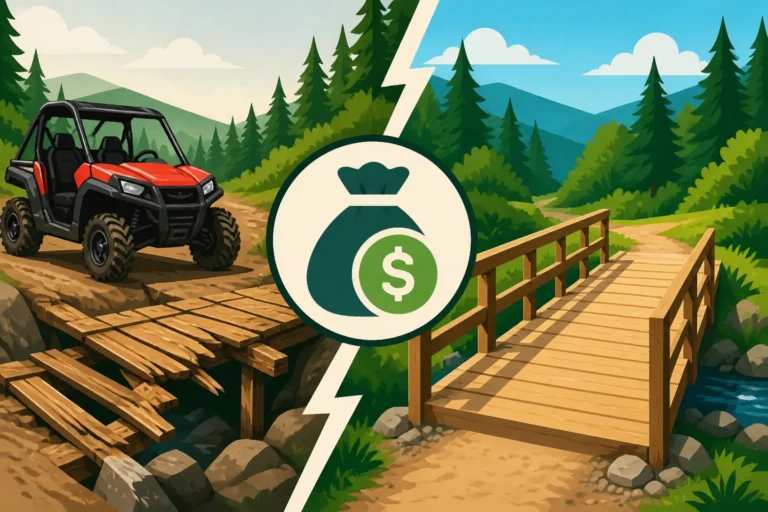
Maine ATV trail grants are intended to support trail access and upkeep, not simply to provide general funding for any ATV-related expense. Projects may involve work such as repairing or replacing a bridge, improving drainage, clearing a route, or installing trail signs. The practical aim is to maintain a safe, usable trail network while respecting the landowners and communities that make riding possible.
A project’s fit depends on its details and the program’s current requirements. For example, a club dealing with a washout may need to explain what failed, how the proposed repair would improve access, and which landowners or other parties have agreed to the work. A request to improve a route also needs to account for whether the route is authorized and who will maintain it afterward.
Grant funding does not automatically mean a trail is open to riders. A project may be approved for construction or repair while access arrangements, seasonal restrictions, or local rules still determine when people can ride. Before planning a trip around a trail, check the applicable club or local notices and review Checking Maine Trail Status Before You Drive.
How grants fit into Maine’s trail system
Maine’s ATV trail network relies heavily on cooperation among clubs, municipalities, landowners, and public agencies. A trail may cross private property, follow a town-approved route, or connect with a larger club-maintained system. A grant can help with a specific piece of that network, but it cannot replace the permissions and relationships required to keep the route open.
Funding and trail work also have a connection to registration. Maine ATV registration revenue helps support trail-related work through the state’s ATV funding system, alongside the application and administration of grants. For a broader explanation of that relationship, see Where Maine ATV Registration Money Goes and Maine ATV Registration Revenue and Trail Grants.
The effect is easy to miss when a ride goes smoothly. Riders may cross a sturdy bridge, follow a well-marked junction, or pass through a stretch that has been cleared after a storm without seeing the volunteers and project planning behind it. Grants can help address defined work, while ongoing care still depends on local effort. Maine ATV Trail Grooming and Bridges offers more context on the physical work that keeps routes usable.
Who May Be Involved in a Trail Grant
Clubs, municipalities, and project partners
A local ATV club may be closely involved in identifying a problem and organizing a solution. Depending on the project and program requirements, a municipality or another eligible organization may also have a role in applying, coordinating, or supporting the work. The right applicant and arrangement depend on the grant rules and the project’s location, so a club should confirm eligibility before investing substantial time in a proposal.
The project also needs people who can explain who owns or manages the land, who has permission to do the work, and who will take responsibility for maintenance. A club might be willing to organize volunteers, but a bridge on a town-managed route may need additional coordination. A project that touches private land requires a clear understanding with the landowner before work begins.
If you ride regularly, joining or supporting a local club is one way to understand how that coordination works. Clubs often know the local trail layout, access agreements, and maintenance needs better than a visitor can learn from a map alone. See Maine ATV Club Membership and Dues for more on what club involvement can mean, or Volunteering With a Maine ATV Club if you want to help with trail work directly.
Landowner permission and local coordination
Permission is central to trail projects in Maine because many routes depend on private land access. A grant award does not grant a club or riders permission to enter property, build a structure, or change a trail. Project organizers need to work through the appropriate landowner and local approvals before carrying out work.
A useful early step is to map the proposed work area and identify each party who may need to be involved. A route that appears to be one continuous trail on a screen might cross several parcels or meet a town road. One landowner’s approval may not cover a neighboring parcel, and permission to pass through does not necessarily mean permission to install a bridge or make other improvements.
This is also why local relationships matter after a project is complete. A landowner who sees considerate riding and prompt attention to concerns may be more comfortable continuing access. Conversely, dust, noise, litter, or unauthorized detours can put a route at risk. For more on the access side of trail planning, read Landowner Relations on Maine ATV Trails.
How a Trail Grant Project Typically Takes Shape
Identify and document the need
A strong project begins with a specific problem rather than a broad wish to “improve the trail.” Describe what riders or maintenance crews are encountering: a damaged bridge, recurring erosion, a blocked corridor, confusing junctions, or another clearly defined issue. Record where it is, what conditions are causing the problem, and how it affects access or safe passage.
Useful documentation might include notes from club volunteers, maintenance records, photographs, a map showing the location, and a description of the work being considered. A project organizer can use a mapping tool such as onX Offroad to help review route location and terrain, but a consumer map should not be treated as proof of legal access, landowner permission, or current trail status. Confirm those details with the club or responsible local contact.
It also helps to distinguish the immediate repair from any larger improvement. If a bridge is damaged, for instance, the project may involve more than replacing a deck: the approach, drainage, materials, and future inspection plan could all matter. Clear documentation lets organizers discuss the work coherently and identify questions before an application is prepared.
Confirm requirements before committing to work
Grant rules, forms, deadlines, eligible costs, and approval procedures can change. A club or municipality should check the current program guidance directly with the responsible state office before setting a project schedule or promising that a particular expense will be covered. This avoids a common frustration: volunteers arrange materials or begin work, only to learn that the grant requires prior approval or a different process.
Before applying, confirm who is eligible to submit the request, what documentation is expected, whether project permissions must be in place, and how funding is handled. Ask whether the grant is paid in advance or requires the organization to cover costs first and seek reimbursement later. That distinction can affect the size and timing of a project, especially for a volunteer group with limited cash on hand.
The application may also ask organizers to explain how the project benefits the trail system and how the completed work will be maintained. Keep a copy of correspondence, approvals, receipts, and project records in one place. How Maine Clubs Apply for Trail Money is a useful related topic for understanding the application side.
| Project question | Why it matters | What organizers can prepare |
|---|---|---|
| Is the applicant eligible? | A useful project can still be ineligible if the applicant or arrangement does not meet program rules. | Confirm requirements with the program administrator before drafting the request. |
| Is access authorized? | Funding does not replace landowner permission or local approvals. | Document permissions and identify any additional approvals needed. |
| Is the need clearly defined? | Reviewers need to understand the problem and the proposed response. | Record the location, condition, scope of work, and expected trail benefit. |
| Can the organization manage costs and records? | Funding procedures may affect cash flow and documentation. | Clarify payment or reimbursement rules and plan to track expenses. |
| Who will maintain the result? | A repaired or improved feature still needs care over time. | Assign responsibility for inspection, upkeep, and reporting problems. |
Complete work and keep records
Once a project has the necessary approvals, follow the approved scope and any conditions attached to the funding. If the actual site differs from what organizers expected, check with the program contact before making a major change. A small adjustment in the field can affect materials, cost, permissions, or the work being reported.
Keep records as the work proceeds, not just at the end. Depending on the project requirements, that may mean retaining invoices, volunteer records, photographs, correspondence, and notes about materials or completed tasks. An organized file makes it easier to answer questions, document the result, and plan future maintenance.
When the work is finished, tell riders what changed and whether any temporary closure or restriction remains. Clear updates help prevent people from arriving at a work site expecting a finished route. A map app such as onX Offroad can help a rider understand the surrounding area, but it should be used alongside club or official notices for current conditions and access information.
How Riders Can Support Funded Trail Work
Report problems through the right local channel
If you find a downed tree, damaged bridge, erosion, missing sign, or another trail concern, report the location as clearly as possible. Include the trail name or nearby junction, a description of the issue, and whether it seems to prevent passage or create a hazard. If it is safe and appropriate, a photo can help the club understand what a crew may encounter.
Avoid trying to fix a structure or reroute around a problem without permission. A well-intended repair can create a safety issue, conflict with a landowner’s wishes, or complicate an approved project. Use the club or local contact responsible for that trail instead. For guidance on raising a trail concern, see Reporting a Trail Problem to the State.
Respect closures and support the people maintaining access
A closure may be disappointing, especially if you have driven a long way to ride, but continuing through a closed work area can undermine the project and damage the trail. Check notices before leaving, follow posted detours, and do not assume that a route is open because it appears on a digital map. A tool such as onX Offroad can be helpful for orientation and route planning, but local trail updates are essential when conditions or access have changed.
Riders can also help by staying on marked routes, closing gates when instructed, slowing near homes, and avoiding muddy or vulnerable sections when conditions make damage likely. These everyday choices matter because continued access depends on trust as well as physical maintenance. A grant may help pay for a specific repair, but responsible riding helps protect the route after the crew packs up.
If a project interests you, ask the local club whether volunteers are needed or whether it can explain the work and its funding. You do not need to be a grant writer to be useful: sharing accurate trail information, attending a work day, or reporting a hazard promptly can all support the network. When you plan a ride, combine a route-planning tool such as onX Offroad with current local information, and treat the club’s access guidance as the deciding source for whether a trail is open.
Disclaimer
This article is for general informational purposes only and does not constitute professional advice. Laws, prices and regulations vary by location and change over time. Consult a qualified professional for guidance on your specific situation.