Guided Group Rides in Northern Maine
A guided group ride in northern Maine can make a big trail network feel much less intimidating, especially when you are unfamiliar with local access, changing conditions, or long stretches without cell service. The key is finding the right kind of ride, preparing your machine and group, and confirming that the route is open and suitable for everyone before you leave.
Choose the right kind of guided group ride
Club rides, organized events, and paid tours are different
“Guided group ride” can mean a few different things in Maine. A local ATV club may organize a ride for members or visitors, an event organizer may lead a scheduled group outing, or a commercial outfitter may offer a guided trip. The route, pace, group size, included equipment, and experience required can differ considerably.
A club ride may be a good fit if you want to meet local riders and learn how a trail system connects nearby communities. Some club rides are social outings rather than instruction, though, so ask whether a leader will actively navigate, manage regrouping, and help if a machine has trouble. Start with local clubs and their posted ride information, such as through Maine ATV Clubs and the Trails They Keep Open.
A paid tour may provide a more structured experience, but do not assume that “guided” automatically means every detail is included. Ask whether the price covers a machine, fuel, protective gear, trail permits, meals, or transportation to the starting point. If you are bringing your own ATV or UTV, confirm that the guide accepts personal machines and that your vehicle fits the route’s width limits.
For any type of ride, get the basics in writing before you travel: meeting location, expected duration, minimum experience, cancellation policy, route difficulty, and what happens if weather or trail conditions change. A little clarification beforehand can prevent an awkward surprise in the parking area.
Match the ride to your group’s experience and machines
Northern Maine rides can appeal to everyone from first-time visitors to riders who are comfortable navigating remote trails. Be honest about your group’s experience. A newer rider may be capable on a quiet, well-marked trail but feel overwhelmed by a long day, a tight schedule, deep mud, or repeated road crossings.
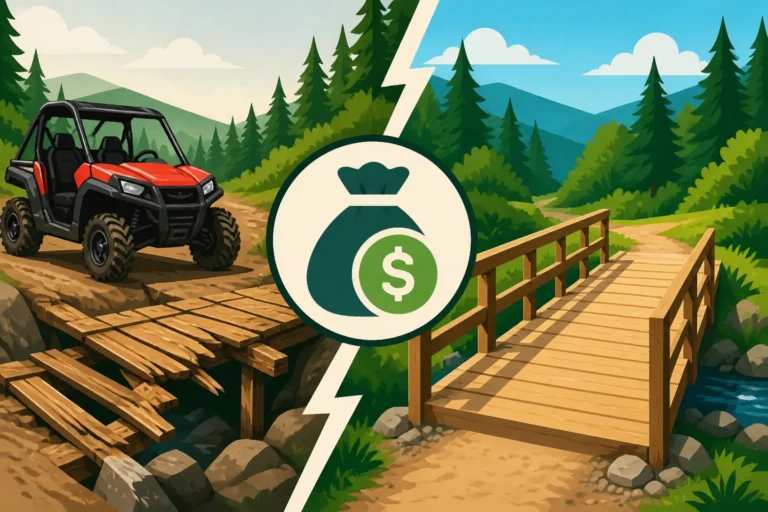
Machine size matters, too. A wide side-by-side may not fit comfortably on every trail or bridge, and a group with both quads and UTVs needs to ask about route suitability before setting out. If one rider has a larger machine, limited mobility, or a passenger who needs frequent breaks, tell the ride leader in advance. It is easier to choose a workable route before everyone is geared up and engines are running.
Ask how the group handles different riding speeds. A considerate leader will explain where the group stops, how riders are counted, and what participants should do if they become separated. For a group with children or less-experienced riders, look for a ride that allows a relaxed pace rather than one built around covering as many miles as possible.
Plan the route and verify access
Confirm trail status before driving north
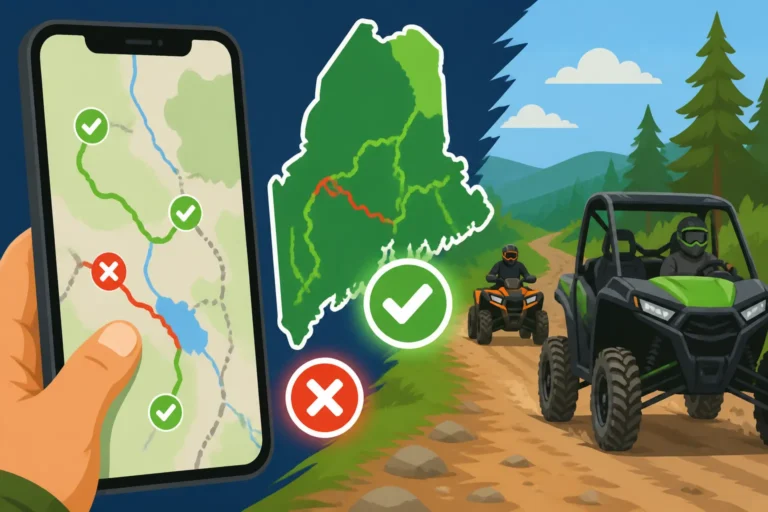
A trail shown on a map is not automatically open on the day you plan to ride. Trail access can change because of seasonal conditions, maintenance, landowner decisions, weather, or local club notices. This is especially important if you are traveling to a staging area from far away: a route change can affect where you park, which town you ride through, and whether the outing still makes sense.
Before leaving, check with the ride organizer or the local club responsible for the trail. Ask whether the route is open for your type of machine and whether there are any temporary closures, detours, or restrictions. You can also review Checking Maine Trail Status Before You Drive and Maine ATV Trail Maps and Club Boundaries as part of your preparation.
Treat digital maps as planning aids, not permission to ride wherever a line appears. onX Offroad can help you review a route and get a sense of the surrounding area, but confirm current access with the organizer or the responsible local source. Download or save useful map information before you lose service, and carry a paper map or written route notes as a backup.
Build a route around the day you actually have
A good ride plan includes more than a start and finish. Work out where the group will meet, where machines can be staged, where riders can stop, and how the plan changes if someone needs to turn back. Ask how long the outing usually takes, but leave room for slower travel, unexpected stops, and trail conditions that make progress less predictable.
If the ride spans more than one town or takes up a full day, discuss fuel and food before you start. A route that looks simple on a phone may involve long stretches between convenient services. Ask the leader where the group expects to refuel, whether everyone must arrive with a full tank, and what to do if a machine uses more fuel than expected. For a longer trip, Planning a Multi-Day Ride Across Maine Trails can help you think through lodging, staging, and daily logistics.
Use a route plan that reflects the least-experienced rider in the group, not just the most confident one. A shorter loop with a comfortable lunch stop can be a far better day than an ambitious route that leaves half the group tired and watching the clock. onX Offroad may help with advance route review, but the ride leader’s local instructions and current trail information should guide decisions on the ground.
| Before the ride | What to confirm |
|---|---|
| Route access | Is the route open, and is it suitable for the group’s machine types? |
| Meeting point | Where should riders park, unload, and check in? |
| Ride pace | Is the outing suitable for beginners, families, or mixed-experience groups? |
| Fuel and food | Where are the planned stops, and should riders bring extra supplies? |
| Group procedure | How will the leader count riders and regroup after turns or crossings? |
| Backup plan | What happens if weather, a closure, or a machine problem changes the route? |
Ride safely and stay together
Agree on group rules before engines start
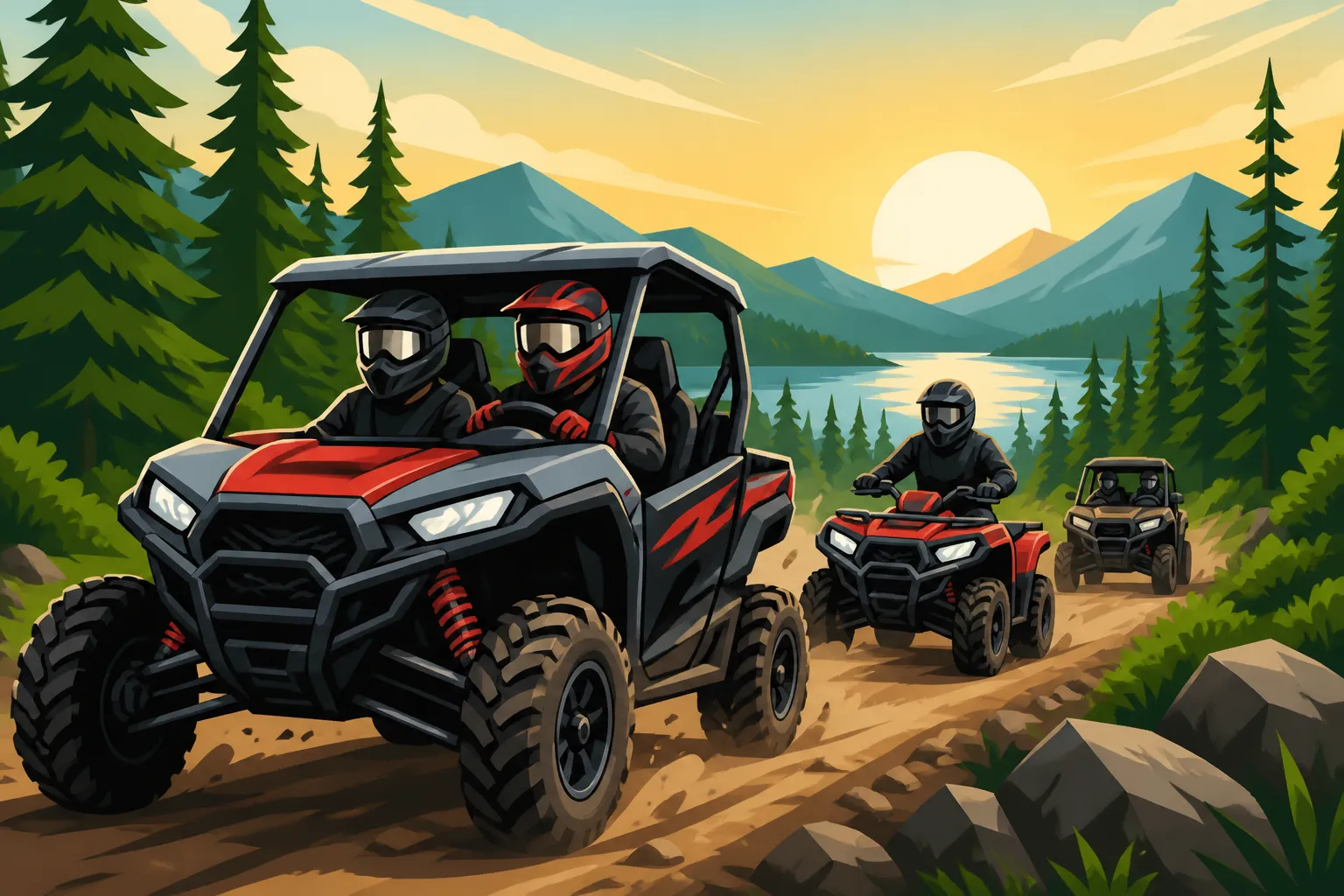
A group ride goes more smoothly when everyone understands the basic plan before leaving the staging area. Ask who is leading and whether there is a designated sweep rider at the back. The sweep rider helps the leader know when the group has cleared a turn or regrouping point, but every participant still needs to ride responsibly and keep track of the person behind them.
Single-file riding is often the simplest arrangement on a narrow trail, but spacing and visibility matter as much as formation. Avoid riding so close that dust or a sudden stop becomes dangerous. If the leader stops, pull over where the group can be seen and where the machines are not blocking the trail. For practical group habits, review Riding Single File in a Group.
Agree on what to do if someone loses sight of the group. Many groups use planned regrouping points and ask riders not to continue through an unfamiliar intersection alone. Make sure each person knows the route’s general direction and has the leader’s contact information where appropriate. A charged phone can be useful, but remote areas may have weak or no service, so do not make a phone the entire emergency plan.
Pack for remote conditions, not just the forecast
The weather at a trailhead may not match conditions farther along the route. Pack clothing layers, water, food, basic first-aid supplies, and any personal medication you may need. Bring the tools and spare items appropriate for your machine, along with a way to secure loose gear. Check that helmets and other protective equipment fit properly and are in good condition.
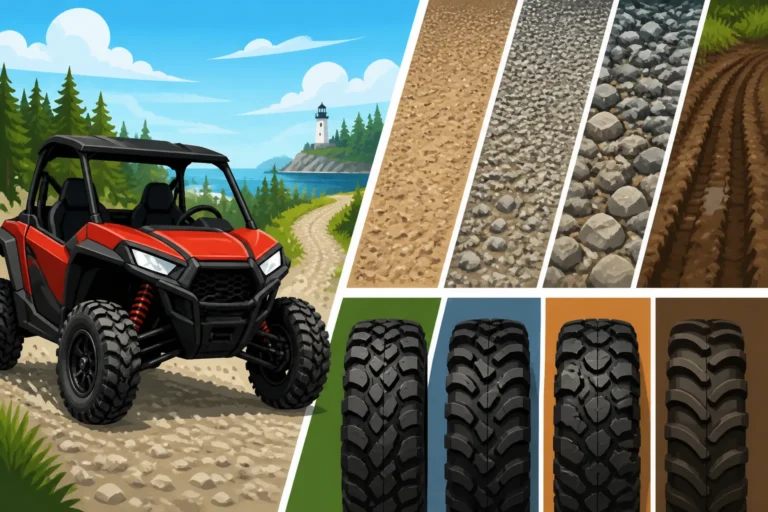
Before riding, confirm that your ATV or UTV is ready for the day. Check tires, brakes, lights, fuel, and any required safety equipment. If you are borrowing a machine, ask the owner or rental provider to explain its controls and limitations before joining a moving group. For a fuller packing checklist, see What to Carry on a Remote Trail Ride.
Also plan for the possibility that a machine becomes stuck or develops a mechanical problem. Tell the leader about the issue promptly rather than trying to catch up alone. If someone is injured or unable to continue, the group should follow the organizer’s emergency plan and avoid splitting up without a clear reason. Reviewing Getting Help on a Remote Trail can help set realistic expectations for communication and assistance outside town.
Be a considerate guest on northern Maine trails
Respect landowners, clubs, and local communities
Many Maine trails rely on permission to cross private land. That means riding respectfully is part of keeping access available, not just a matter of good manners. Stay on the designated route, obey posted signs and closures, avoid creating new paths around wet or blocked sections, and do not assume that access to one trail gives permission to use nearby land.
Follow the ride leader’s instructions around homes, farms, gates, and trail junctions. Keep noise and speed considerate near people and buildings, and close gates only when the group has been told to do so. If a landowner or club representative gives a direction, take it seriously. Maine Trail Etiquette With Landowners offers more guidance on the everyday choices that help protect trail relationships.
A ride leader may know which local clubs maintain the route and where to direct questions about access. That local knowledge is valuable, but it does not replace your own responsibility to follow posted rules and applicable requirements. Before the trip, check that each rider has the required registration and safety preparation for their situation. Maine ATV Safety Course Requirements is a useful starting point for understanding course rules.
Leave the group and the trail in good shape
A strong group ride is one that finishes with everyone accounted for and the trail no worse than it was at the start. Pack out trash, avoid spinning tires unnecessarily, and report hazards or damage to the ride leader rather than trying to make an unapproved detour. A leader may pass information to the local club or the appropriate trail contact.
After the ride, let the organizer know what worked and what caused confusion. If the route was too difficult for newer riders, the stops were too far apart, or the instructions at a junction were unclear, useful feedback can improve the next outing. If you enjoyed the experience, ask whether the club has volunteer days or other ways visitors can support the trail network.
For your own next ride, make a note of the route, fuel use, weather, and any gear you wished you had brought. Keep maps and downloaded route details organized, and check current access again before returning. onX Offroad can be one part of your personal route-planning toolkit; pair it with local trail updates and clear communication with the organizer rather than relying on any single map. A little preparation makes a long ride through northern Maine feel more manageable—and makes it easier to enjoy the company instead of worrying about what might go wrong.
Disclaimer
This article is for general informational purposes only and does not constitute professional advice. Laws, prices and regulations vary by location and change over time. Consult a qualified professional for guidance on your specific situation.