Maine ATV Rules on Dirt Town Roads
Riding your ATV or UTV down a scenic dirt town road in Maine can seem like the quintessential New England experience, but many riders get caught off guard by the specific—and often strict—rules that govern where and how you can operate your machine on these public ways. It's not as simple as "dirt road equals trail," and misunderstanding these regulations can lead to fines, frustrated residents, and even the loss of trail access. This guide will walk you through the nuances of Maine's ATV laws concerning dirt town roads, helping you ride legally, safely, and courteously.
Understanding the Nuance of "Dirt Town Roads" in Maine
When you picture a "dirt town road" in Maine, you might imagine a winding, unpaved path through the woods that feels like an extension of the trail system. While some of these roads certainly look like trails, legally speaking, they are often still considered public ways. This distinction is absolutely critical for ATV and UTV riders, as the rules for operating on a public way are vastly different from those for designated ATV trails.
What "Public Way" Really Means for ATVs
In Maine, a "public way" is generally defined as any road, highway, or street that is maintained by the state or a municipality and open to the public for vehicular travel. This definition includes paved highways, gravel roads, and yes, many of those picturesque dirt roads. The key here is maintenance and public access, not the surface material. Unlike dedicated trails, which are often privately owned land with easements or managed by ATV clubs, public ways are part of the official transportation infrastructure.
Many riders mistakenly assume that because a dirt road isn't paved, it automatically defaults to an ATV-friendly zone. This couldn't be further from the truth. If a dirt road is part of the town's road system, even if it sees minimal traffic, it falls under the same legal umbrella as any other street. This means the default rule is generally no ATV access unless specifically designated otherwise. It's a common trap for new riders and even seasoned veterans who haven't brushed up on the latest local ordinances. The feeling of freedom on a quiet dirt road can quickly turn into a headache if you're not where you're supposed to be.
Town Ordinances: The Local Layer of Regulation
While state law sets a baseline for ATV operation, Maine's municipalities have a significant say in how ATVs can use their local roads, including dirt town roads. This is where things can get a bit complicated, as regulations can vary dramatically from one town to the next, even for neighboring communities. A town might decide to open certain sections of its dirt roads as [Maine ATV-Access Routes and How Towns Post Them], while a neighboring town might keep all its public ways closed to ATVs.
These access routes are almost always clearly marked with specific signage indicating that ATV use is permitted. If you don't see signs explicitly designating an ATV access route, you should assume that ATV operation is prohibited, regardless of how inviting the dirt road looks. Relying on local word-of-mouth or anecdotal evidence can be risky business. Towns often publish their ordinances online, or you can inquire with the town clerk's office. It's truly a patchwork, and what's allowed in one part of Maine might be strictly forbidden just a few miles down the road. This local control means that riders have a responsibility to know the specific rules for the area they're riding in, rather than assuming a blanket policy applies across the state.
The Legal Framework: What Maine Law Says About ATVs on Public Ways
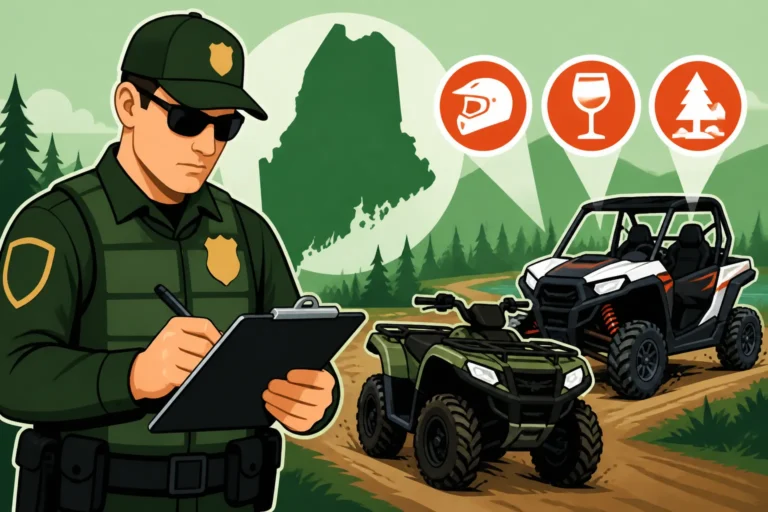
Maine law is quite clear about the general prohibition of ATVs on public ways, but it also provides specific, limited exceptions. Understanding these exceptions, and the strict conditions that come with them, is crucial for anyone considering riding their ATV or UTV on a dirt town road. These aren't suggestions; they are legal requirements that wardens and local law enforcement actively enforce.
The 500-Yard Limit and Its Strict Application
One of the most commonly cited, and often misunderstood, exceptions for ATV operation on public ways is the "500-yard rule." This rule, found in Maine statute, allows an ATV to cross a public way or to operate on a public way for a distance not exceeding 500 yards. However, this isn't a free pass to cruise a half-mile down any dirt road you choose. The intent of this rule is very specific: to allow riders to connect trails, access services like gas stations or restaurants, or bypass an obstruction. It's not meant for recreational riding on the public way itself.
When operating within this 500-yard limit, the law requires you to ride on the extreme right of the traveled way. Furthermore, you must come to a complete stop before entering a public way and yield to all vehicular traffic. This means no blasting out of a trail onto a dirt road, even if you don't see any cars immediately. Imagine you're on a trail that ends abruptly at a dirt town road, and another section of trail picks up a quarter-mile down the road. The 500-yard rule would allow you to legally travel that quarter-mile to reconnect. But if your destination is simply "a ride on the dirt road," you're likely violating the spirit and letter of the law. Violations of this rule are easily spotted and can result in significant fines. This is a rule designed for limited utility, not broad recreational use.
Specific Operating Requirements on Public Ways
When you are legally operating an ATV or UTV on a dirt town road, whether it's on a designated access route or within the 500-yard limit, several other legal requirements kick in. These are often forgotten by riders who are accustomed to less restrictive trail environments. First and foremost, your ATV must be properly registered in Maine. This means you need your current [Maine ATV Registration Sticker Delivery Time] visible on the machine, and you should have your registration papers with you while riding. An unregistered machine, even on a legal access route, is a quick way to get a ticket.
Beyond registration, your machine needs to meet specific equipment requirements. For example, if you're riding at night or in low visibility, you must have working headlights and taillights. You can find quality lighting solutions, like those from SuperATV, that improve visibility and ensure you meet these safety standards. Furthermore, when operating on a public way, you must obey all traffic laws applicable to motor vehicles, including speed limits, stop signs, and yield signs. You must also maintain control of your machine and not operate it in a reckless manner. Remember the [Maine's Stop-and-Yield Rule Before a Public Way] and the requirement to ride the [Maine's Extreme Right Rule on a Public Way]. These aren't just polite suggestions; they are enforceable laws designed to ensure safety when ATVs share space with other vehicles, even on sparsely traveled dirt roads.
Navigating Dirt Town Roads: Practical Rules and Best Practices
Successfully and legally navigating Maine's dirt town roads with your ATV or UTV requires more than just knowing the letter of the law; it demands a responsible mindset and adherence to best practices that benefit everyone. It's about being a good ambassador for the sport, ensuring trail access remains open, and prioritizing safety.
Identifying Legal ATV-Access Routes
The clearest way to know if you can ride your ATV or UTV on a particular dirt town road is to look for official signage. Towns that designate parts of their public ways for ATV use are required to post clear signs indicating the route. These signs typically feature an ATV symbol and sometimes specify hours of operation or other restrictions. Without such signs, you should assume the road is off-limits. Never rely on the presence of existing ATV tracks as proof of legality; those tracks could belong to trespassers or private landowners operating on their own property.
Many towns, often in collaboration with local ATV clubs, will publish maps of their designated ATV routes online or have them available at the town office. Before you head out, do your homework. Check the town's official website or the website of the local ATV club in that area. For instance, if you're riding in a region known for its extensive trail networks, like Aroostook County, the local clubs are often the best resource for current information on what roads are open. Ignorance of the local ordinance is never a valid defense, so a little pre-ride research can save you a lot of trouble.
Being a Good Neighbor and Maintaining Trail Access
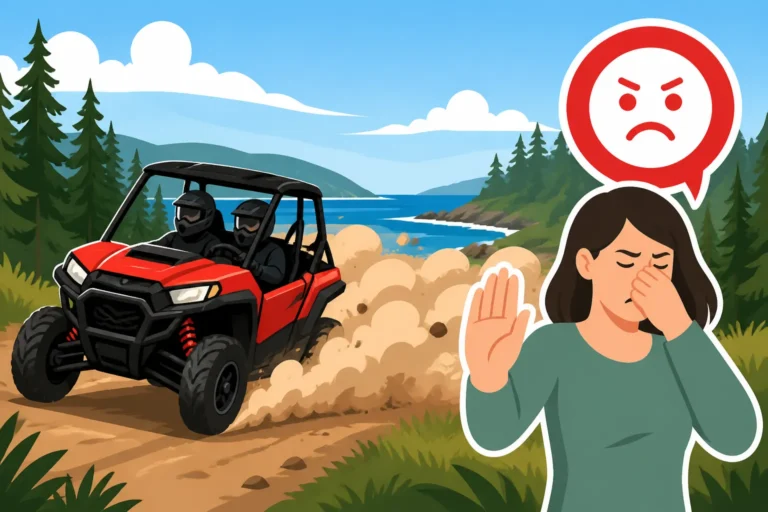
Riding on dirt town roads, even designated access routes, places a greater responsibility on ATV and UTV operators to be mindful of their impact on residents. Unlike remote trails, these roads often pass by homes, farms, and businesses. Excessive speed, loud exhausts, and kicking up large dust clouds can quickly lead to complaints from residents. These complaints, in turn, can prompt towns to restrict or even revoke ATV access. Maintaining your machine's muffler system to meet [Maine Noise Limits and Muffler Rules] is critical. Even if your machine is technically legal, consider if it's being overly disruptive. Many UTV owners install windshields and rear panels, some of which are available from SuperATV, to help contain dust and debris, especially when passing by homes.
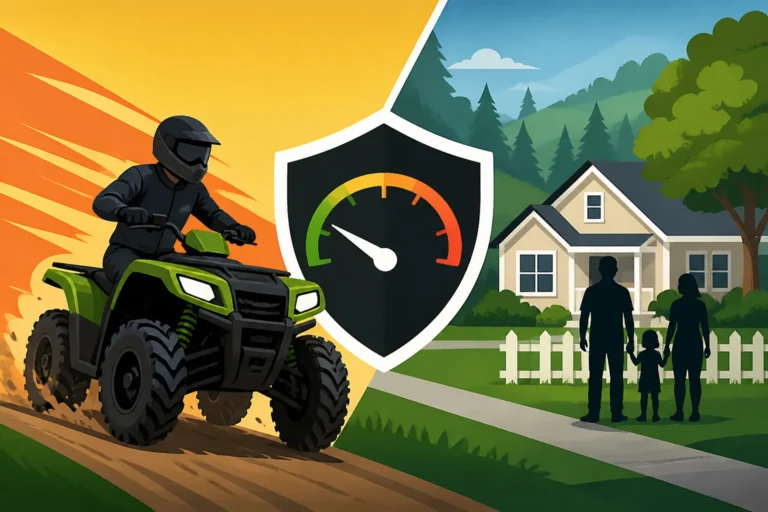
Remember that trail access, especially on sections of public roads, is often a privilege granted by towns and supported by local residents. Treat these areas with respect. Slow down when passing houses, yield to pedestrians and other vehicles, and be courteous. Adhering to [Maine ATV Speed Limits Near Buildings] isn't just about avoiding a ticket; it's about building positive relationships with the communities that host our trails. These common-sense practices are vital for preserving the ability to ride in these areas for years to come.
Addressing Common Misconceptions and Local Variations
The varied nature of Maine's landscape and local governance means that ATV rules on dirt town roads are ripe for misconceptions. What one rider heard at a gas station might not apply, or might be outright wrong. Getting your information from reliable sources is key to avoiding penalties and ensuring responsible riding.
The "If There's No Sign, I Can Ride" Fallacy
This is perhaps the most dangerous misconception circulating among ATV riders. The idea that if a dirt road isn't explicitly marked with "No ATVs" signs, then it must be permissible to ride, is absolutely incorrect under Maine law. The general rule for public ways is that ATVs are prohibited unless a town or state entity has specifically designated that road or section as an ATV access route. This means you should be looking for signs that permit ATV travel, not the absence of signs that prohibit it.
Think of it like this: you wouldn't assume you can drive your truck down a hiking trail just because there isn't a "No Trucks" sign. The default for public roads regarding ATVs is "closed" unless opened. Many towns choose not to designate ATV routes on their dirt roads for various reasons, including resident complaints, safety concerns, or to protect infrastructure. Operating an ATV on an undesignated dirt town road is trespassing if it's a private road, or illegal operation on a public way if it's a town road. Both can carry significant penalties. Always verify access rather than assuming it.
Registration and Other Non-Negotiable Requirements
Regardless of whether you're on a designated trail, a private logging road, or a legal ATV access route on a dirt town road, certain requirements are universal and non-negotiable. First and foremost, your ATV or UTV must be properly registered with the Maine Department of Inland Fisheries and Wildlife (IF&W) if you are riding off your own land. This includes both residents and non-residents. Operating an unregistered ATV is one of the quickest ways to receive a substantial fine, as wardens frequently check registrations on the trails and access routes. If you've just bought a used machine, make sure you understand [Maine ATV Registration After a Private Sale].
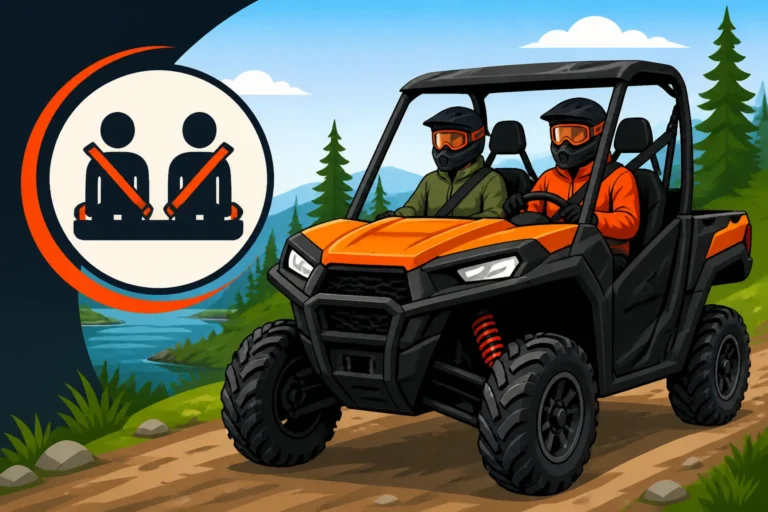
Beyond registration, age and safety course requirements are critical. Riders between the ages of 10 and 16 must complete an approved ATV safety course and be accompanied by an adult while riding. While adults are not legally required to wear a helmet on designated trails or access routes, it is always strongly recommended for safety. However, passengers under 18 must wear a helmet. For UTVs, seatbelts and potentially other safety equipment (like those robust roll cages and harnesses often found on SuperATV-equipped machines) are essential. These rules aren't just bureaucratic hurdles; they are in place to protect riders and maintain a safe environment for everyone sharing Maine's trails and roads.
Here’s a quick overview to help clarify the distinction between riding on dirt town roads and dedicated trails:
| Feature | Dirt Town Road (Undesignated) | Designated ATV Access Route (Dirt Town Road) | Dedicated ATV Trail (Non-Road) |
|---|---|---|---|
| Legal Status | Public Way – Generally Prohibited for ATVs | Public Way – ATV Use Permitted by Ordinance | Private/Public Land – ATV Use Permitted by Easement/Law |
| Primary Use | Vehicular traffic, residential access | Connect trails, access services (secondary for ATVs) | Recreational ATV/UTV riding |
| Signage | No ATV signs (implies prohibition) | Explicit "ATV Route" signs required | Trail markers, club signs |
| Speed Limits | Posted road speed limits (must obey) | Posted road speed limits (must obey), often lower for ATVs | Often unposted, but safe and courteous speed expected |
| Traffic Laws | All motor vehicle laws apply | All motor vehicle laws apply (stop, yield, right-of-way) | Yield to hikers, horses, other trail users |
| Dust/Noise | High potential for resident complaints | Moderate potential, must be highly considerate | Lower potential, but still important to be mindful |
| Registration | Required (even for 500-yard exception) | Required | Required |
| Helmet Rules | Passengers <18 required, adults recommended | Passengers <18 required, adults recommended | Passengers <18 required, adults recommended |
| Connections | Use 500-yard rule for brief connections only | Designed to connect larger trail networks | Connects other trails, destinations |
This article is for general informational purposes only and does not constitute professional advice. Laws, prices and regulations vary by location and change over time. Consult a qualified professional for guidance on your specific situation.